Dartmouth College has been a major part of my life – as a student, professor, parent, and spouse – for over four decades. I am proud to be part of the extended community of this Ivy-League university that dates back to 1769, founded even before the United States. And yet, although I’ve long been aware it was named after the Earl of Dartmouth, in England, I’d never had a chance to look deeper into the origin of its name. Until today! I spent a beautiful spring afternoon exploring the picturesque village of Dartmouth, nestled along the banks of the River Dart within sight of the river’s mouth, which is defended by a Castle dating back to 1388. In addition to exploring this Dartmouth’s many historical milestones, my hike (30th consecutive weekend!) led me to one of the most spectacular wildflower meadows I’ve ever seen, in peak bloom!
Dartmouth is not an easy place to reach by public transit, especially on a Sunday morning. After a six-hour journey from our flat in London – complicated by cancellations and delays – I arrived in the tiny riverfront village of Kingswear, across the river from Dartmouth. The cab driver chatted pleasantly as we drove narrow country lanes over the rolling hills, past some of the most beautiful pastoral scenery in England. Hedgerows divide the landscape into a patchwork of fields – some smooth and brown and freshly tilled, some bright green with new growth, some brilliant yellow with crops in full flower. With sunshine and blue skies, I could tell I was in for a treat.
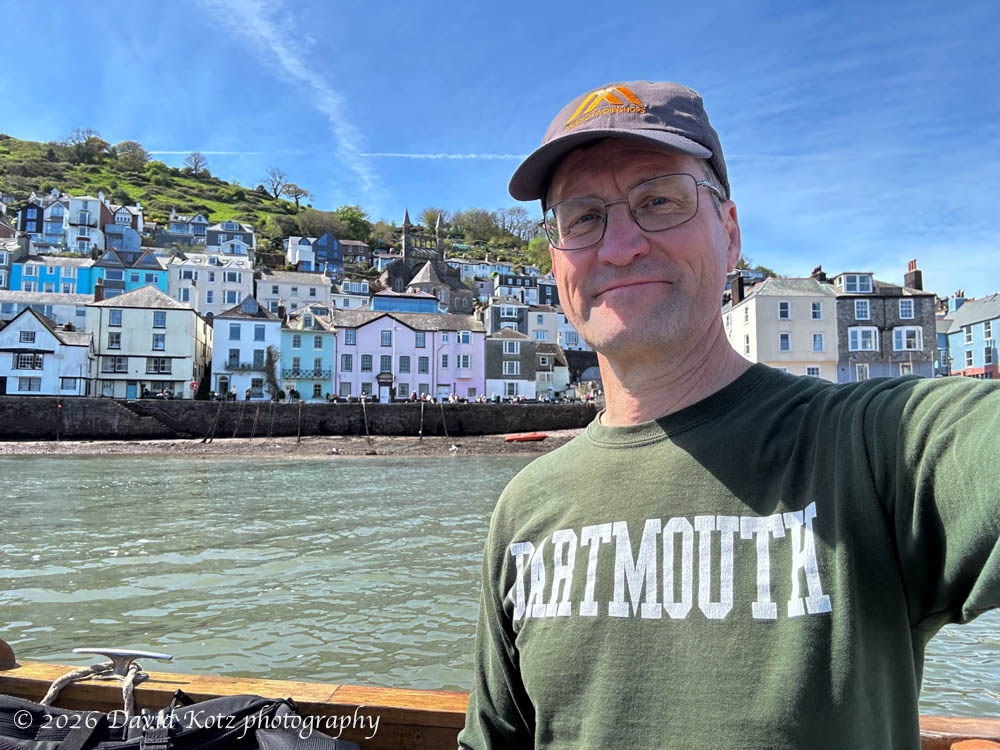
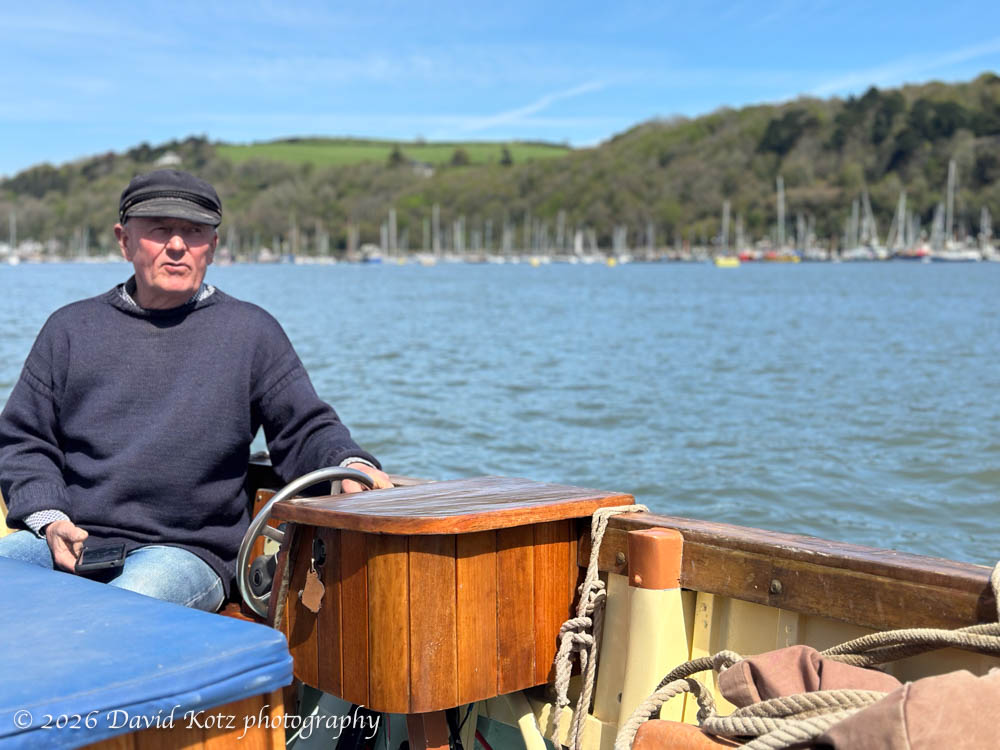
From Kingswear, I walked onto a small ferry for the brief (4-minute) ride across the River to Dartmouth, where historic homes and businesses seem to clamor for space along the steep hillside rising above the waterfront. I walked a short way upriver, dropped my bags at a delightful B&B (the Waterfront House), and looked for the ferry to the castle. After an impulse buy at the pop-up tent offering Dartmouth Ice Cream (how could I pass that up?) I climbed down the steps to the Dartmouth Castle Ferry – just a small motorboat operated by a pleasant man who spends his day carrying visitors from the docks downriver to the Castle, visible a couple hundred meters away. The ride lasts ten minutes (perhaps less!), but provides a water-level view of the castle as one approaches, a view not possible from the Dartmouth shore.
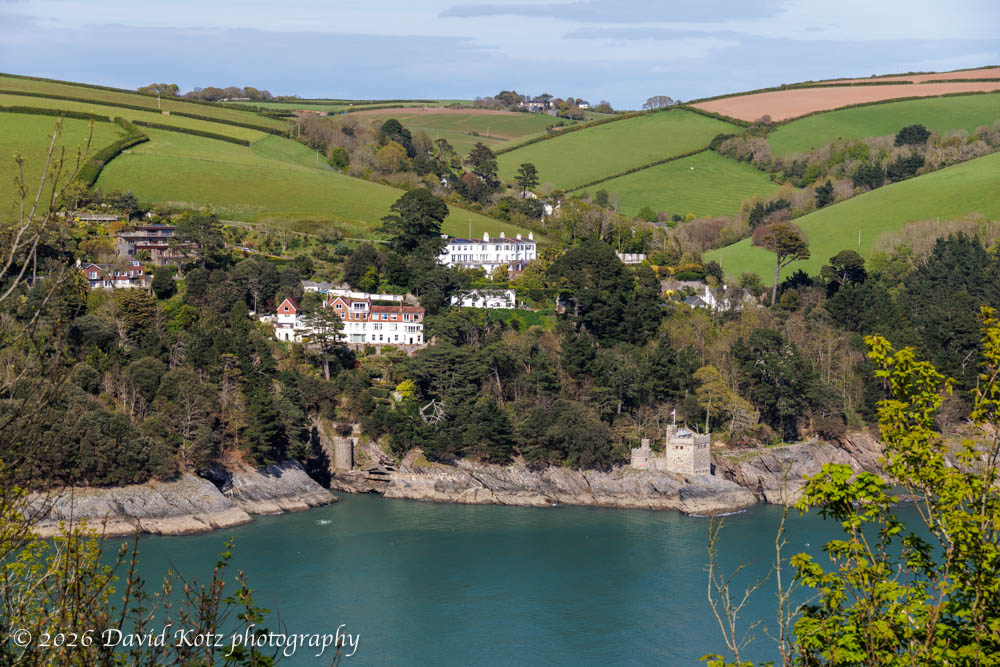
Dartmouth Castle is a fascinating place to visit. Its earliest instantiation was built in 1388-1390 to protect the mouth of the river from French invasion. Over time, it was expanded and refined. It was the first English fort built for guns. It saw action in the English Civil War, in battles between the Parliamentarians and the Royalists. It was active during wars with France and Spain. It was refurbished and expanded for the First World War, after which it became a museum and a tea shop. When the Second World War broke out, it was again refurbished as a fortress. Now it is, once again, a museum and a tea shop. Let’s hope it can stay that way! [Read more about its history, and view some of the museum signage.]
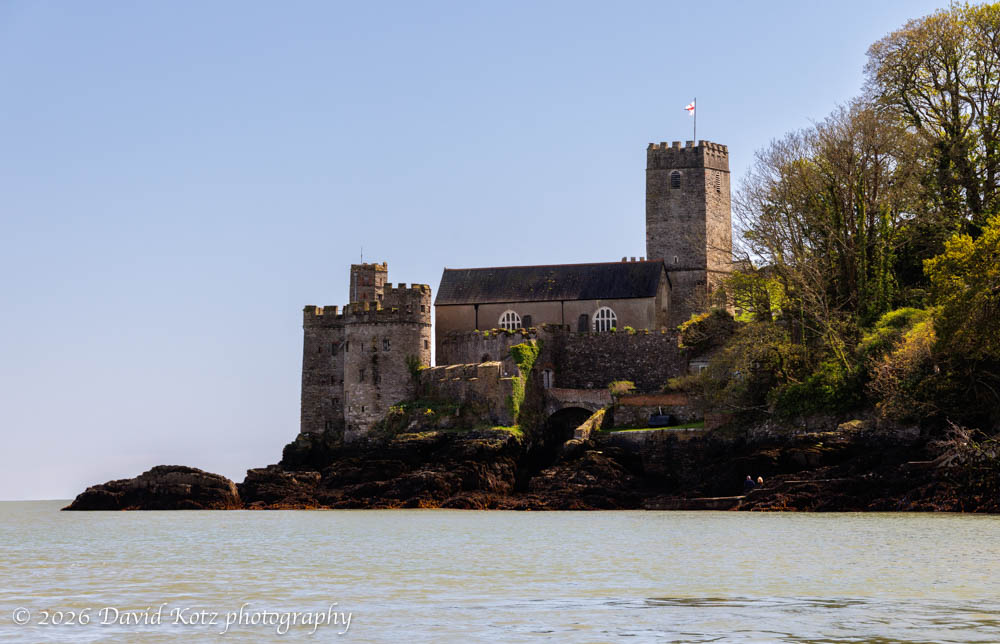
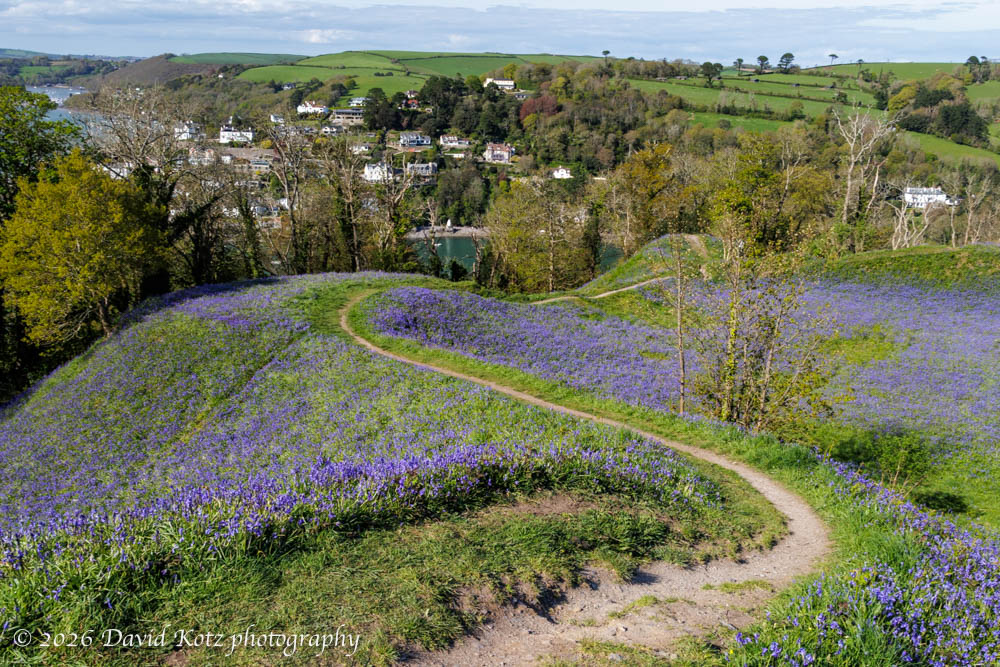
From there I hiked the Coast Path to follow the coastline to Compass Cove, a sheltered beach sprinkled with smooth stones and seashells, up into the pastures of Little Dartmouth, and back over Gallants Bower (a hilltop above the castle). There, I stumbled into a most amazing sight: acres of blooming bluebells, carpeting the forest understory and the open hillsides. In the soft afternoon sunshine, a few other people were seated on the benches, or laying on the grass, soaking in the incredible beauty of this afternoon. The photos barely do it justice.
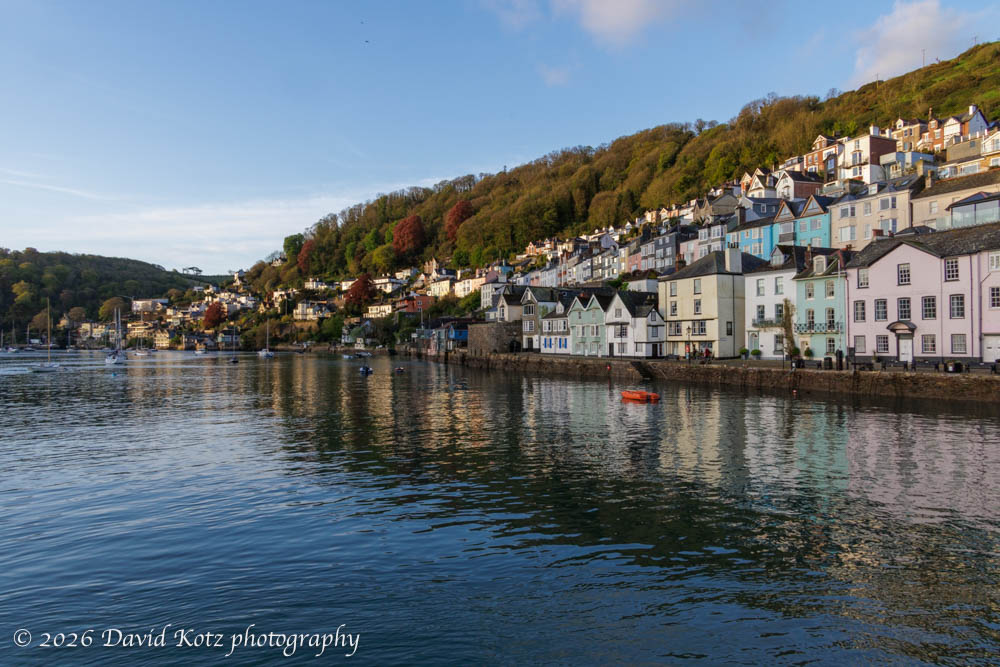
I concluded my walk by strolling the road into town. At the town center I popped into the Dartmouth Arms pub for dinner and a pint or two. The sun was setting behind the town, casting Kingswear and the opposite shore into a warm glow. In the morning I rose early to explore the town’s quiet streets, and to watch for early morning light on Dartmouth Castle, before hopping a commuter bus across the rolling fields and pastures to find the train back to London. What a delightful visit! Check out the photo gallery.
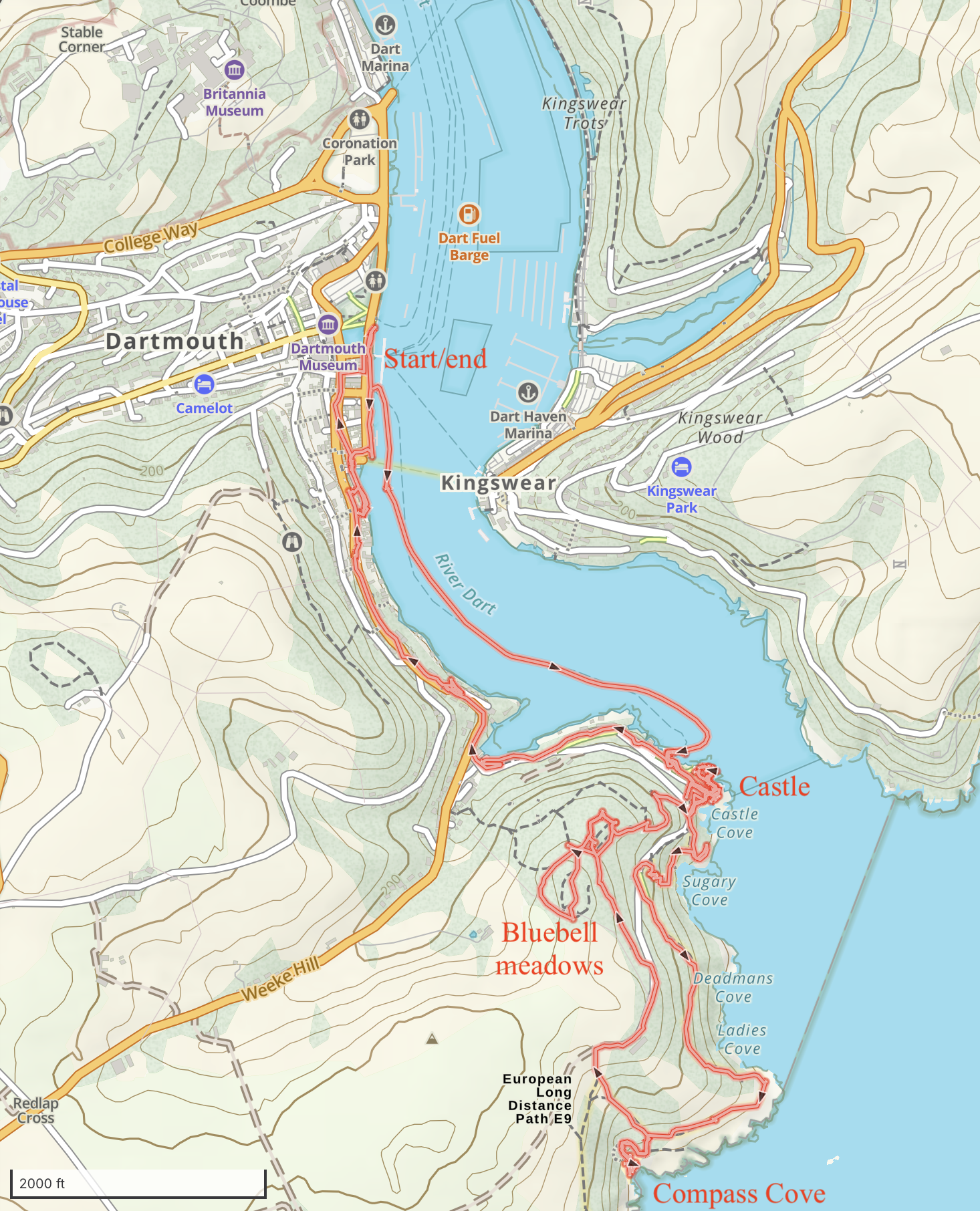
Hike stats: (after visiting the castle)
Distance: 4.4 miles (7km)
Time: 3 hours
Gain: 854′ (260m)
GaiaGPS track (including castle ferry and walking), shown below:
Fun facts about Dartmouth:
- Dartmouth was first mentioned in 1049, in an Anglo-Saxon chronicle [history].
- The peerage known as Earl of Dartmouth was named after this town; later, the college we know as Dartmouth was named for the Second Earl of Dartmouth.
- Dartmouth is home to the Naval Academy, which has trained many of England’s finest. King Charles III (the current monarch) completed some of his naval training here.
- Several Crusade fleets departed from Dartmouth.
- The Mayflower stopped here on its way from Southampton to the New World.
- John Davis, famed for inventing navigational instruments and for his explorations in search of the Northwest Passage, lived near here.
- Thomas Newcomen invented the steam engine, here.
- Dartmouth is home to the England’s only train station that has never been visited by a train. The station was built for visitors who arrived in the Kingswear station, and then ferried across the river to Dartmouth.
- The Kingswear-Dartmouth ferry is the most unusual I’ve ever seen: a tiny barge tied to a tugboat; the tugboat spins deftly around while the barge moves forward. Supposedly, it is unique across England. The whole trip lasts about 4 minutes. Brief videos: one, two.


One thought on “Dartmouth and its castle”