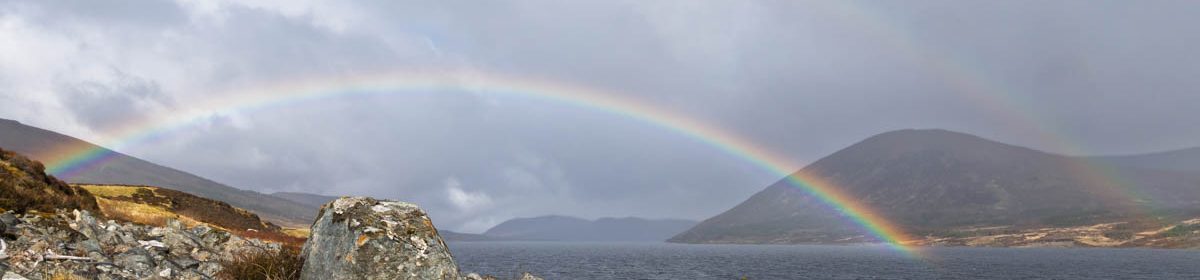
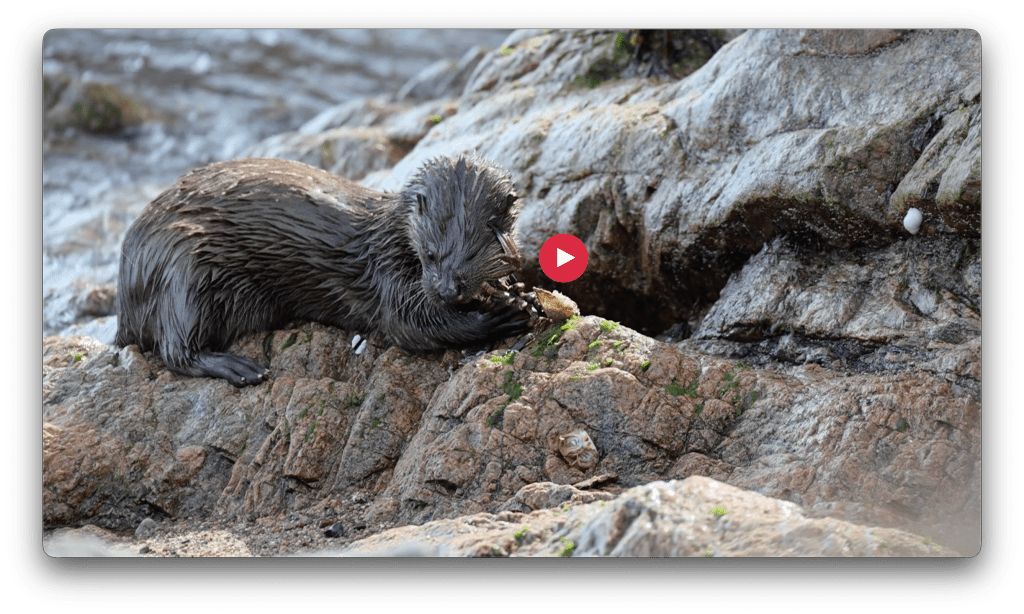
While we were visiting the beautiful beach at Muckle Roe – an island on the west coast of the Shetland Islands – we spotted an otter running toward the surf. It quickly disappeared under the water, but I kept close watch and saw his head appear occasionally as he hunted in a shallow bed of kelp among the rocks a few meters offshore. Then – ahah! – he caught something. I watched him swim toward shore, a crab squirming in his jaws, just barely above the surface of the water. He reached the shore, but just behind a large boulder, where I could no longer see him. I grabbed my long lens and walked quietly down the beach, behind the boulder, and peered over. There he was, just a few meters away, gnawing on his crab!
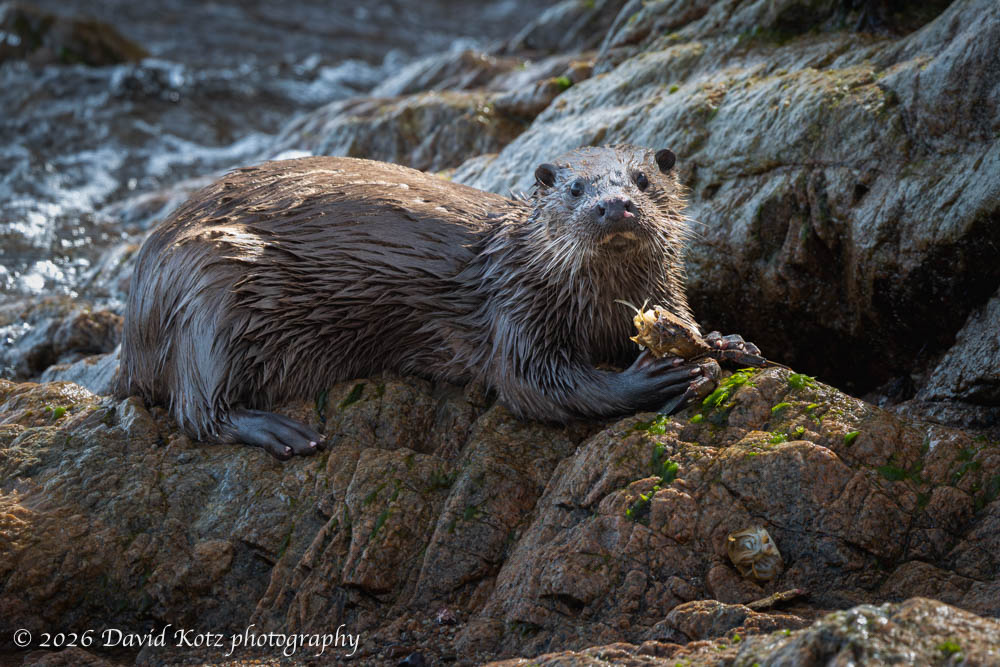
He looked up – not too concerned with my presence. I stood perfectly still, snapping a hundred or more photos while he crunched away on his lunch. Eventually, he checked all around him to see whether he’d dropped any juicy morsels, then walked calmly back into the water, face first as if to wash the mess off his face.
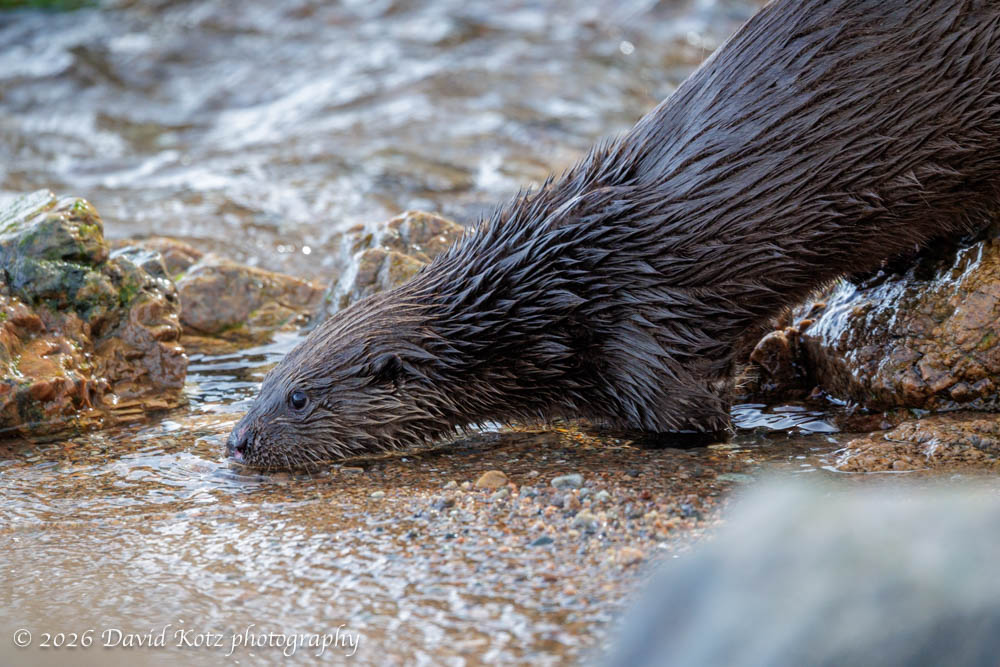
After this lucky encounter we debated whether he was a river otter or a sea otter. He was too long and skinny to be a sea otter, I thought. We later confirmed that, yes, he is a river otter: specifically, a Shetland otter – a subtype of Eurasian Otter. They are known to sometimes live near the shore and hunt in the sea shallows as well as terrestrial streams. As that website notes, their “markings make it possible to identify and recognise individuals;” indeed, if you look closely at my photographs, you can see pale splotches on his face and chin, no doubt unique to him.
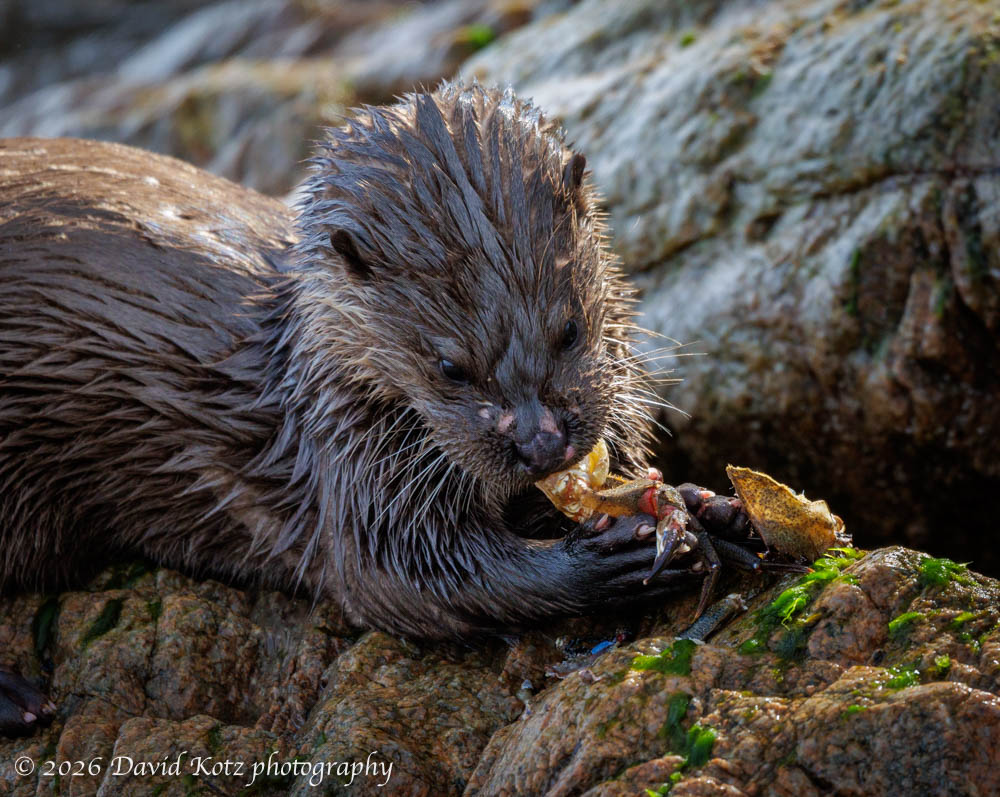
Also as that website notes, “Crab are very low in nutritional value so adult otters rarely bother with them. Cubs on the other hand have yet to figure that out. It’s usually the first thing they learn to catch themselves.” Thus, our otter was likely a juvenile (cub)!
I encourage you to view the other photos in the gallery, and you really must watch the video, linked below for convenience.


One thought on “Shetland Otter”