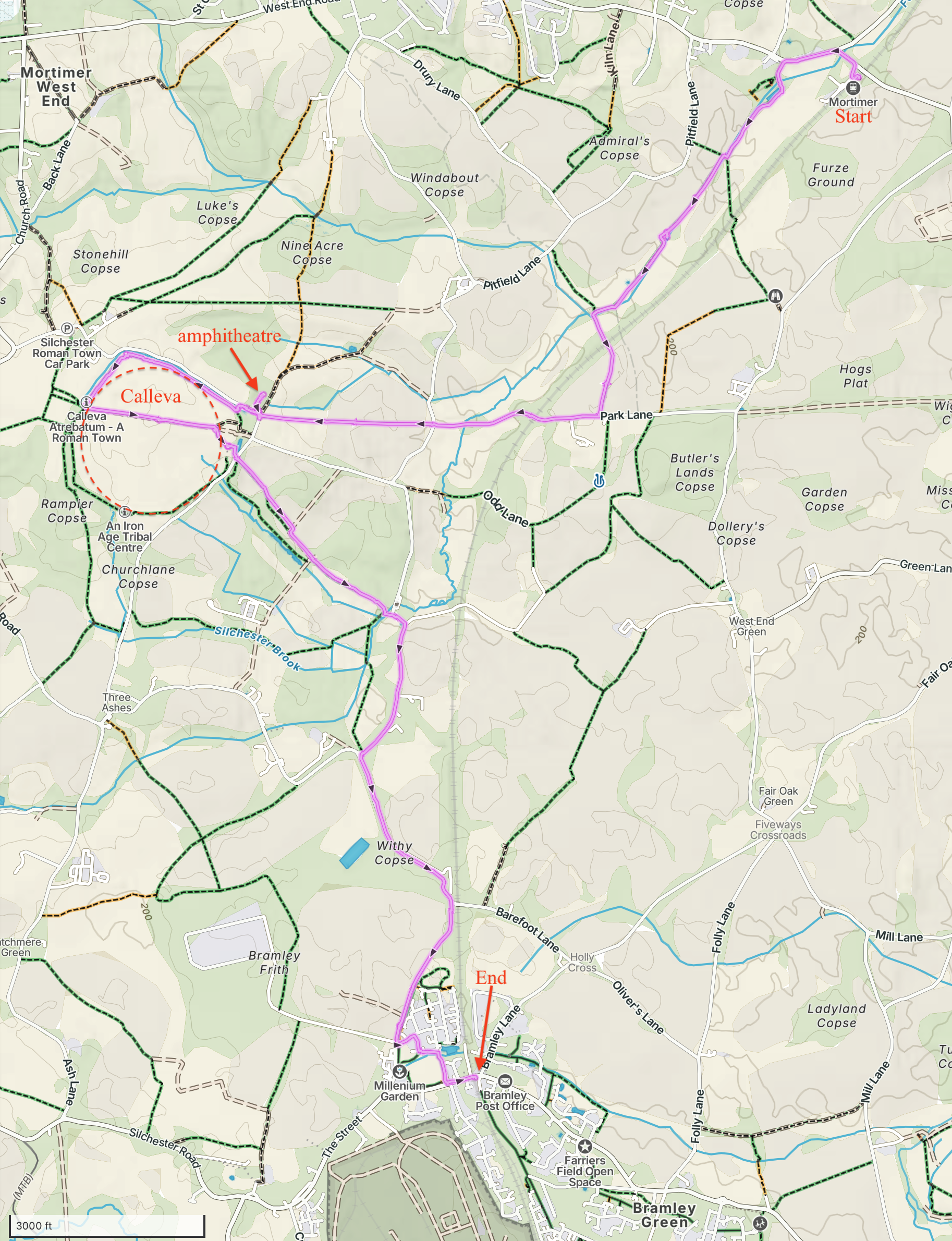
Another sunny day called for another excursion outside London, for a walk through the beautiful English countryside. I hopped off the train in tiny Mortimer, which is little more than a train depo, a church, a pub selling Indian cuisine, and a few houses. Soon I was traversing fields of wheat, crossing pastures with grazing cows, and following a lazy stream across the flat terrain. I tried to imagine what this landscape looked like two thousand years ago, when the Romans arrived and built an amphitheater. I was about to find out.
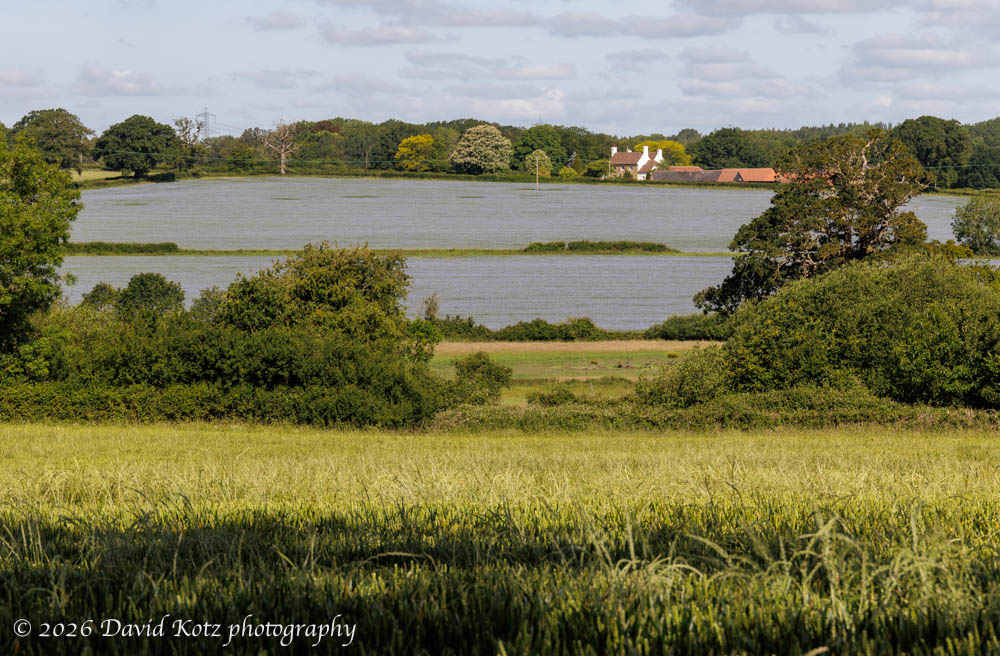
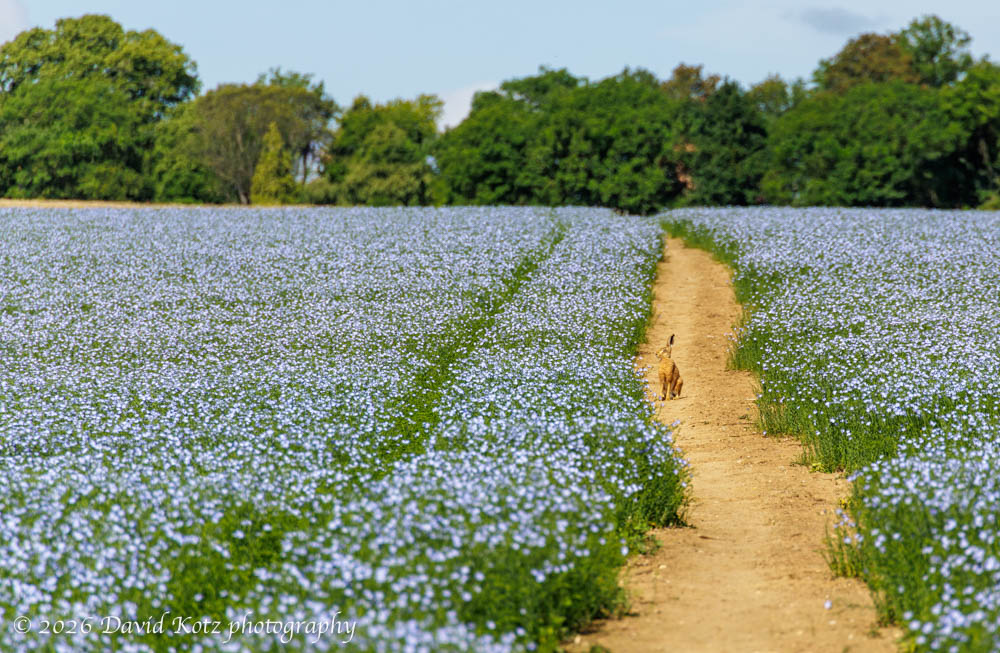
First, though, the route passed through some immensely pretty country. At a distance, above, some fields almost look like water. When I arrived to find a vast field of common flax, in full bloom, a hare was standing sentry. (Fun fact: hares were introduced to the British Isles by the Romans!) I had a lot of fun photographing this field; see the gallery.
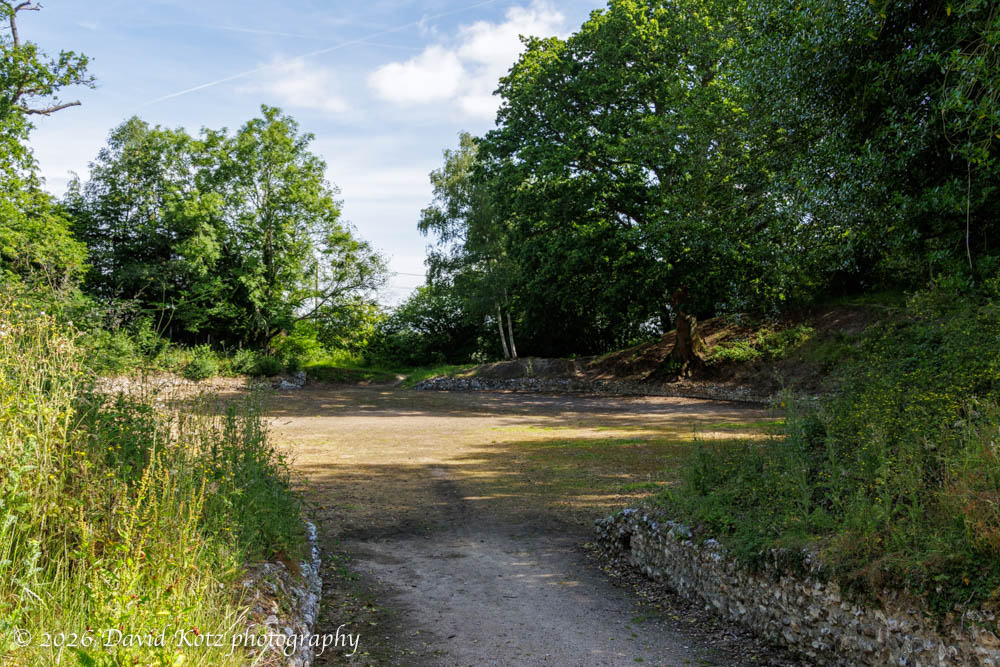
Eventually I reached the site of the amphitheater, below. [See my video panorama.] Originally built around 55 CE as an earthen and timber structure, it was rebuilt in stone some 200 years later. “At its peak, the Roman amphitheatre would have housed around seven thousand spectators. Within, bear fighting, gladiator fighting, and other forms of entertainment were put on.” [Wikipedia]
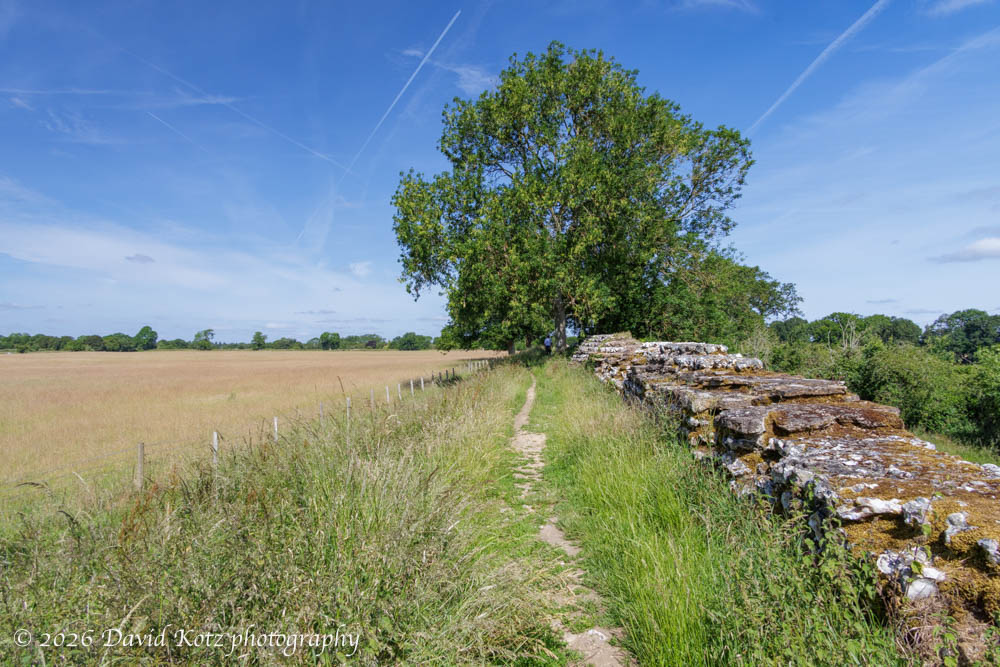
I then walked a kilometer atop massive stone walls the Romans built, in the third century, to encircle their town of Calleva. It’s astonishing to touch stones placed into a wall by a Roman nearly two thousand years ago!
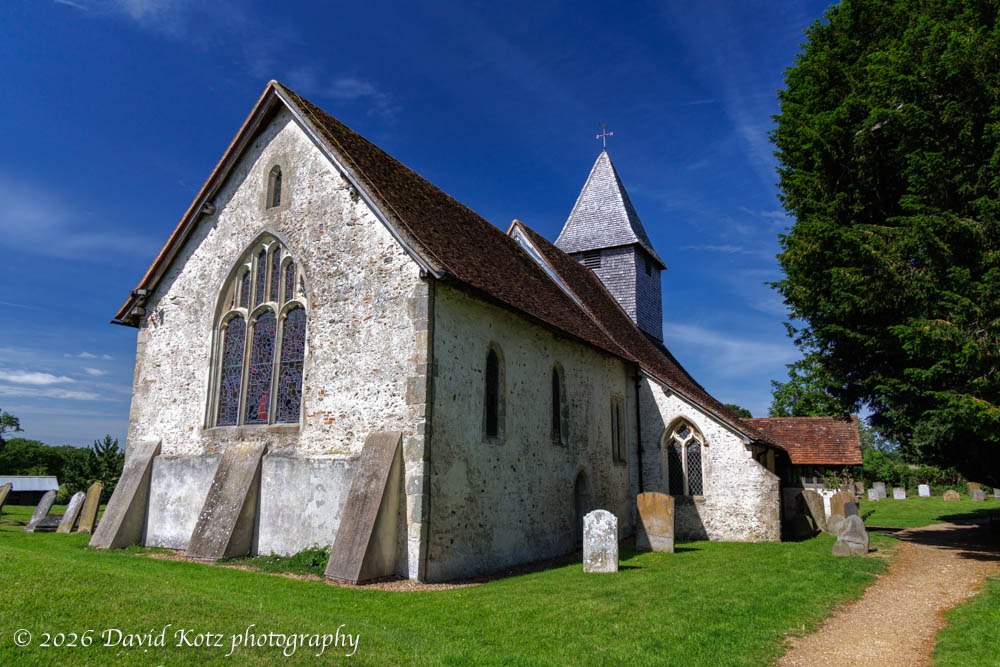
Finally, after passing through more fields, the route passes St. Mary’s Cathedral, still active after 900 years. As I passed the entry, I could hear the Sunday service underway.
Wow. Passing a 900-year-old church, an 1,800-year-old wall, and a two-thousand-year-old amphitheater, really puts modern life into perspective. Be sure to view the photo gallery for more scenery, and information about the Roman town of Calleva Atrebatum, a major crossroads.
Hike stats: my 38th consecutive weekend hiking!
Distance: 6.44 miles (10.4km)
Time: 2h23m
Gain: 215 feet (66m)
GaiaGPS track