Local wildlife remains busy, throughout the winter.
I’ve been pleased by the overwhelming response to my “Best of 2024” summary video, which seems to have brought enjoyment to many an armchair wildlife fan. Thanks for sharing your feedback! I enjoy sharing the videos from my wildlife camera, and I enjoy even more the opportunity to spend time in the outdoors, off trail, wandering through a local forest with an eye and ear tuned to the signs and sounds of nature. Read on to see January’s new videos!
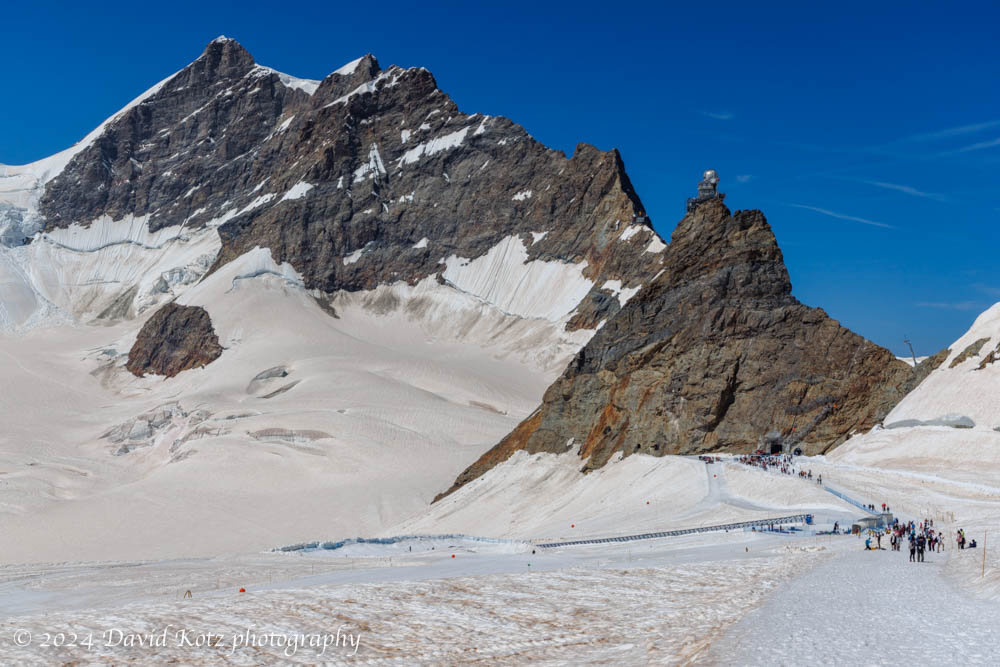
A morning visit to the highest train station in Europe – and a stroll across the snowfields at 12,000′.
On our fourth day in Grindelwald we took two hikes. We spent the morning visiting Jungfraujoch, which (despite its intensely touristy nature) is an incredible place to visit. It is the highest train station in Europe, serving a structure that perches on a pinnacle at 3571m (11,716′) above sea level, adjacent to the snowfields surrounding the 4000m Alpine mountains of Eiger, Mönch, and Jungfrau. In this post I share a few impressions – and a gallery of photos of our walk across the snowfield to the hut at Mönchsjochütte, on an astonishingly gorgeous day.
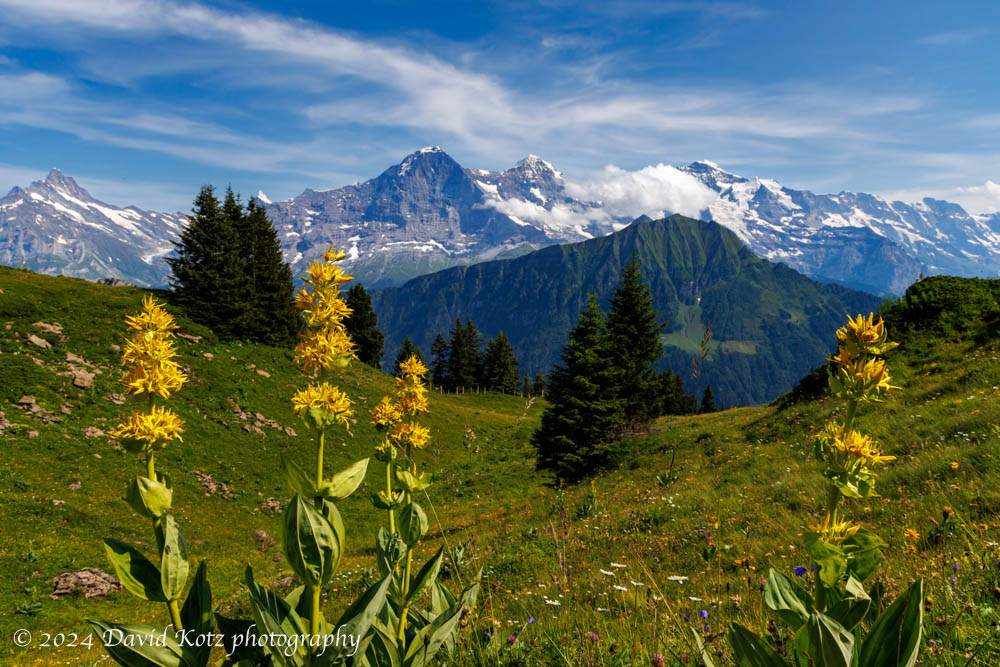
On the third day of our week in Grindelwald we decided to hike one of the most classic routes in the area, from Schynige Platte to First – although in the opposite direction. My hike there in 2019 was one of the most moving hikes I’ve ever experienced, as the Alps emerged out of an undercast sky like so many islands in an endless sea. Today, I was thrilled to share it with friends!
Today, we hiked from First (reached by gondola from downtown Grindelwald) to Schynige Platte (reached by a historic cog railway that climbs into the mountains from a valley close to Interlochen). The weather was perfect, so we were treated to a day full of stunning vistas as we hiked the high country above Grindelwald, over the pointy peak of Faulhorn (with lunch at its summit hotel!), along the rocky ridgeline, through alpine meadows brimming with wildflowers, across a couple of stubborn snowfields, and past another hut at Männdlenen (with a stop for apfel strudel, of course!). Read on, and check out the gallery.
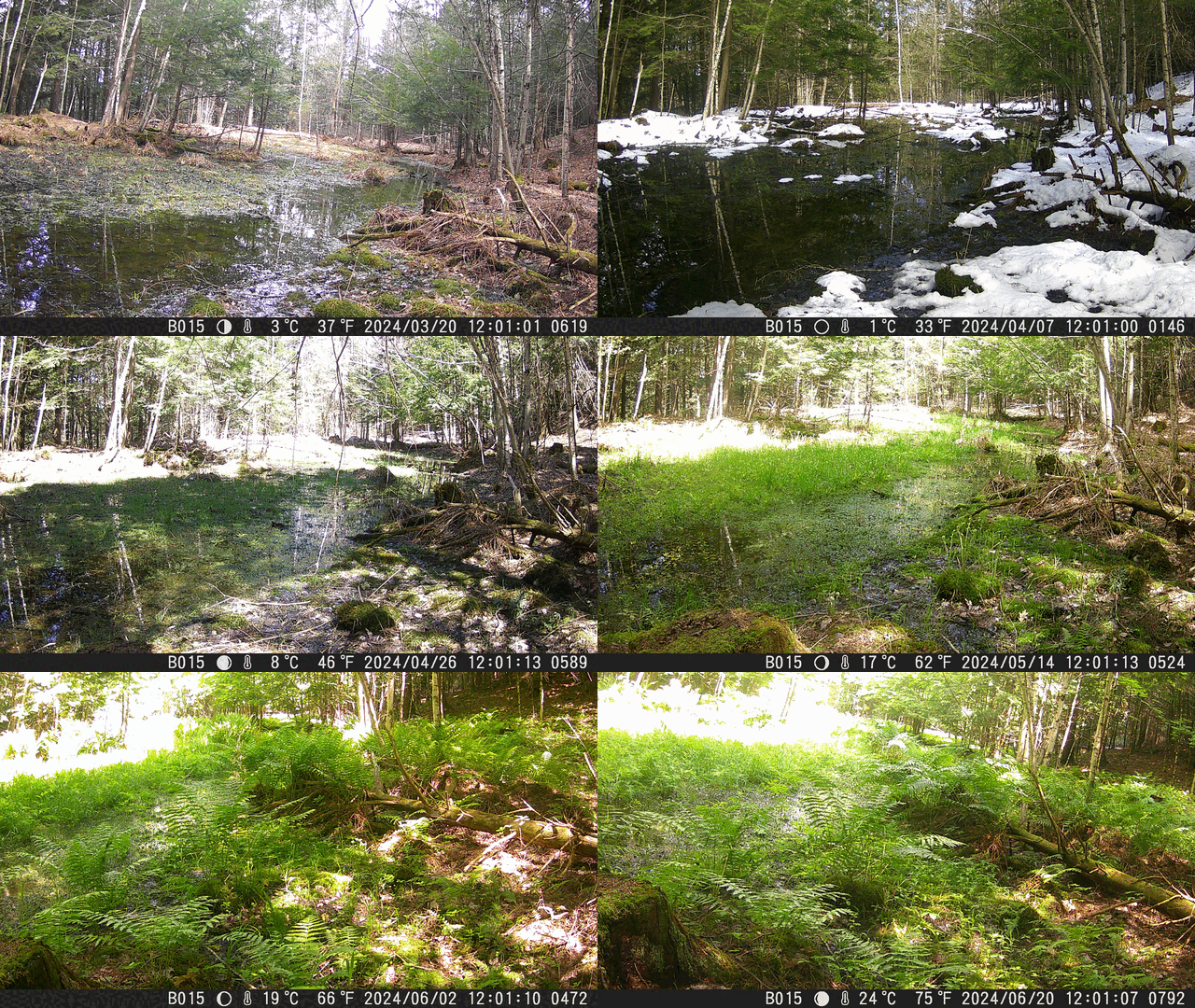
As regular readers know, I have placed several wildlife cameras in a forest near home, and have captured many enjoyable videos of wildlife like deer, bear, fox, coyote, bobcat, turkey, and more. The same cameras can be set to capture photos on a regular schedule, which can later be stitched into a timelapse video. Back in March, a few days before the spring equinox, I placed a camera at the edge of what I knew to be a vernal pool; this month, a few days after the summer solstice, I removed the camera. The camera snapped an image every five minutes from sunrise to sunset, resulting in 14,697 images. Watch the pool evolve from a snowy landscape into a lush fern-filled glade. Watch the heavy snow of March 23 lay its burden on the branches, and then watch those branches relax on March 23 and 25; watch the pool freeze and then re-thaw; watch the April 4th snowstorm bury the pool once again; watch snow melt and the grasses stretch toward the April sun; watch the ferns unfurl into the May sunshine. Below is an abbreviated timelapse, one photo per day at noon. See the full-res noon-time video (1 minute), and the full-length video (10 minutes). If you watch very, very closely, you might see a animal or two.
Photographing one of the most iconic mountain scenes in North America.
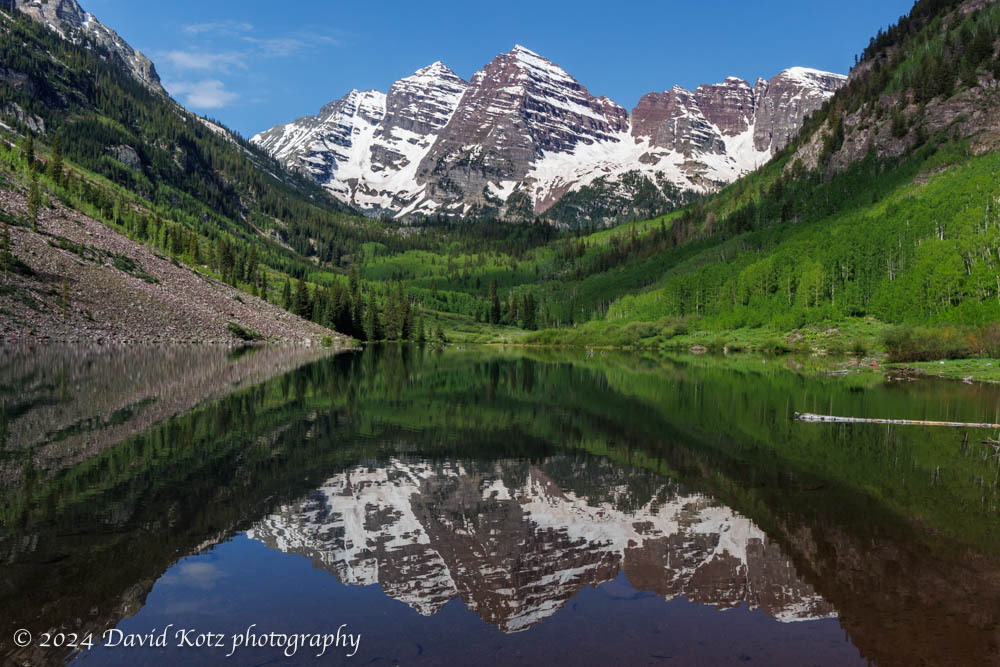
This being my first visit to Aspen, I spent the past few months asking friends and colleagues where I should plan to hike. Although there were many great suggestions, I had only one day I could fully allocate to hiking. From my research, it was eminently clear that the Maroon Bells are a must-see destination. Fortunately, they are easy to reach from Aspen, with a free city bus from Aspen town over to the base lodge of the Aspen Highlands ski area – which in summer serves as the base for the shuttle bus up the Maroon Creek valley to Maroon Lake and its trailhead. Read on and be sure to visit the photo gallery!
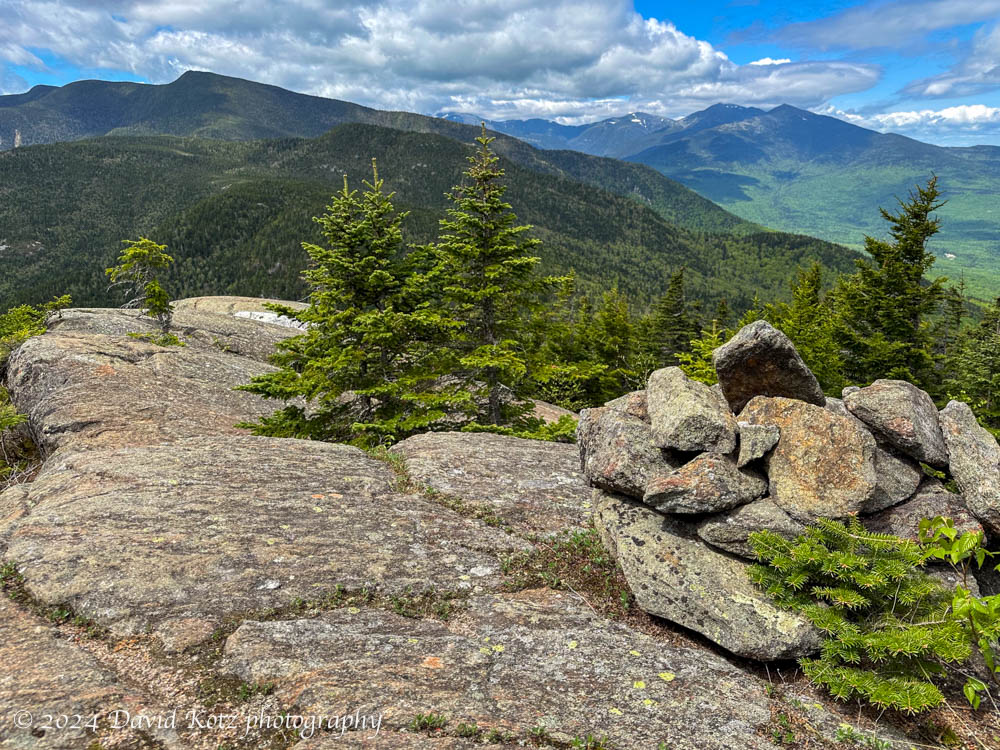
Every year I am always a bit disappointed when winter-hiking season comes to an end, wishing I’d managed to find more opportunities to get out. But then, summer hiking season begins and it’s always exciting to see again just how beautiful the White Mountains can be in summer. This weekend – Memorial Day weekend – is sort of the unofficial start of summer for hiking, biking, boating, and more. So I set out to find a peak to climb: something I’d not visited in a long while, and hopefully not attracting hordes of Memorial Day tourists. I settled on Mount Moriah, in the Carter-Moriah range just across the valley from the Presidential Range. The last time I’d been over this peak was (gasp) the fall of 1983, nearly forty-one years earlier. Today, I took a different route and experienced one of the most beautiful trails of the Whites. Read on!
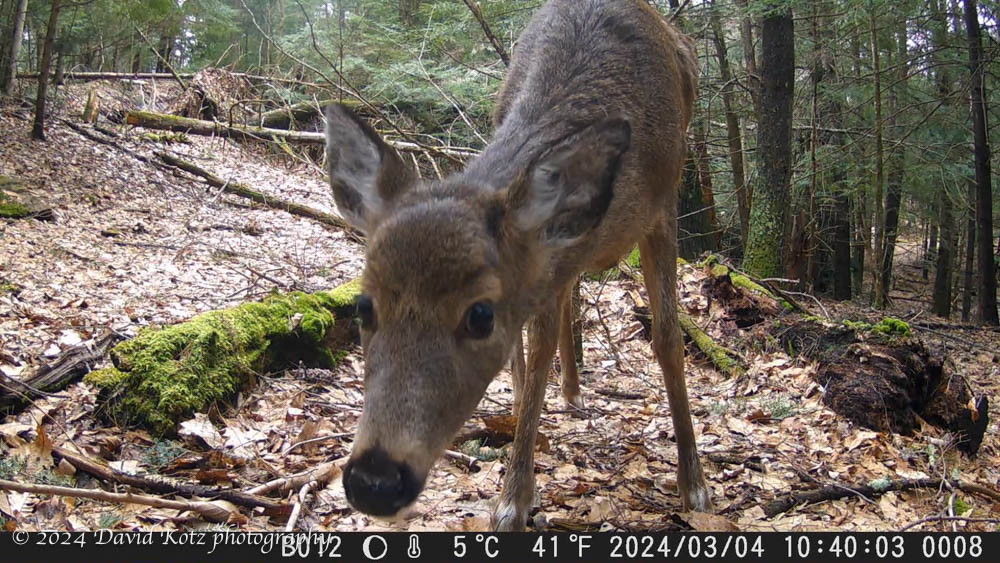
March was unusually warm – and my patch of woods lost all their snow even before the month began. But snow fell again, at least twice, and so my wildlife videos include some scenes with snow, and some without. Two new critters appear this month for the first time – a tiny (but very busy!) mouse, and a chipmunk. (Both on the same log! I share only a little video of each.)
This month’s video (less than four minutes) ends in a cliffhanger: does the fox crawl into the skunk’s burrow? and if so, what happened next?
Wildlife camera captures from March 2024, in the forests of Lyme NH.
We were fortunate to be able to spend the afternoon today visiting some colleagues at a lakeside home in northeastern Vermont – where the skies were clear, the sun was warm, and last week’s snow was quickly thinning. Shortly after 2pm we settled into lawn chairs, pulled out our solar-eclipse safety glasses, and enjoyed watching the moon take over the sun… read on!
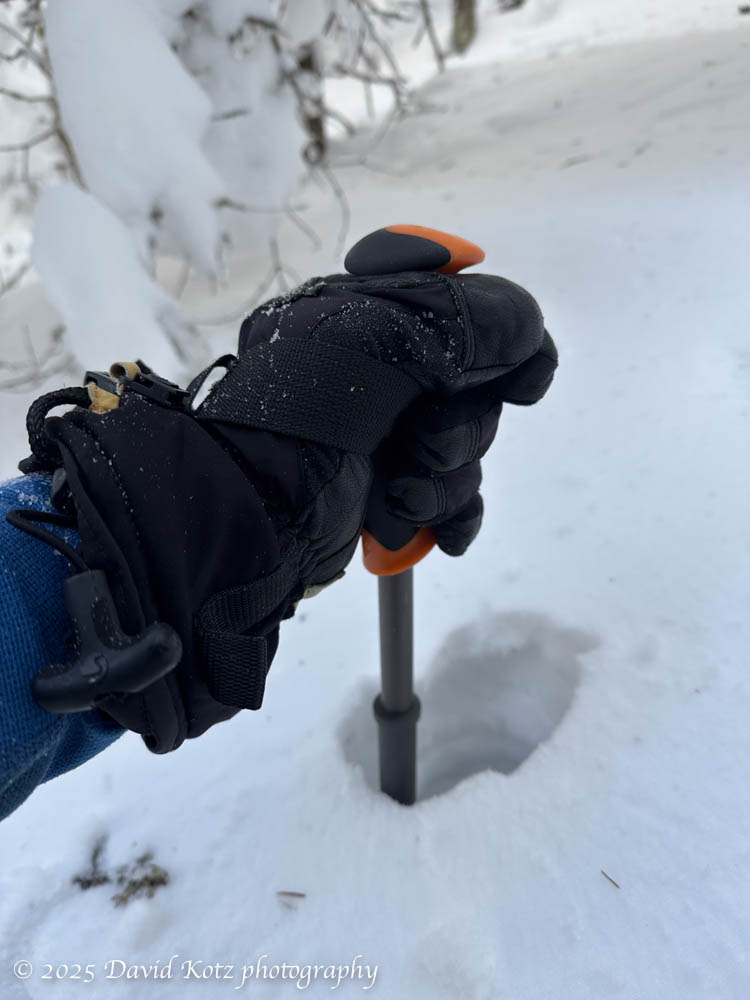
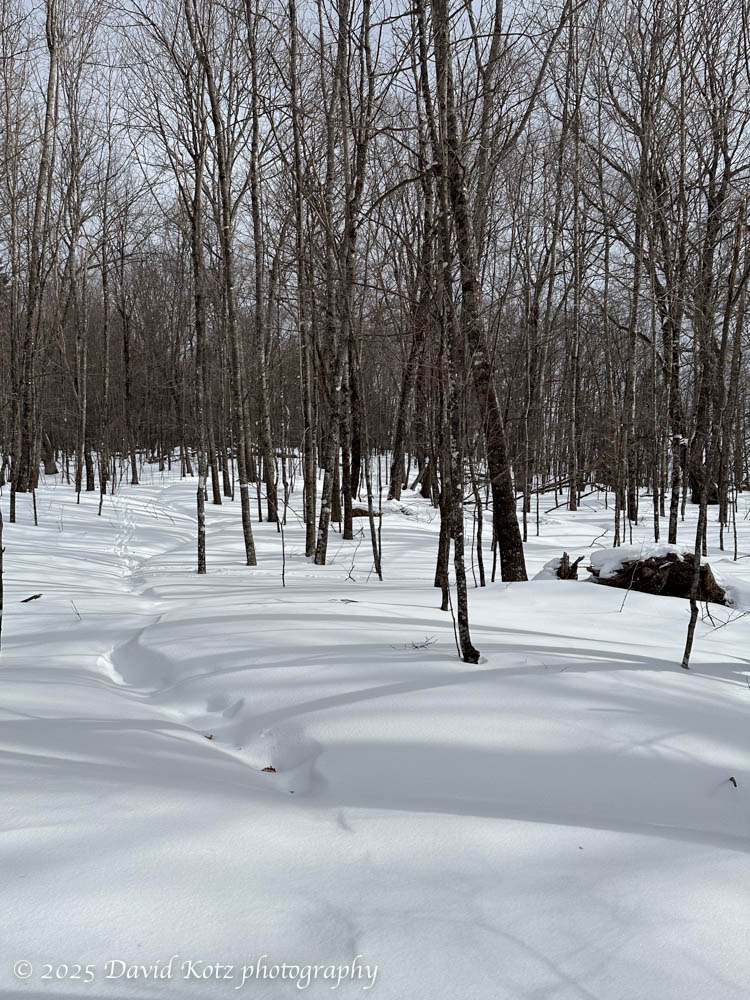
I had already started putting away my winter gear – assuming that, it being April, my winter adventures were at an end. I should know better, because New Hampshire often plays tricks with spring. Three days ago, in the week of April Fools, New England was hit with a powerful nor’easter storm that brought us 40 hours of snowfall. Here at home the snow was wet spring snow – delivering a lot of moisture but melting so quickly that we never accumulated more than 3-6″ of depth. In the three warm days hence, much of that snow has melted, or will be gone soon.
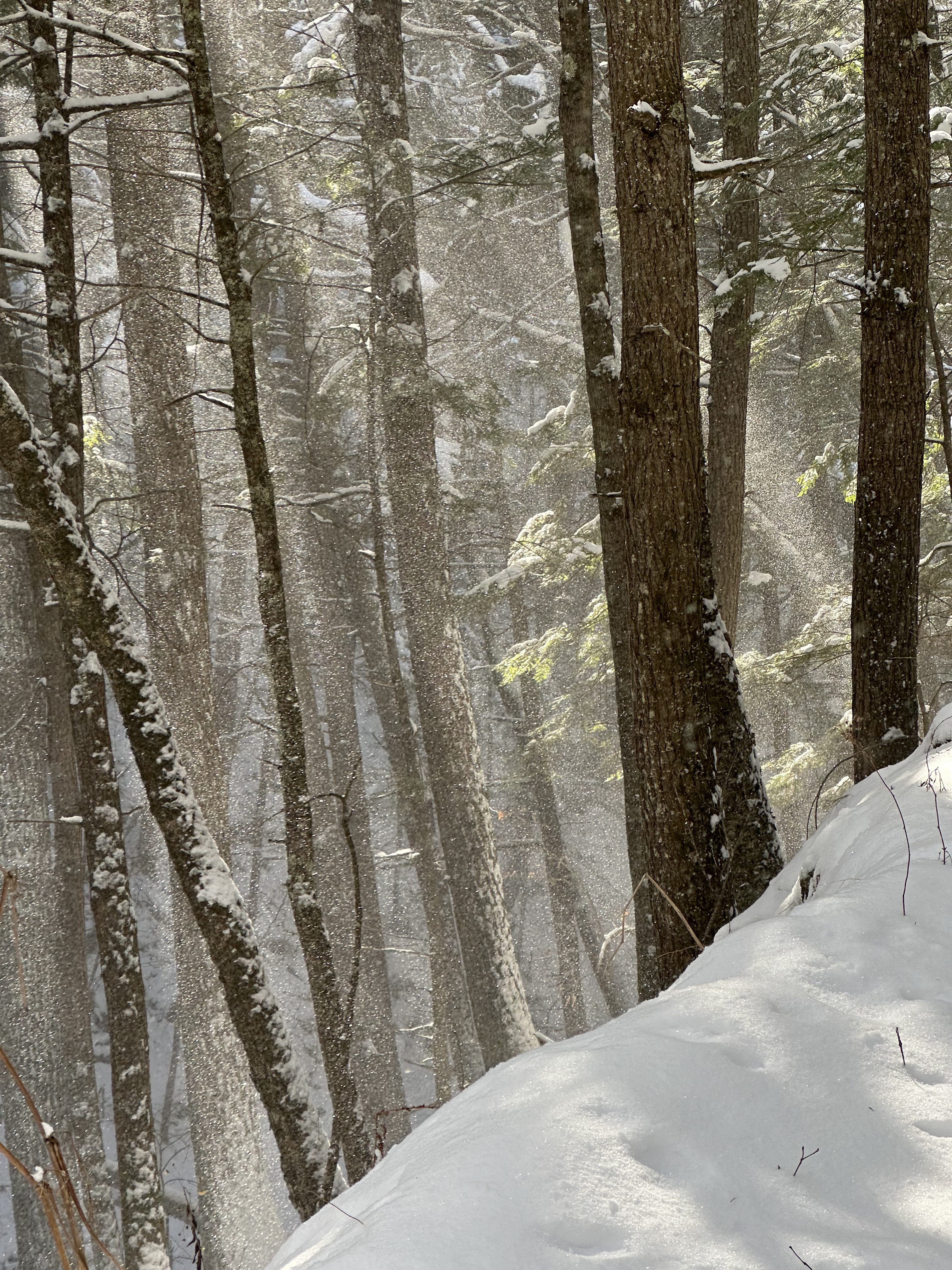
I knew the story would be very different at altitude: in the higher peaks of the White Mountains the rain would have turned to snow sooner, stayed as snow longer, and fallen as dry, fluffy powder. With the weather clearing today, I just had to get up there, up high, to play in this new powder. I was not disappointed. Read on, and check out the gallery of this winter wonderland!
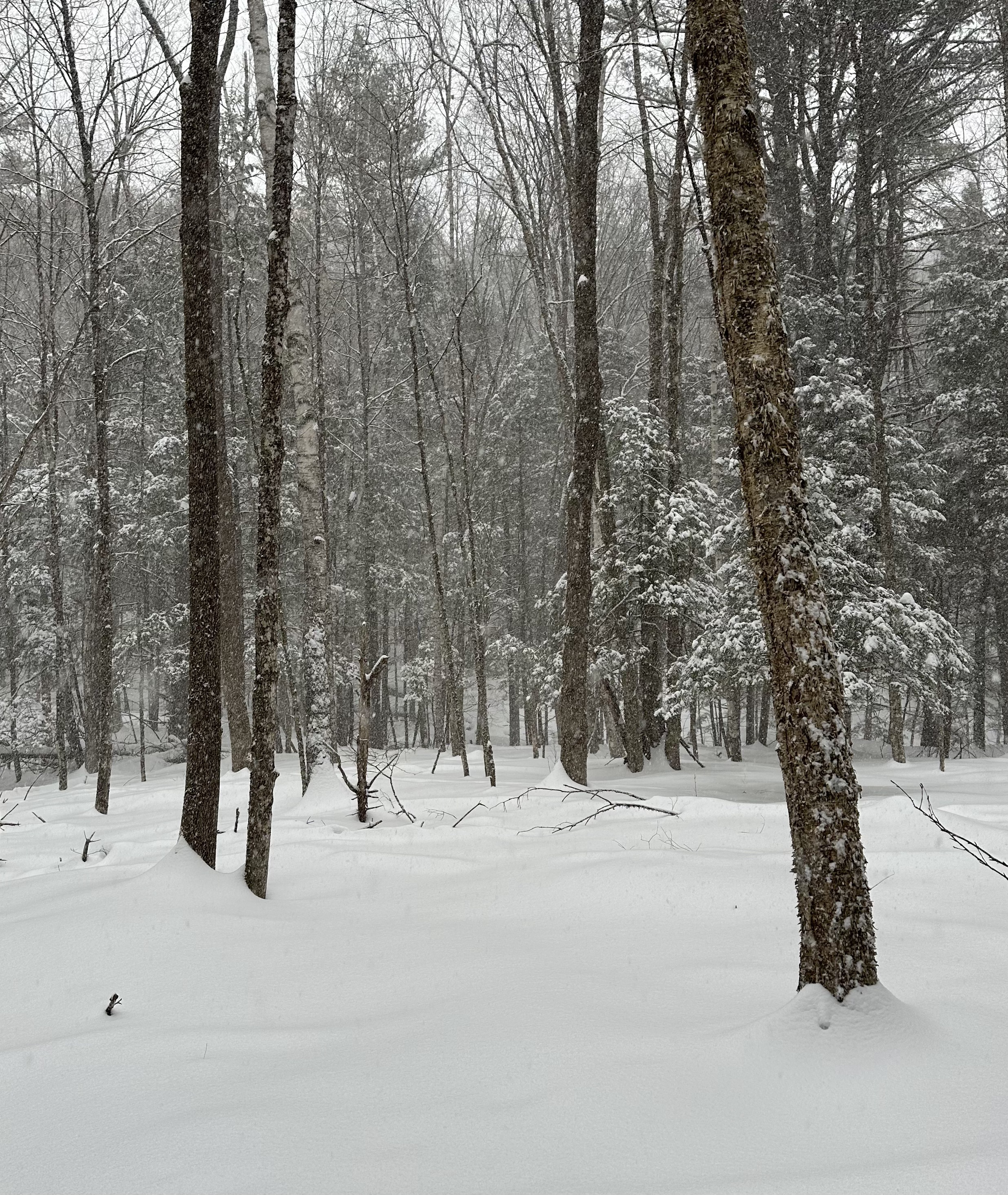
We’ve just concluded a spring snowstorm – in April. It was unusually large and long, lasting over 40 hours and dumping 3-6″ in our area… but possibly several feet at higher elevation. These spring storms can often bring the greatest snowfall because they result from the collision of warm, moist air arriving from the south, and cold, dry air from the north. They bring sticky, wet snow, which coats everything beautifully with fat snowflakes – but can also bring down trees and branches, causing power outages. We lost power this morning, and I went out to photograph the beauty; see the gallery!