Christmas lights

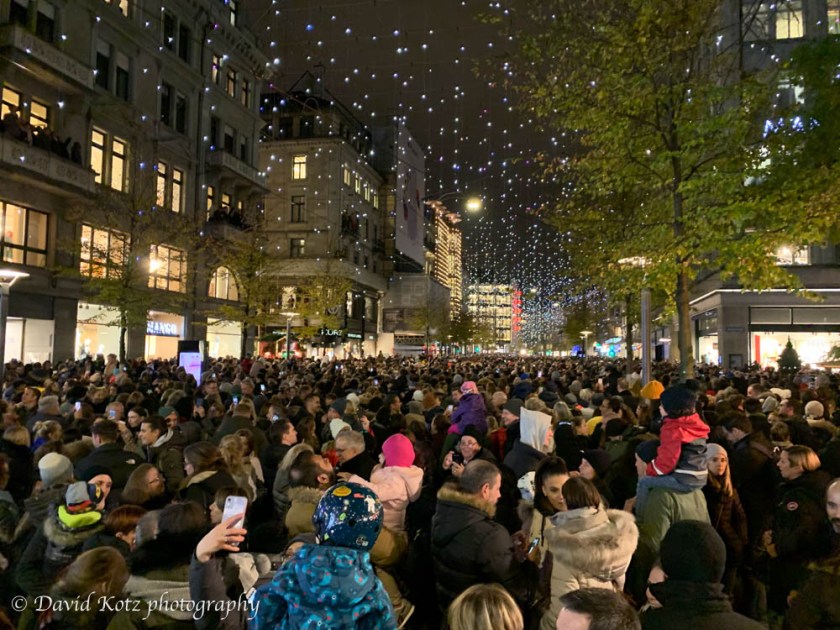
I went to watch the city of Zurich celebrate the onset of the Christmas season.

At this particular time on this particular day, the city of Zürich turns on all its Christmas lights and the Christmas markets officially open.  Throngs of people turned out for this much-anticipated event, packed shoulder-to-shoulder on Bahnhofstrasse, the central avenue. The photo below shows the moment after the lights came on, with the crowd cheering and the people in the verandas at upper left setting off confetti crackers.  The smell of heiss marroni (roasted chestnuts) and glüwein (mulled wine) wafted by, and the shops were handing out free glasses of champagne or live music indoors. A very festive evening… see the short gallery – with video!

2019-11-21-75939.jpg

Budapest

A lovely trip to Budapest and the computer-science study-abroad program at AIT.

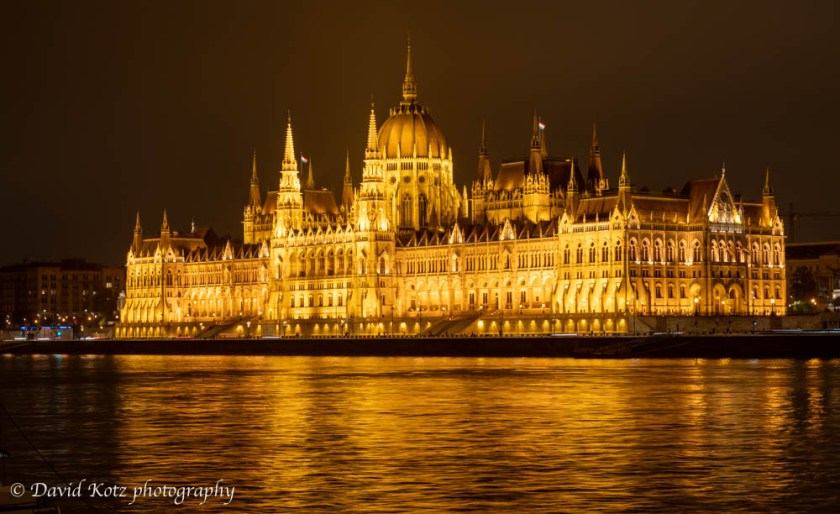
Just back from a quick but lovely trip to Budapest, Hungary.   I found it be a delightful and interesting city and hope I have a chance to return someday to explore it in more depth.  The bridges and buildings along the banks of the Danube are a UNSECO world-heritage site, and are particularly striking at night.  Read on, and check out the photo gallery.Parliament building, seen across the Danube - Budapest. Continue reading “Budapest”

Paxmontana

A lovely 48 hours at Hotel Paxmontana in a tiny village outside Luzern.

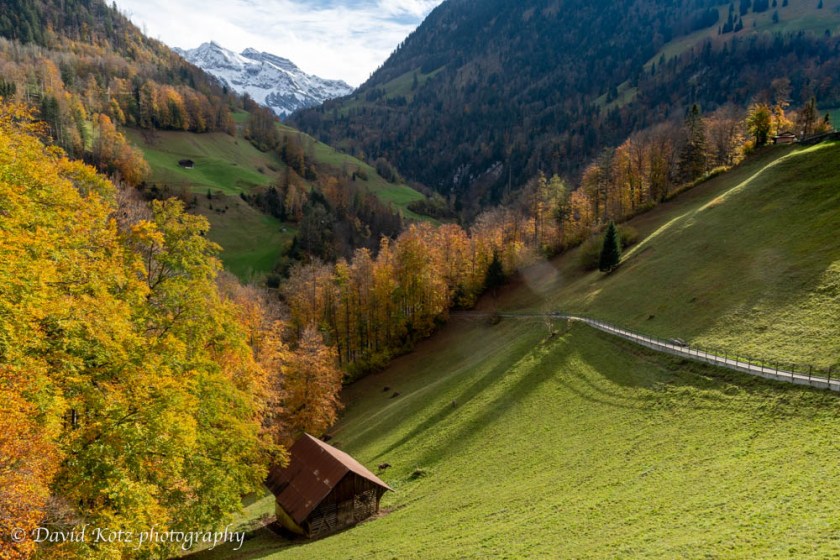
I spent about 48 hours at the lovely Hotel Paxmontana in the tiny village of Flüeli-Ranft, outside Luzern Switzerland, for a research-group retreat.  One of those grand countryside hotels, recently renovated, Paxmontana is nestled above a valley with a 180-degree views including two lakes and several snow-capped mountain ranges.  Behind the hotel is a narrow stream valley echoing with the bells of cows grazing its with hillside pastures – and the bells of several small churches that enjoy reminding everyone of the time every 30 minutes, around the clock.Paxmontana Hotel, Flueli-Ranft, Switzerland.
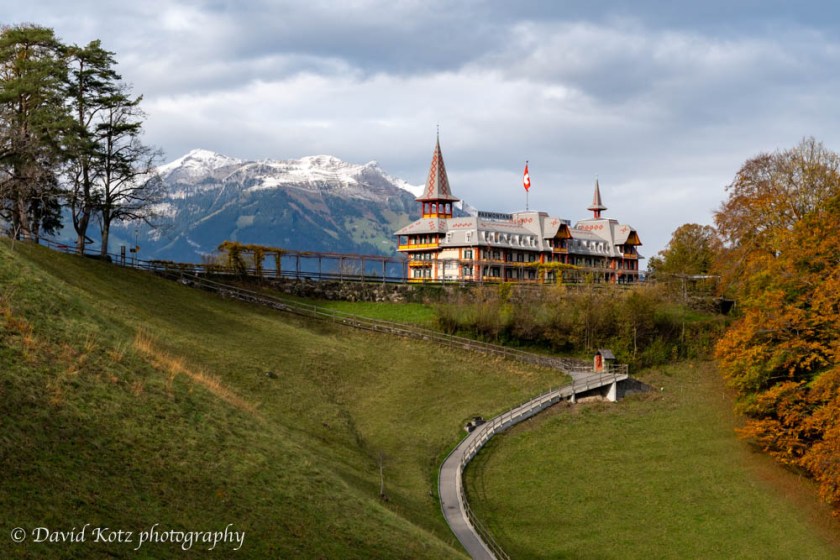
Despite our short visit, the weather and light shifted frequently – from overcast to sunny, from light drizzle to heavy snowfall – leading to opportunities to photograph the same scenery in dramatically different conditions. I attach just a couple shots here; check out the photo gallery for more.

The valley is best known as the home of Bruder Klaus, also known as Nicholas of Flüe. Born in 1417, he is the patron saint of Switzerland.  “Despite being illiterate and having limited experience with the world, he is honored among both Protestants and Catholics with the permanent national unity of Switzerland.”   He left his family to live as a hermit in this tiny valley, and (according to Wikipedia) had a “reputation for wisdom and piety” that caused many to travel from afar to seek his advice and counsel.  Soldier, farmer, hermit, ascetic, saint – interesting fellow!Pasture near the Paxmontana Hotel, Flueli-Ranft, Switzerland.
Los Cabos

A week in Mexico to attend MobiCom, and to snorkel the warm waters around Los Cabos.

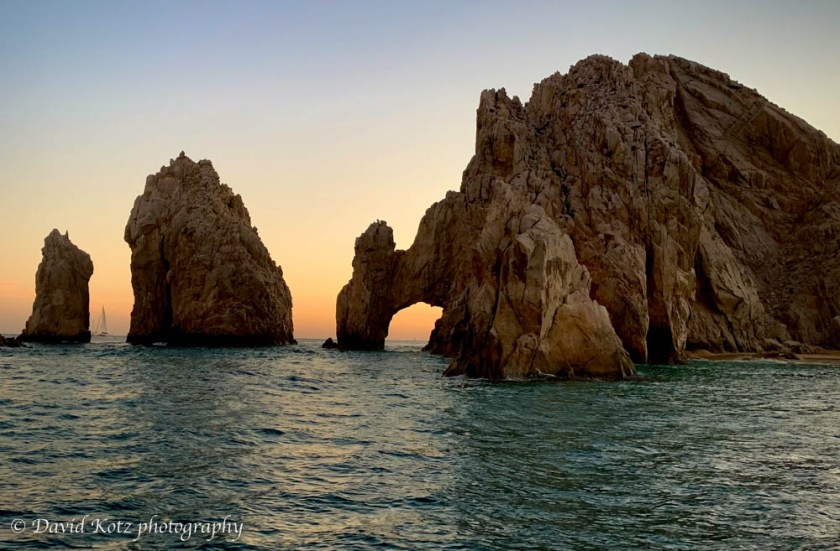
I spent a week in Los Cabos, Mexico, to attend the annual MobiCom conference.  Although the conference itself was excellent – great science, interesting colleagues, and celebrations of this conference’s 25th anniversary – I had a chance to explore some of the outdoor opportunities in the area.  Read on, and check out the photo gallery.2019-10-24-75256.jpg Continue reading “Los Cabos”

Cruise

We spent a week on a cruise ship in the Mediterranean Sea, from Malta to Sicily to Greece.

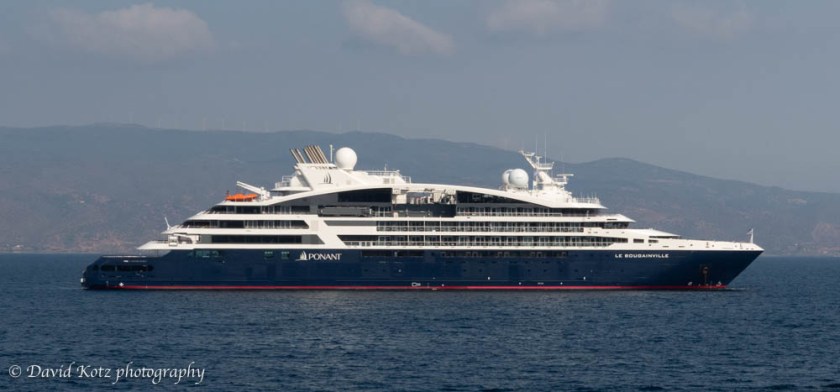
Thus concludes our cruise of the Mediterranean from Malta to Sicily and on to Greece and Athens.    We were incredibly lucky with the weather – blue-sky sunshine every day, unusually warm for October, and perfectly calm seas. On board our ship Le Bougainville, which is only five months old, the staff was friendly, the accommodations comfortable, and the food fabulous.  (French chef; need I say more?)

The highlight of our time on-board, though, was a series of lectures and panel discussions on the topic of “World Affairs”, organized by Washington & Lee University’s office of lifelong learning.  (Although we were part of the W&L group, we comprised only half of the passengers; they were also welcome at the events.)   The speakers included Fareed Zakaria from CNN, John McLaughlin retired from CIA, Daniel Mendelsohn from Bard College, and Provost Marc Conner from Washington & Lee.  Every lecture and panel was a fascinating reflection on world affairs from the time of the ancient Greeks and Persians to the dramatic news of this week (notably, involving Washington, Ukraine, and Syria).

See the photo gallery for a few photos of the ship, the gallery of “favorite photos” for the entire cruise, and the blog posting from each stop on our cruise:

2019-10-17-74102.jpg

Athens

After our cruise, we had a day to visit some of the monuments of ancient Greece – and to explore the streets of old Athens.

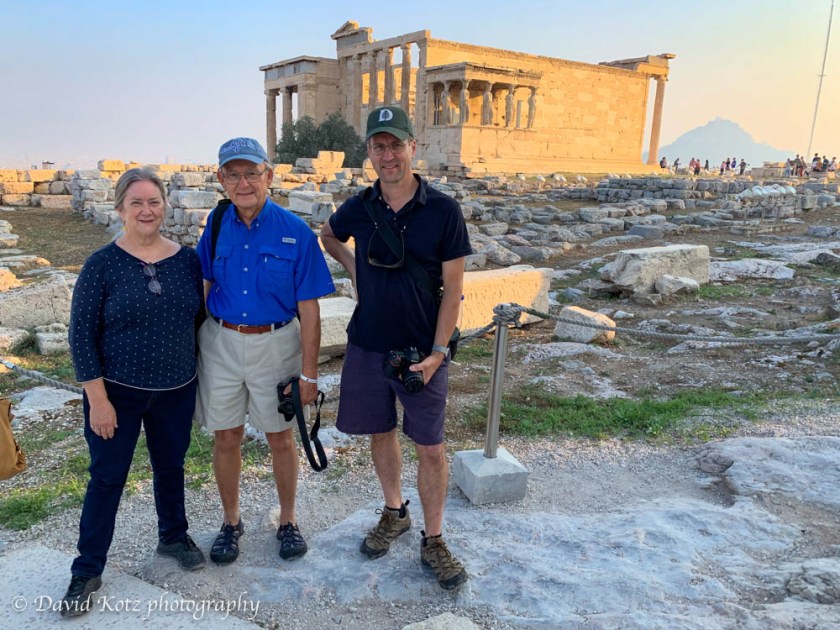
Our cruise ended in Athens on Friday morning, allowing us Friday afternoon and Saturday morning to explore Athens itself.  Given the limited time available, and it being my first visit to Athens, we focused our attention on the Acropolis and its accompanying museum.  Read on and check out the photo gallery.
2019-10-19-74559.jpg Continue reading “Athens”

Hydra

A brief visit to the lovely island town of Hydra, on a beautiful day.

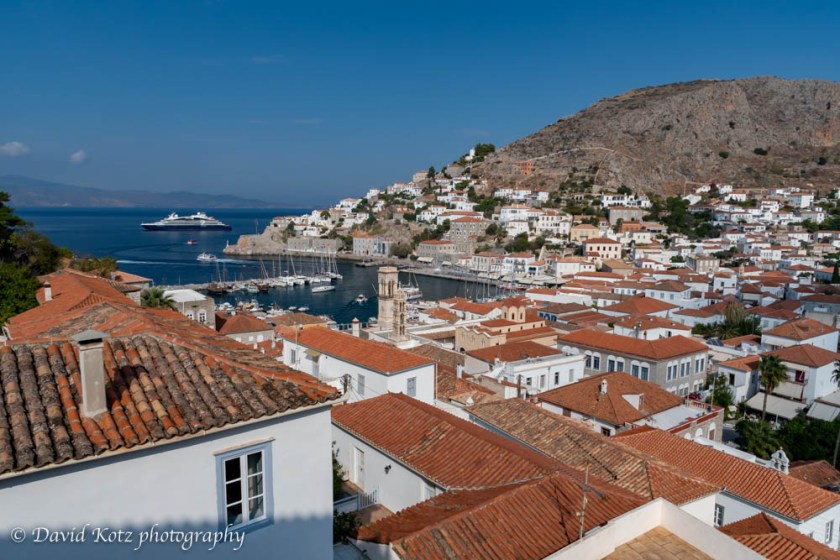
We pulled into the harbor of Hydra, a little town on a small island in the Aegean Sea, not far from Athens.  Once an important port for shipping and, during the war for Greek independence, for the military, Hydra is now entirely driven by tourism.  Nearly all of its 1,900 residents live in the hillside village surrounding the bay, navigating the narrow streets, stairs, and alleys on foot.  “Rubbish trucks are the only motor vehicles on the island, since by law, cars and motorcycles are not allowed. Horses, mules and donkeys, and water taxis provide public transportation” [Wikipedia].

Although our guided tour included the maritime museum and the preserved mansion of an 19th-century businessman, I found it most interesting to wander the streets and drink in the sights and smells of this quaint little town.  Below you can see about half the town, and, in the bay, our ship. Check out the photo gallery for more.

2019-10-17-74307.jpg

Mycenae

A fascinating visit to the ancient Greek site of Mycenae, built over three thousand years ago.

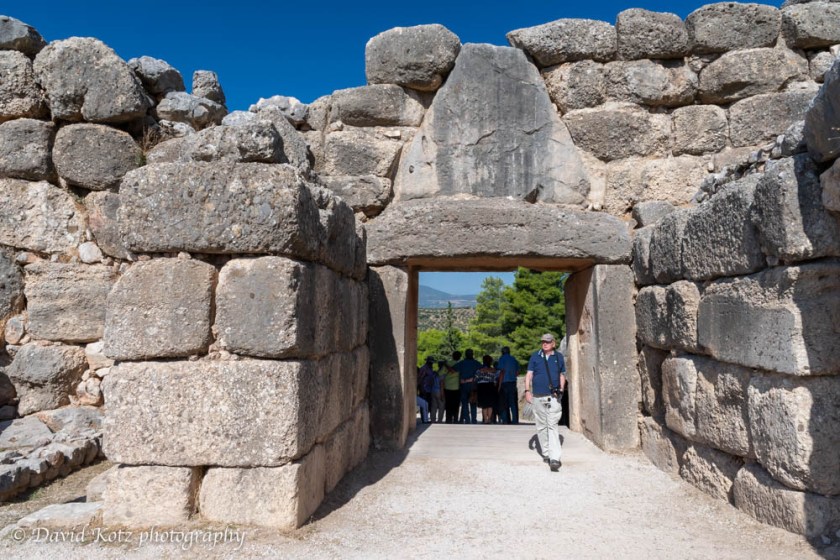
Our final visit on the Peloponnese peninsula of Greece was to Mycenae, the site of a grand palace and fortification built over three thousand years ago.  I find it astonishing that these structures and graves were preserved, buried for millennia, until modern excavations just a couple hundred years ago.  It has impressive scale and scope, remarkably with several major structures still intact, notably the Lions’ Gate entrance and tholos/treasury.  Read on, and check out the photo gallery.

2019-10-16-73976.jpg Continue reading “Mycenae”

Epidaurus

From the port of Nafplion we visited the ancient Greek theater and healing village of Epidaurus.

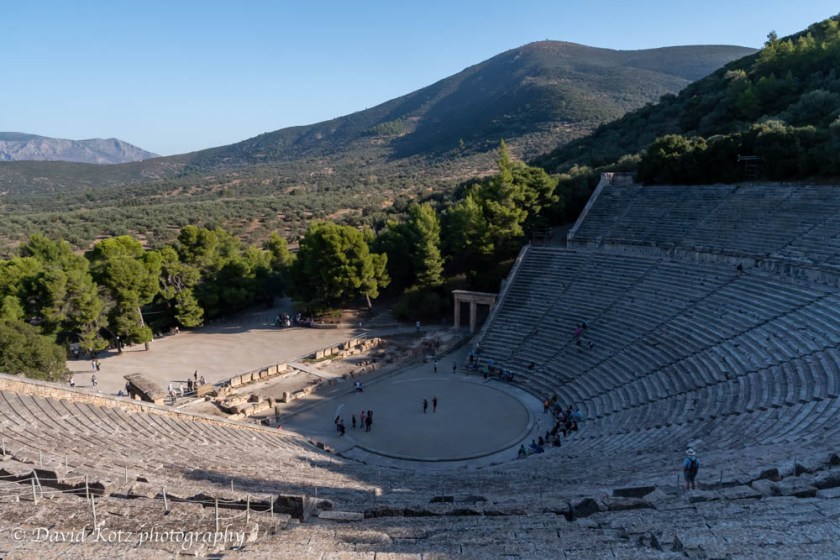
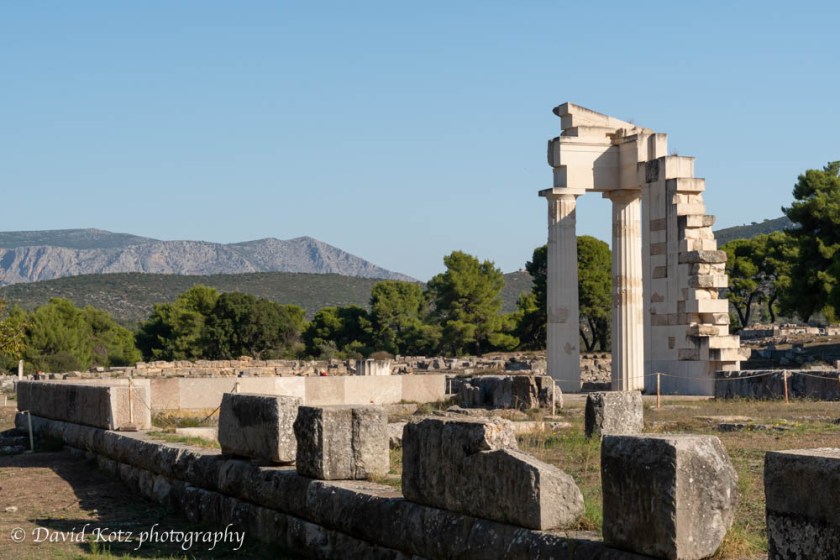
The Peloponnese, a major peninsula that forms the southern portion of Greece, is the site of many prehistoric and ancient Greek archaeological sites.  Today we toured Epidaurus, the site of an incredibly large and intact Greek theater (still used for performances even today), and a small village of temples and lodgings used as a site for healing.2019-10-16-73904.jpg

The theater seats 14,000 people, and is renowned for its excellent acoustics.   Modern measurements indicate “that the astonishing acoustic properties may be the result of the advanced design: the rows of limestone seats filter out low-frequency sounds, such as the murmur of the crowd, and also amplify the high-frequency sounds of the stage.” [Wikipedia]

The rest of the complex included temples and lodgings for pilgrims who spent a night at Epidaurus; “In their dreams, the god himself would advise them what they had to do to regain their health” [Wikipedia].  There are still stone slabs on which ancient pilgrims have inscribed testimonials about the miraculous healing of their conditions.2019-10-16-73933.jpg

Overall, a fascinating site. Check out the photo gallery for more.

Corinth Canal

An hour-long transit of the narrow Corinth Canal – barely wider than our own ship.

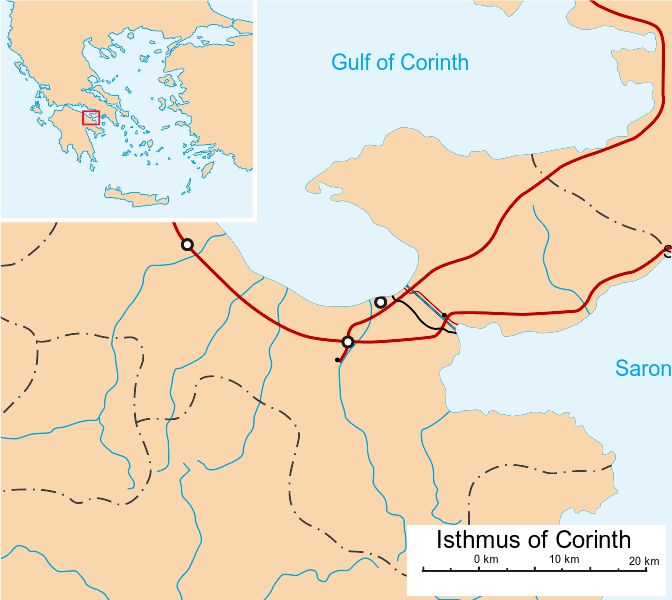
The Peloponnese is a vast peninsula that forms the southern portion of Greece, and is attached to the mainland by the incredibly thin isthmus of Corinth (see map below).  The Romans once built a wall across the isthmus to protect the peninsula from the mainland.

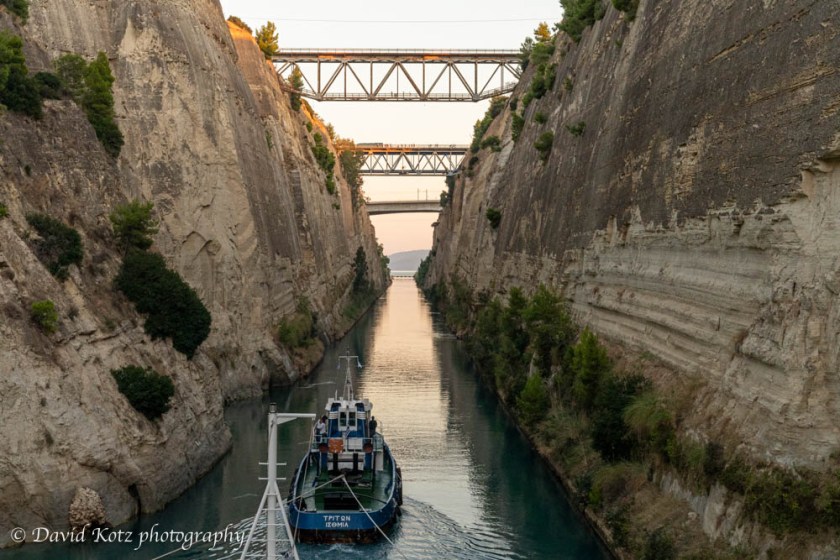
This narrow strip of land separates the Ionean Sea from the Aegean Sea, and forces ships to sail around the entire peninsula to reach one from the other, a 700-kilometer (430 mile) journey. Even in antiquity, sailors dreamed of digging a canal to shorten the voyage – with the first attempt dating to the 7th century BC.  Finally, in 1893, a viable canal was completed [Wikipedia].  Our own ship, Le Bougainville, is nearly as wide as the canal – with just 2m to spare on either side – and is thus quite an exciting transit!  See the photo gallery.

Isthmus_of_Corinth
Map of the area, and (inset) of Greece, from Wikipedia.

2019-10-15-73782.jpg