The spruce-grouse hen, startled from her nesting site, squabbled noisily across the trail as I approached. I was equally startled, as I hiked up the Appalachian Trail on a quiet weekend morning in early June. Surprisingly quiet, actually; mine was the only car in the lot at 7:30am, and I had thus far passed only one small group of hikers – southbound thru-hikers, by the looks of them. So I had been strolling easily up the trail, lost in my own thoughts, when this mother hen leapt into action and directly across the trail in front of me. Read on!
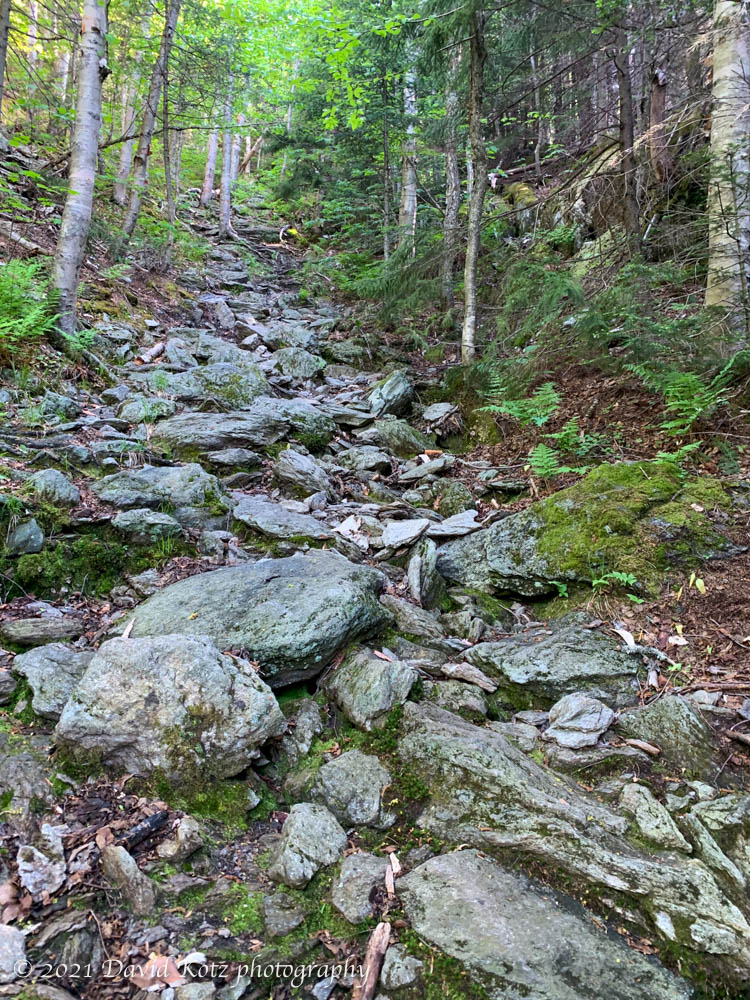
Rugged trail, straight up the fall line, on Worcester Mountain.
“It sure does look different in the winter”, said the hiker I met on this trail back in January. He had lost the trail just a couple hundred meters shy of the summit of Worcester Mountain, despite having climbed this trail “dozens” of times. After thanking him for his advice, I pressed on and experienced the most exhilarating hike of the season [read that story].
So today, a warm and muggy day in early June with the trees and shrubs almost fully leafed out for summer, and nary a snowflake left anywhere in New England, I decided to head back and see if Worcester Mountain really is “different in summer”. I got an early start, reaching the trailhead by 7:30am, but there were already three cars in the lot. Read on, to see what I found!
I’ve climbed Mount Cardigan at least a dozen times over nearly four decades… and yet my records show I have not been back since 2016. Its bald granite dome (the result of a wildfire years ago) grants visitors grand views in all directions, so it is a very popular destination for hikers young and old.
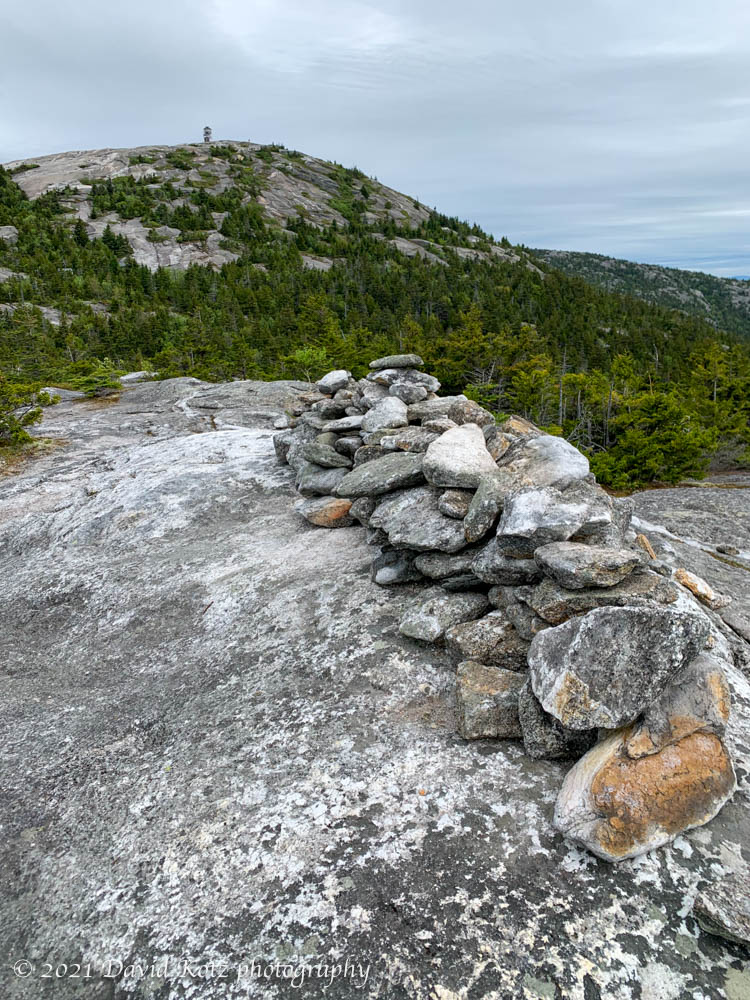
A view of Mount Cardigan from its South Peak.
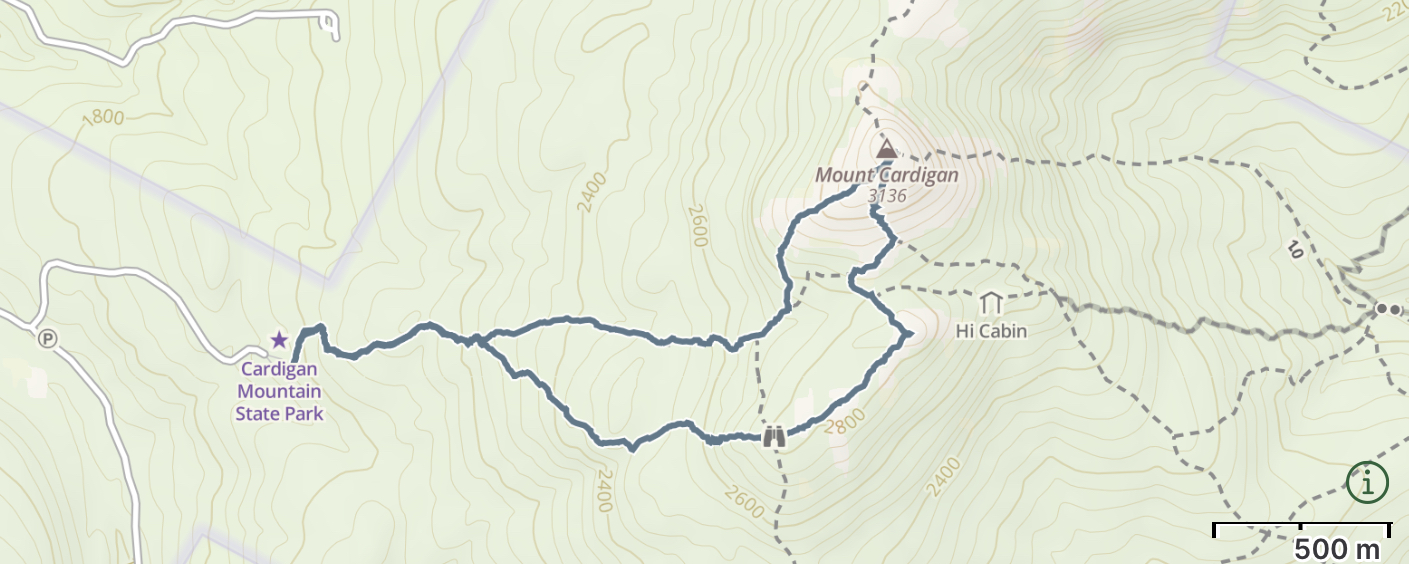
Today was a cool and windy day, as I wound my way up the familiar West Ridge Trail. I arrived early to beat the holiday-weekend crowds and the forecasted rain, and enjoyed a quiet hike through the damp woods to the windy summit.
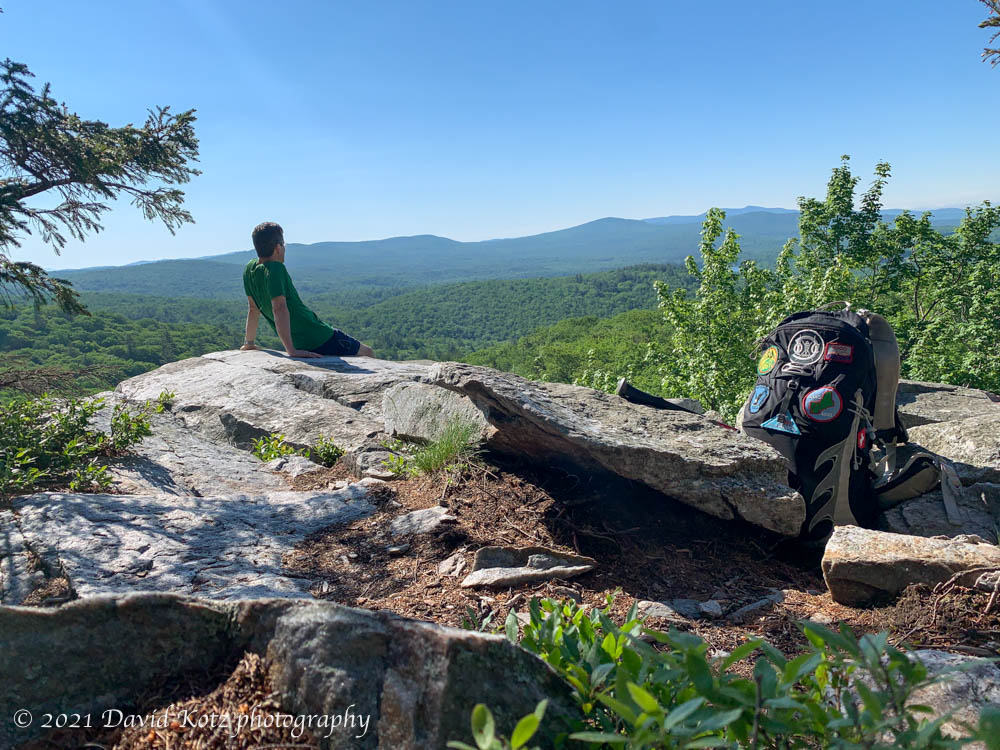
David on the summit of Mount Cardigan on a very windy day!
And windy it was! After a brief stay in the shadow of the summit firetower, I returned via the South Ridge Trail, which provided some fine views of the peak.
Check out the photo gallery, including a video from the summit.
A visit to the famous Bomber crash site on Mount Moosilauke.
On the afternoon of January 14, 1942, a Douglas B18-A bomber with a crew of seven took off from Westover Air Field, Massachussetts. Hours later, fighting darkness and bad weather on their return to base, the crew became seriously disoriented… thinking they were approaching Westover when in fact they were over central New Hampshire. Moments later, they crashed into the side of Mount Waternomee, one of the peaks on the shoulder of Mount Moosilauke. The crew scrambled out of the wreckage, but the plane caught fire and exploded. Five survived, standing in the dark in the deep snow. The story of the crash – and the mid-night mid-winter rescue – has become the stuff of legend.
More than thirty years ago, as an undergraduate we often heard rumors of the “bomber site” on Moosilauke; it was known to be difficult to find and a challenging bushwhack. I’ve been meaning to visit the site ever since. Today I finally made it. Read on…
Today was my second visit to a vernal pool in three days. These small empheral pools appear for only a few weeks in the spring (hence the name), typically in shallow depressions that capture snowmelt and early spring rains. They serve as an important breeding ground for frogs, salamanders, and other amphibians… and then disappear for the summer.
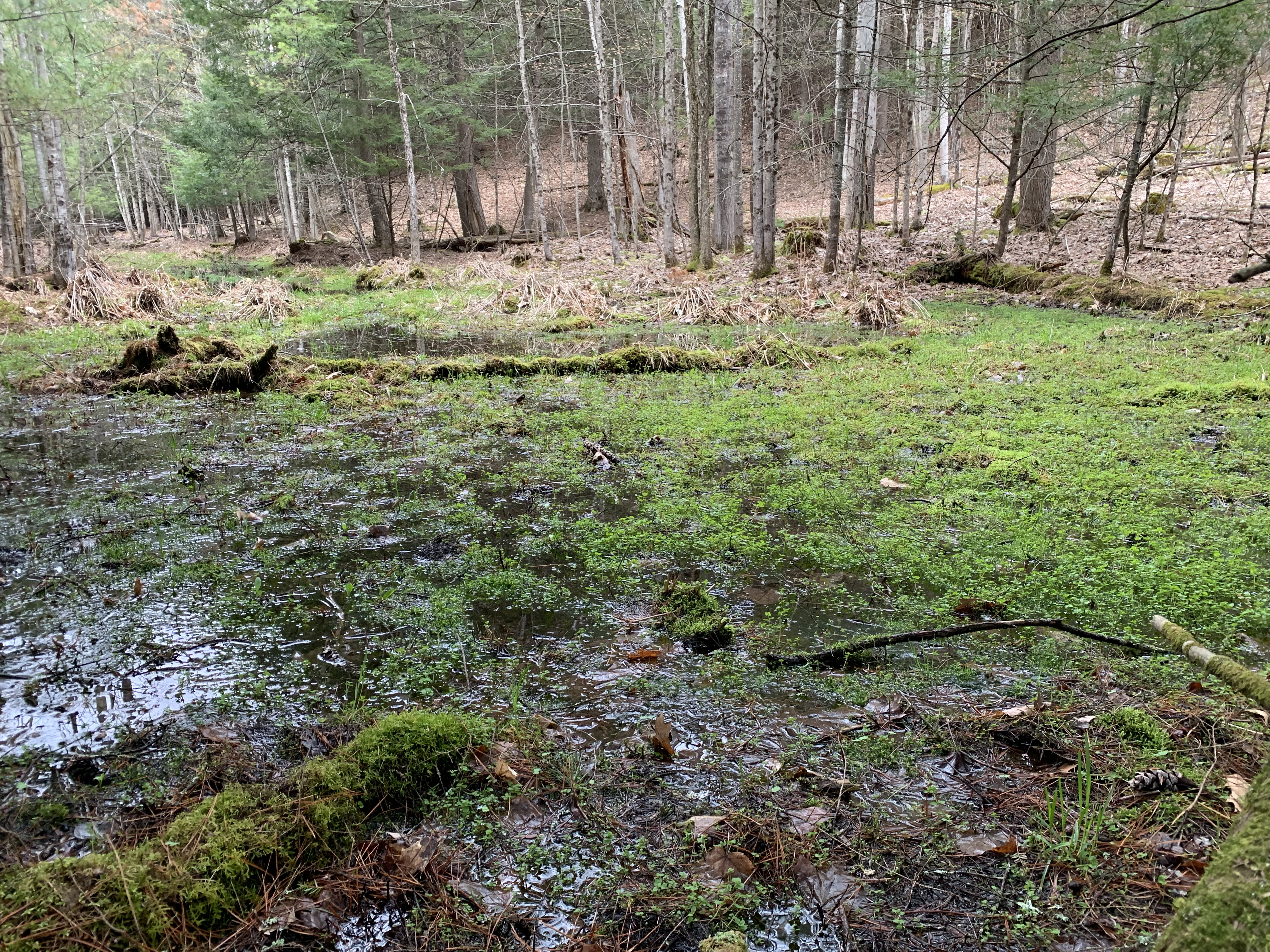
This vernal pool, near home, has grown in with moss and grasses.
Today, as I strolled along the fading skidder trails that lace the patch of forest above my home – an area I tend to explore when under winter’s deep snowpack, as I did back at the beginning of February – I was surprised to see I was not the first to visit this pool today.
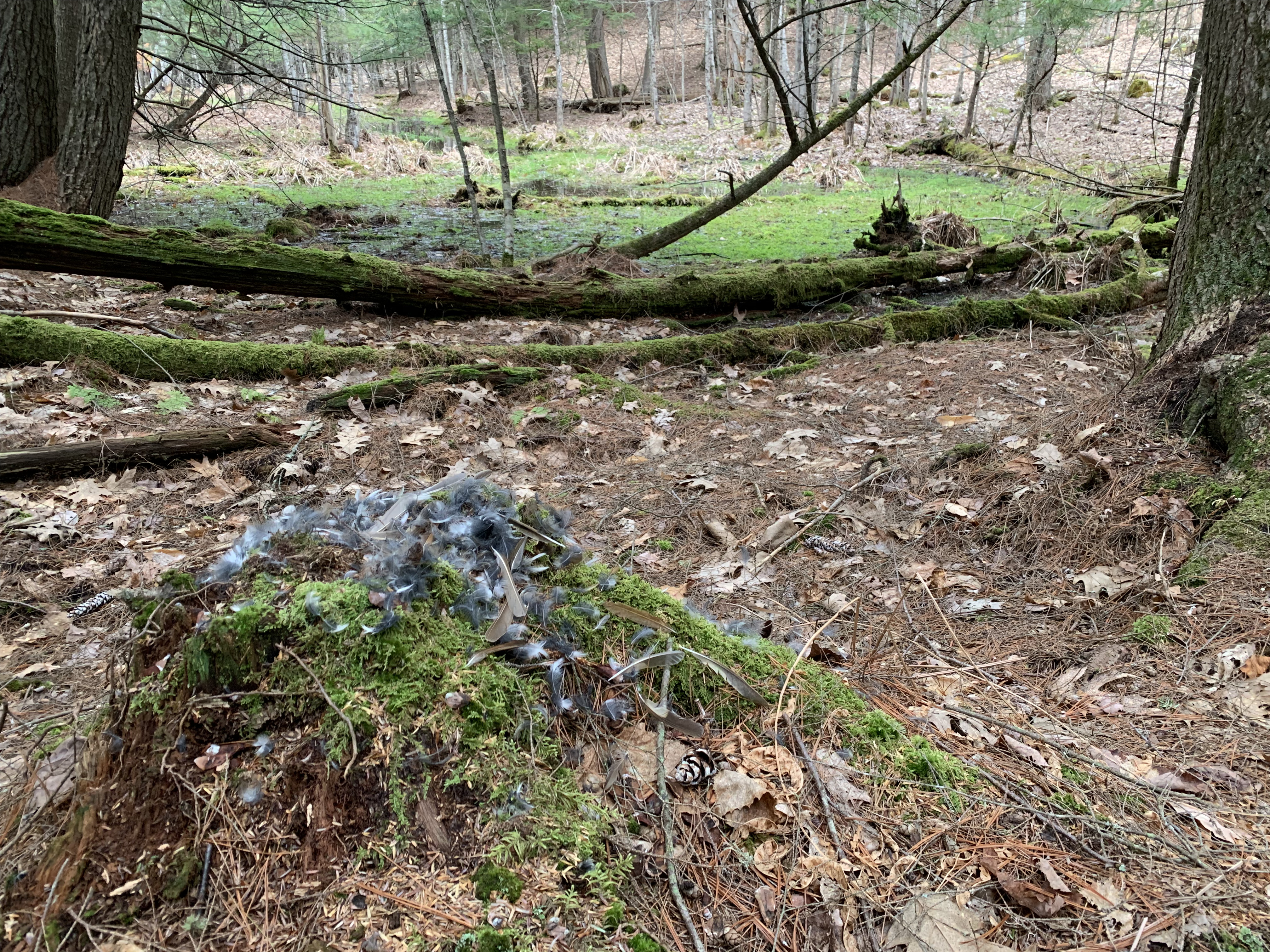
A mossy tree stump served as someone’s dinner table.
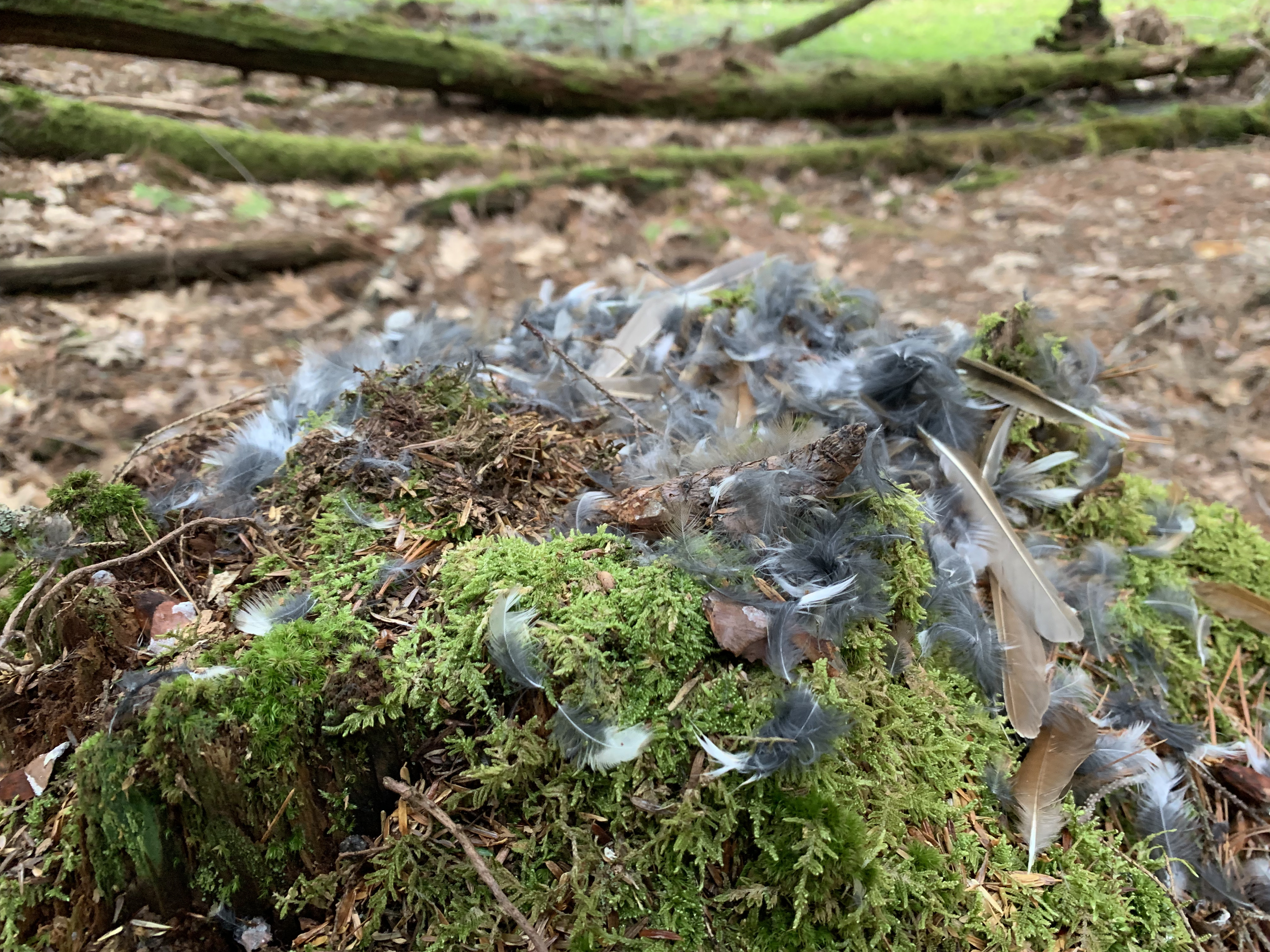
Let’s take a closer look. This tree stump was covered in feathers – very fresh feathers. I’m assuming some carnivore – a fox, perhaps? – had used the stump as a dining table for consuming an unlucky member of the local avian population.
Curiously, the feathers were on the stump – and only on the stump.
Although I’d already been up Moosilauke twice this winter, in late November and early January, I could not wait to get up there again before the season ends. I always enjoy visiting in late winter when the snowpack is incredibly deep, yet the valleys are starting to experience spring. So I’ve been watching the weather for the past two weeks and, finally, today offered me fantastic weather and an open calendar. I jumped at the chance. Read on, and check out the gallery.
Today is the vernal equinox – the spring equinox – when the length of day and night are equal (equi = equal, nox = night). Actually, “They are not exactly equal, … due to the angular size of the Sun, atmospheric refraction, and the rapidly changing duration of the length of day that occurs at most latitudes around the equinoxes” [Wikipedia]. Here in New Hampshire, Sunrise was at 6:51am, Sunset at 7:01pm.
For those who welcome the arrival of spring, today is when we are adding more minutes of sun per day than at any other time. We’re on the steep part of the curve! This is great news for our solar tracker, which put in a banner effort today under nearly clear skies, with a total production of 45.57kWh:
Technically, the equinox is “the instant of time when the plane of Earth’s equator passes through the geometric center of the Sun’s disk” [Wikipedia]. This year, that occurred at 0937 UTC, or 5:37am here in Lyme, which happens to be about when I got up this morning.
Interestingly, it has long been noted this is the “day when the Sun rises due east and sets due west, and indeed this happens on the day closest to the astronomically defined event.” [Wikipedia again].
On cue, the Connecticut River decided it is also ice-out day – the day the winter’s ice breaks up and the river begins to visibly flow. I’m pleased to see open water, because it means that bald eagle might be seen more often in our neighborhood once again, now that it has an opportunity to fish.
ice-out on the Connecticut River, in front of our house
The forecast shows nothing but clear skies, warm days (50-60º) and cool nights (20-30º). Great weather for sugaring! More on that to come…
It’s snowing lightly this morning, quite a change from the 50-degree sunny weather that has worn hard on the snowbanks this past week. It’s a welcome opportunity to pretty-up the view of the nearby hillsides and to coat the dirty old snow in a fresh coat of white.
I recently read a New York Times article about the amazing snowflake photographs produced as a hobby by Nathan Myhrvold, a retired Microsoft executive, like the one below.
Image copyright Nathan Myhrvold, from the New York Times.
I decided to dash outside and give it a quick try. Needless to say, my attempts – photographed in about five minutes using a handheld Nikon camera and a routine lens, of flakes freshly fallen onto a microfiber cloth – are not even worthwhile saving. Myhrvold’s work has taken years of experimentation, custom-designed equipment, travel to remote locations, and incredible persistence. It’s beautiful work, and I highly recommend a scroll through the photos in the article.
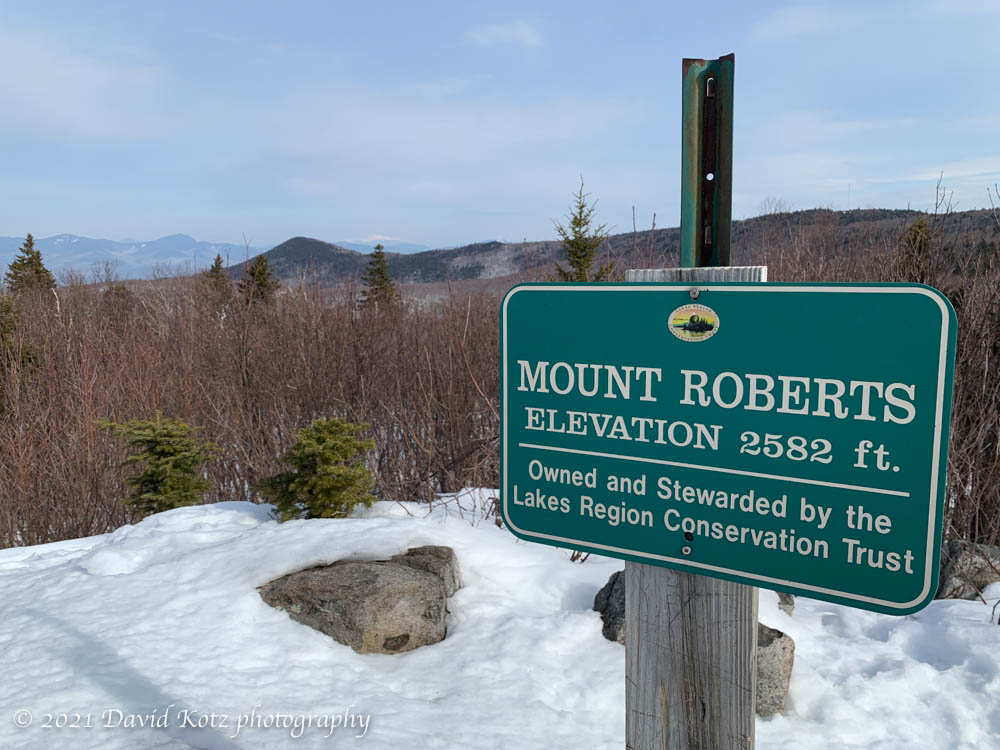
It’s Thursday, and that means it is time for another outing. I was constrained today by a need to be home in time for a meeting at noon, so I selected one of the New Hampshire “52 with a view” peaks that is new to me and yet not too-far of a drive: Mount Roberts. It turns out to be a great destination… and the conditions were radically different than last week. Read on…
The summit of Mount Roberts includes grand views of the White Mountains, including Mount Washington in the center distance.Continue reading “Mount Roberts”
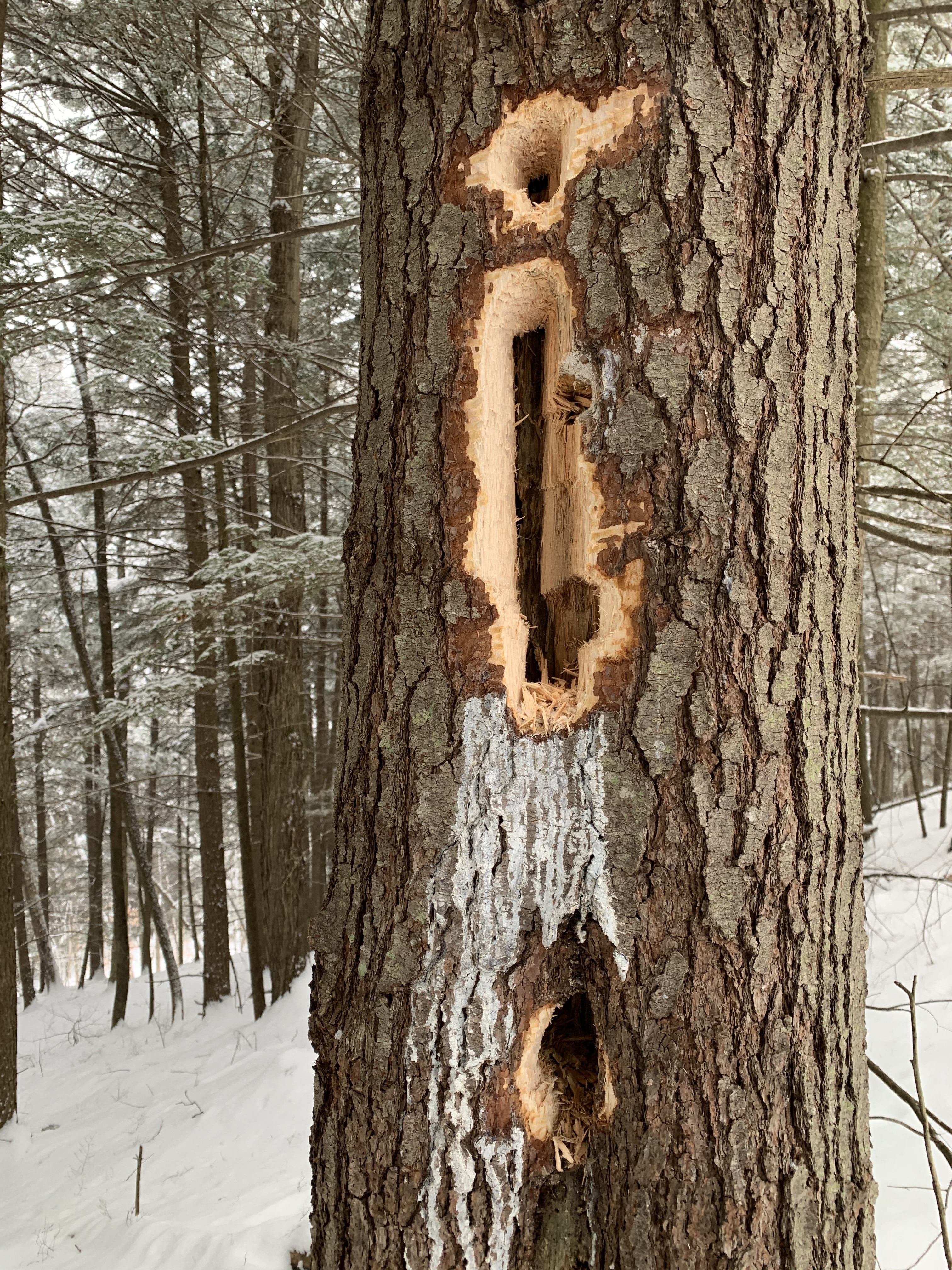
Despite the winter season there are plenty of birds around here – chickadees, blue jays, cardinals, crows, ravens, owls, and even a bald eagle. The woodpeckers are still here too, and keep quite busy. One of the most impressive woodpecker projects is a pine tree I pass often on my walk through the local woods. It’s impressively deep, and hints at a tree that may be rotten at the core.







 David Kotz