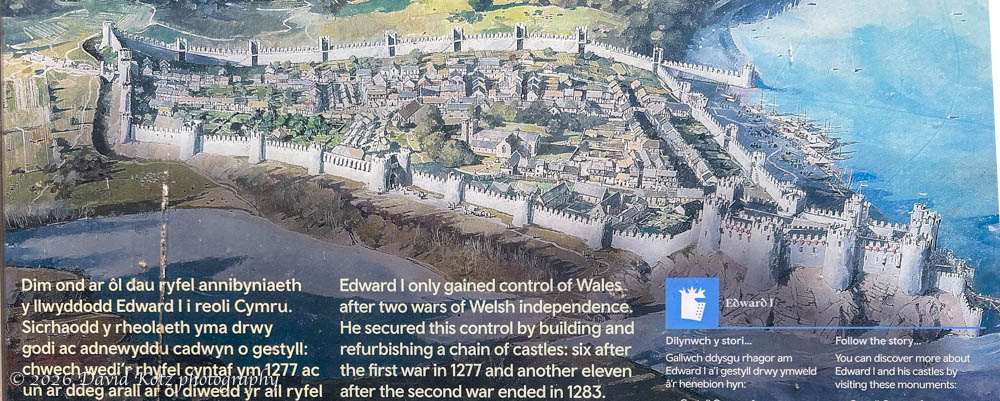
After my previous post, about an early morning hike over Mount Conwy on the north coast of Wales, we spent another two days exploring the delightful and historic medieval village of Conwy (“conn-wee”) — which King Edward I established in 1283 by constructing (in just four years!) a massive castle and a new city surrounded by a 1.3km fortified wall.
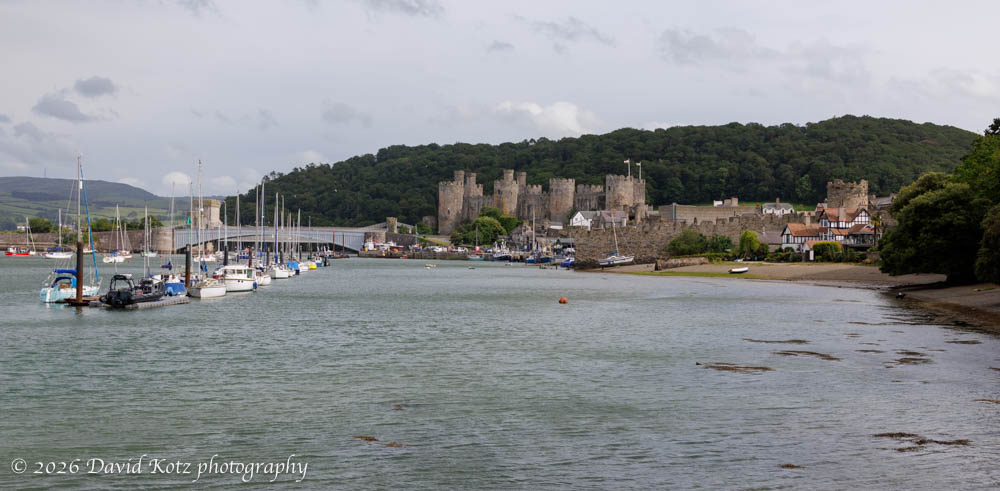
The village is best known for Conwy Castle, completed in 1287 and still one of the most intact (and imposing!) of the 400+ castles in Wales.
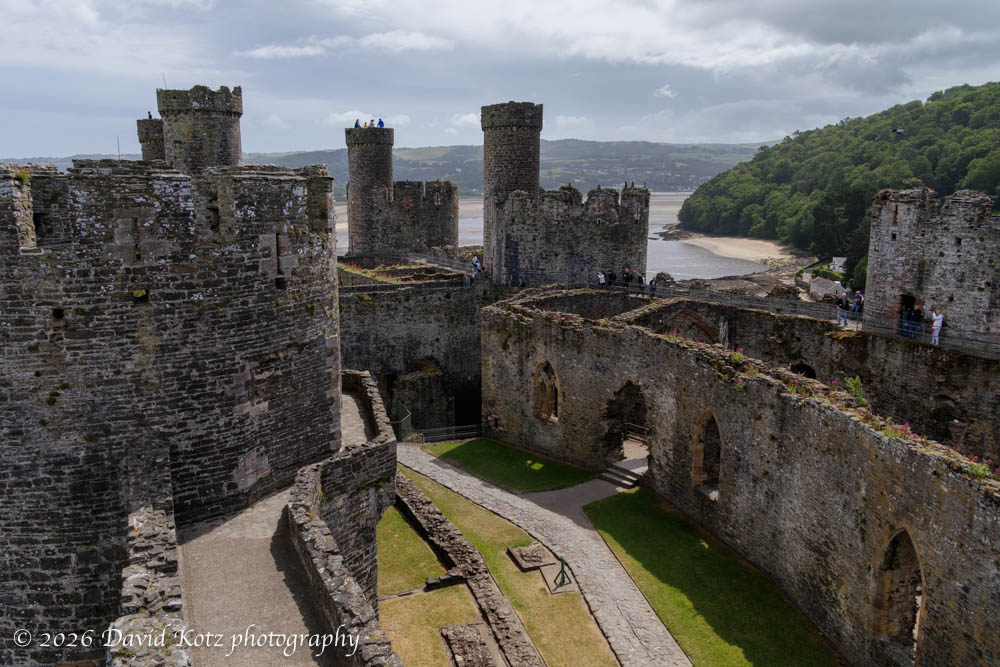
We spent the better half of a morning exploring the castle, climbing the towers and walking the entire circuit of its fortified walls.
The castle anchors the riverside corner of the fortified wall that was built to enable a brand-new village (of imported English settlers), as part of King Edward’s effort to establish his rule over Wales. (The local Welsh were none too happy about this plan; hence the need for strong walls!) The link above provides a short summary of the history, the evolution of the walls over seven centuries, and their restoration in the 20th century. Today, the wall’s few gates – each just a narrow archway, barely wide enough for one car to enter – are the primary means for entry. Let’s just say I’m glad my rental car didn’t lose any paint to those gates! it was a close call.
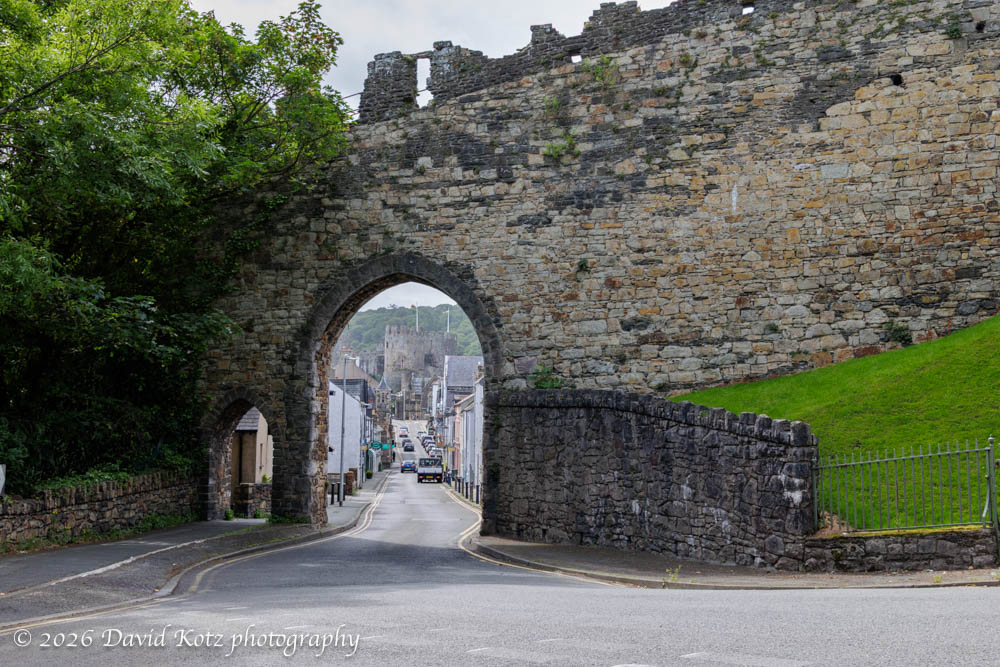
We also enjoyed walking the narrow streets, strolling along the harbor waterfront, passing by the smallest house in Great Britain, and exploring Plas Mawr, a remarkably intact home from the Elizabethan-era (1576-1585).
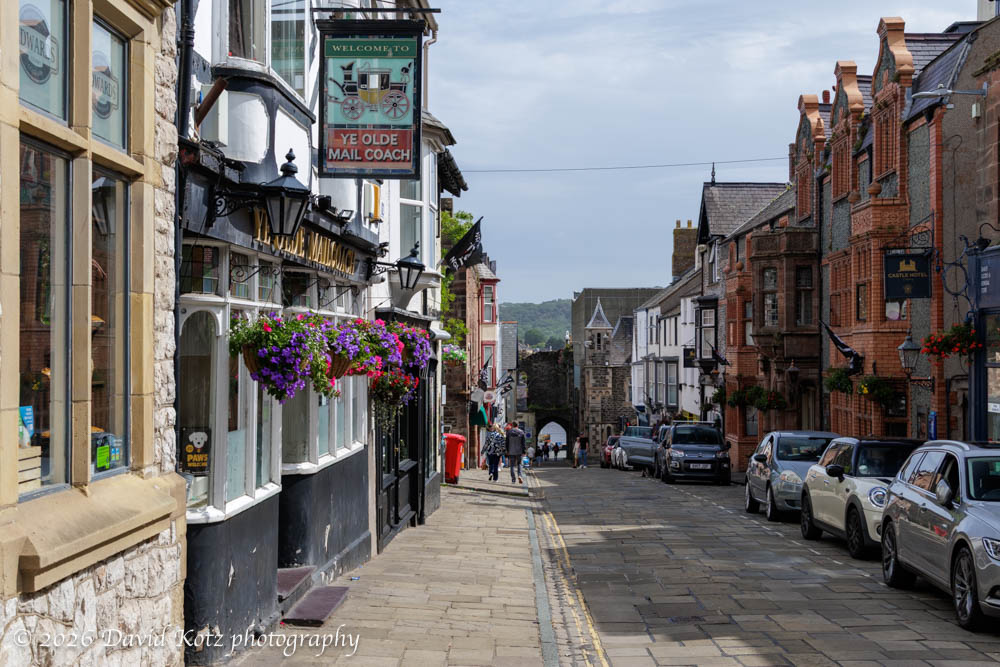
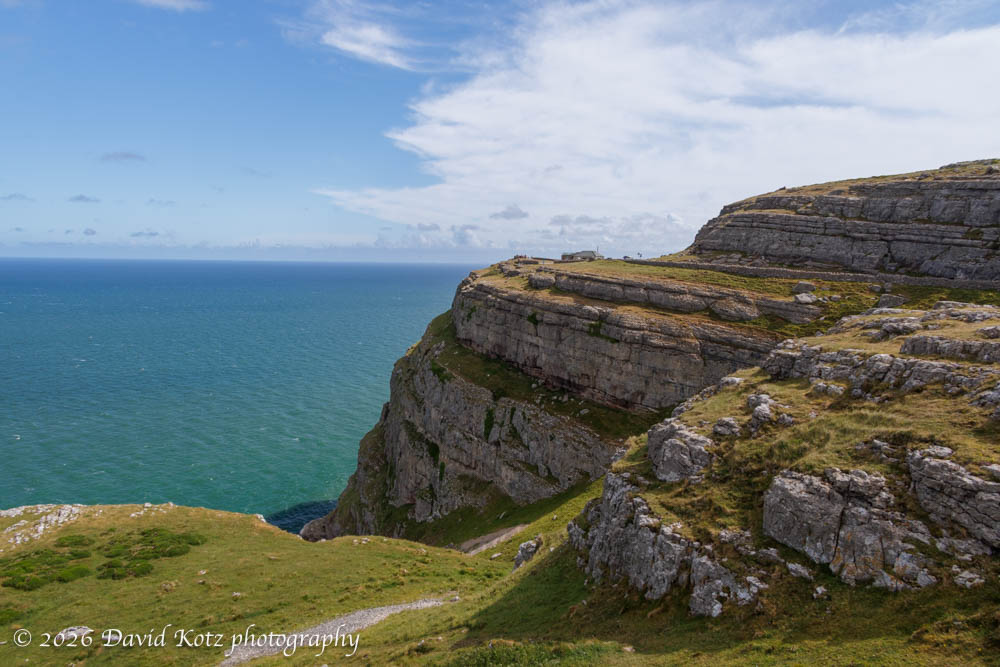
The next day we crossed the River Conwy to the resort town of Llandudno, and drove the narrow oceanside road around the Great Orme Peninsula. Despite the stress of descending tight, hairpin (read: zigzag) turns on a one-lane road that carries two-way traffic, the views from this rugged limestone headland were worth it.
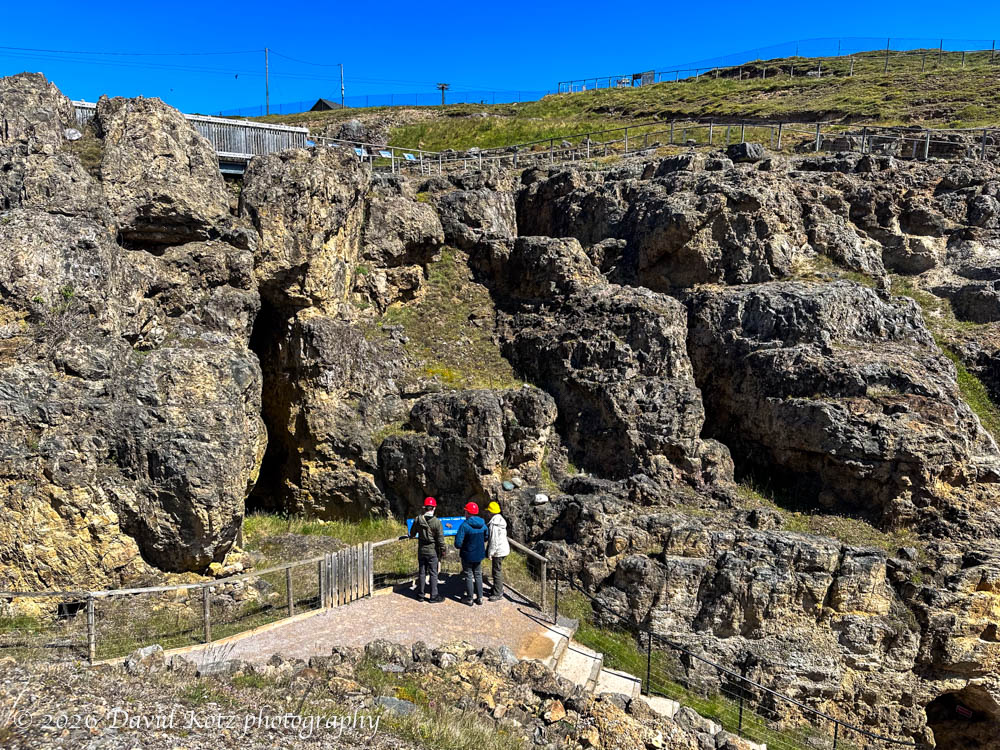
We then went underground to explore the Great Orme Mines, a tiny fraction of the extensive network of underground Bronze-age mines used to extract copper ore. It is incredible to think of people tunneling deep into the limestone to dig seams of malachite, smelt it to extract copper, mix it with tin to make bronze, and trade it across the British Isles and western Europe… over 3,500 years ago! Their only tools consisted of round stones from the seashore – used as hammers – and animal bones [read more]. Astonishing.
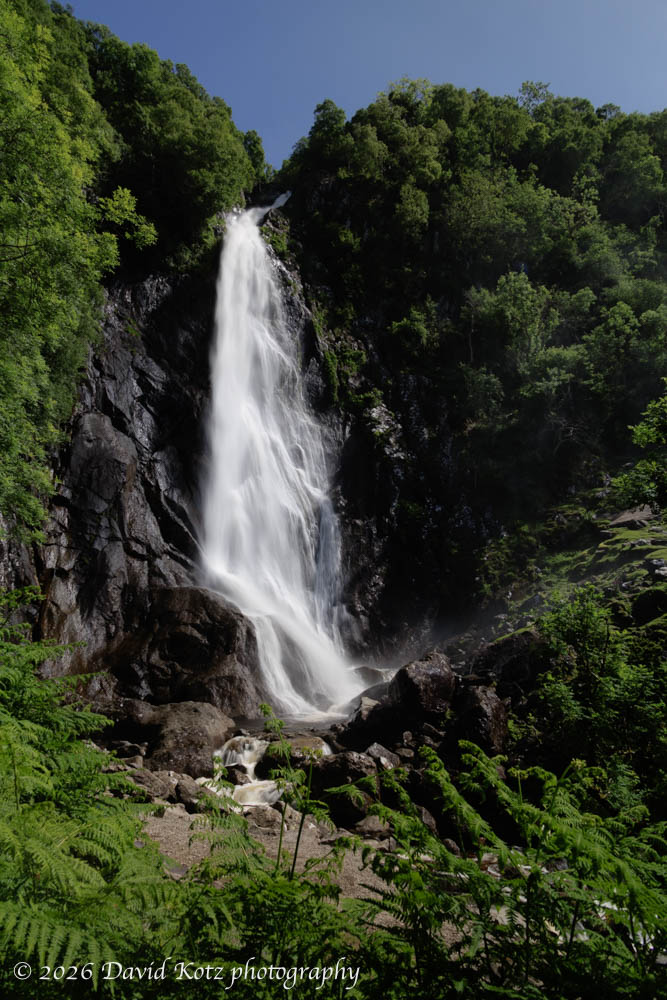
After lunch at Home Cookin’ (recommended!) we drove west to make a short hike up to Rhaeadr Fawr (Aber Falls), which were especially beautiful on this sunny afternoon, after several days of rain led to increased water flow. The walk itself followed a pretty river valley through sheep pasture and oak woodland, with an opportunity to see Bronze-age stone circles along the way.
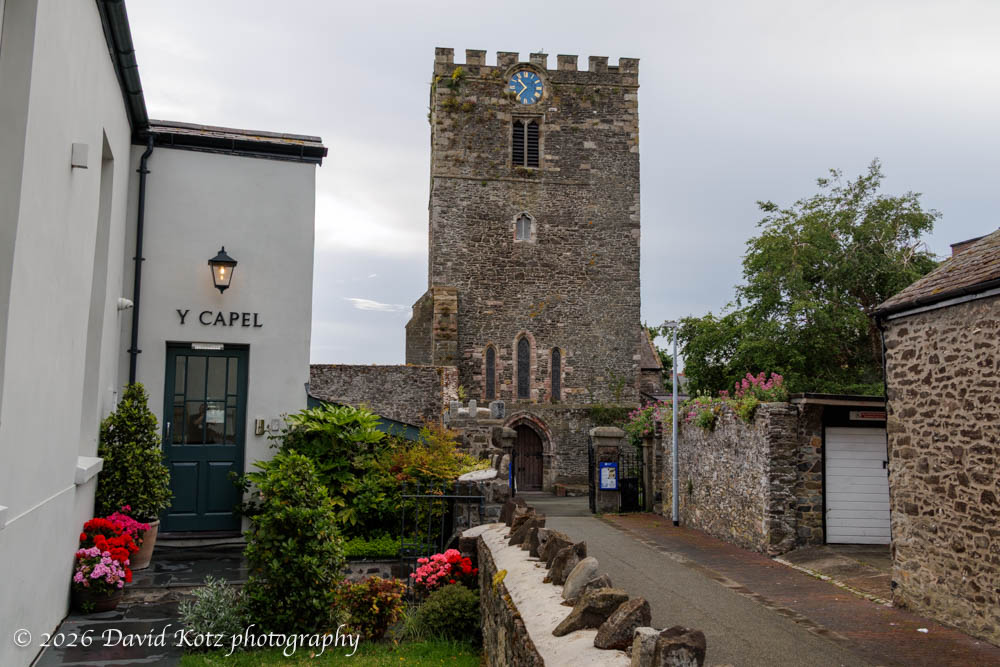
While in Conwy we stayed at the Y Capel hotel, a converted church, just a block from the railway station. It was lovely, with spacious, comfortable rooms and a cozy common room with a small kitchen and comfy sitting area. Our room had a balcony with a partial view of Conwy Castle and, in the immediate foreground, historic St. Mary’s Church (which dates to 1283 and earlier). The catch? St. Mary’s belltower rings every quarter-hour, day and night, which is perhaps why the common room has a box of complementary earplugs ;-). Still, I’d visit again!
The photo gallery shares more photos from all of the above locations, especially the castle. Enjoy!

 David Kotz
Amaze amaze amaze…
So many places I never knew existed, that I must now visit!