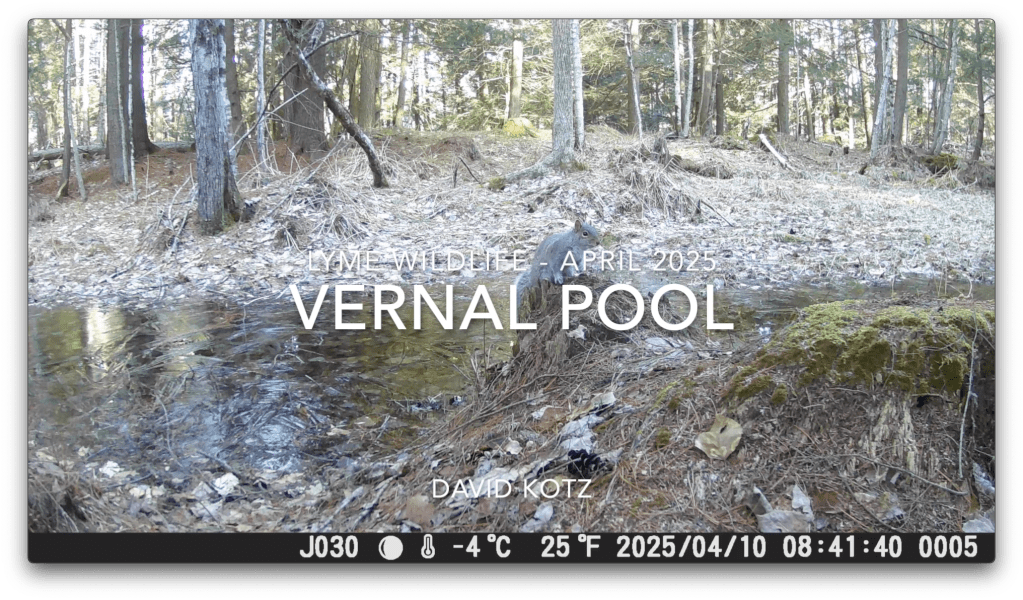
In the Lyme forest, my usual tromping grounds include a couple of vernal pools. These small, shallow depressions fill with water in the spring – initially, from melting snow that cannot yet seep into the still-frozen earth below, and later from early spring rains. They teem with life, and are a particularly important breeding ground for amphibians. They also attract wildlife of all types, to hunt or to drink. I saved aside the clips from my two cameras beside one vernal pool – not included in my April videos shared two weeks ago – because the activity around this pool is so fascinating. It also provides my first ever view of predation in action, in almost two years of work with wildlife cameras.
I have followed the same route for years, climbing steeply up the hillside following a skidder trail left behind from a logging operation more than twenty years ago. It slants upward, moderating its steepness and thereby reducing the potential for erosion, then hooks sharply right as it reaches the ridge and settles out at the high point. Although this hilltop is fully forested, and only a few hundred feet in elevation, I affectionately refer to it as the ‘summit’, the high point of my home turf. It was the first location I chose for a wildlife camera, and it has never failed to capture interesting action.
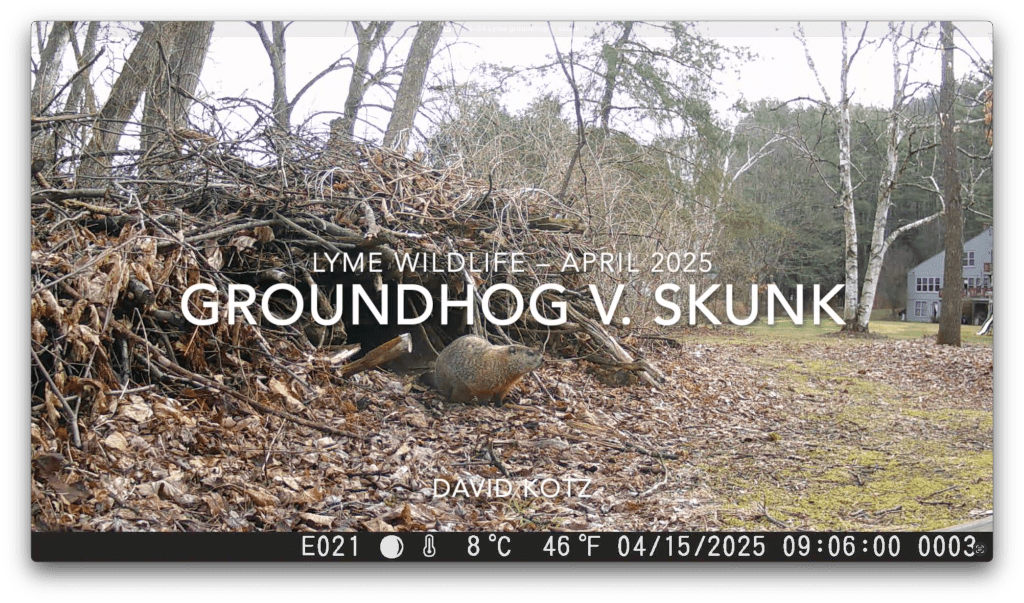
Last year I placed a wildlife camera near an apparent animal den that something had burrowed under a pile of sticks – a pile that has accumulated lawn debris for over two decades. It turned out to be the home of Mother Groundhog, who soon gave birth to seven cute little pups. For weeks they romped in front of their den, leading to a delightful video. Not long after, they all disappeared. I never knew what became of the mother or the pups.
So, as spring emerged this year, I set up the camera again to see whether a groundhog (woodchuck) had returned and might be using the den for another litter of pups. Little did I know that, over just two weeks, I’d capture a bit of drama and a total takeover of this snug little den. Check it out!
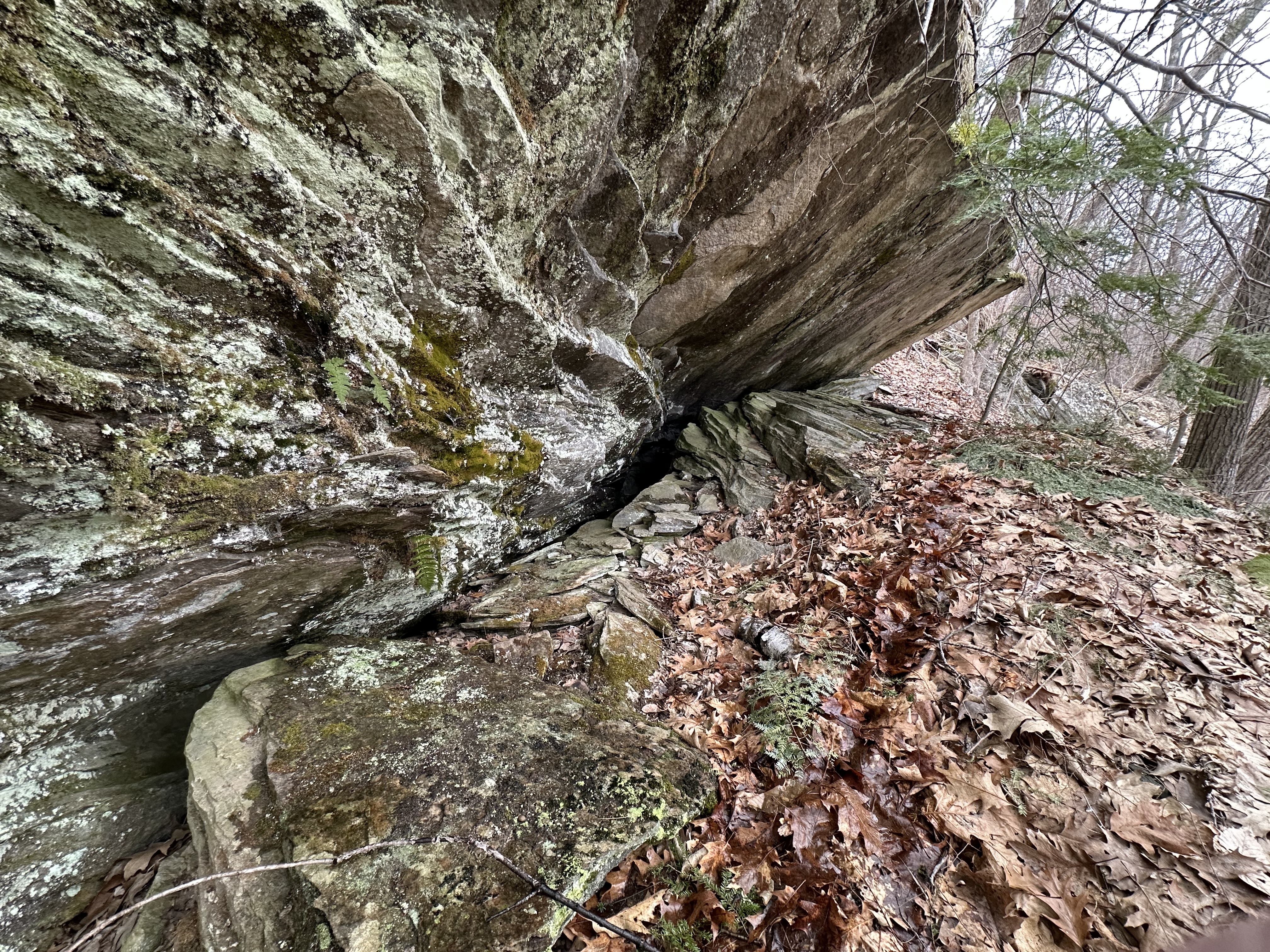
As regular readers know, I’ve been exploring a new area of Lyme forest – a steep slope below a line of crumbling granite cliffs. Huge boulders have broken off the cliff, over centuries, forming a steep hillside with jagged boulders stacked chock-a-block here and there. The resulting nooks and crannies provide excellent den terrain for numerous porcupines. I’ve seen bobcats and coyotes, but have yet to find their dens.
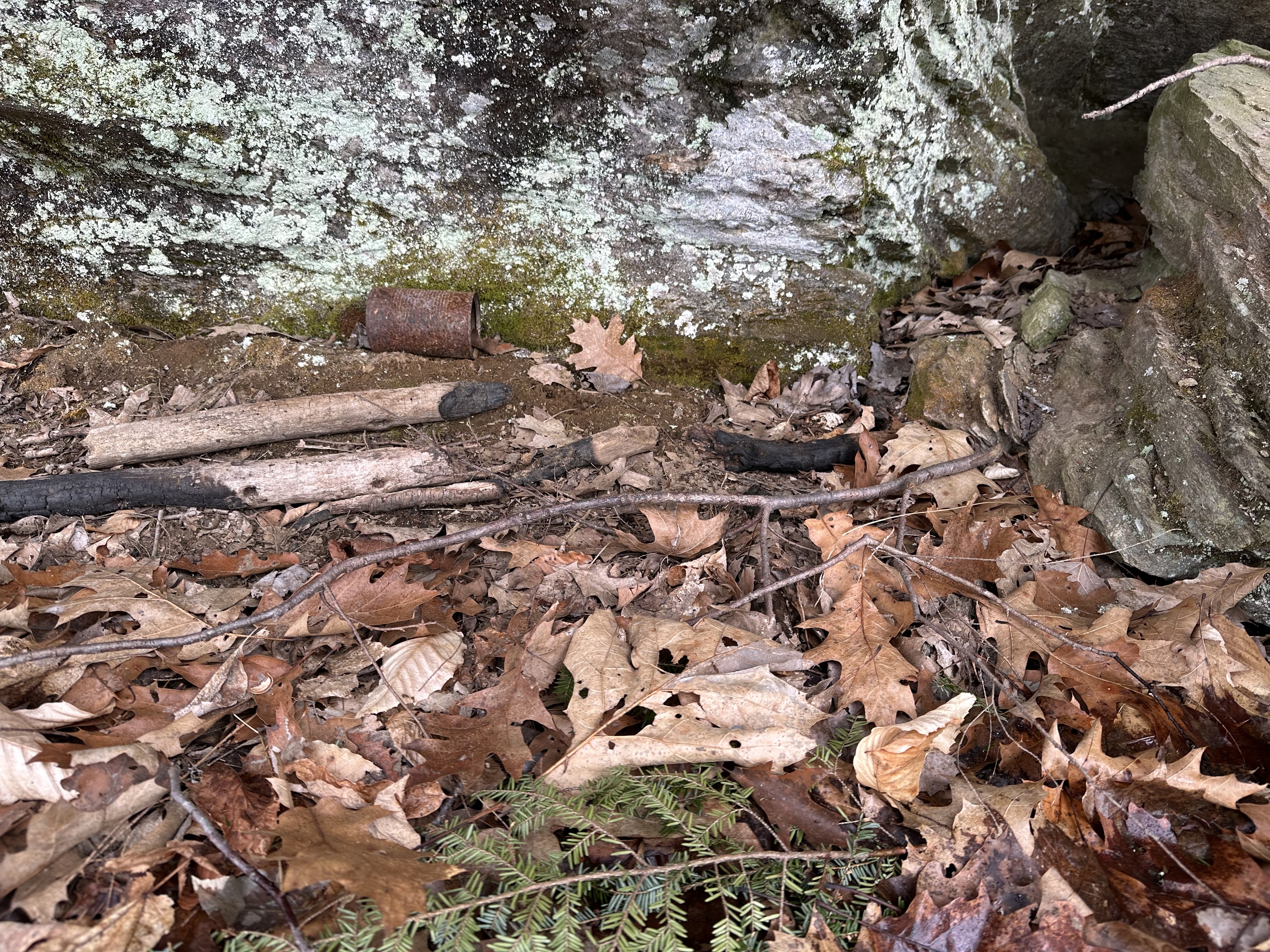
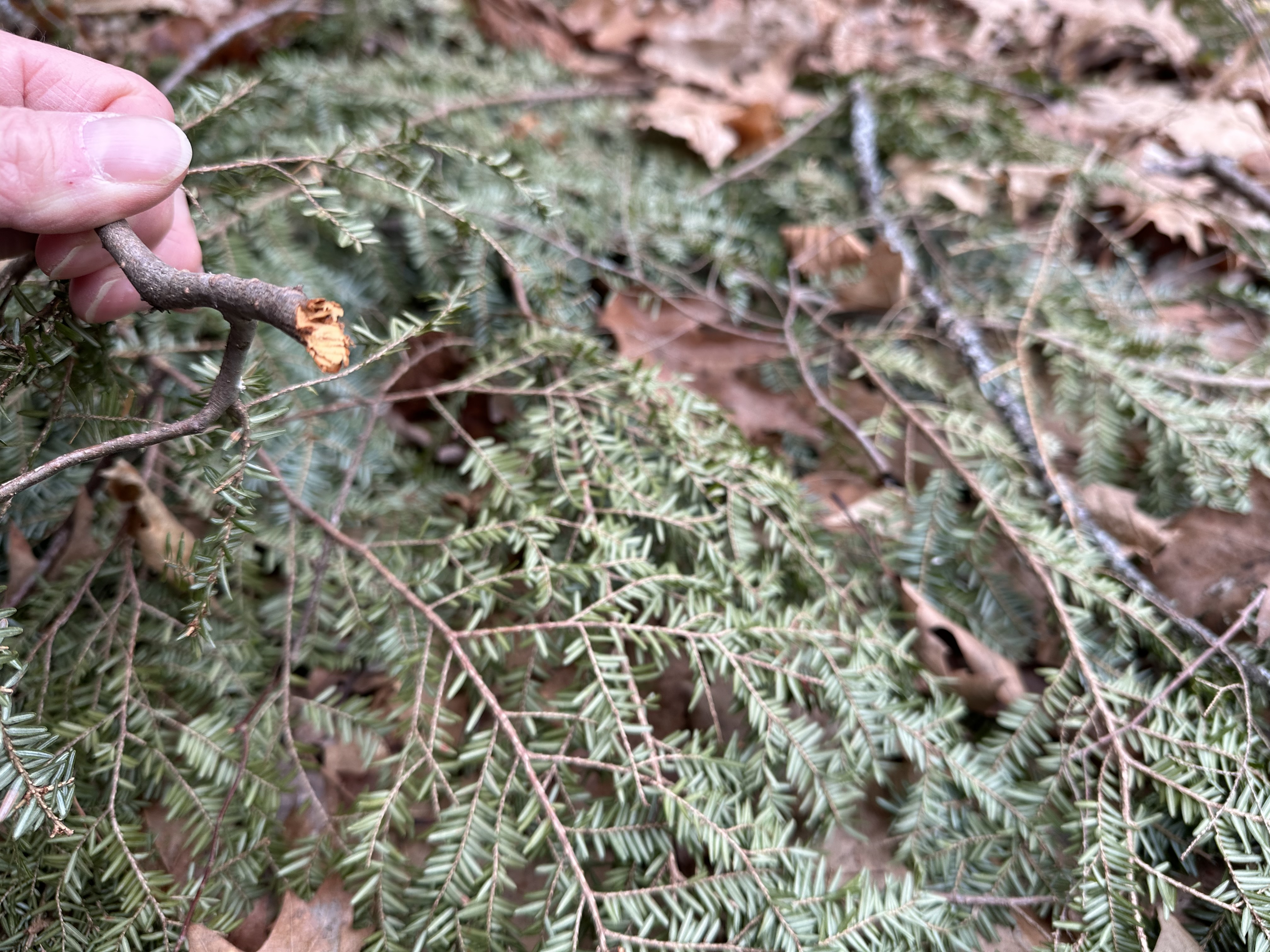
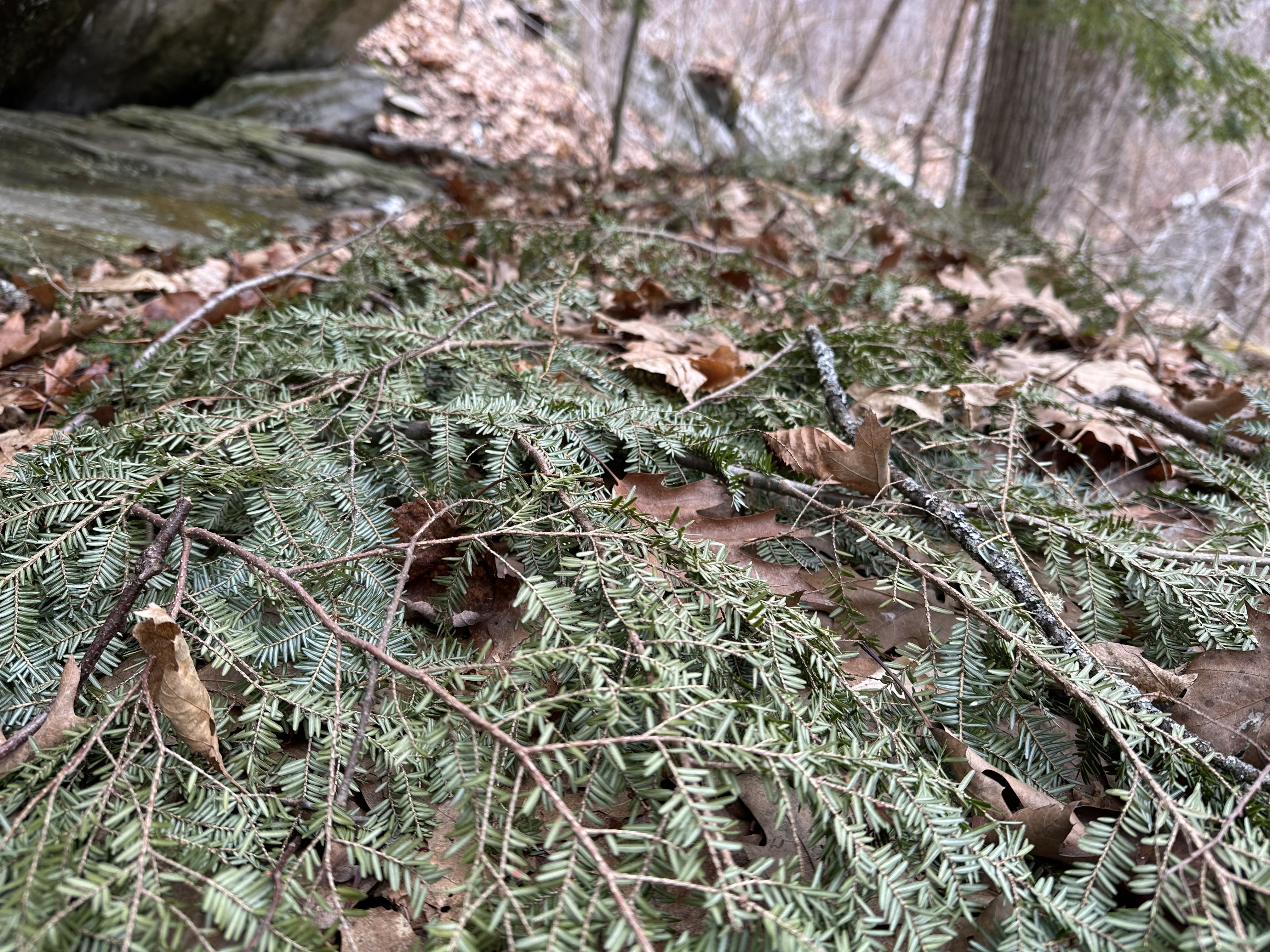
Two weeks ago I found an interesting nook, a dry place under an overhanging boulder, that looked promising. On the ground were scattered small hemlock branches, snipped from the trees above – most likely by porcupines, but I was curious to see who might be resting and eating below this overhang. I placed a camera, and left. Five days later, it had a visitor.
It was like a switch had flipped. February here in New Hampshire was snowy and consistently cold – the temperature never rose above freezing, which led to a fantastic season for outdoor winter activities. But on the first of March the weather immediately started to warm. The lower elevations of Lyme, where I deploy my wildlife cameras, lost all their snow — only to see the snow return twice in brief snowstorms. My wanders through the forests of Lyme led me to discover exciting new locations to capture video of wildlife activity… and to meet some of these critters face to face! Read on.
Winter truly arrived in February, with deep cold and deep snow throughout most of the month. I had nine cameras out the field – but decided, mid-month, to relocate half of them to a new area of Lyme (New Hampshire). Although the terrain is similar – rolling hills, mixed forests, rocky slopes, low elevation – I was looking for new opportunities. That day (February 16) was an incredible winter’s day: a light snow was falling as a large winter storm was winding down, so I snowshoed through deep, soft powder around my usual loop, picking up cameras. The next day, I skied a loop in a different part of town, setting up cameras in promising new locations. What did the cameras find? Check out these four short videos (all less than three minutes)… read on!
In 42 years on Moosilauke I have *never* seen this much snow.
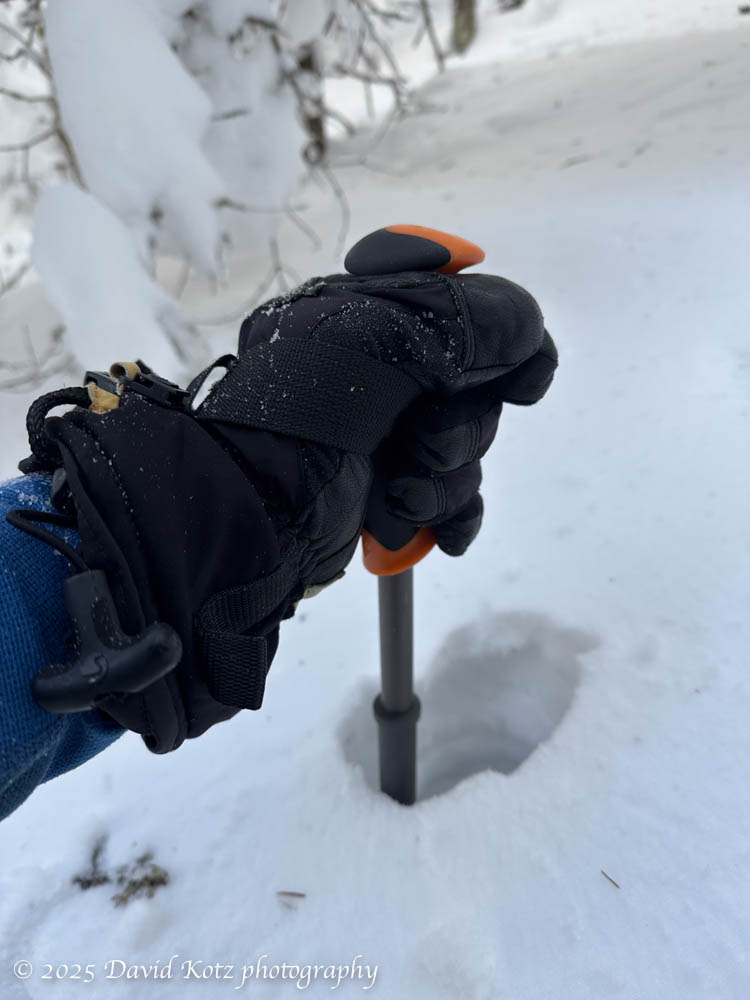
my 135cm pole disappears in the powder – in places, it went deeper!
I have never seen this much snow on Mount Moosilauke, in 42 years of hiking this mountain. Especially not in February. Well, maybe just once – in late March 2017, the first time I had to actually crawl a section of trail because the snow was so deep it nearly reached the branches of trees overhanging the trail. Today, the snow may have been slightly less deep – but with vastly more snow pillowed on the trees, causing them to bend over the trail. Today’s hike involved a lot more crouching and crawling. On the way up, I met hikers who had turned around, claiming the trail ahead was “impassable.” Read on!
We’ve had cold weather and several beautiful snowfalls, in the past two weeks, so it was time to get outside. Tim and I headed up the Appalachian Trail, northbound from Goose Pond Road here in Lyme. Our target was a viewpoint on Holts Ledge, just past the top of the hill and just before reaching the top of Dartmouth Skiway.
Hiking the Appalachian Trail to Holts Ledge; there is a faint sign of prior hikers’ tracks under the newest snowfall.Continue reading “Backside of Holts”
Local wildlife remains busy, throughout the winter.
I’ve been pleased by the overwhelming response to my “Best of 2024” summary video, which seems to have brought enjoyment to many an armchair wildlife fan. Thanks for sharing your feedback! I enjoy sharing the videos from my wildlife camera, and I enjoy even more the opportunity to spend time in the outdoors, off trail, wandering through a local forest with an eye and ear tuned to the signs and sounds of nature. Read on to see January’s new videos!
Wow, 2024 was quite the year. With a dozen or more hikes in New Hampshire, and travels to Finland, Estonia, Iceland, Switzerland, Japan, Korea, California, South Carolina, and India, I had many opportunities for photography. Check out some of my favorite photos!
Aurora borealis seen over the Northern Lights Village in Saariselkä, Finland.
This year I dug deeper into wildlife photography by expanding my network of camera traps (wildlife cameras) in a forest near home. Click on the image below for a compendium of my favorite clips! It is 14 minutes long – I know, in the era of TikTok that may seem interminable, but I encourage you to sit back and enjoy the wildlife at its own pace. You’ll see black bear, beaver, bobcat, coyote, deer, fisher, red fox, goose, groundhog, owl, raccoon, skunk, flying squirrel, and turkey.
For all my wildlife-camera videos, visit this tag.
Still cameras: this year I upgraded from the Canon R5 to the Canon R5 Mark II; I use several lenses for most photos: 24-105mm, 100-500mm, and (recently) 200-800mm. Some of my favorites also come from my iPhone 14 Pro.
Wildlife cameras: I started off with a pair of cameras from Punvoe, which produced most of the video on this site; more recently I’ve bought some Rigdoo; they are very similar (the internal firmware is clearly almost identical) but with a better camera (4K) and (supposedly) a faster reaction time and less-obtrusive night-vision light.