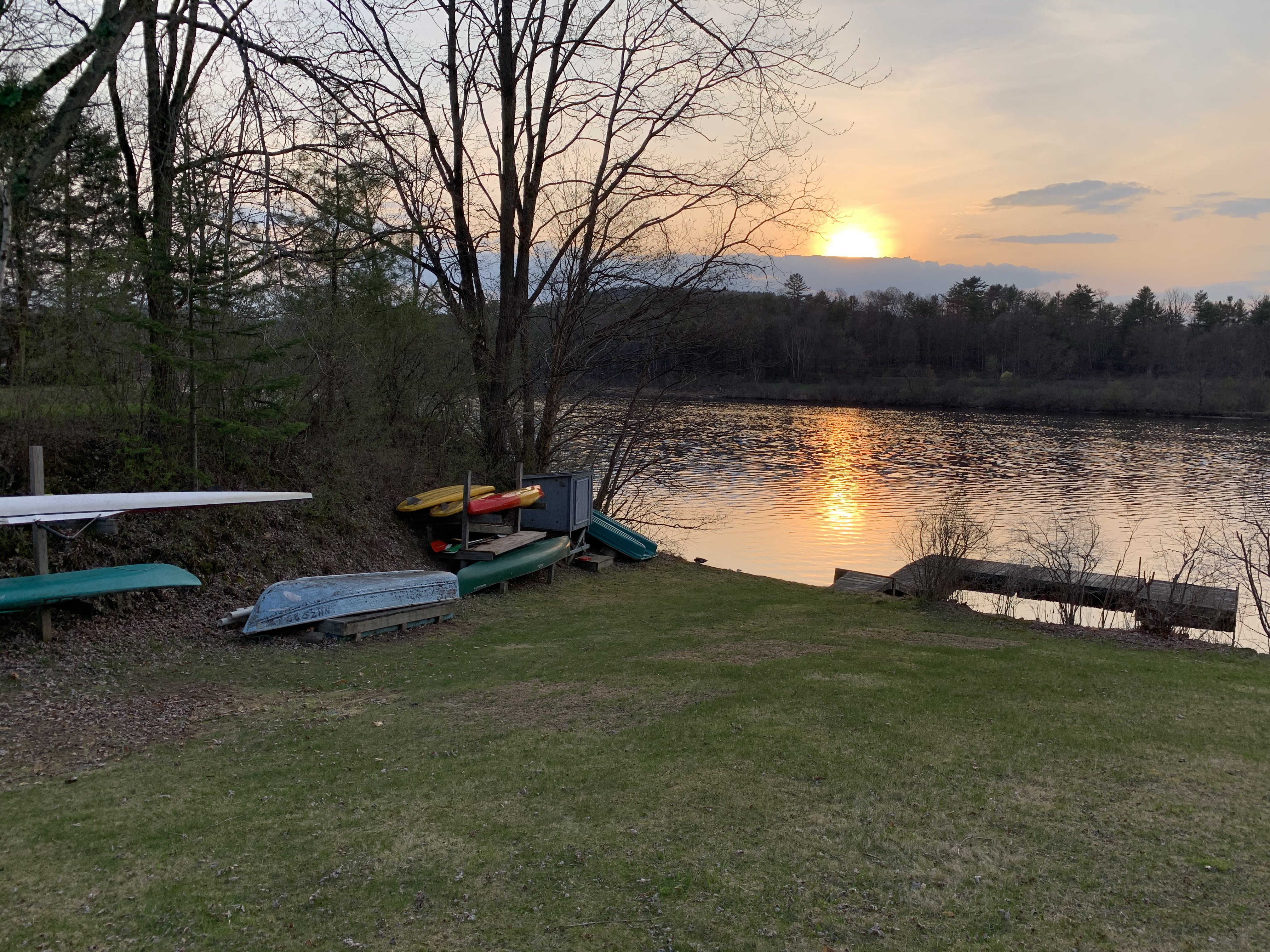
Triple tree trouble

If a tree falls in a river…

Last fall, two stems of a large basswood tree finally gave up their desperate attempt to cling to our riverbank, and fell into the river. This massive four-stemmed tree was rotting at the base, and the steep riverbank provided little support. The two river-side stems fell toward the river, laying down at a steep angle reflected the depth of the river along our banks. We asked two tree services about removal, but it would have involved heavy equipment and a large fee. We left the trees for the winter ice and spring floods to remove.

Unfortunately, they remained unimpressed by the spring currents, and yet some of their branches impeded boat traffic along our shoreline. So, a few weeks ago, I scrambled out along their trunks and sawed off whatever I could reach, while the others tied ropes and pulled the debris away from the mess, away from our docks, and out to sea. I inspected the two remaining stems, and the now-exposed rot near their base, and forecast that they would follow soon, perhaps within two years.
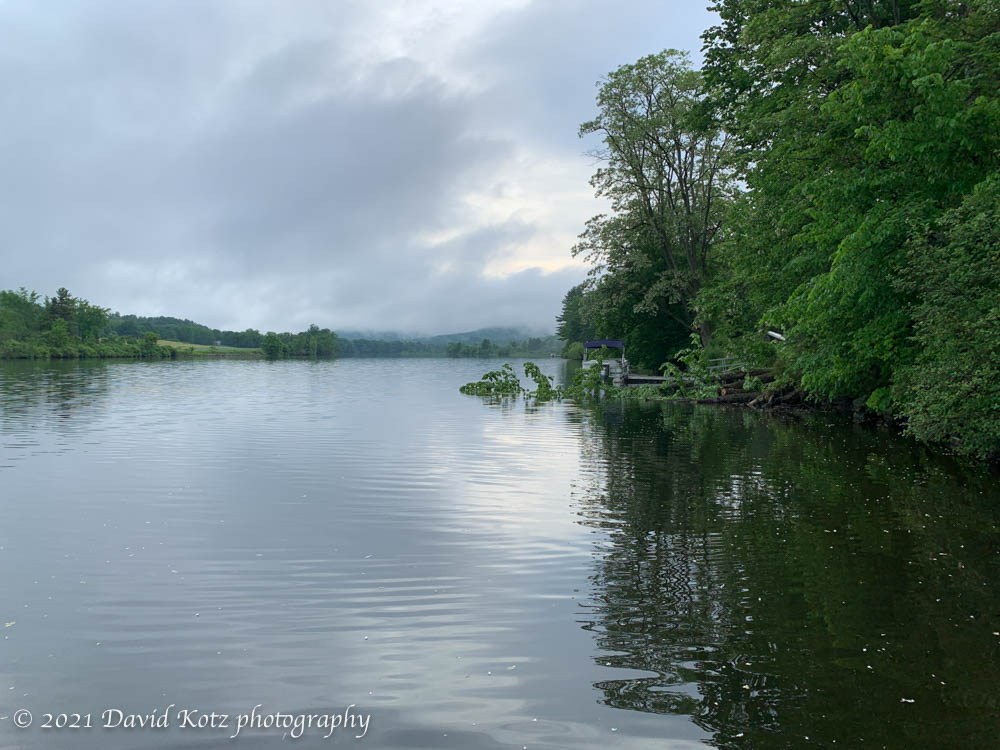
Trees fallen into the river along our bank.

One only lasted two weeks (above). So this week I was scrambling out along a new trunk, sawing off what I could, while Andy swam around to pull the debris, new and old, out to the stronger current. I don’t have any photos of the action, but the photo below shows what remains.
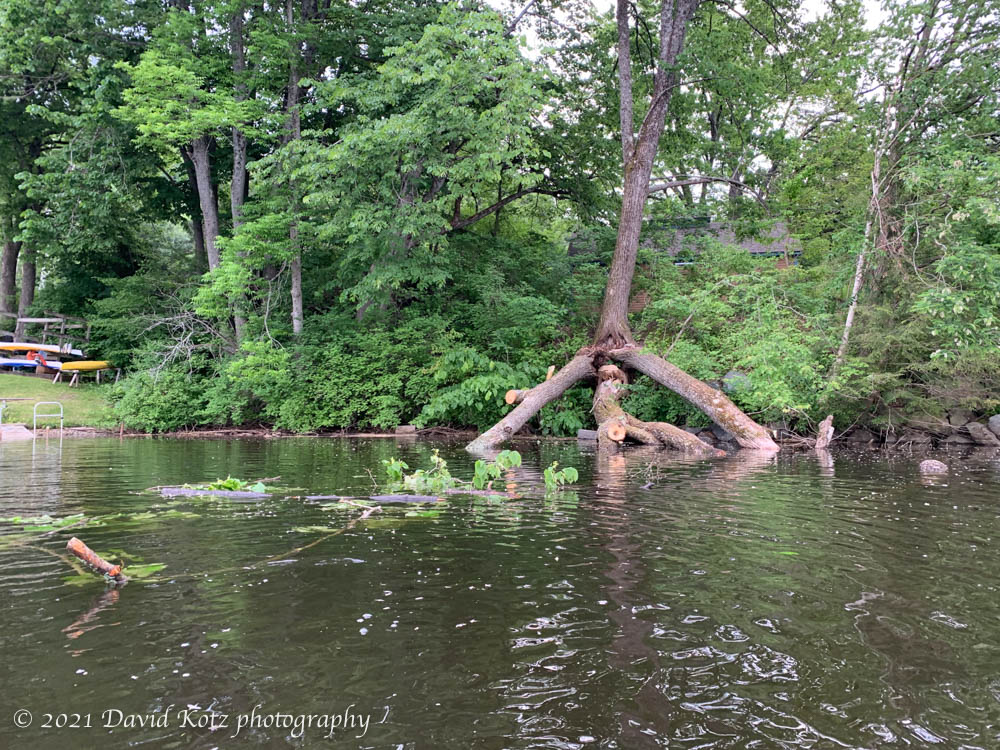
Trees fallen into the river along our bank.

The fourth and final stem leans inland… right onto the shed. Hmm.
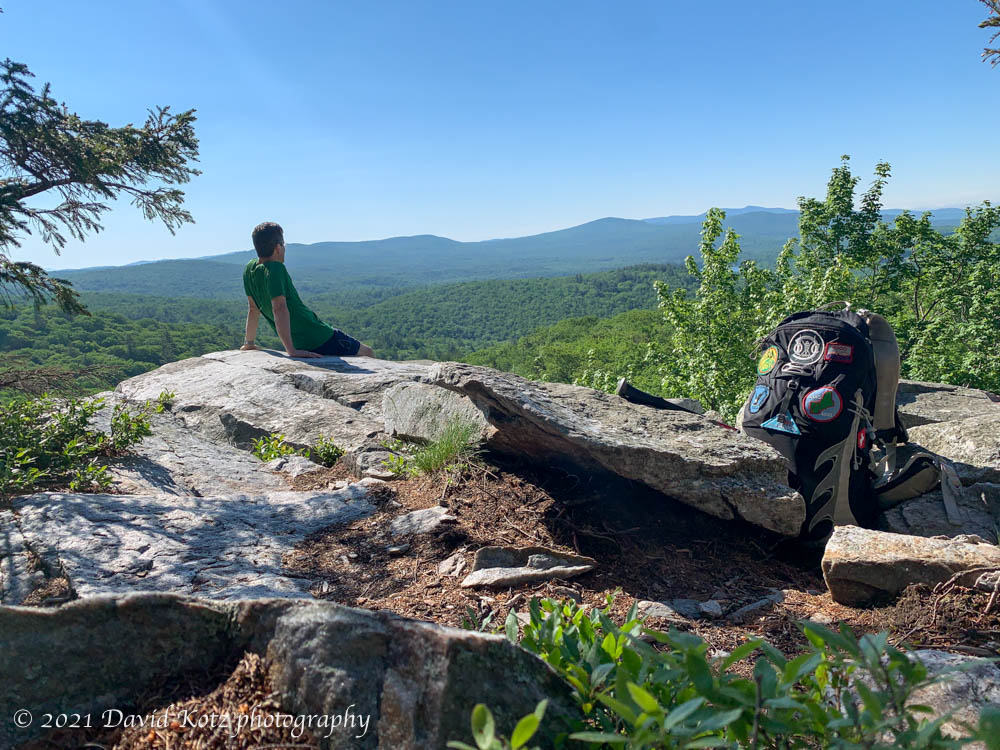
Smarts Mountain

Wildlife in action.

The spruce-grouse hen, startled from her nesting site, squabbled noisily across the trail as I approached. I was equally startled, as I hiked up the Appalachian Trail on a quiet weekend morning in early June. Surprisingly quiet, actually; mine was the only car in the lot at 7:30am, and I had thus far passed only one small group of hikers – southbound thru-hikers, by the looks of them. So I had been strolling easily up the trail, lost in my own thoughts, when this mother hen leapt into action and directly across the trail in front of me. Read on!

David at the viewpoint on Lambert Ridge, Smarts Mountain.
Continue reading “Smarts Mountain”

Return to Worcester

What a difference!

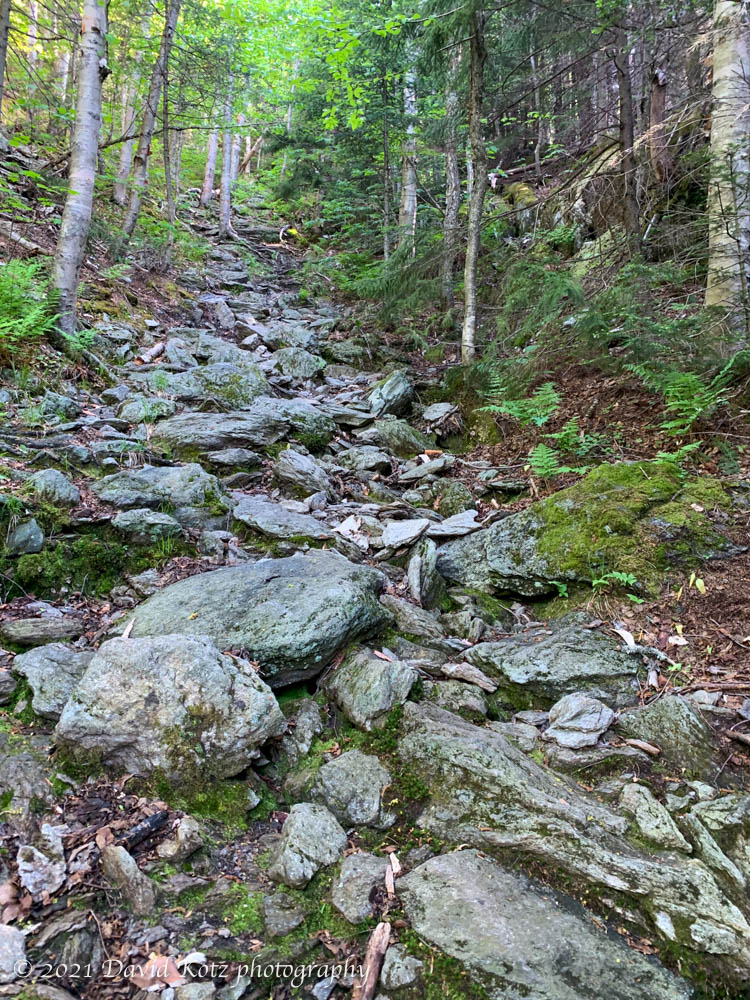
Rugged trail, straight up the fall line, on Worcester Mountain.

“It sure does look different in the winter”, said the hiker I met on this trail back in January. He had lost the trail just a couple hundred meters shy of the summit of Worcester Mountain, despite having climbed this trail “dozens” of times. After thanking him for his advice, I pressed on and experienced the most exhilarating hike of the season [read that story].

So today, a warm and muggy day in early June with the trees and shrubs almost fully leafed out for summer, and nary a snowflake left anywhere in New England, I decided to head back and see if Worcester Mountain really is “different in summer”. I got an early start, reaching the trailhead by 7:30am, but there were already three cars in the lot. Read on, to see what I found!

Continue reading “Return to Worcester”

Retroblog – Himalayan trek

I hope to return someday!

In the spring of 2009, when we lived in India, we took a trip to Darjeeling in the far northeast corner of India and spent a week walking along the Singalila ridge, which forms the border with Nepal. It was a beautiful walk, despite being in the clouds much of the time… and never catching a glimpse of Mount Everest. It was a fantastic trip, despite some challenges, and I still think often of finding some time to return. Read the original story.

Himalaya Trek: Posing with the full trekking team.

Cardigan

A visit to an old friend on a blustery day.

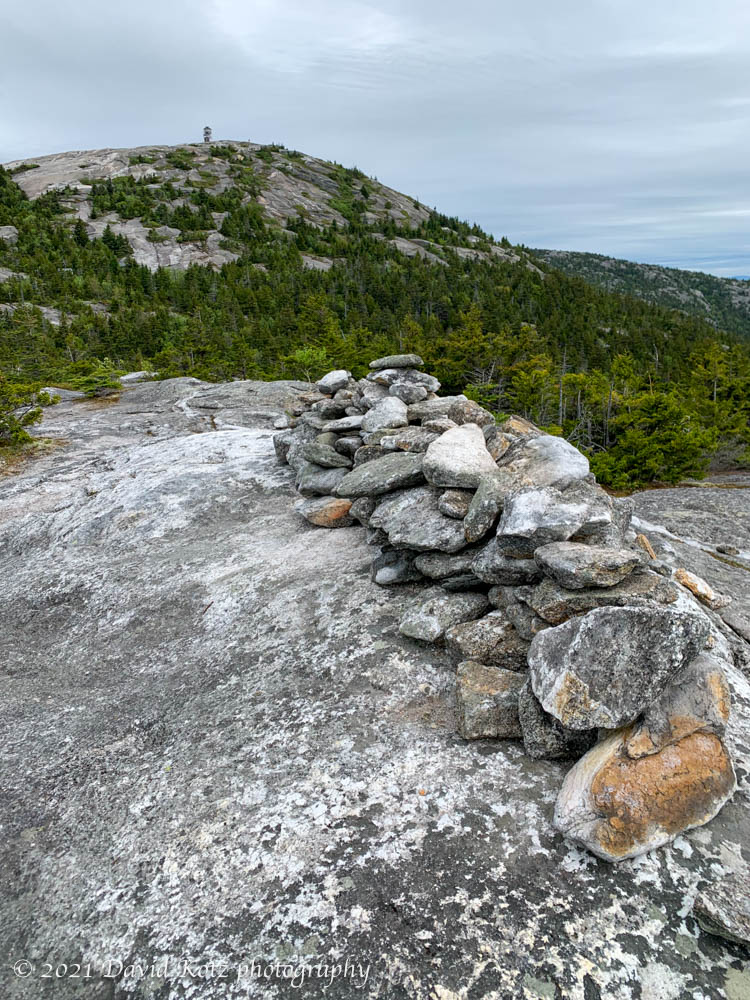
I’ve climbed Mount Cardigan at least a dozen times over nearly four decades… and yet my records show I have not been back since 2016. Its bald granite dome (the result of a wildfire years ago) grants visitors grand views in all directions, so it is a very popular destination for hikers young and old.

A view of Mount Cardigan from its South Peak.

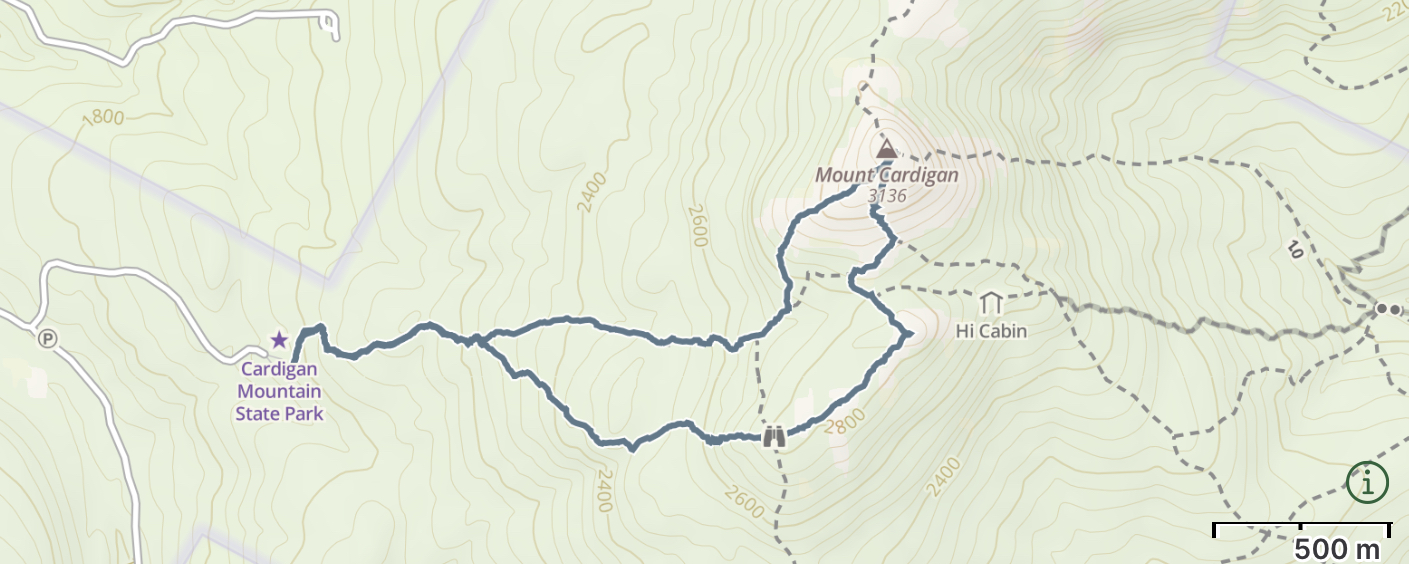
Today was a cool and windy day, as I wound my way up the familiar West Ridge Trail. I arrived early to beat the holiday-weekend crowds and the forecasted rain, and enjoyed a quiet hike through the damp woods to the windy summit.

David on the summit of Mount Cardigan on a very windy day!

And windy it was! After a brief stay in the shadow of the summit firetower, I returned via the South Ridge Trail, which provided some fine views of the peak.

Check out the photo gallery, including a video from the summit.

Hike stats:
distance: 5.3km
gain: 337m
time: 1h37m

B18 bomber crash

A visit to the famous Bomber crash site on Mount Moosilauke.

On the afternoon of January 14, 1942, a Douglas B18-A bomber with a crew of seven took off from Westover Air Field, Massachussetts. Hours later, fighting darkness and bad weather on their return to base, the crew became seriously disoriented… thinking they were approaching Westover when in fact they were over central New Hampshire. Moments later, they crashed into the side of Mount Waternomee, one of the peaks on the shoulder of Mount Moosilauke. The crew scrambled out of the wreckage, but the plane caught fire and exploded. Five survived, standing in the dark in the deep snow. The story of the crash – and the mid-night mid-winter rescue – has become the stuff of legend.

More than thirty years ago, as an undergraduate we often heard rumors of the “bomber site” on Moosilauke; it was known to be difficult to find and a challenging bushwhack. I’ve been meaning to visit the site ever since. Today I finally made it. Read on…

Continue reading “B18 bomber crash”

Town meeting

A wonderful New England tradition.

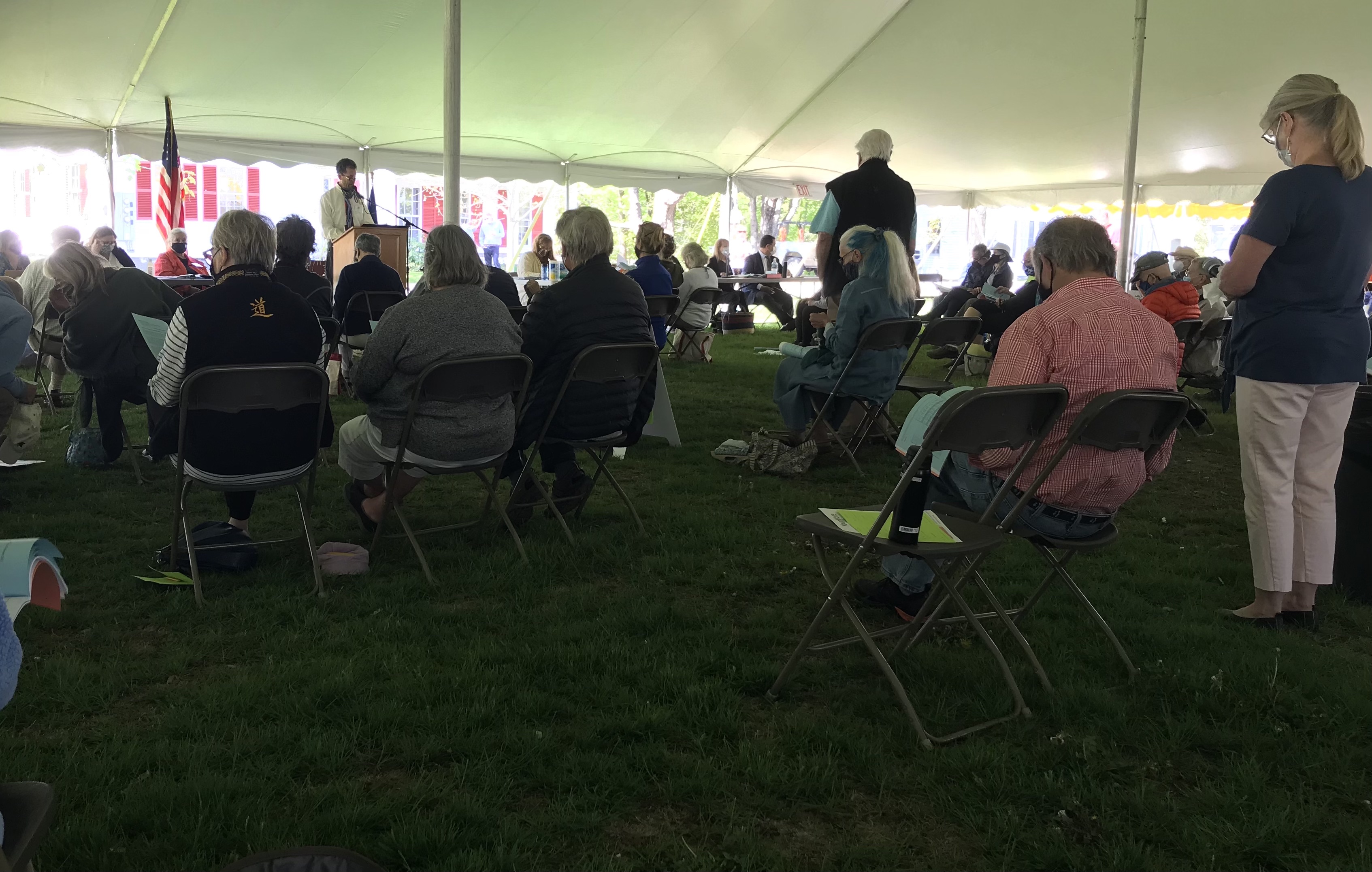
The smaller towns of New Hampshire and Vermont have a wonderful tradition: once a year, all the townspeople gather for Town Meeting, to discuss and vote on the important matters of the town. Although Town Meeting is usually held in March, the pandemic postponed the 2021 meeting to May… when we could meet outdoors. The weather today was lovely, with blue skies and a warm breeze wafting the scent of blooming trees through the tent set up on the Lyme Green.

The assembled townsfolk voted on the town’s operating budget for the coming year, with amendments proposed and approved (or denied) regarding the addition of lifeguards for the beach on the town pond; on the withdrawal of reserve funds to make payments on the new town fire truck, or to replace that aging police cruiser; to withdraw a few thousand dollars to support the annual July 4th celebration and the maintenance of the town cemetery; discussion of the paving of a road (and those portions not to be paved), and so forth. Most of these items passed with a modicum of debate. In keeping with the moderator’s opening remarks, it was “ok to disagree, but not to be disagreeable or disrespectful.” Each person who stood to speak introduced herself or himself by name and by home location, often by naming the prior resident of that home… recognizing that town history goes back centuries (and collective memory goes back decades).

The big issue of the year was in regards to our road – River Road – which runs along the Connecticut River. Indeed, it runs so close to the river that, in some places, it is at risk of washing away as the river eats into its banks. Without repeating a long story, today’s heated debate was about whether to abandon a section of River Road and to turn its roadbed into a “Class A trail”, allowing continued public access. Ultimately, by a very close vote, the town decided to do so. Again, the details are complex, and omitted here, but what struck me today was the degree of engagement and decorum by which the townspeople conducted their business. Town residents were there, in respectful conversation with the Select Board, with the Police Chief, with the Road Agent, and with the affected landowners, … and despite the tension and import of the issue to many, the debate proceeded with respect. I am proud of our little town.

Vernal pool

An ephemeral opportunity.

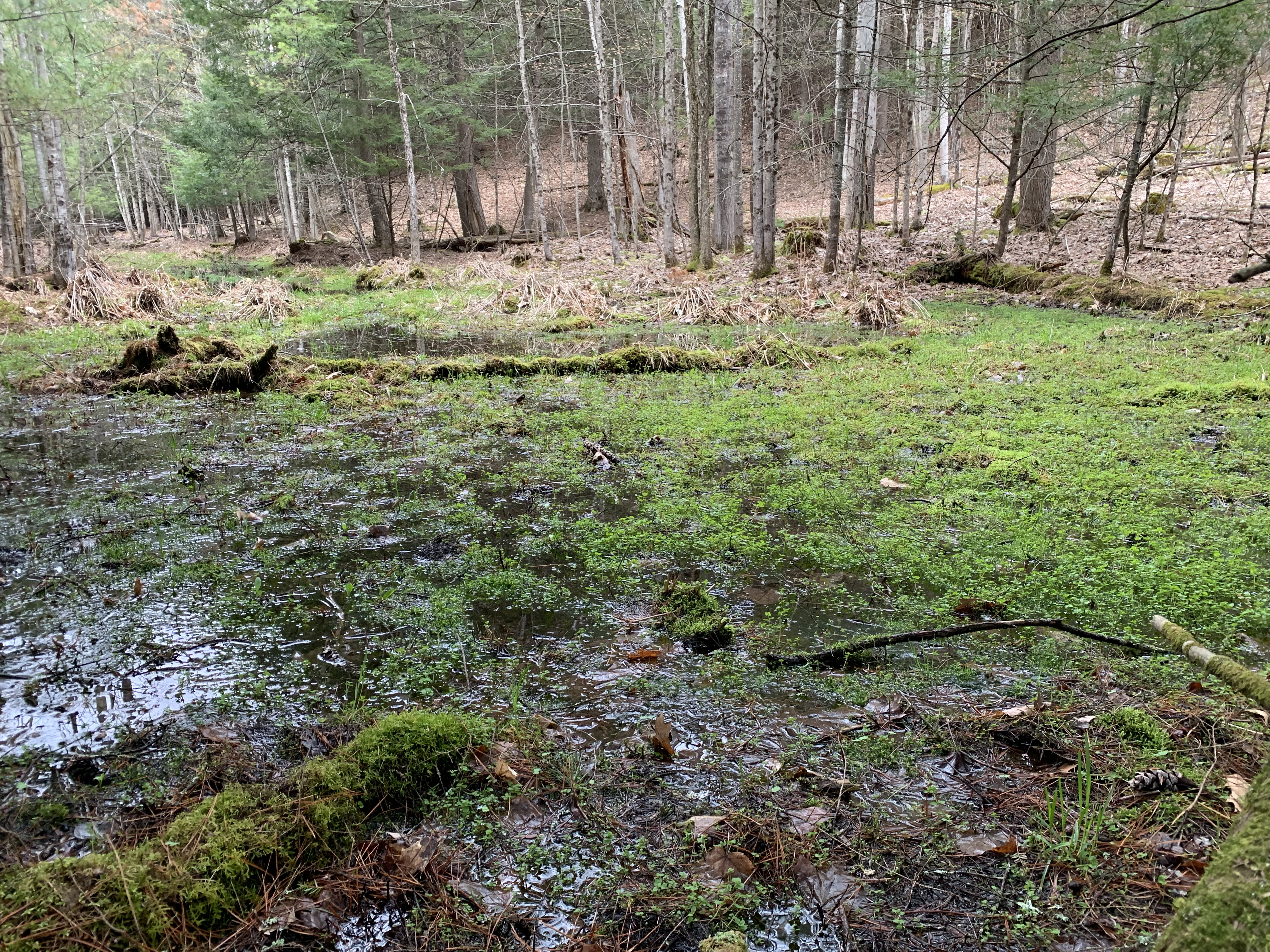
Today was my second visit to a vernal pool in three days. These small empheral pools appear for only a few weeks in the spring (hence the name), typically in shallow depressions that capture snowmelt and early spring rains. They serve as an important breeding ground for frogs, salamanders, and other amphibians… and then disappear for the summer.

This vernal pool, near home, has grown in with moss and grasses.

Today, as I strolled along the fading skidder trails that lace the patch of forest above my home – an area I tend to explore when under winter’s deep snowpack, as I did back at the beginning of February – I was surprised to see I was not the first to visit this pool today.

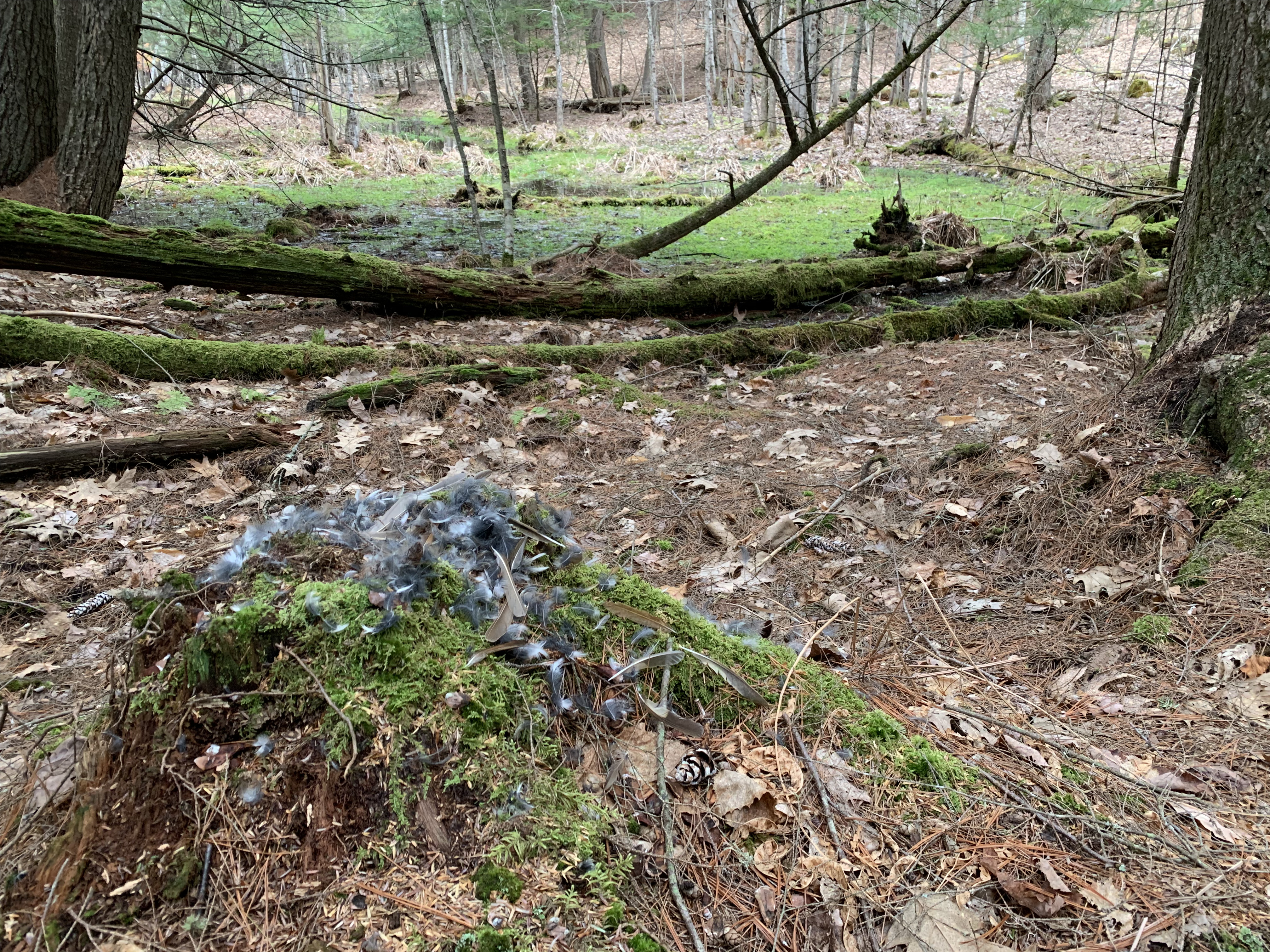
A mossy tree stump served as someone’s dinner table.

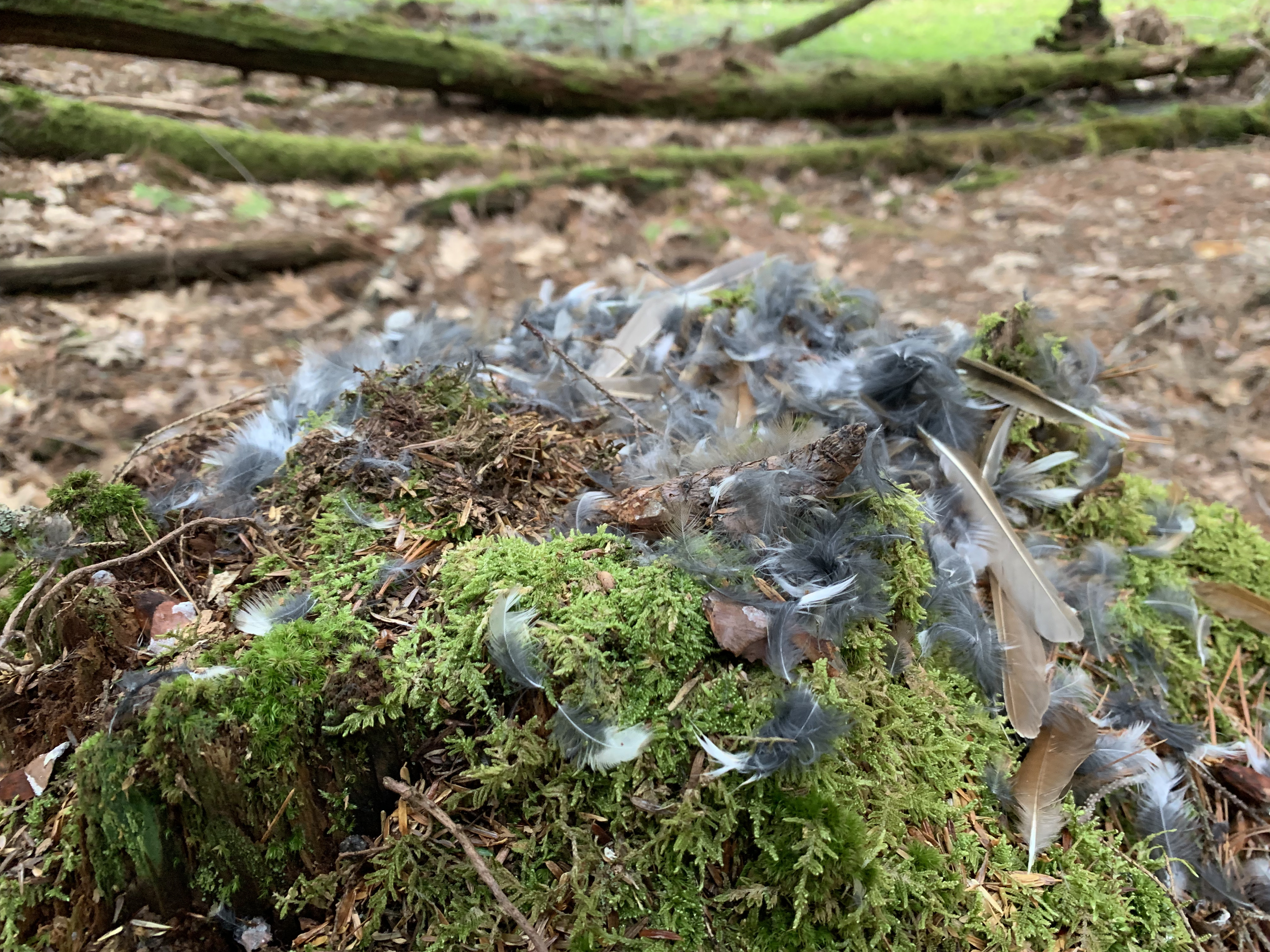
Let’s take a closer look. This tree stump was covered in feathers – very fresh feathers. I’m assuming some carnivore – a fox, perhaps? – had used the stump as a dining table for consuming an unlucky member of the local avian population.

Curiously, the feathers were on the stump – and only on the stump.