Backpacking Zealand notch

Our first-ever family backpacking trip, through Zealand notch in White Mountain National Forest.

On Labor Day weekend, we took the kids on their first backpacking trip.  We hiked in from Zealand road past Zealand hut to Thoreau Falls, within the NH White Mountains.  The weather was fantastic, and we found a nice campsite off in the woods away from the falls.  We spent two nights there, with a dayhike up to Ethan Pond in between. We had campfires and went swimming under the falls.

We’re ready to head out on our first backpacking trip, at the Zealand trailhead in NH White Mountains.

See the photo gallery.


This post was transferred from MobileMe to WordPress in 2021, with an effort to retain the content as close to the original as possible; I recognize that some comments may now seem dated or some links may now be broken.

Auckland, New Zealand

We spent our first day in New Zealand, a glorious sunny day, hiking up the harbor volcano called Rangitoto.

Kia ora! We are now in New Zealand, after a pleasant flight from Sydney.  We had a fantastic first day, Sunday, with warm weather and sunny skies.  We took the ferry out to Rangitoto island, a small volcano which popped up out of the harbor only 600 years ago.  Read on!

Auckland NZ: many sailboats out, with Rangitoto in background.
Continue reading “Auckland, New Zealand”

Himalayan trek

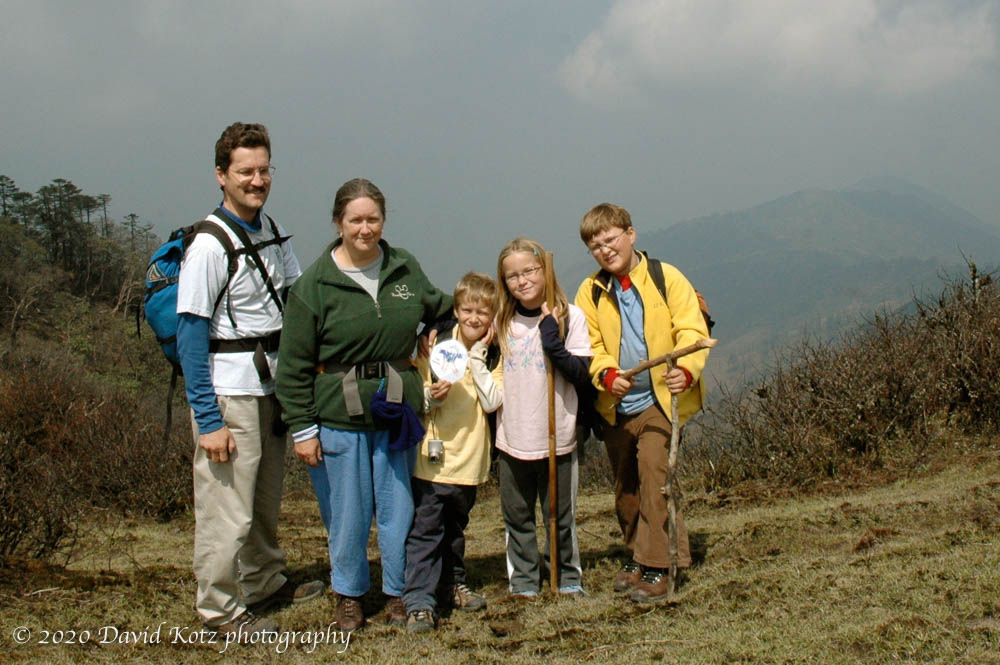
Can you see Mount Everest in the photo below?  Neither can I.  We spent six days trekking along the Singalila ridge, the border between India and Nepal, but we were in the clouds the whole time. Nonetheless, it was a fantastic trip and a beautiful place. Read on, and check out the photo gallery!

Family photo at a sunny break during the day. On a clear day, one could see Everest in the background. Not today!
Continue reading “Himalayan trek”

New Year’s day

Hiking to Triund pass above Dharamsala.

Following our 25-year tradition, I spent New Year’s day hiking with my Dartmouth friends David and Kathy. This year, we have our families along, including Benjamin (age 4).   Read on and check out the photo gallery.

Chubbers in the Himalaya! David with Kathy and David in the Triund pass above Dharamsala, India, on New Year’s day.
Continue reading “New Year’s day”

MobiSys in Colorado

Some hiking and sightseeing around a conference in Colorado.

At the MobiSys 2008 conference, which was held at Breckenridge resort in Colorado, a group of us met to celebrate the retirement of Carla Ellis by taking a hike in the beautiful Rocky Mountains.  See the trail description and review.

Surendar Chandra, David Kotz, Carla Ellis, and Rick LaRowe.

On the way back, I drove over Loveland Pass to stand on the Continental Divide. Gorgeous!

See the photo gallery.

This post was transferred from MobileMe to WordPress in 2020, with an effort to retain the content as close to the original as possible; I recognize that some comments may now seem dated or some links may now be broken.
Skiing Mount Cardigan

Skiing the east side of Mount Cardigan.

In early January 2008 I met with some friends to ski up (and down) the east side of Mount Cardigan.  After a big dump of new snow, it was a popular destination that day.

David Metsky, near the summit

See the photo gallery.

This post was transferred from MobileMe to WordPress in 2020, with an effort to retain the content as close to the original as possible; I recognize that some comments may now seem dated or some links may now be broken.
Riva del Garda, Italy

I attended WiOpt 2005 in Riva del Garda, Italy.

When I attended WiOpt 2005 in Riva del Garda, Italy, I spent some time strolling around this picturesque village, and took a day off to drive around Lago di Garda.  Gorgeous place! 

On another day off, I walked right out the front door of my hotel; in a few blocks I reached the base of the mountain to the west; enclosed is a sunrise photo of the mountain from my hotel room. I climbed up past the ruins of a small castle, and a beautiful tiny mountainside chapel, to a tiny peak near the summit. The little peak, known as Cima Sat, seems to be the common destination rather than the actual, higher, summit. Although a direct trail offers a lot of exposure and hundred-foot ladders.

Cima Sat is at 1270m; I started my hike at the lake (200m).

See my photo galleries.

This post was transferred from MobileMe to WordPress in 2020, with an effort to retain the content as close to the original as possible; I recognize that some comments may now seem dated or some links may now be broken.
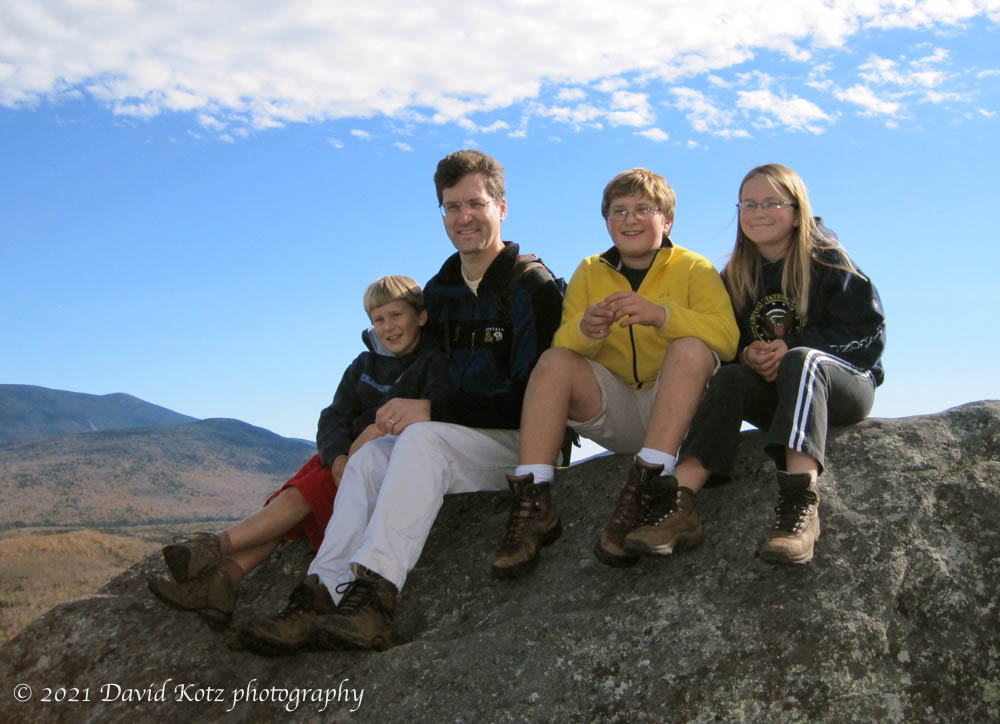
Lake Louise, Banff

Lake Louise, in Banff Canada.

During SOSP 2001 a group of us hiked up into the hills above Lake Louise, in Banff Canada.  This lake is in a gorgeous section of the Canadian Rockies.

We stayed at the Fairmont Chateau Lake Louise, on the edge of the lake and in the midst of some impressive mountains.

October 21, 2001. Lake Louise and Fairview mountain.

See photo gallery.

This post was transferred from MobileMe to WordPress in 2020, with an effort to retain the content as close to the original as possible; I recognize that some comments may now seem dated or some links may now be broken.
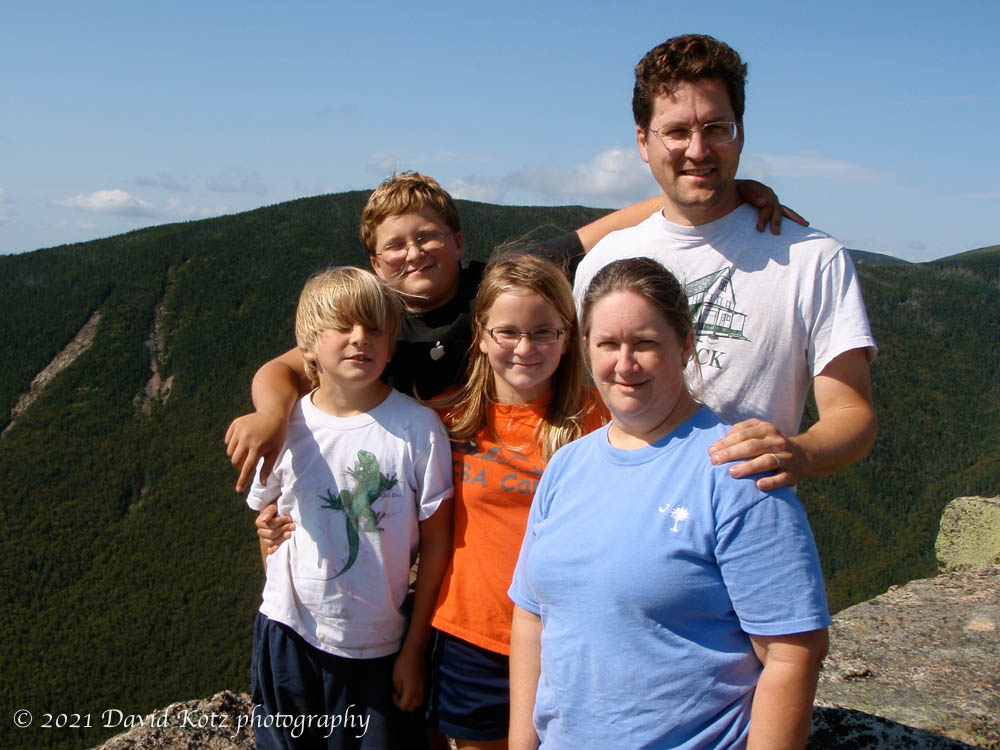
Madeira

A fabulous week in Madeira.

We’ve just returned from a fabulous week on the island of Madeira. Madeira is a little volcanic archipelago off the coast of of Africa, about 400 miles west of Casablanca. Part of Portugal since it was discovered about 500 years ago, it feels more like Europe than like Africa, but environmentally it’s a sort of Hawaii of the Atlantic. Tropical climate. Steep, dramatic verdant hillsides, luscious flowers everywhere, fabulous tropical fruits, and incredible seafood. Well, except the main island has no sandy beaches. 

See this photo gallery.

Hiking

For us the highlight was the walking. It turns out to be an incredibly nice place for hiking. The hillsides are beautiful, with stunning ridges and ravines, beautiful tropical forests, terraced fields, and neat rural villages. You’d think it would be hard going, with all that steep terrain. As it turns out, though, they have developed an extensive network (thousands of miles) of aqueducts, called “levadas”, over the past 100 years. It turns out that although they have plenty of rain, most of it simply runs down the steep slopes to the sea… so they capture it and route it through the levadas to all the fields. These levadas, about 2′ wide and 1-2′ deep, usually open to the air, follow the contours of the hills, of course, and are thus essentially flat. They are a public network, so in most places it is acceptable to walk along them. In some places, that means walking on a dirt path alongside the water channel. In others, the hillside is so steep that you walk on the concrete wall of the levada, which is maybe 18″ wide, and on one side you have the flowing water, and the other side you have a several-hundred-foot drop down into the ravine. It can be “vertiginous”, as the guidebook says. Other places, they tunnel through the hillside, and you crouch a bit and walk through the darkness for anywhere from a few feet to several hundred yards, trying not to hit your head or fall into the levada. 

On our first hike, a newer levada (only 30-40 years old), it weaved through the forests and occasionally through a small village. Here and there was a little sluice gate where the water could be released to flow down into a farmer’s field. These gates were controlled by the levadeiro, a man who manages the levada. While stopped for a late-afternoon snack one day, a very old looking man strode along the levada past us, in his traditional wool hat and turned-down leather boots, clearly comfortable with the hundred-foot drop along the levada. I’m pretty sure he was the levadeiro; he certainly looked the part.  [read detailed description, with photos]

But on our next hike, on one of the oldest levadas that flowed right into Funchal, it spent very little time in the forest and most of its time flowing alongside old houses. Indeed, this levada was mostly covered over, and the resulting three-foot-wide “sidewalk” was clearly the main path for transportation to and from the houses along the levada. We passed many people going about their daily business, making us feel silly in our hiking boots and backpack. We passed numerous neat little houses overflowing with tropical flowers, and countless banana trees, the principal cash crop at that altitude. In many places it was amazing to see extremely fancy new villas being constructed, most likely for an emigree returning from afar after making his riches.  [read detailed description, with photos]

Wine

They are of course famous for their wine, “Madeira”, so we of course stopped by a few wineries for a tour and a taste ;-). 

Vines were brought to the island by the first colonizing party, the Portuguese, in the late 15th century, and wine has been made ever since.  But, as the story goes, one barrel shipped to the New World accidentally remained on board and sailed back to Madeira.  The captain assumed that the wine was now bad, having sat in the barrel on his boat for so long.  But upon tasting, it had improved!

It turns out that the slow heating in oak barrels, which happened naturally during the sea voyage, and now happens naturally in oak barrels stowed in the attics of wineries (or in the cheaper varieties, in heated vats), was responsible for the special flavor.

We toured the Blandy’s winery in downtown Funchal, one of the oldest and biggest, run by the Blandy family of Britain. They had a great tour including a wine-tasting.

But for a more interesting experience we went to a little place, barely marked, off one of the side streets… the home and winery of the Barros e Sousas brothers.  Mr. Barros e Sousas was effusively welcoming, insisting that we climb up to his attic to see all the dusty barrels, that we taste some bottles, etc.  Neat place!  Most of his father’s and grandfather’s barrels had worn so much that the writing was not always legible, and thus many old old barrels are of uncertain vintage.  Thus he sells them as “extra reserve” (from his grandfather’s day) or “reserve” (from his father’s day) since he is not allowed to cite them as a specific vintage.  They thus cost less… but taste great!

They are also famous for their embroidery. Absolutely beautiful, but incredibly expensive, so we mostly had to just look.

Grand tour

Since we spent all of our nights at a hotel in Funchal, we wanted to get out at least one day to see some more of the island.  The roads are incredibly narrow and twisty, and the local drivers quite bold, so we were not too excited about renting a car.  The island bus system is quite good, but not terribly convenient for a day-long tour of the island.  So we signed up with a tour company for a tour of the northeastern part of the island.

The next morning a taxi arrived, rather than the expected minibus.  Change of plans… they were short a minibus so one of their drivers brought his taxi instead.  So we had a private tour! Our driver/guide, Paolo, was an ambitious young man who spoke several languages: Portuguese, English, German, French, a little Spanish, and was enrolled in classes to learn more.  He was also very talkative and informative, so we learned a lot as we drove.

From Funchal we zipped down the highway to the center point of the island, then north over the mountain pass in the middle, and then east around the north, east, and south coasts back to Funchal.

On our tour of the eastern half of the island, we passed numerous vineyards, all terraced into the steep hillsides. Given the terrain, the natural shape of all the roads is “hairpin turn”; coupled with the fact that all the roads are following the contours of a steep hill, and that nearly all the roads are barely more than 1 lane wide, this makes driving pretty hairy. The drive also gave us a flavor of the incredible diversity packed into a small space… as you change elevation from sea level up to the peaks at 6000′, the vegetation changes dramatically. The northern coast is much wetter than the southern coast (we spent most of our time in Funchal, the main city on the sunny south coast). And since the islands are volcanic, we were able to explore some grottoes (lava tubes, actually) formed by agent lava flows.

Terrain

Even the airplanes landing at the airport do a wild hairpin turn as they land. There is so little flat land in this place that the airport hugs the coast and the runway actually sticks out over the water, on stilts. For some reason, the planes fly low parallel to the runway, then make a sharp 180-degree turn to land on the runway, momentarily flying straight toward the hills. Yikes.

Orchids

Madeira’s tropical – yet mountainous – climate is perfect for growing orchids.  We visited an orchid-growing greenhouse and the gallery includes many photos of these beautiful plants. 

Funchal (the main city)

The city of Funchal itself is wonderful… 500 years old, young by European standards, it still has that wonderful European flavor, with narrow cobblestone streets, sidewalk cafes, ancient churches, and neat old architecture. On the left is one of the many beautiful mosaic sidewalks, Portuguese style.

Although quite a walkable city, we figured out the local bus system and found it quite handy. Because the terrain is so steep, a bus can be a handy shortcut to a steep climb uphill. Streets got a lot steeper and narrower as we climbed, stopping occasionally to press ourselves against the wall as a truck came barreling down the hill. 

We strolled through the city market, filled to the brim every day with every sort of flower, fruit, or vegetable one can imagine, alongside the fish market with the freshest seafood. 

Fortunately, there’s no shortage of Portuguese cooking in all the restaurants nearby. Yum… At Arsenio’s, the chef (Arsenio) stands out front grilling the most fabulous fish espadas, that is, fish and vegetables on a skewer. Inside, during dinner musicians play and sing “Fado” music. Although the food here was good, the atmosphere was a bit touristy… across the street, O Jango’s was much more interesting; tiny and crowded and also very good food. 

Tourists

Although it is part of Portugal, the British have been significant presence for about 400 years, arriving first as part of the sugar and wine industries. So it is a very popular place for British tourists, now, and quite a few Germans, although we saw very few Americans. So almost everyone, at least in Funchal and definitely at any tourist sort of place, speaks English. I hardly had a chance to dig out my old Portuguese. Unfortunately, the tourist industry is growing so fast that hotels are being built by the dozen. The  gallery includes a photo that shows a view of the western edge of “Hotel town,” a cluster of many hotels on the western edge of Funchal. We stayed at the five-star Madeira Palacio, which we highly recommend.

Beaches

Madeira is not a place to go if you want to sit on a beach and soak up rays. True, the little island of Porto Santo (a ferry ride away) has an incredible beach, but the main island itself has hardly any.  Most are rocky. The rocks are all smooth stones, not too bad really. Toward the water it becomes a dark sand. So, I actually tried to swim, but the water was cold and just under the surf were more of the rocks, churning in the surf, so it was actually rather unpleasant.

Overall, a fabulous place. See my photo gallery. See http://www.madinfo.pt/ for pointers to information.

This post was transferred from MobileMe to WordPress in 2020, with an effort to retain the content as close to the original as possible; I recognize that some comments may now seem dated or some links may now be broken.
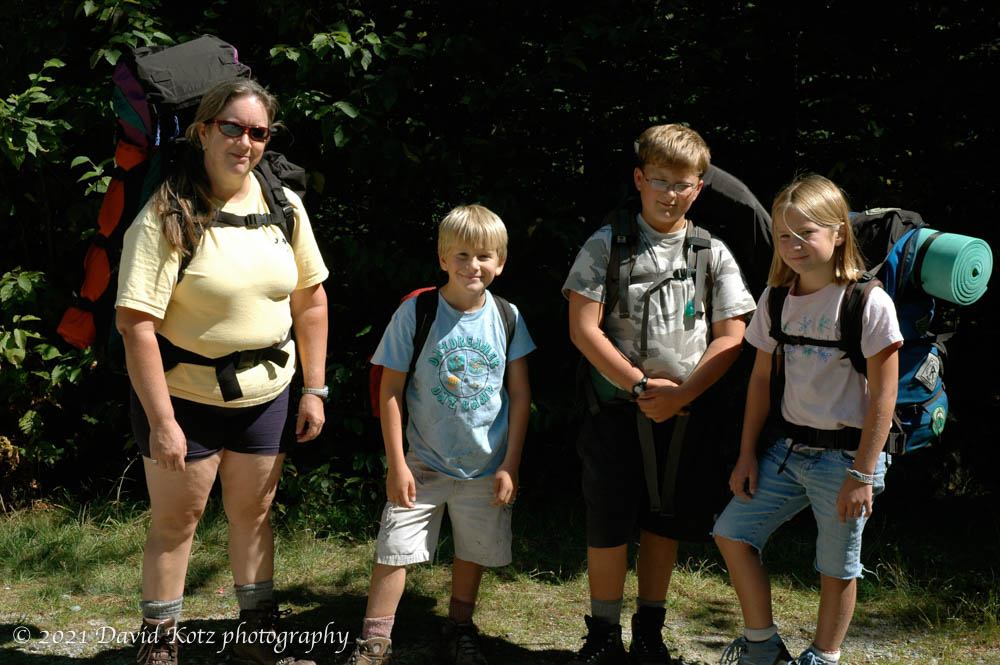
Madeira – Levadas (2)

Walk along the Levada dos Piornais and Levada do Curral.

In our second walk along a levada, we followed one levada from our hotel into the country, then up through a village to another levada, and then deep into a river valley. See the photo gallery and the post about the whole trip.

The first levada was the Levada dos Piornais, one of the oldest on the island. We picked it up a few blocks uphill from our hotel, and followed it upstream, westward. The initial part was through some rather depressing shanty/farms, but the scene quickly changed as it began to pass older, established banana farms.

Most homes in Madeira, particularly the nicer ones, seem to be surrounded by walls, with an entrance gate. Here you can see a typical section of the early part of the Piornais, where the levada is covered over to become a sidewalk, with people’s doorways along the wall. Above we peek through the gate to an elaborately floral display along the steps leading up to the house.

I liked this spot, with an old wall and a tree leaning over the levada.

Here we leave the sidewalk section and enter a cliffside section, where the levada clings to the side of a cliff. Sometimes it’s supported by arched stonework, like a bridge, and other times it cuts into the cliff-face.

Truly impressive. I was glad for the recently installed railings, because the drop was severe… several hundred feet in some places. Look closely at the pictures… see the trucks down below? it’s a long way down.

Here’s a place where they decided to cut the levada through some cracks in the cliff. We hikers then must scramble through.

Another set of impressive views. Here, you can get a sense of the vertigo we faced.

Here, we had reached a point where I was able to walk down below the levada and snap this picture looking back up at it… here you can see the bridge-like stonework. (In a few places the levada actually was on a bridge, a few feet out from the cliff.)

At this point we left the levada and climbed up through a village to find the Levada do Curral. That levada, too, weaved through many villages, like a sidewalk, and then entered a wooded section with some more steep drops.

Quite a ways further, we climbed up through a village to join the Levada do Curral, another very old Levada. This levada led deep up the river valley. Here are two views upward into that valley… on the right we peek between two high ridges (and below a layer of clouds) to a village high on a distant sunny ridge.

This levada, after passing much of the same “sidewalk” sort of terrain, past villas and villages, entered a wilder portion with only an occasional small farm. Below is a grape arbor overhanging our route.

Here we have reached our turn-around point, where the steep drop becomes truly treacherous, and the hillside is so steep that the plants overhang the levada and a spring drips, no, pours water on your head. We’re actually quite far up a river valley, near the head of the levada.

Next is a view of the head of the ravine, and you can see a bridge where the levada curves across the ravine toward the left.

Here is a view looking back down the valley. We walked pretty much all the way up from that fancy bridge in the background. Actually, it’s a pretty neat suspension bridge, very high and very long, for the new coastal highway.

See the photo gallery and the post about the whole trip.

This post was transferred from MobileMe to WordPress in 2020, with an effort to retain the content as close to the original as possible; I recognize that some comments may now seem dated or some links may now be broken.