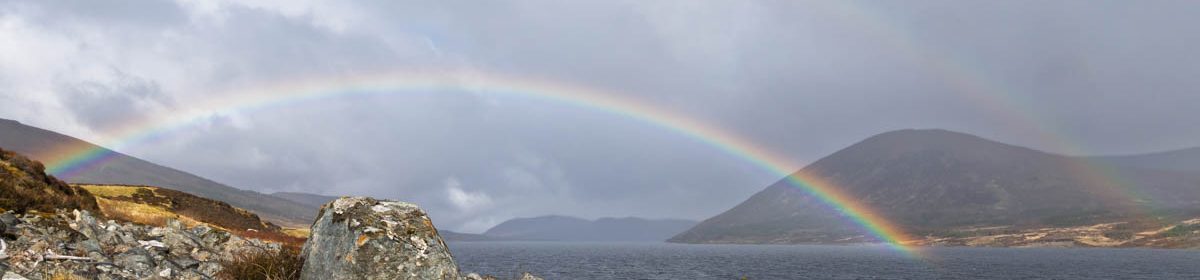
While walking through a rural area outside London, early in my year-long stay in England, I came across a bright-red postbox embedded in a very old stone wall in the tiny village of Shalford, outside Guildford. Although self-standing pillar-shaped postboxes are ubiquitous, this one sparked my curiosity. Why is this postbox – owned and maintained by the Royal Mail as a public service – embedded in a stone wall? and what does the insignia, embossed on the surface, mean? I later did some research online and found myself embarking on a months-long quest for more postboxes. Read on!
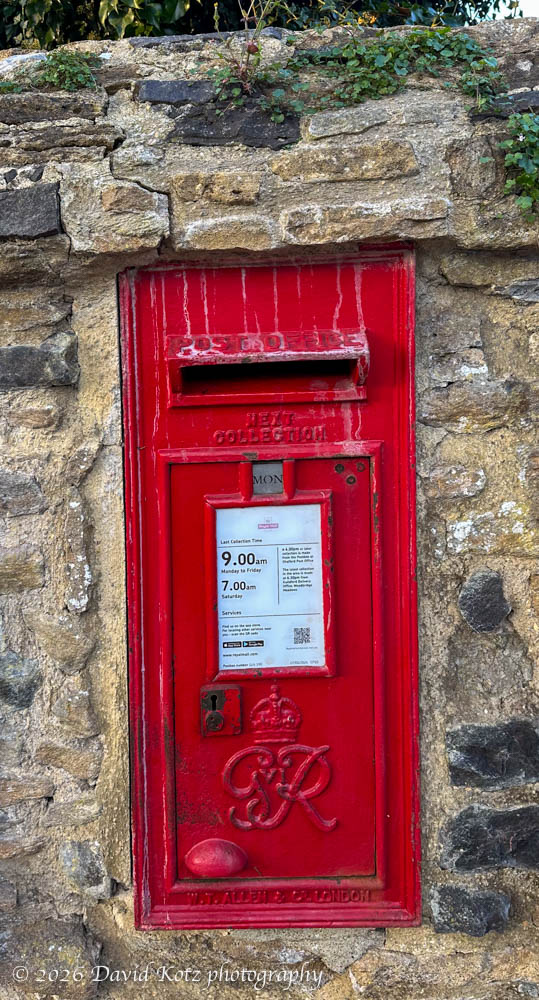
Although the Royal Mail can trace its history back to 1516 [Wikipedia], it has been placing bright-red postboxes around the U.K. since only 1852. (I say “only” 174 years ago because, well, the Royal Mail and its predecessors are over 500 years old 🙂.) The standard design includes the Latin initials of the monarch at the time of installation, with an embossed insignia representing the royal cypher for that monarch. For example, the earliest such boxes were installed during the reign of Queen Victoria – Victoria Regina in Latin – and thus bore the initials VR – or one of two elaborate cyphers representing VR.
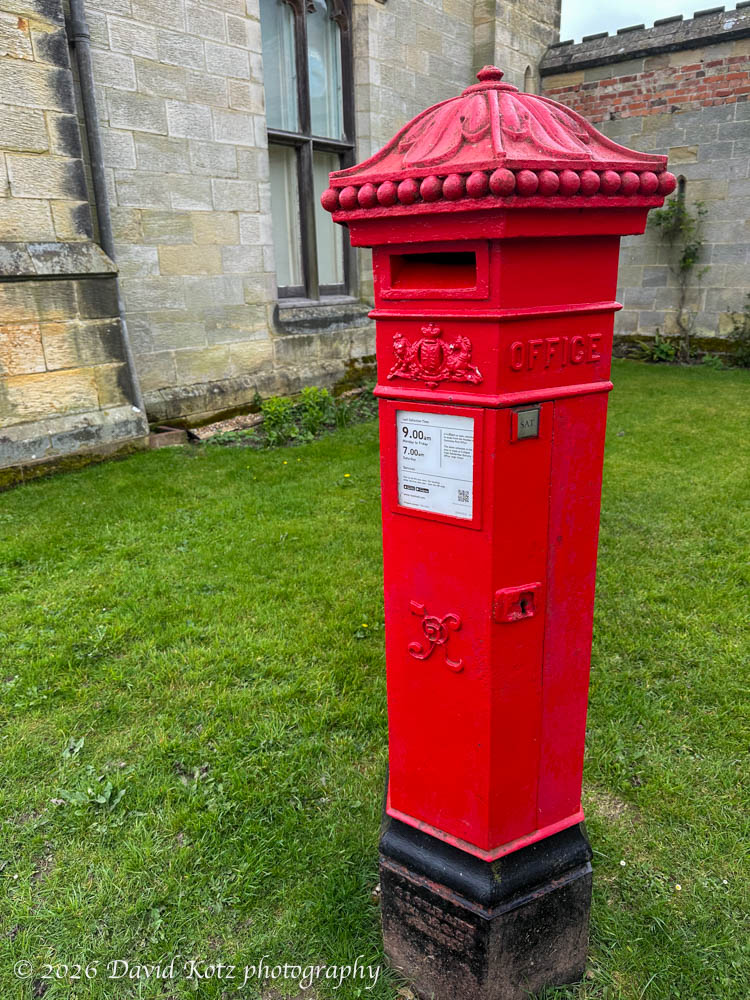
Note the elaborate royal cypher.
The Postal Museum has a lovely webpage explaining this practice, and details of each of the royal cyphers since Queen Victoria:
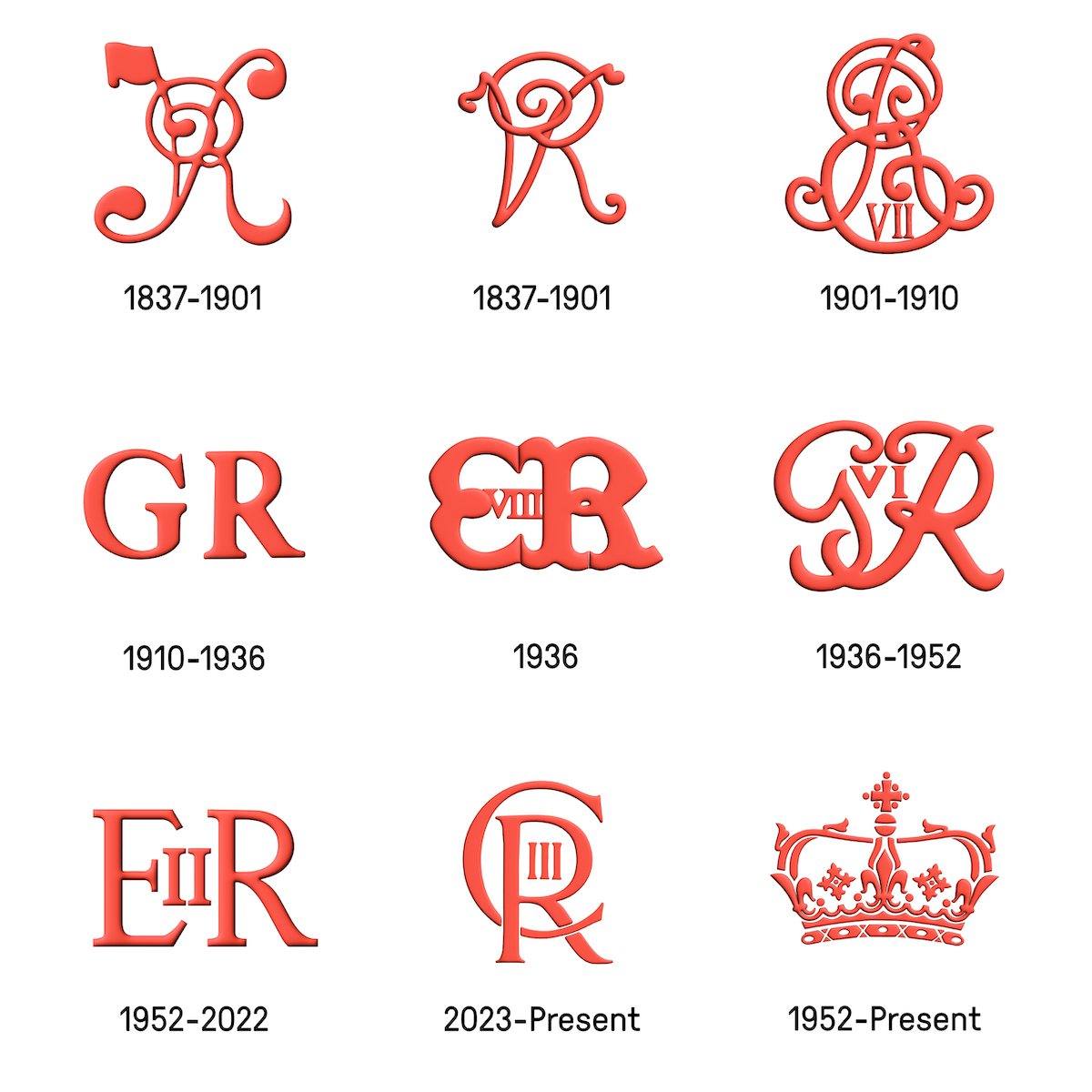
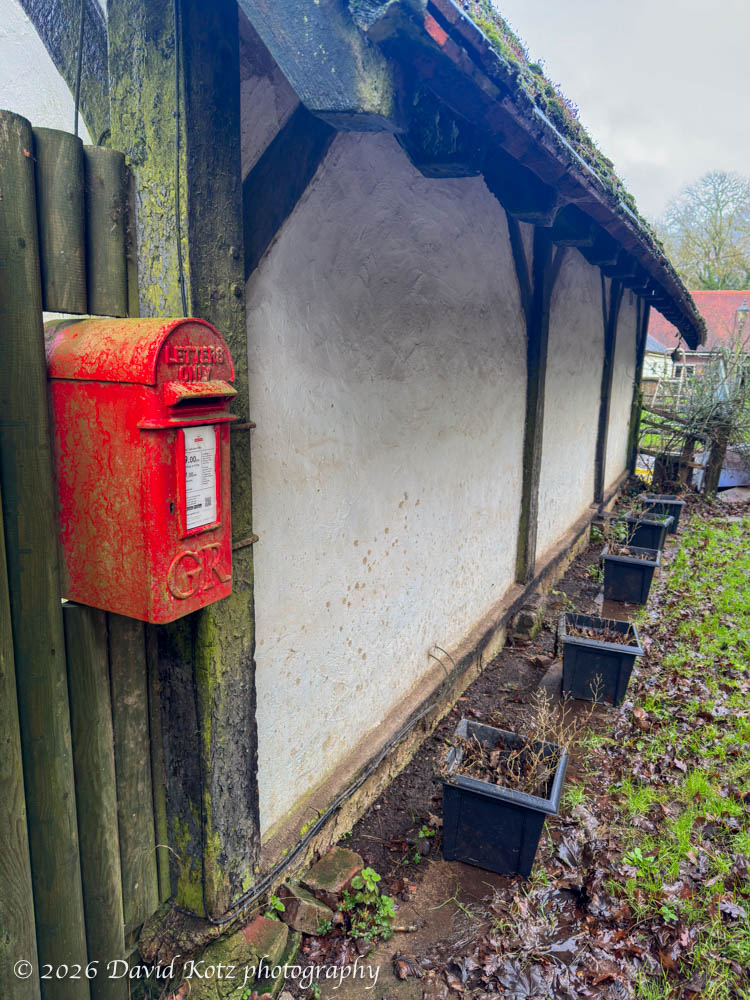
(It’s worth perusing that webpage for the story behind each cypher. Really!) Note the rather plain “GR” (George Rex, i.e., King George V), perhaps an over-reaction to the elaborate design of his predecessor Edward Rex (i.e., King Edward VII). The bottom-right cypher is actually the “Crown of St Andrew, part of the regalia of the Honours of Scotland, otherwise known as the Scottish Crown Jewels.” It is used in Scotland, because the use of Queen Elizabeth’s cypher on a Scottish postbox stirred hard feelings from the long-ago absorption of Scotland into the United Kingdom… leading the Royal Mail to henceforth avoid using the English monarch’s cypher on any mailbox in Scotland.
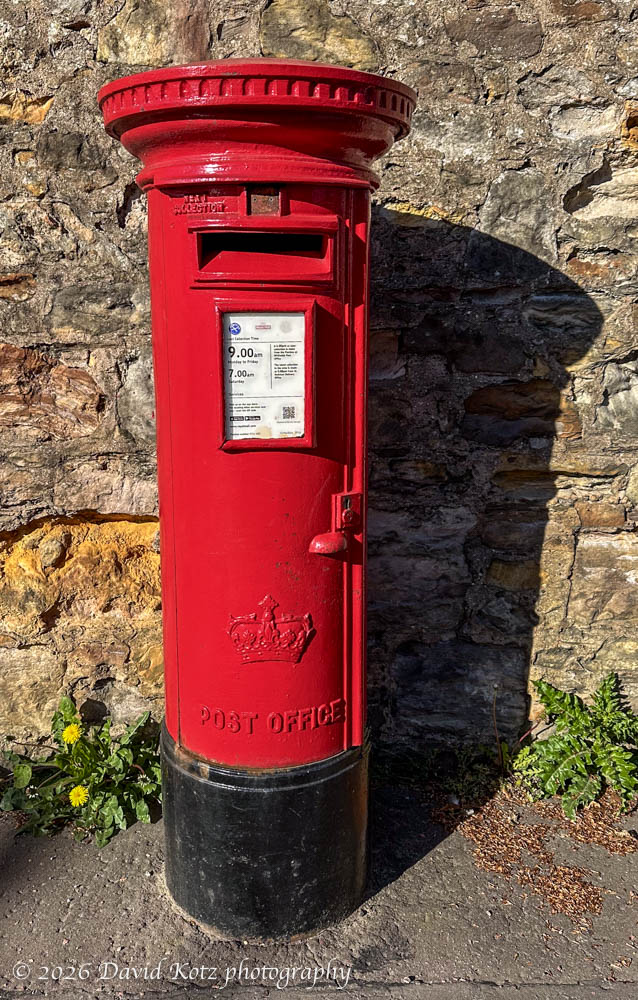
That page also refers to the hobby of cypher-spotting, the act of searching for different royal cyphers on letterboxes. Of course! Some people will hunt for postboxes, trying to collect them all. I’m afraid to admit it, but I’ve fallen into this trap myself, recalling my childhood tendency to collect coins, stamps, rocks, and even beer cans. Now, every time I pass a postbox on the streets of London or along the quiet lanes of the surrounding countryside, I glance at the cypher to see if I may be able to add to my collection of photographs.
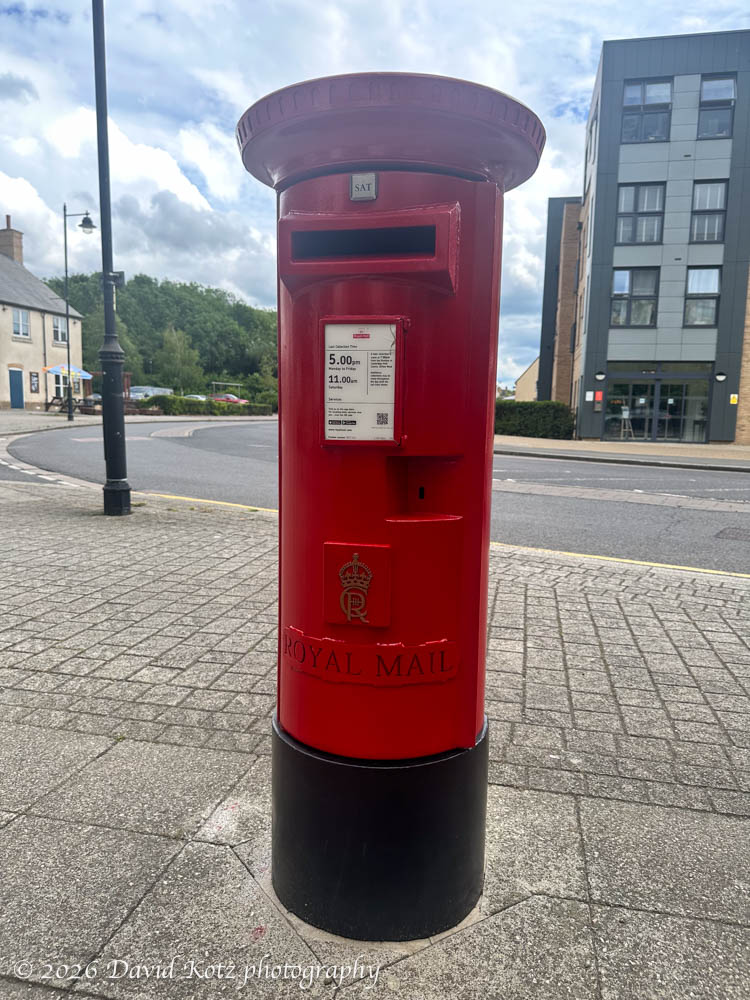
Two of the cyphers are very rare. The newest style, for King Charles III, was first installed only two years ago after his coronation in 2023. I’ve yet to encounter a King Charles postbox in my everyday rambles, but some googling led me to a news story about a small ceremony at the first installation. It was in Great Cambourne, a small town outside Cambridge. So, after a recent hike in Cambridge I hopped a local bus for a quick 30-minute detour to find that very box. Success! As the first installation, this box has a plaque and its cypher is decorated with gold paint.
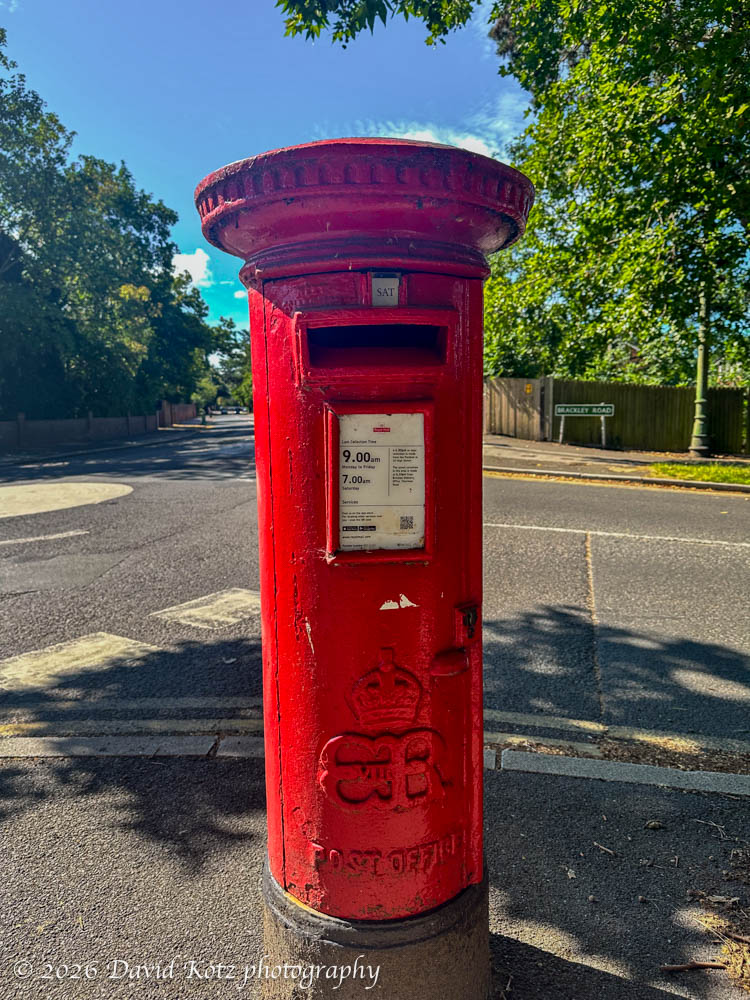
Edward VIII postboxes are especially rare, because he reigned for only 326 days in 1936. A bit of googling led me to a page, assembled by a diligent cypher-spotter, providing a list of reported sightings around the UK. Most of the locations described there are rather vague – sometimes little more than the name of a town or village. Two sightings were sufficiently descriptive to identify a specific location… and, looking at the map, it appeared possible they were close to the Capital Ring trail… and looking even closer, they lay right on the Capital Ring trail (section 3), so I hiked that route last weekend. The first report (Stumps Hill Lane) was a bust – no postbox in the entire two-block length of this tiny suburban lane – but the second report (“the junction of Southend Road & Brackley Road in Beckenham”) was spot on!
Here’s a gallery of my finds, with a close-up of the each cypher shown below.
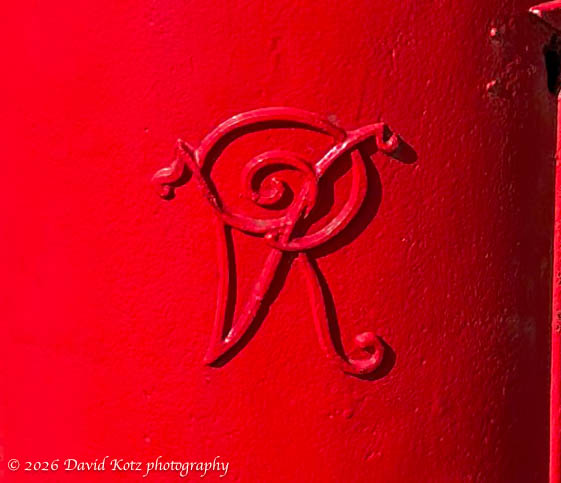
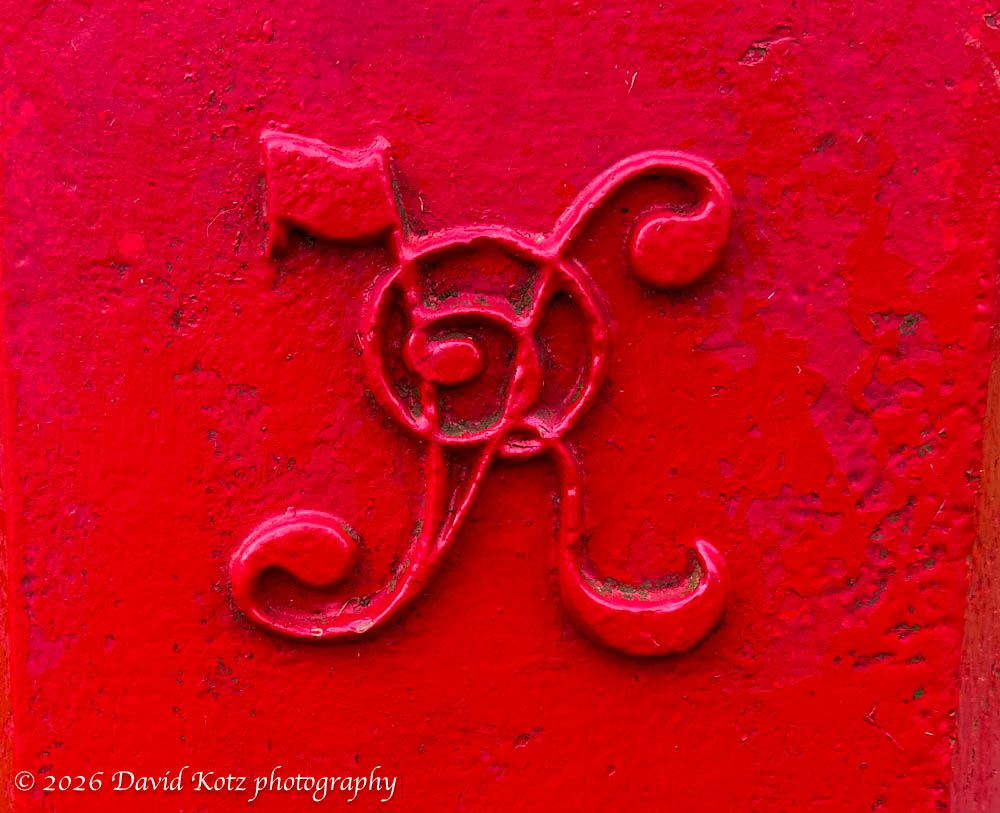
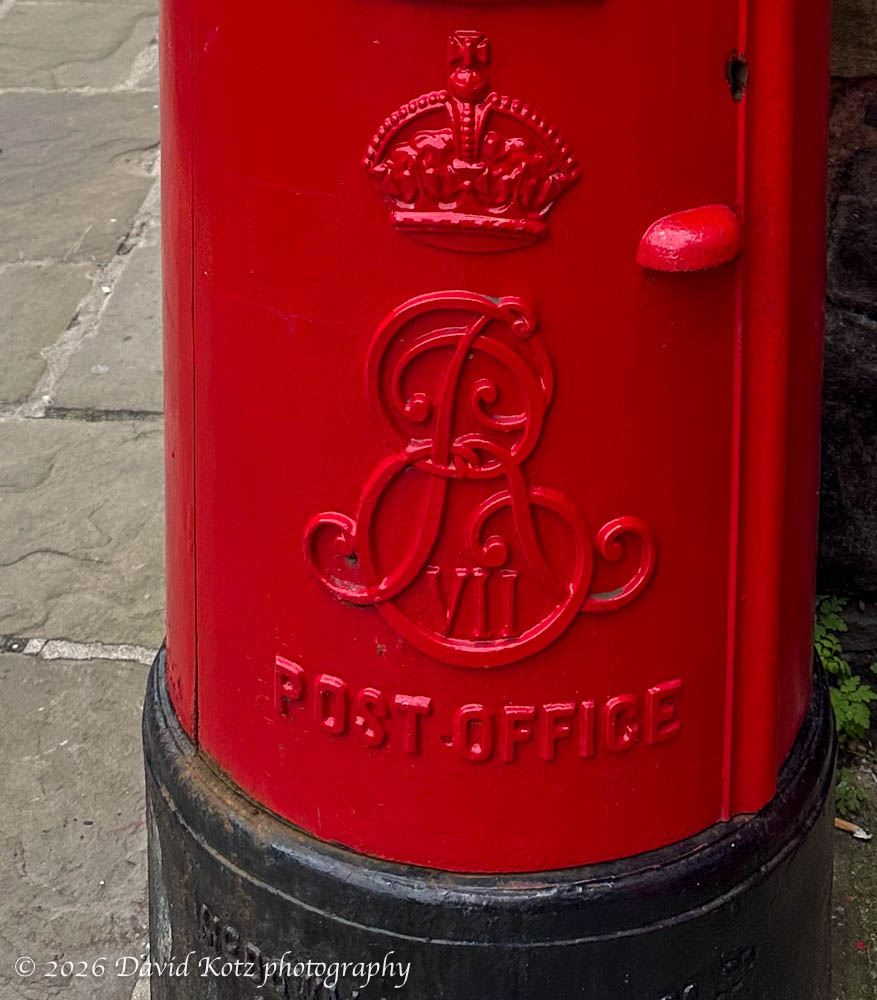
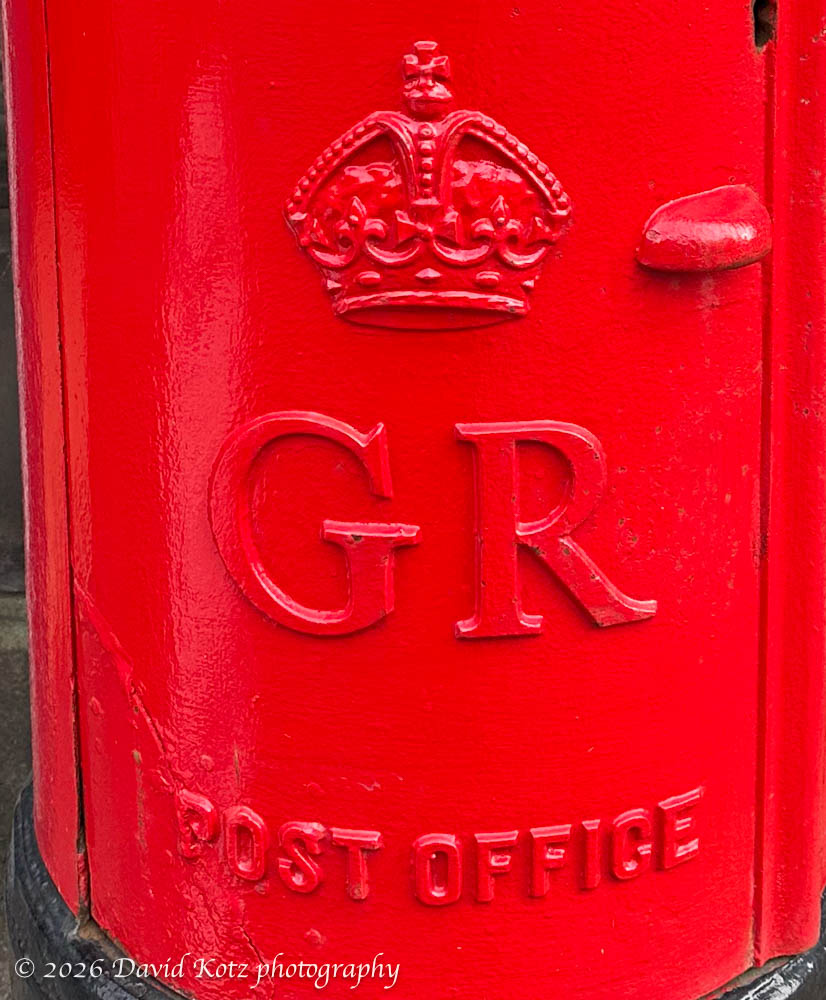
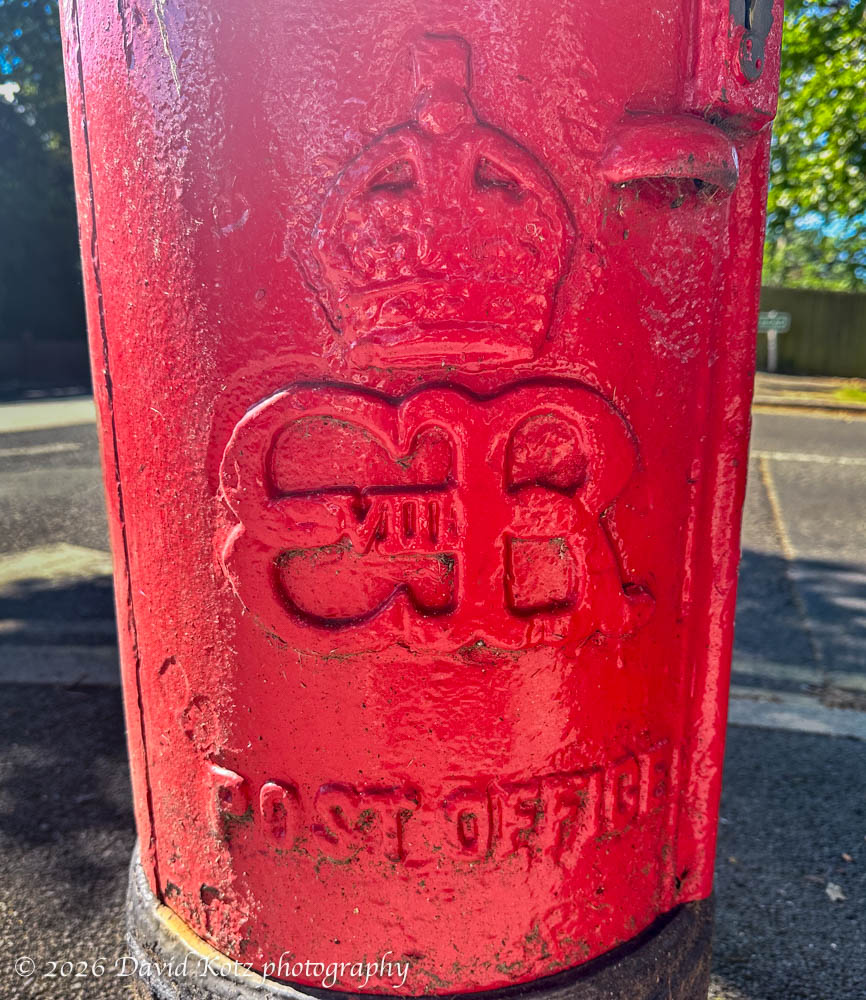
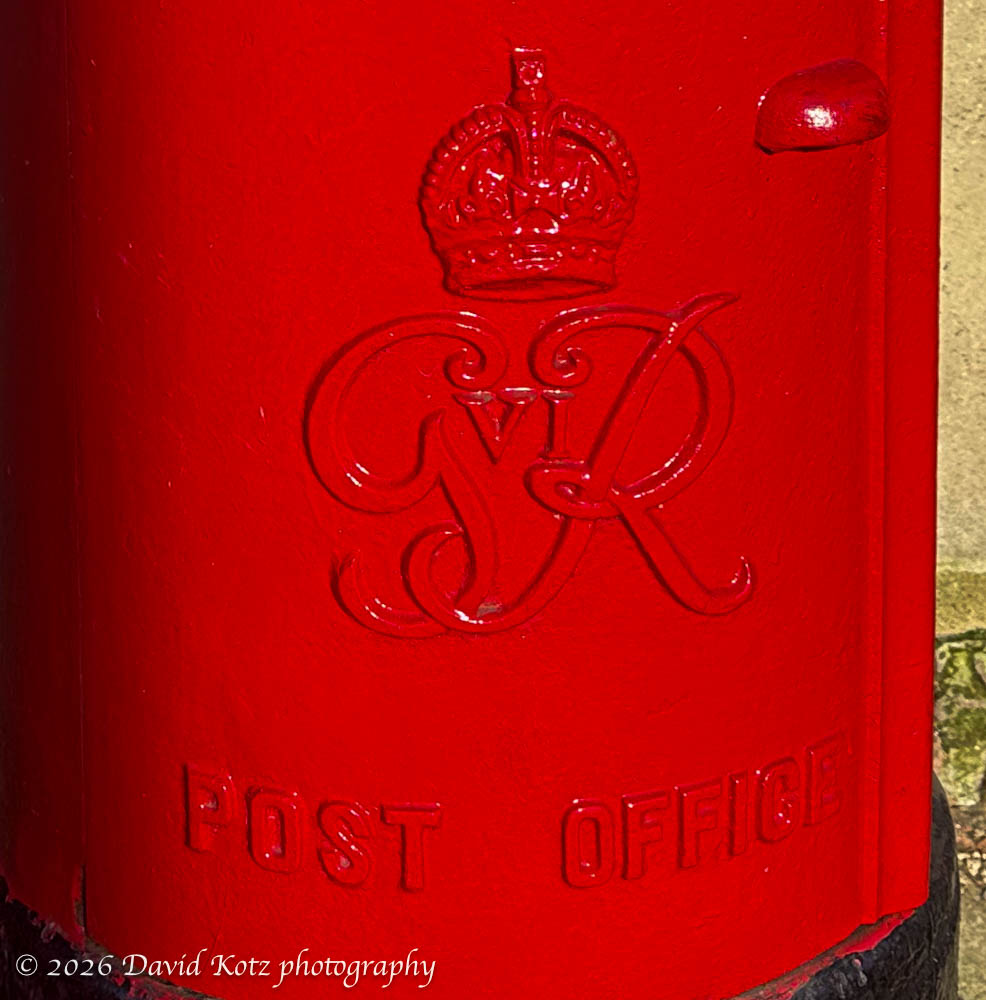

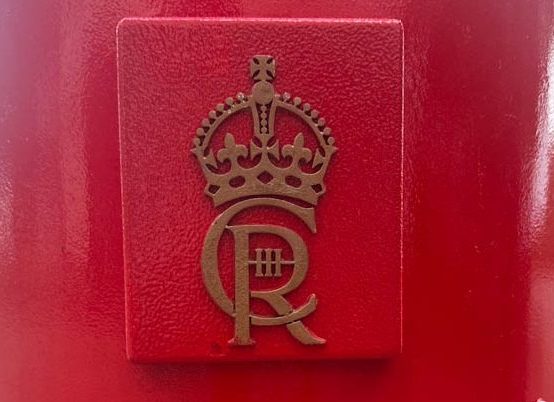
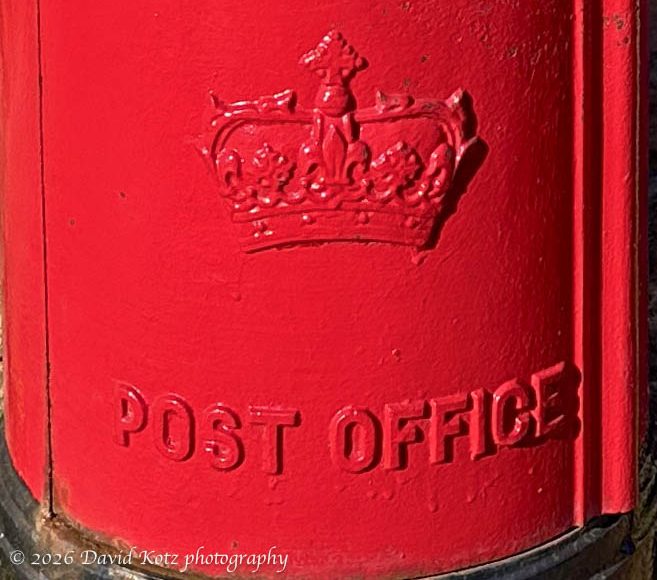
There you have it: I found all nine postbox cyphers. My time in England is now complete. 🙂
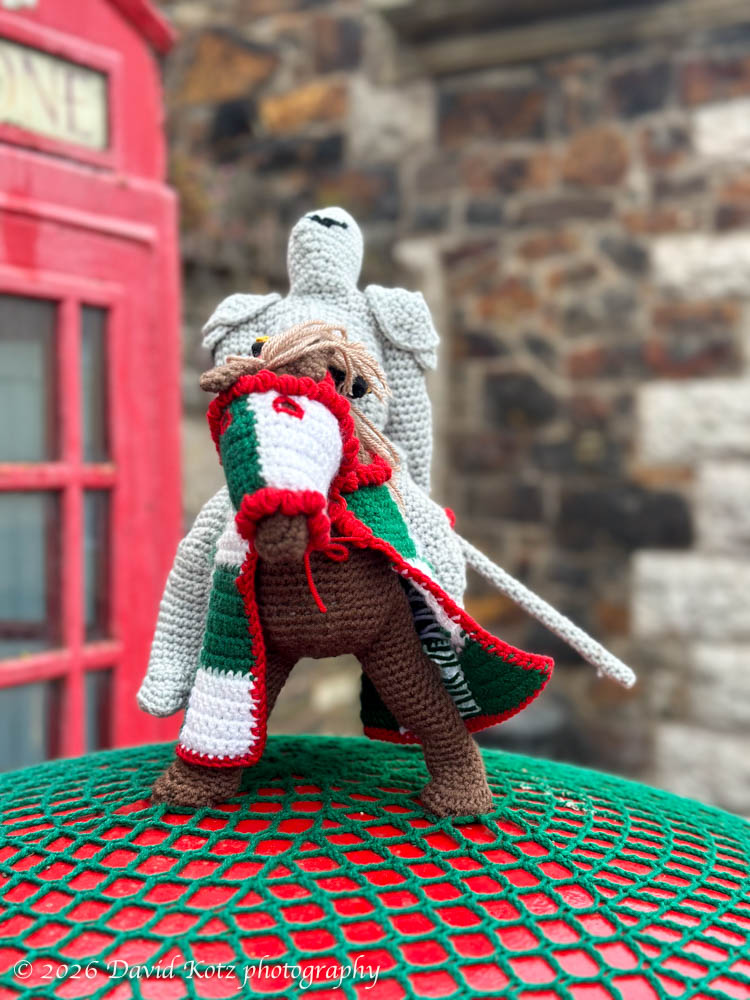
One final note: in two locations I found a bit of local color atop a postbox. For example, the postbox outside a knitting shop in Conwy (Wales) wears a knit cap on which perches a knit knight and horse:
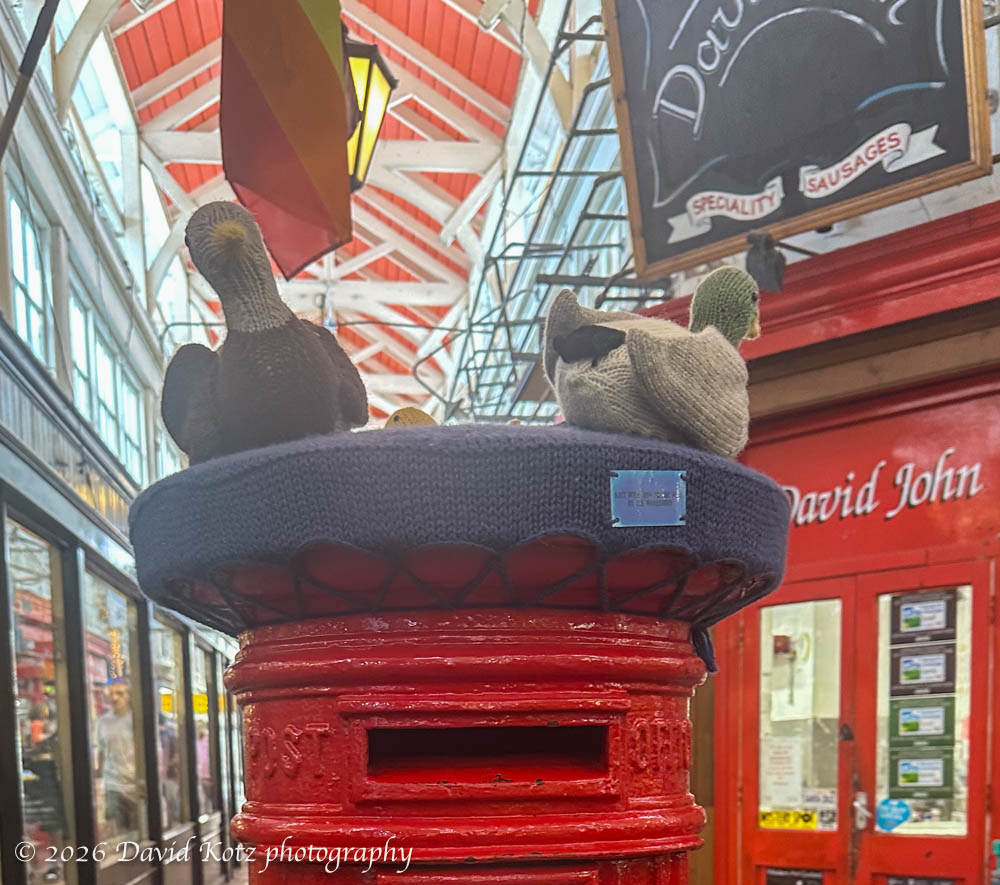
and in Oxford Covered Market, a pair of knitted ducks swim round the cap on this Queen Victoria postbox:
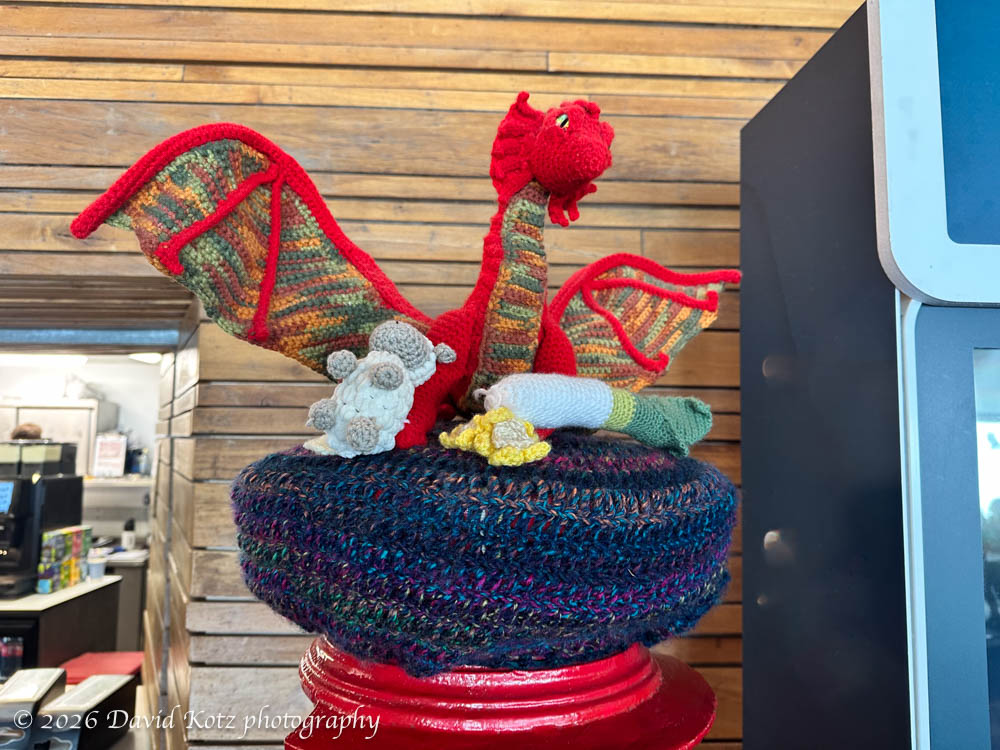
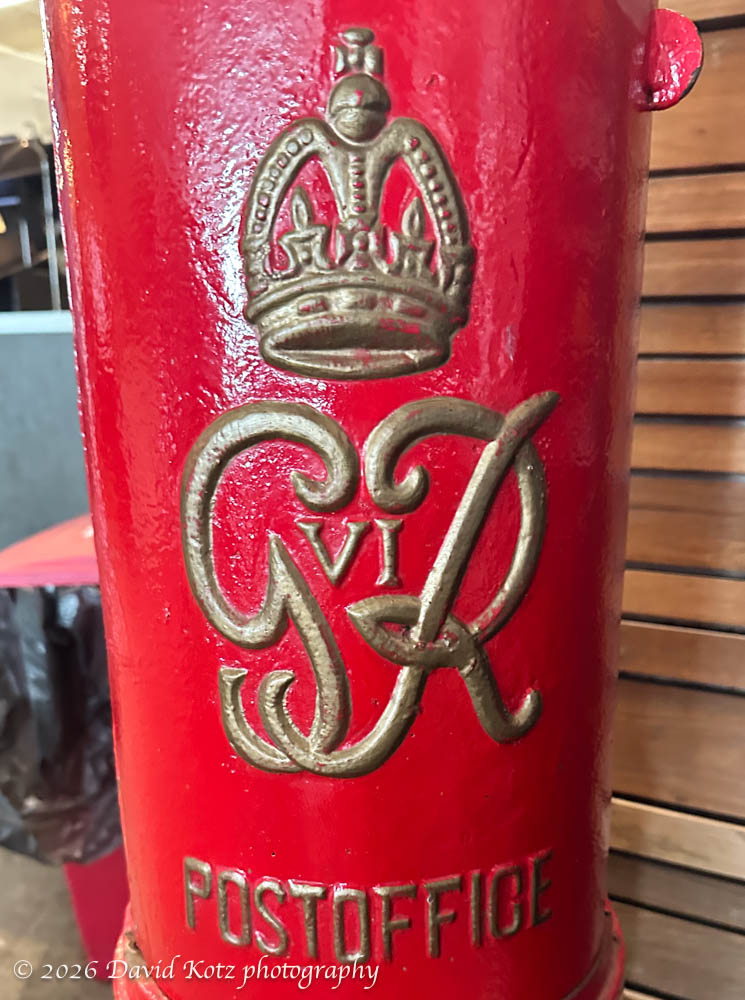
Update: I found this impressive crocheted top for a beautiful King George VI postbox in the gift shop at the top of Mount Snowdon, highest peak in Wales:
Please enjoy the complete photo gallery.


Intriguing – thanks for this!
I enjoy reading about your expeditions, but this will be one of my favorites.
This is fascinating, thank you for sharing! The first image of the postbox in the stone wall reminded me of one in which I deposited a postcard in 2009, located in Fanore, in County Clare, Ireland — except of course, that one was green instead of red. I went back and found a photo and was delighted to now recognize what appears to be a King George V cipher. A quick google search revealed that many of the older boxes from before Ireland won independence were immediately painted green and remain today.
Update (July 3, 2026): added two photos of a beautiful King George VI postbox that I encountered on the summit of Mount Snowdon, the highest peak in Wales. This postbox had a crocheted cap with a dragon, a sheep, and a flower.
Have you ever found a cypherless “anonymous” post box. There is one near Hackney Central.
Now that you mention it, I think I’ve seen some cypherless postboxes in England. Can’t recall where! I know they are more common in Scotland.