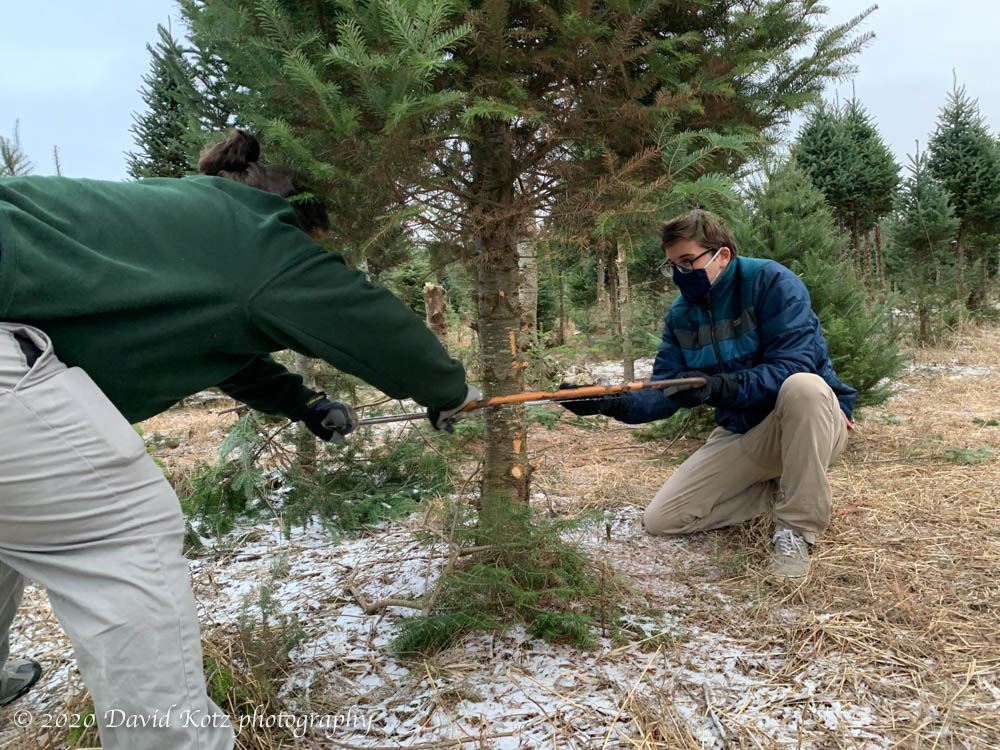
Every year we visit a nearby Christmas-tree lot run by a Lyme family to choose and cut a tree for our home. So, on Sunday, we found ourselves out in a field dusted with fresh snow, searching for the perfect tree. We quickly found one we liked, and the boys cut it down even faster by using two saws at once.
John and Andy cut our Christmas tree with two saws!
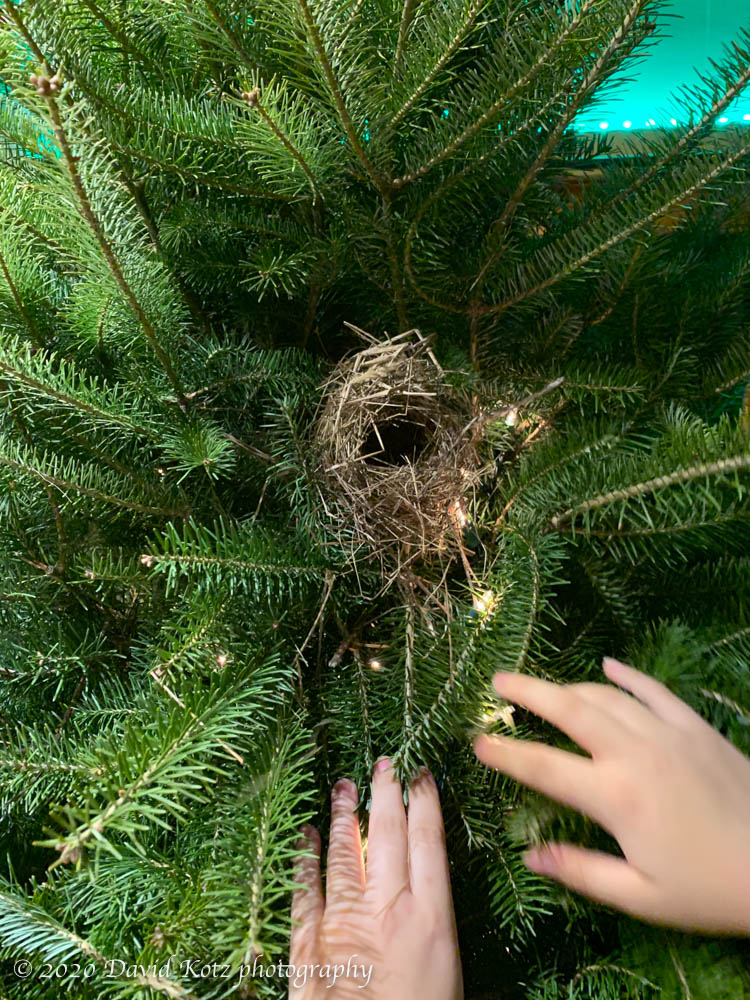
When we set it up at home, we discovered a small birds-nest tucked into the higher branches.
Yesterday was a brilliant sunny day – a nice late-fall day when it should be an early winter day – so it seemed like another great opportunity to get outside. A short drive brought me to the small town of Benton, just west of Moosilauke, and the steep climb to the rocky ridge known as Black Mountain. From its granite ridgeline there is an expansive view across a nearly roadless wilderness to Mount Moosilauke. In the photo below, Moosilauke’s extended north-south ridge is at center, with the Kinsman range at far left and Mount Lafayette’s white-capped peak peeking out behind the Kinsmans.
Views of Mount Moosilauke from Black Mountain summit.
You’ll see it far better in a full-screen version, in the photo gallery… where I include three or four more photos.
Hike stats: distance: 5.6 km gain: 473m time: 2h 0m
Map of my hike ot the summit of Black Mountain and return. Elevations in feet, distances in meters.
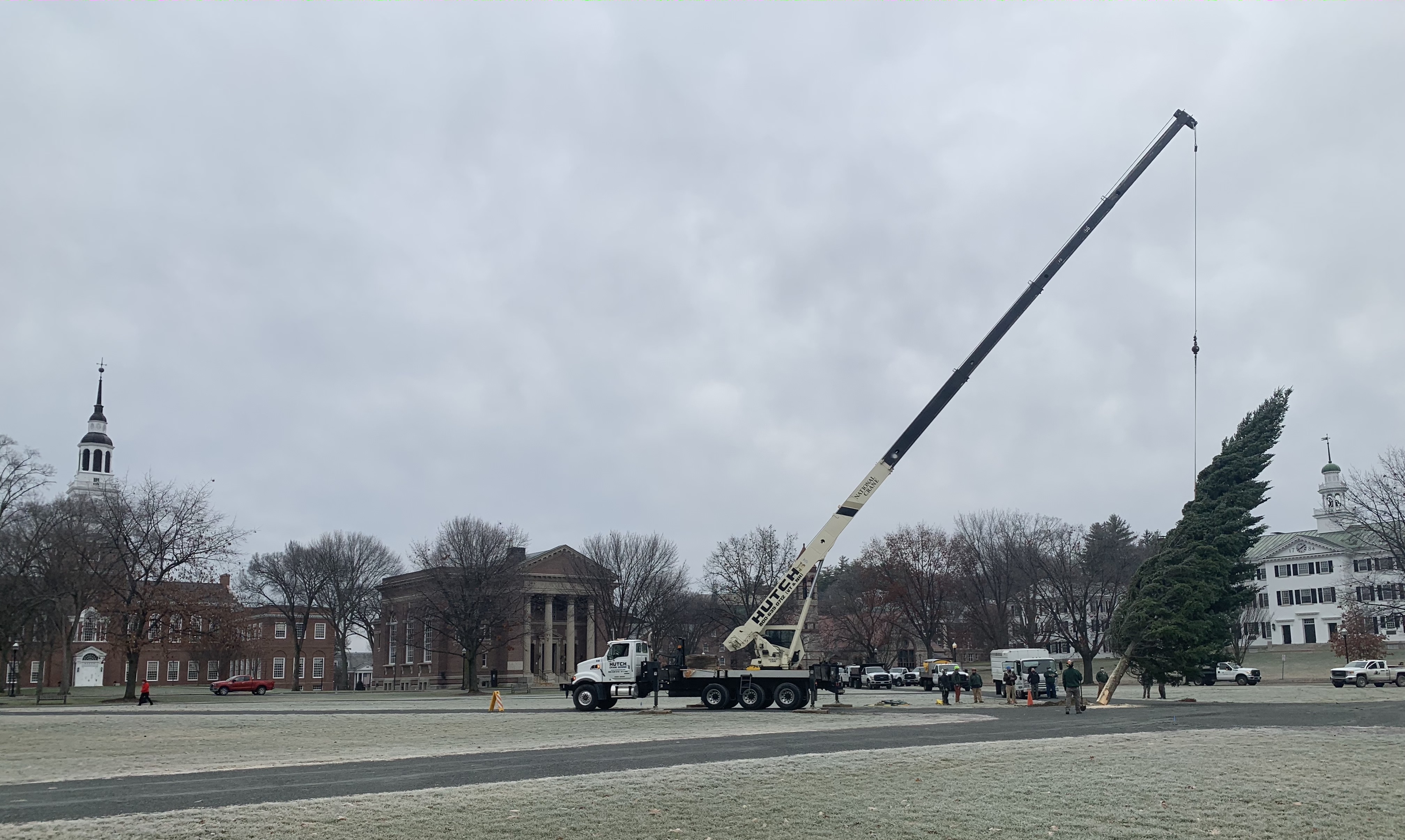
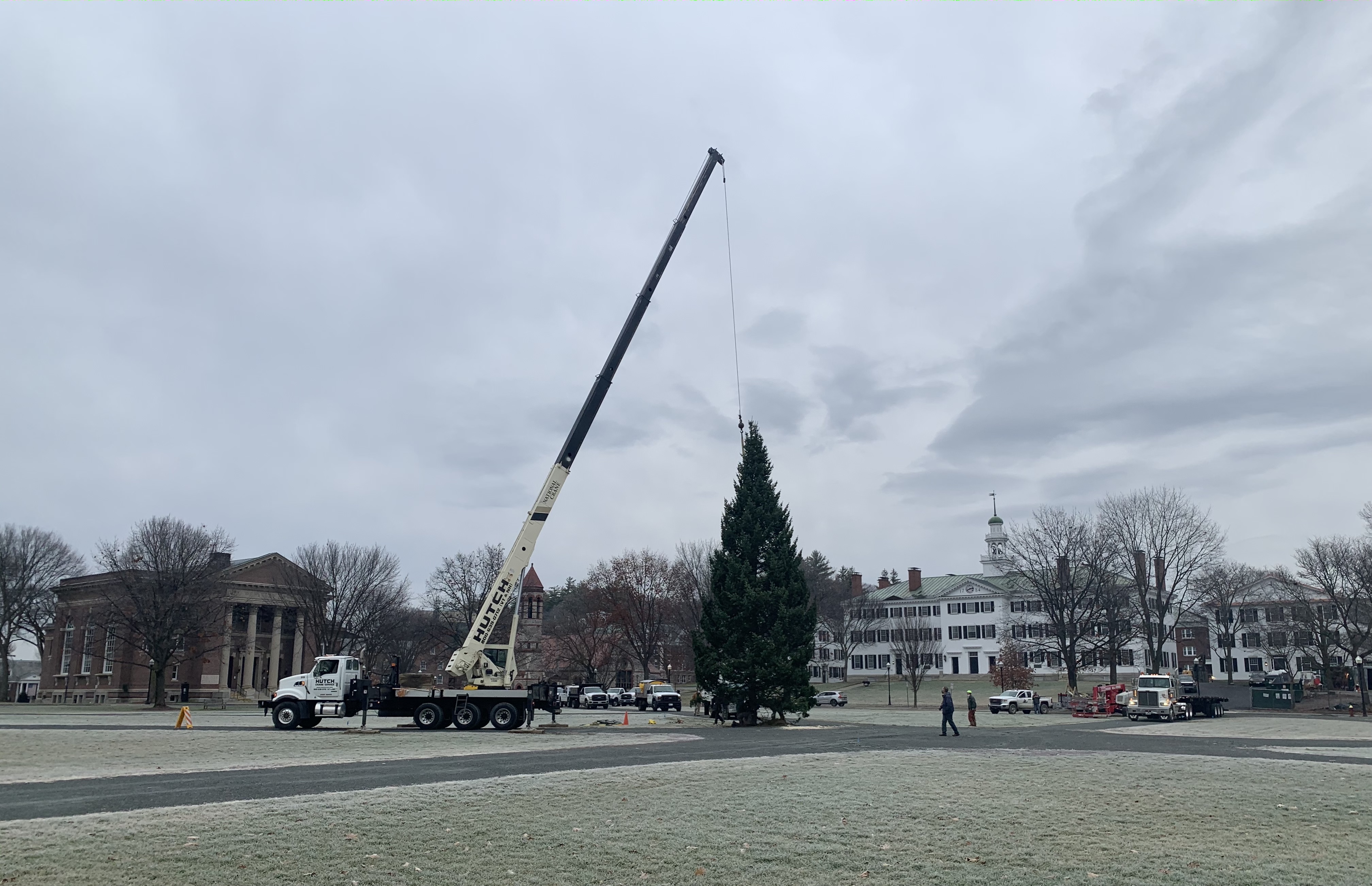
I happened to be walking along the Green in Hanover at the moment when Dartmouth was raising its annual Christmas tree. This year’s tree was selected from a tree farm in Wallingford, VT. Soon it will be decorated with lights and adding cheer to this quiet campus!
raising the tree…settling the tree into its underground base.
A delightful ascent of Moosilauke in unseasonable conditions.
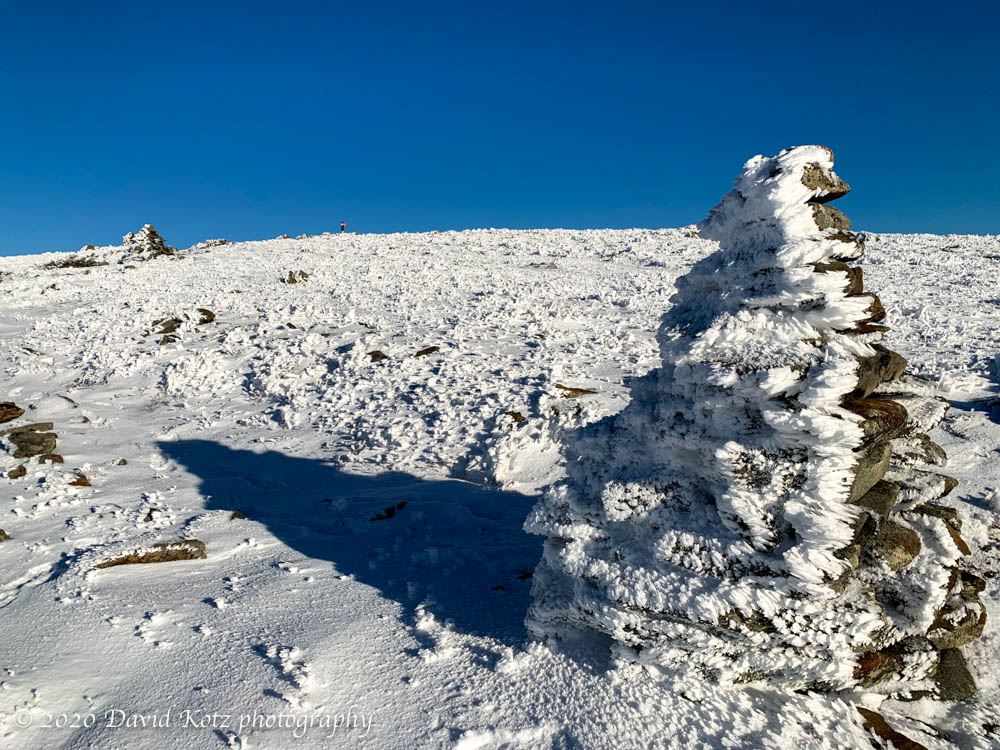
On this day, very nearly the last day of November, the forecast was for a purely sunny day with temperatures well above freezing – weather decidedly un-November-like – so I decided it was high time I went back to Moosilauke. Yesterday it rained much of the day, even at altitude, so I was concerned the Moosilauke summit may have been glazed with ice today. But I was pleasantly surprised, as I climbed the familiar Glencliff trail, to find the muddy conditions of the lower sections giving way to a dusting of snow and, higher up, nearly an inch of fresh snow on the ground and trees decorated with fresh powder and rime ice, backed by a deep blue sky. Read on, and check out the photo gallery.
If last week was momentous in lighting up our home with solar power, this week felt even more momentous in lighting up our home with a fiber-optic Internet connection. We’ve finally entered the 21st century!
One of the longstanding challenges of rural living is the dearth of high-speed Internet service. I remember when we moved from our home in Lyme, NH to the middle of Bangalore, India, we were thrilled to leave behind our dial-up 28.8kbps modem and finally have “high-speed” DSL service; that was 2008. On return, we bought into a local one-man start-up company that provided fixed-wireless Internet service – a dish antenna on the side of our house, aimed at a small tower on the opposite of the river. After some upgrades, that brought us up to 1Mbps, and even 2Mbps. But when it snowed heavily, the signal would degrade. Cellular telephones barely work in our neighborhood and most of the town is a dead zone. There simply aren’t enough towers to cover this hilly terrain.
So I have been following for years, with great anticipation, the tireless efforts of a set of dedicated Lyme townspeople who have been striving to develop a town-wide fiber-optic network. The broadband market has essentially bypassed our little town – there is no cable television (let alone cable Internet), virtually no cellular telephone network, and even DSL is only available only to the handful of residences located in the center of town. No ISP has ever shown serious interest in building out the infrastructure needed to provide Internet service to every home, let alone high-speed Internet service.
Retired experts like Steve Campbell and Rich Brown, who once built and operated Dartmouth’s campus-wide network through the early days of AppleTalk and later Ethernet and Wi-Fi, and who now live in Lyme, worked through the complex state regulations, and the creation of innovative community-focused business plans that can finance a town-wide infrastructure that can serve everyone for the foreseeable future. We are indebted to their tenacity and creativity!
The result is uniquely interesting – a community-focused corporation, with its top priority being service to the community.
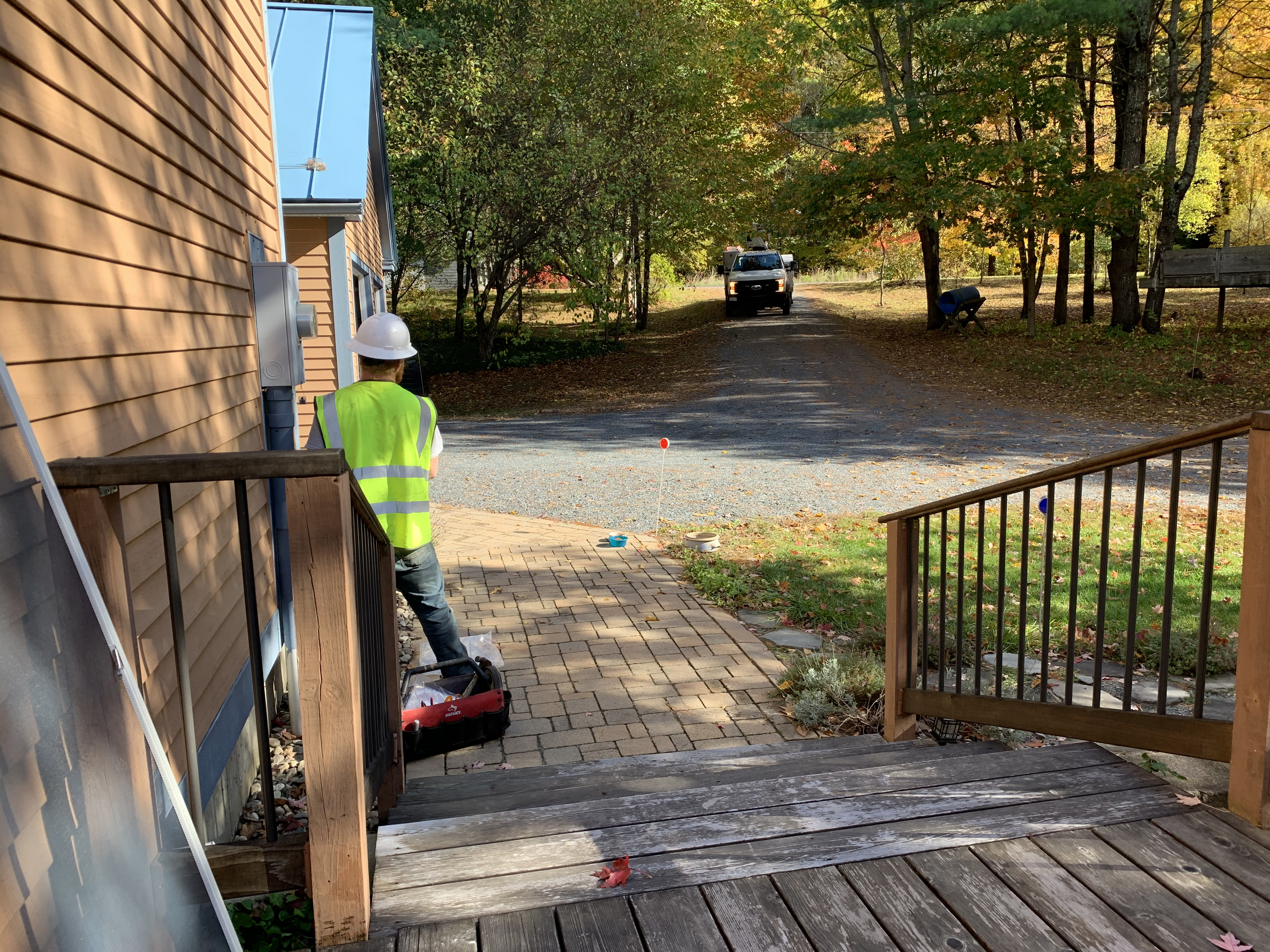
After years of anticipation, we were excited to see the fiber truck pulling cable along River Road, and then to install the ‘drop’ to our house.
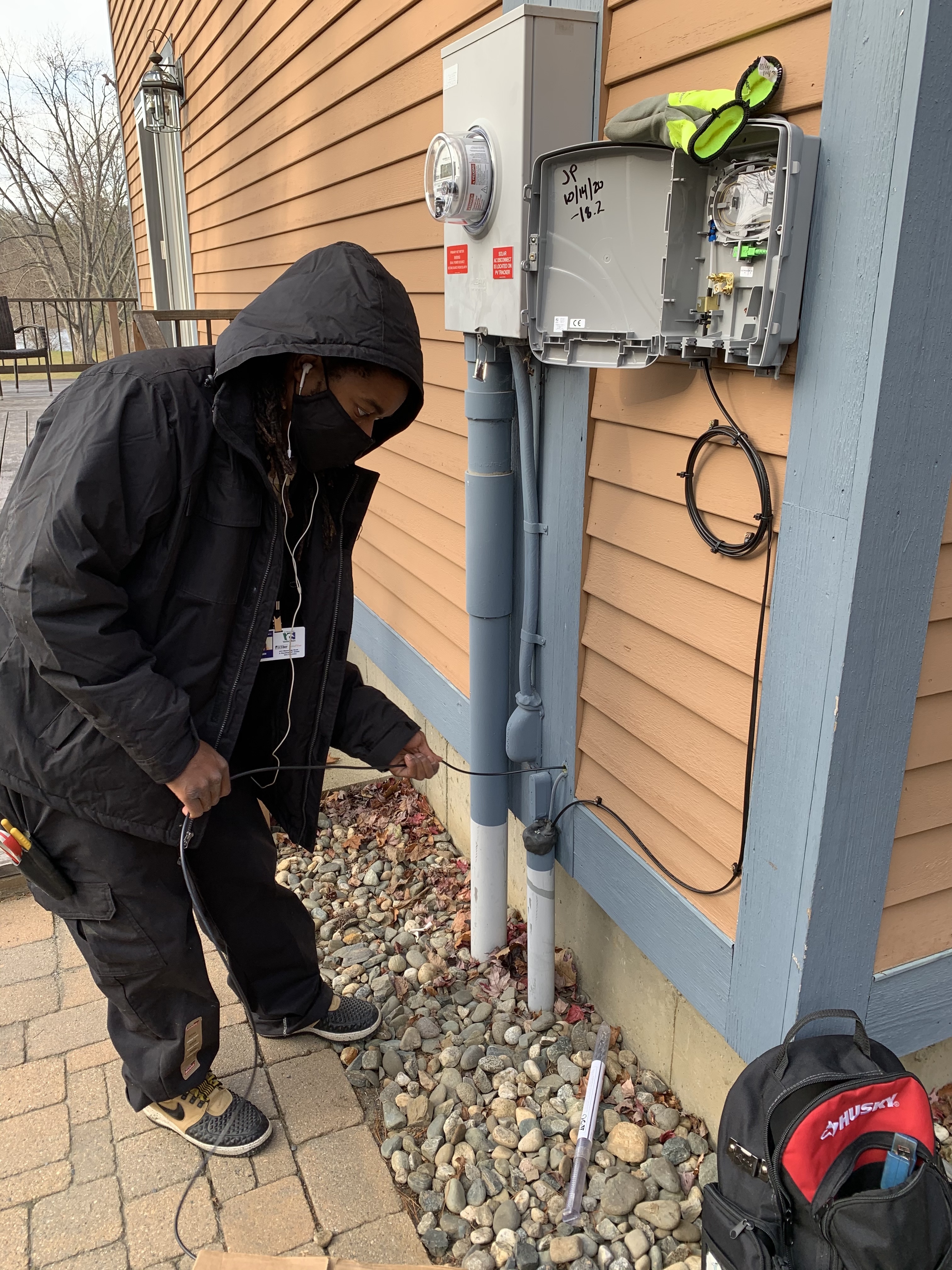
This week, we were visited by another technician who installed another fiber-optic cable from that exterior box, through the wall and into our basement.
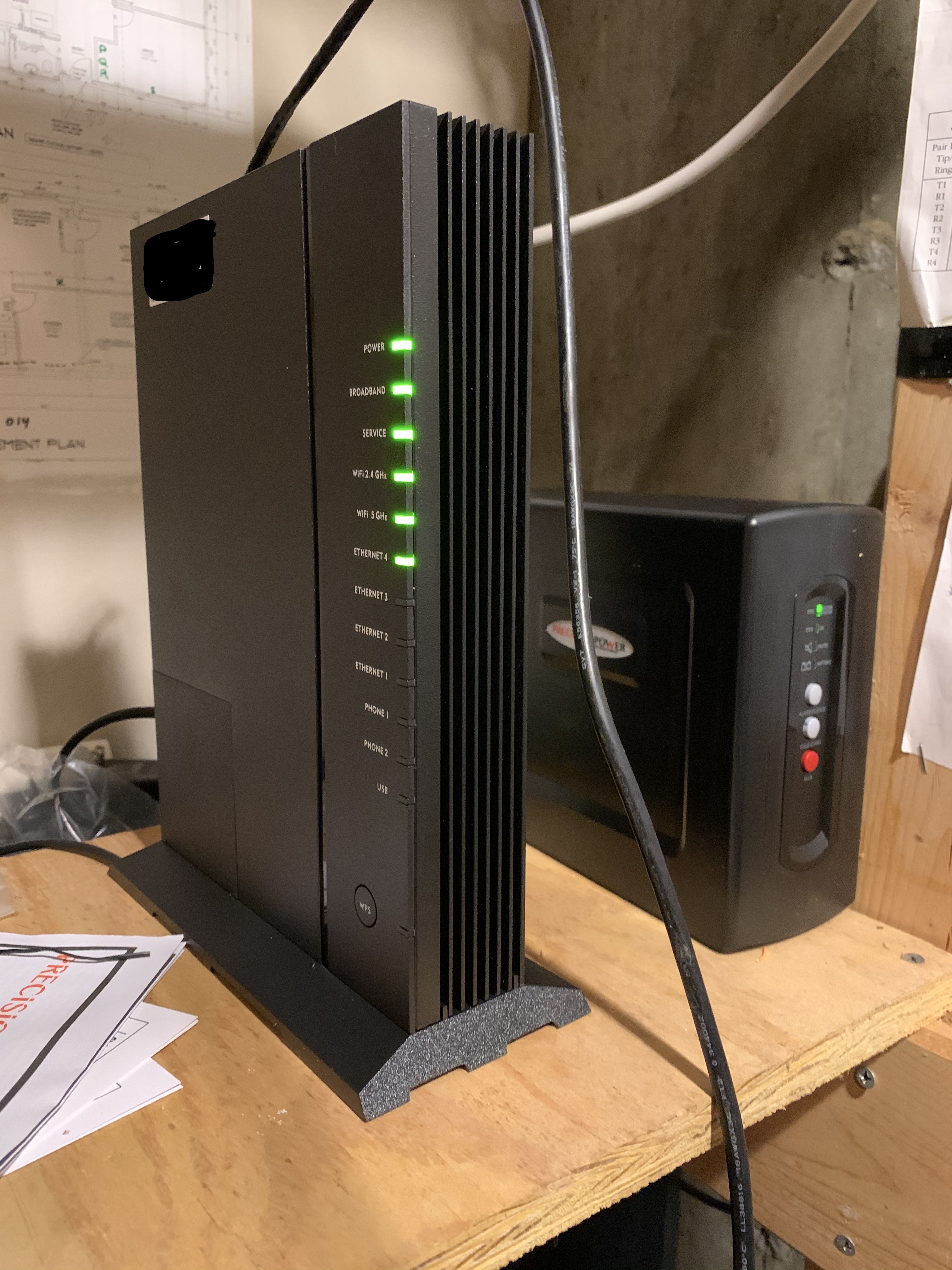
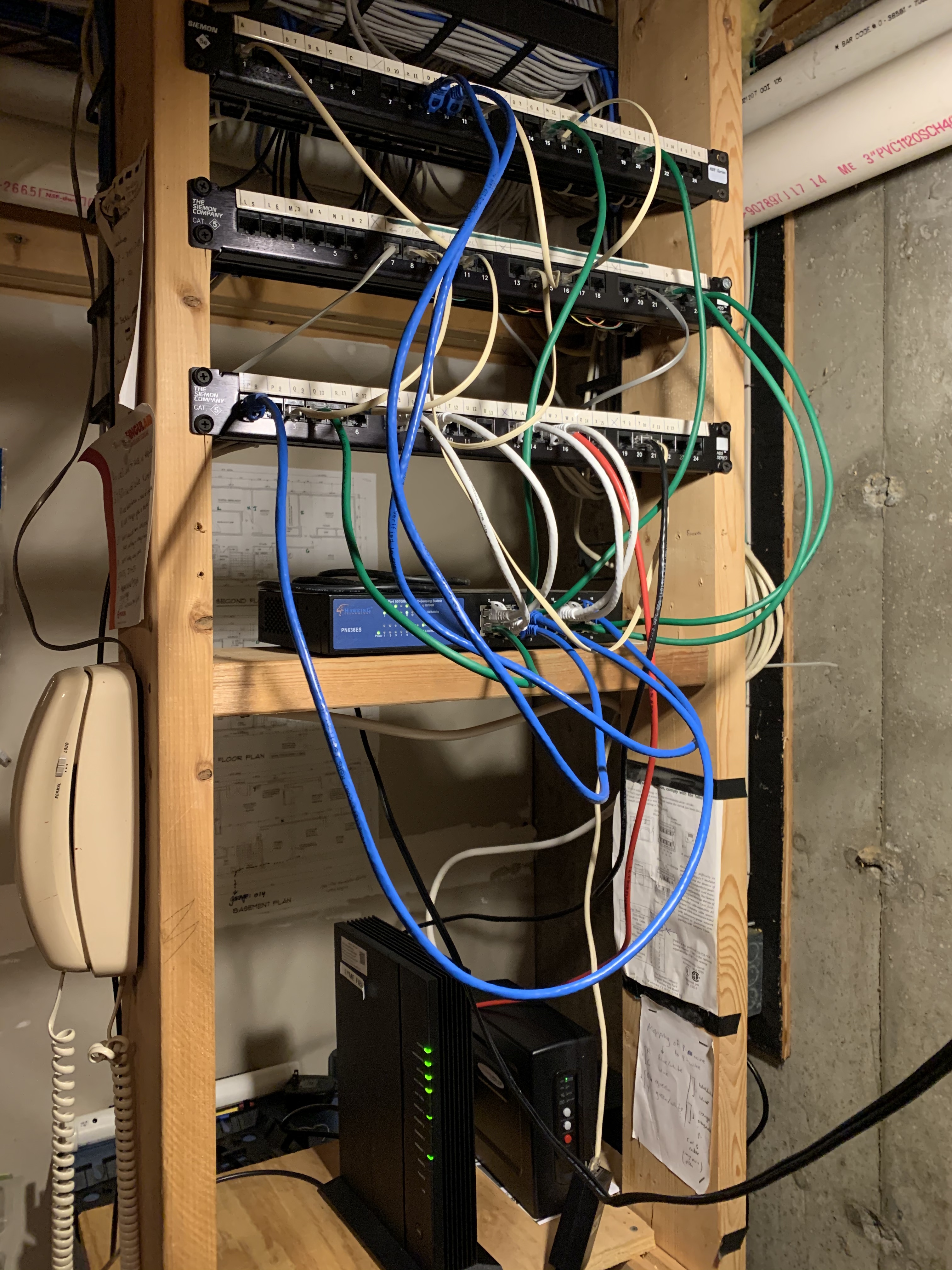
I helped him string the cable through my existing cable chase across the basement to our switchroom, where he terminated the fiber-optic cable at their (provided) Wi-Fi router. They even provide a UPS to keep the router powered during short power failures.
Shortly after he left, I ran a speedtest and was delighted to see, even over Wi-Fi, an impressive 300 Mbps up and down. (I could have paid for more.)
From that router, I connect into our existing home Ethernet network.
For more information about LymeFiber see their FAQ.
Today is the first day of winter. Well, I suppose there are many ways to define “the first day of winter”: the first time snow falls, the first time snow falls and sticks, the first time you actually need to plow or shovel snow, or the astronomical date of the Winter Solstice. I’m going with a new definition: the first day the temperature never rises above freezing.
Although the higher NH mountains have already experienced some significant snowfall, and plenty of freezing temperatures, I’ve been staying close to home and enjoying the low-altitude hikes here in the Connecticut River valley – wearing lots of orange clothing, now that deer hunting season is fully underway.
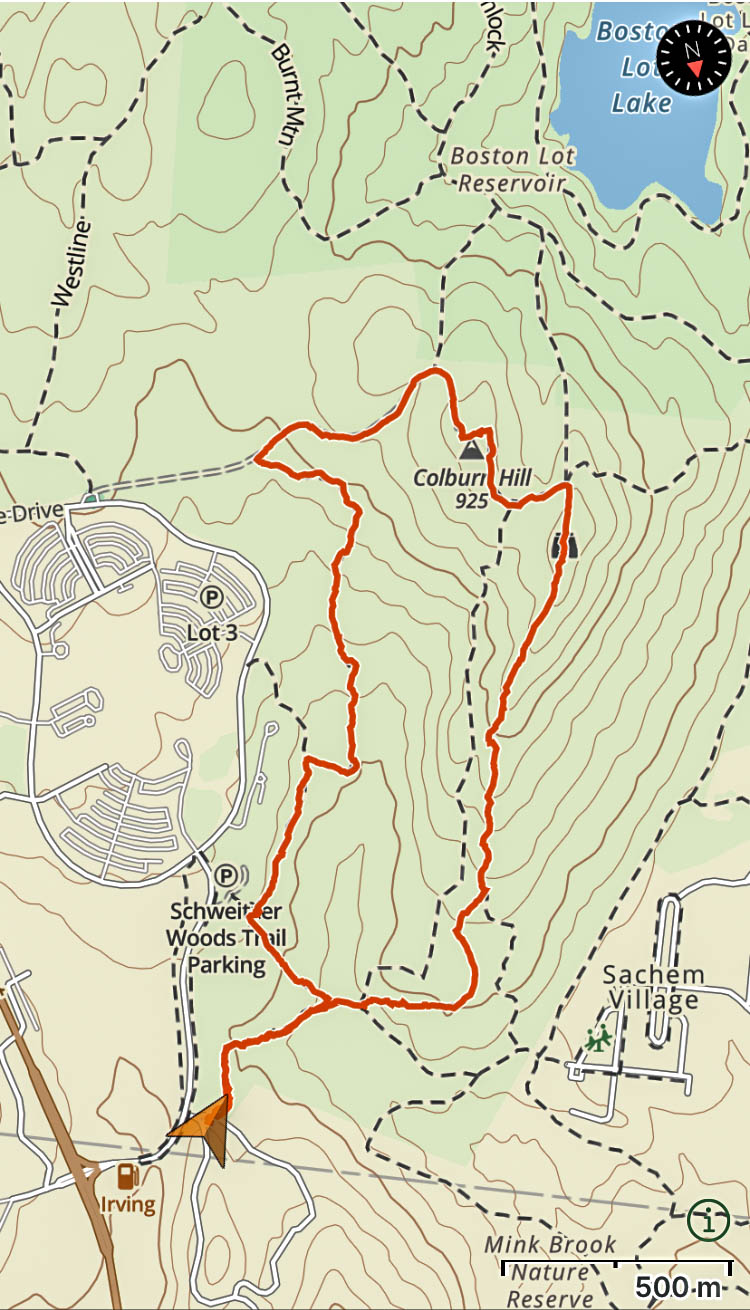
Today I took advantage of a gap in my Zoom schedule to visit a trail network I’d never explored before – between the huge complex of Dartmouth Hitchcock Medical Center and the graduate-student housing over at Sachem Village. This big green spot fills the center of the triangle formed by the towns of Hanover, Lebanon, and West Lebanon. There’s an amazing variety of terrain, and a thorough network of trails used by walkers and mountain bikers.
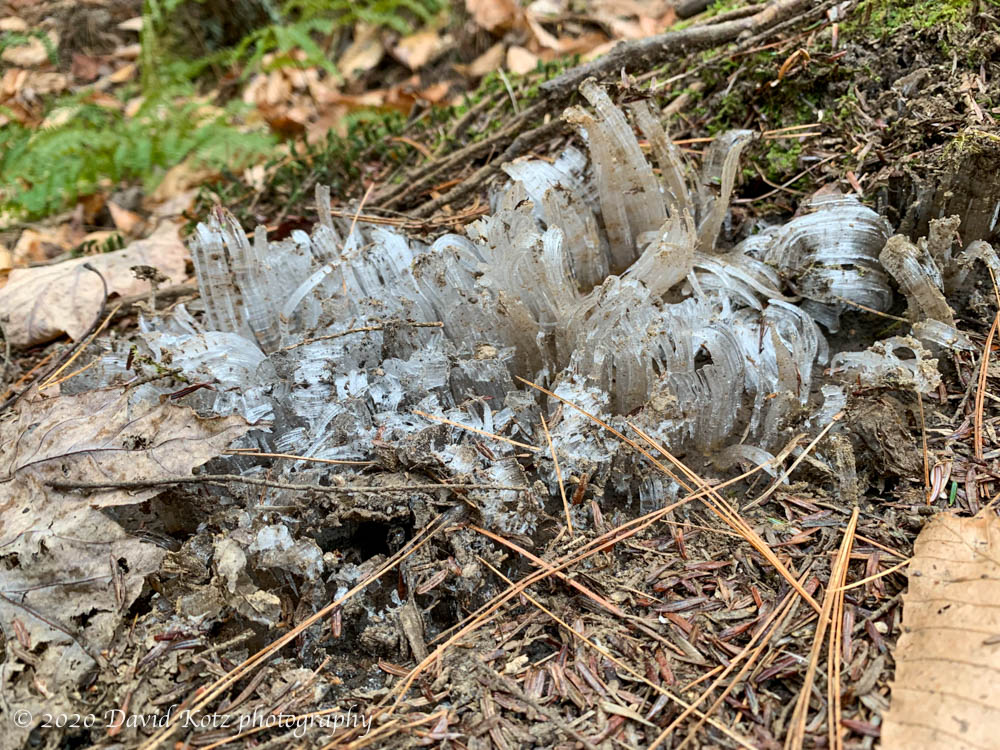
For me it was a pleasant, if chilly, stroll through the quiet post-autumn forest, one that has laid down its blanket of leaves and is awaiting the big snows of winter. I enjoyed the opportunity to snap a few photos of the delightful details like the following. When mud freezes, the water expands and is pushed up through pores in the mud, leaving these fragile towers of crystalline ice. Check out the full-size photo, and three other scenes from the hike, in the photo gallery.
Extruded ice, which happens when mud freezes and the water in the mud expands.
The weather this week has been startlingly warm, almost as if summer has lasted into November. Yesterday’s high temperature here at home was 71ºF! It may have been the last ‘summer’ weather of the year – and also the last day before deer-hunting season fully opens – so I was eager to get out for a hike. I try to hike on weekdays to avoid the weekend crowds.
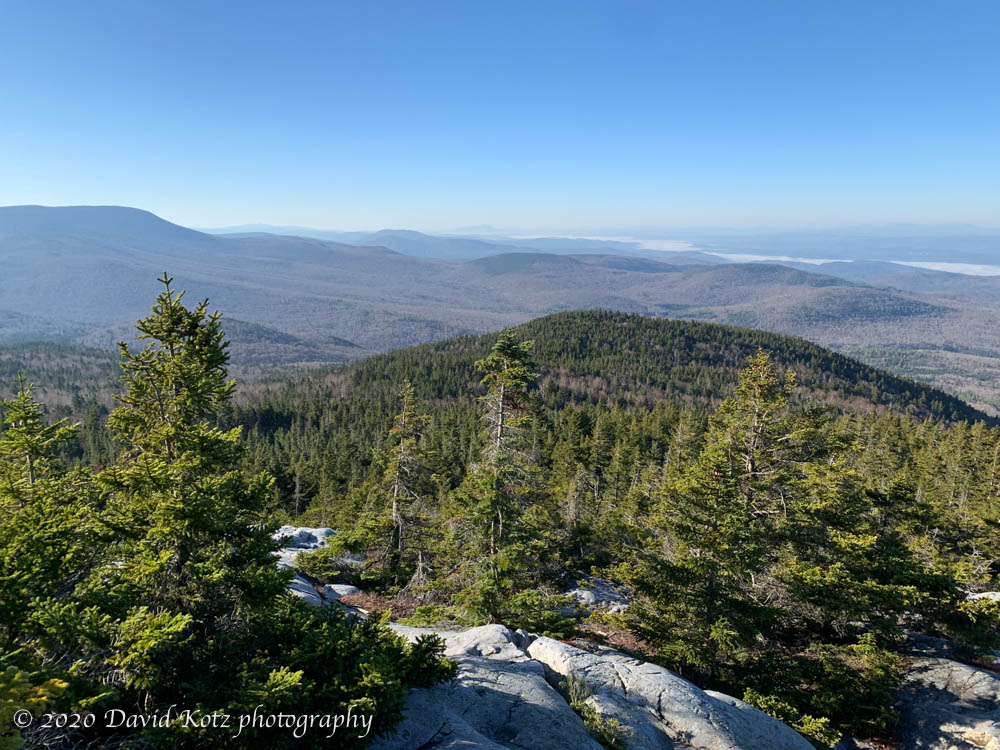
Despite a dense fog clinging to the Connecticut River in the early morning, I hopped into the Tesla for an all-electric drive to one of my favorite trailheads – the Rivendell Trail up Mount Cube, only 30 minutes away. I’ve been up this two-mile route many times, because it gives one all the features of a “real mountain climb” without the temporal overhead of a long drive or a long hike… a stroll through leafy hardwood forests, a scramble up rugged rock-strewn trails, the pungent scent of balsam firs, and distant views from its granite outcrops and 2900′ summit. In the view below, from the summit you can see the foggy Connecticut River valley in the upper right and Smarts Mountain at upper left.
Seen from Mount Cube.
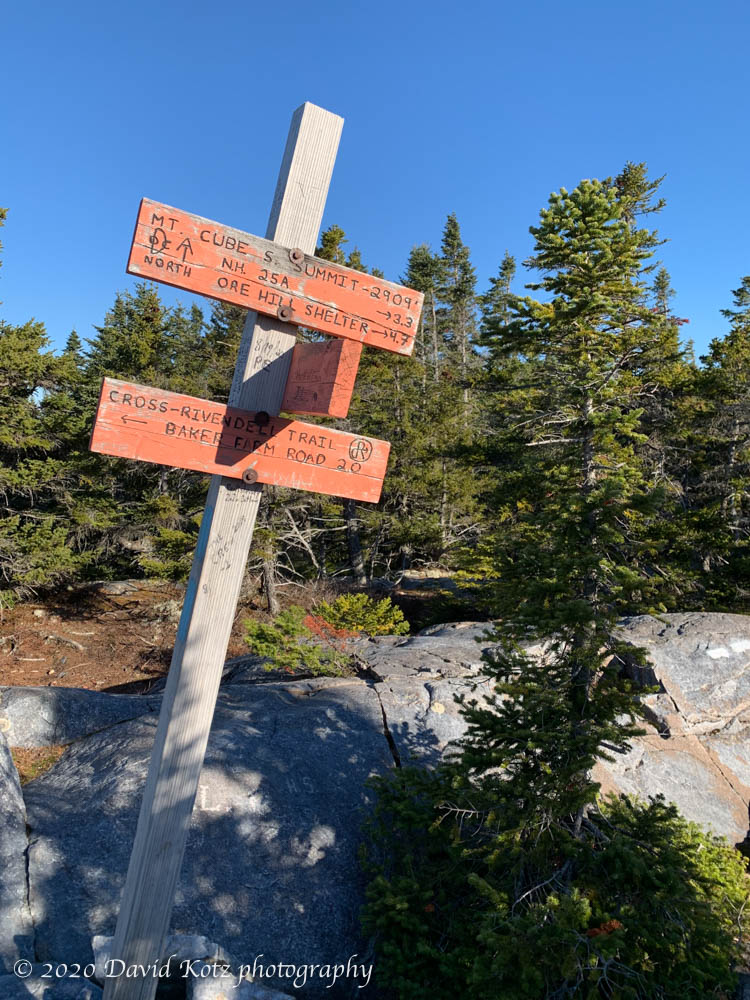
Sadly, the summit has poor views to the northeast, but if you stand on tippy-toes and peer between the firs you can pick out Mount Moosilauke. No photos worth taking, so here’s the summit trail sign, where the Appalachian Trail passes by.
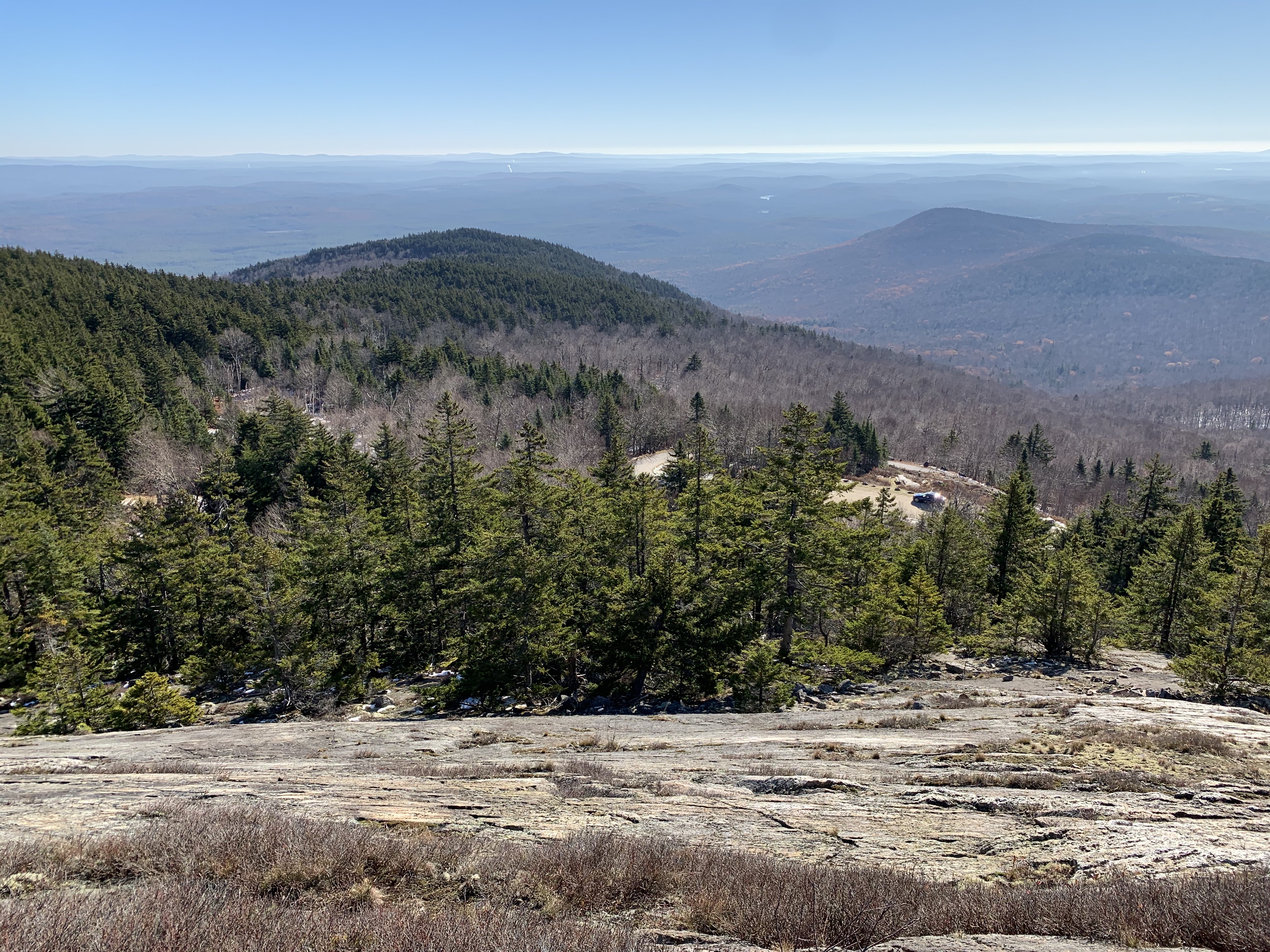
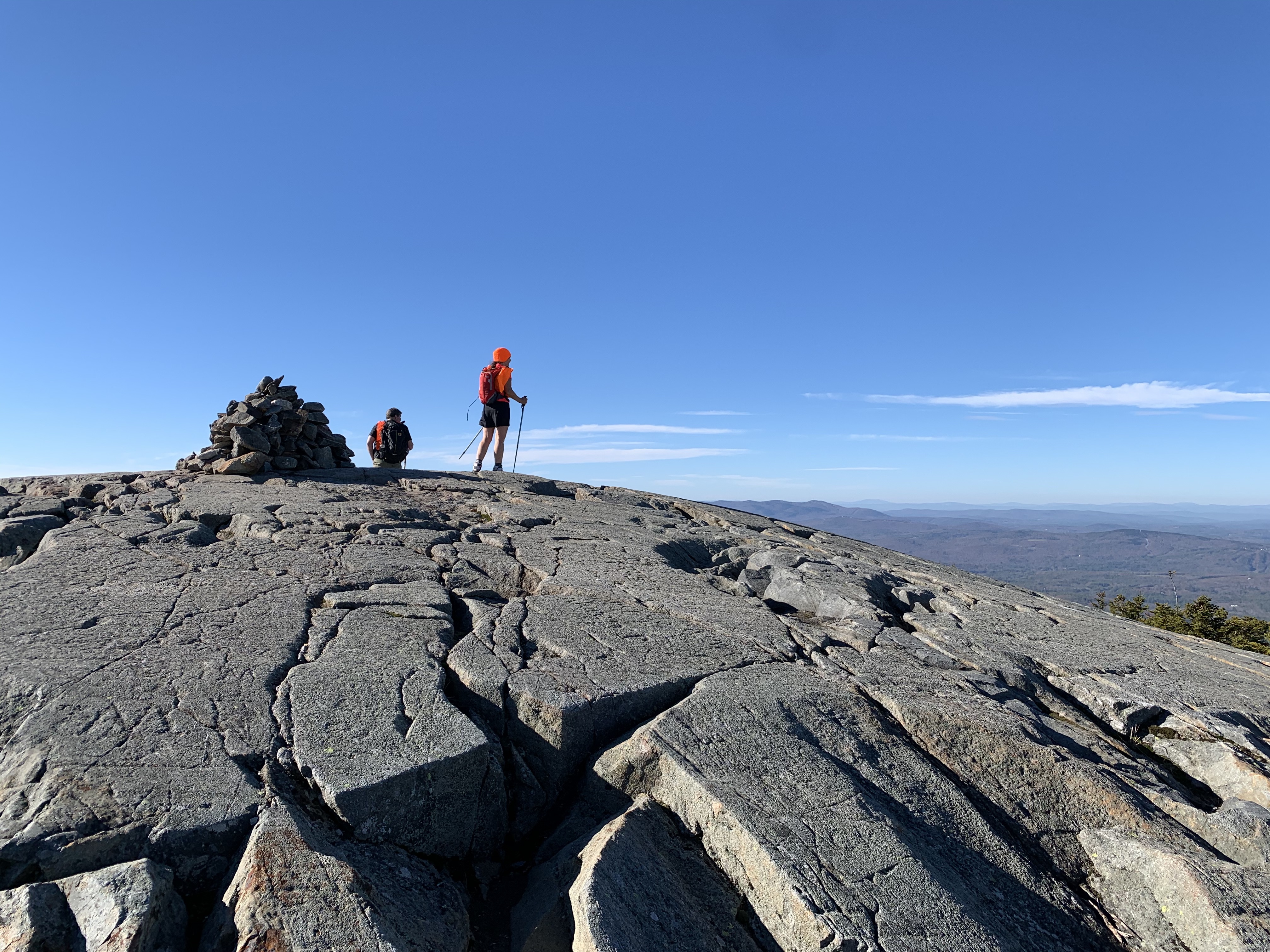
On Thursday morning I took a break from the post-election hubbub and drove down to the far side of Mount Kearsarge. I had only visited this popular peak once before, in November 2014, and recalled that it was a frosty and cloudy experience. Now, on an unseasonably warm sunny November morning, I decided to visit again. Somewhat accidentally (thanks Apple Maps!) I ended up on the far side of the mountain, where an auto-road allows one to park within a half-mile of the summit. I was the only car there, though I did pass a couple walking and an older man running the road.
There was a bit of haze, but otherwise impressive long-distance views to be had as I scrambled up the rocky Lincoln trail to the summit, then down the more gentle (but somewhat icy) Rollins trail back to the parking lot. Great views and I hiked barely more than one mile; it felt like cheating. I’ll have to come back someday and start from the base.
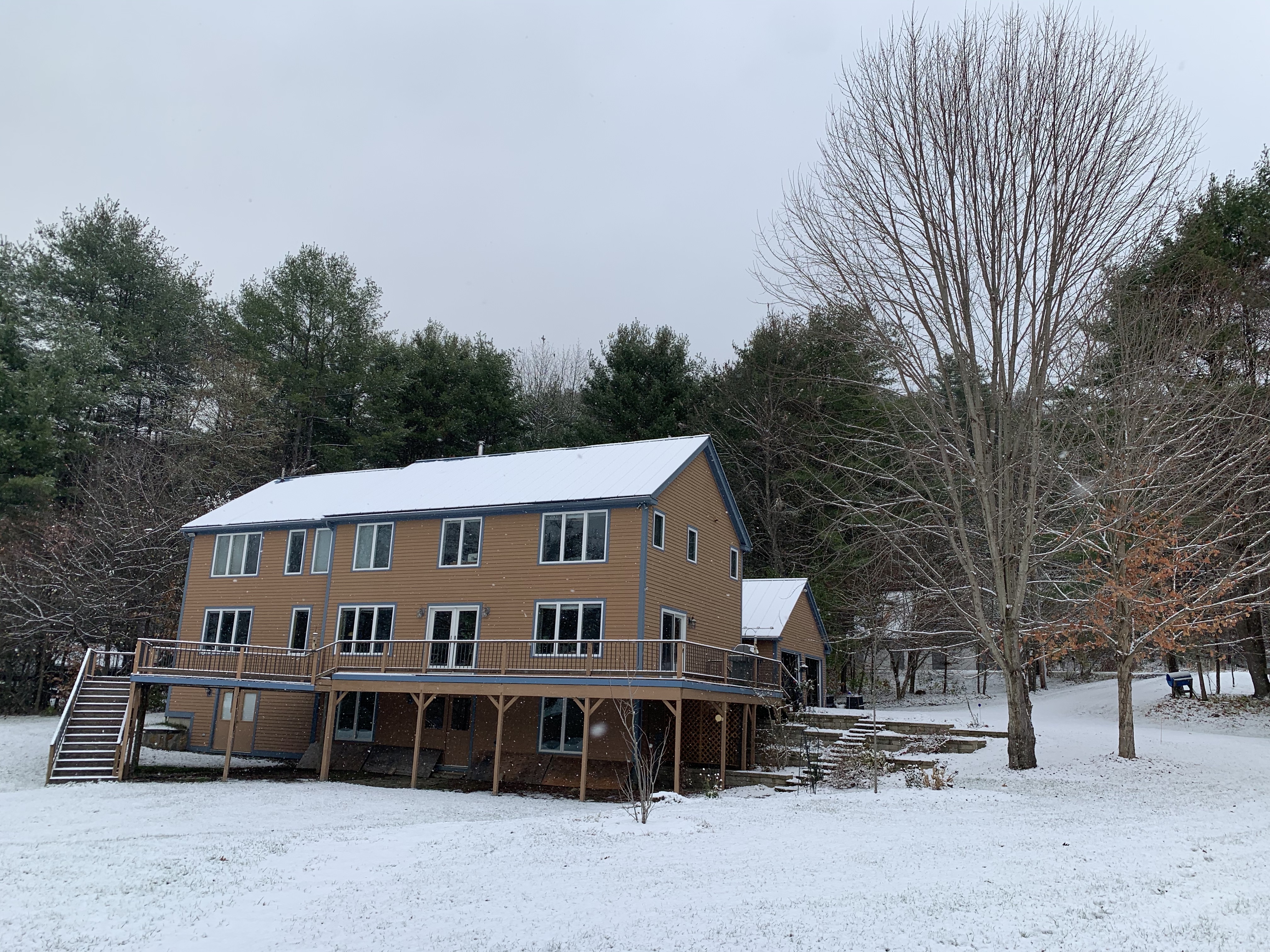
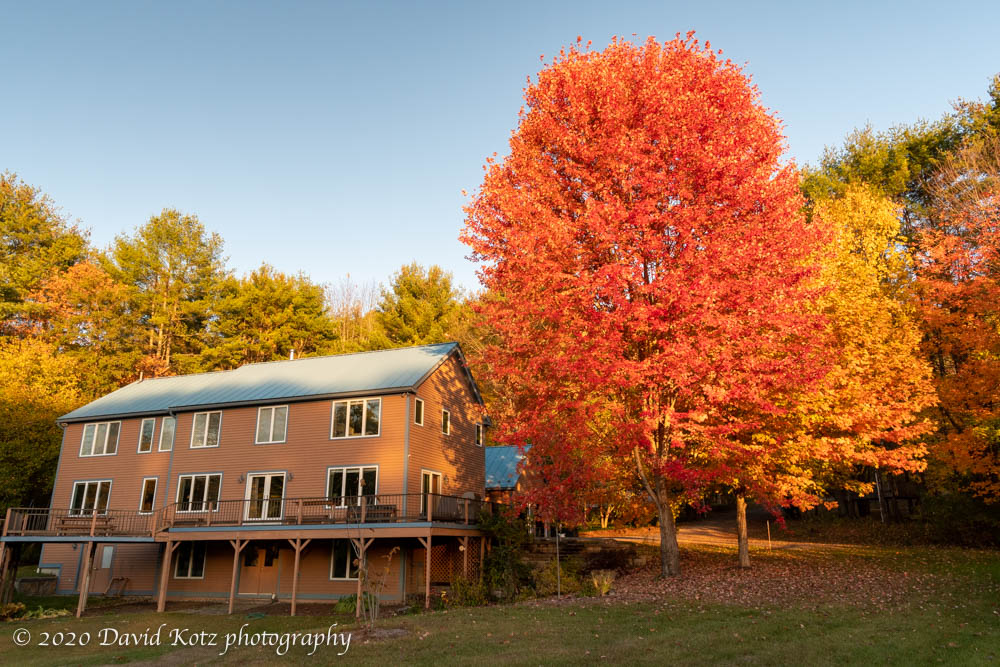
Last night I posted a photo of the fall foliage at our home, a photo taken three weeks ago (October 14). This morning we woke to a very different scene!
This fall brought us some of the most intense fall foliage we’ve ever seen, in three decades of living in the upper valley region of New Hampshire and Vermont. When we had a seriously long drought this August, so many were concerned about a potentially disappointing fall-foliage season, but we’ve experienced quite the opposite! Don’t miss the full gallery.
The trees around our home in their fall foliage; Lyme NH.




 David Kotz