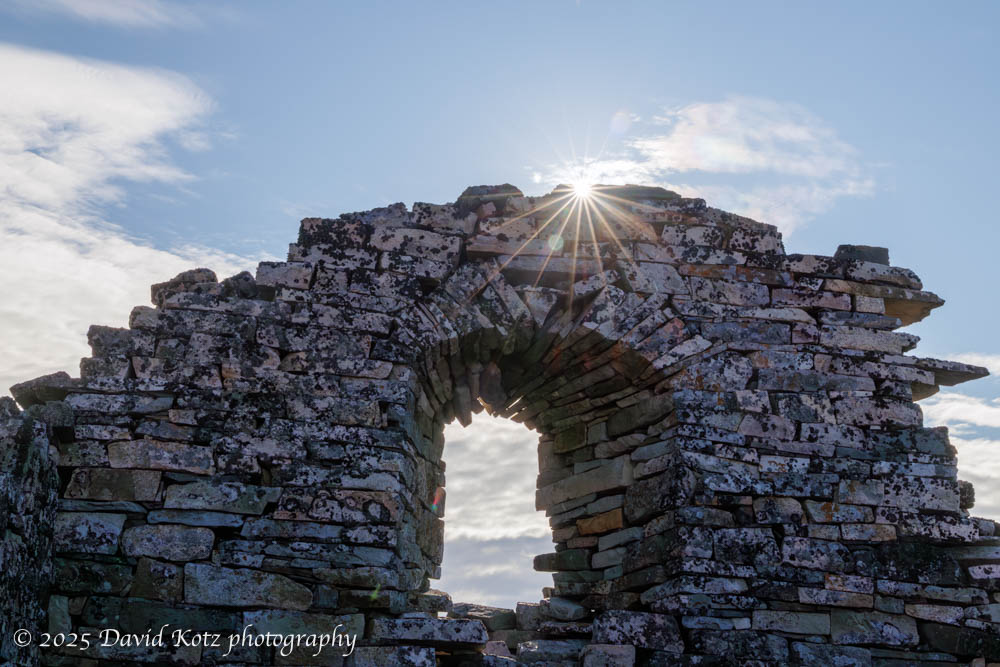
As we cruised the fjords on the southwest coast of Greenland, we had several opportunities to learn about the cultures of Greenland – historic and contemporary – and to visit archaeological sites, small villages, and busy towns. This post focuses on two historic settlements, each now recognized as a UNESCO world heritage site. Read on for more…
One might imagine becoming stir crazy during ten days aboard ship. Fortunately, the expedition team offered many opportunities to go ashore! Nearly every day they would offer short, medium, and long walks. Some were billed as a ‘photo walk,’ accompanied by the ship’s photo experts; others were focused on interpretation of the ecology or history; still others were pointedly called a ‘strenuous hike’ for which exercise was the goal and there would be no time to stop for photos or natural-history lessons. We were fortunate with good weather – sometimes fantastic weather – so I had the opportunity to hike at Dronning Marie Dal (in Skjoldungensund), at the outlet of the Sermeq glacier (at the head of Tasermiut fjord), around the Hvalsey historic site, around the village of Qassiarsuk, and in the tundra above Neria fjord. The scenery was dramatic, and varied tremendously from place to place. Read on for more!
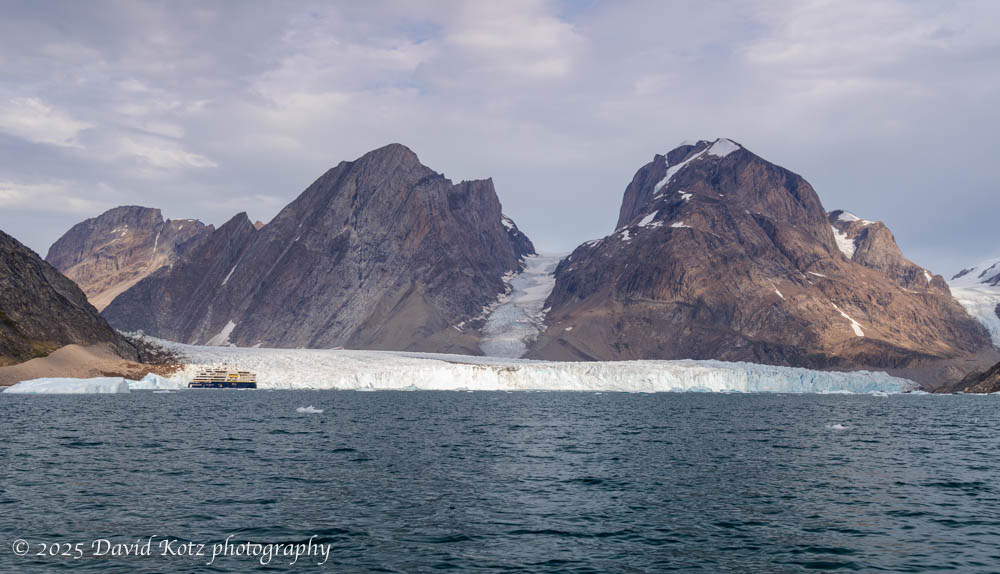
It’s hard to imagine the size of Greenland, or its ice cap. Even those glaciers that flow down to the sea, like the Thryms glacier below, are truly massive. (Notice our ship, the National Geographic Endurance, at lower left!) Read on for more about our outings among the ice, including video…
Although our route sometimes had the Endurance sailing offshore overnight south along the eastern coast, and sailing north along the western coast, most of our time in Greenland was spent in the extensive fjord systems that shape the southern tip of Greenland. In this landscape, a visitor can understand why the early Norse settlers named this land Grœnland (green land) when the Norse, led by Erik the Red, settled here in 982. Although these fjords have steep walls and deep waters, their shores and (rare) shallow glacial plains are covered in a green, grassy tundra sprinkled with heather, dwarf willow, dwarf birch, crowberries, blueberries, and a variety of wildflowers. Although “Iceland’s landscape is the world’s youngest and most dynamic, the rocks of Greenland are the oldest yet discovered on the planet.” [NatGeo] Read on for more…
One of the wonderful aspects of a National Geographic expedition is the opportunity to travel to remote places – places only accessible by ship, completely uninhabited – and to explore the tundra, fjords, and deep seas for some of the incredible wildlife that calls this wilderness its home. As part of our ten-day cruise from Iceland to the southern fjords of Greenland, we had ample opportunity to watch whales feeding, trek across treeless tundra, lock eyes with caribou, beachcomb remote shores, boat among the berglets that emerge from tidal glaciers, and even glimpse the aurora borealis. In the next several posts I’ll share a sample of each. Meanwhile, a special tidbit from the last night of the trip!
A ten-day cruise from Iceland to the southern coast of Greenland.
Recent trips to the Antarctic [South Georgia, 2023] and the Arctic [Finland, 2024] whet my appetite for exploring further in the polar regions, so I jumped at the chance to cruise southern Greenland in late summer. Indeed, because this cruise began and ended in Iceland, it gave me a chance to expand on my prior visit to Iceland [2024] to explore its southeast coast. Finally, this cruise was aboard the National Geographic Endurance, the same ship we’d sailed on our cruise of South Georgia and the Falklands in 2023, and which I found to be a terrific experience. Read on!
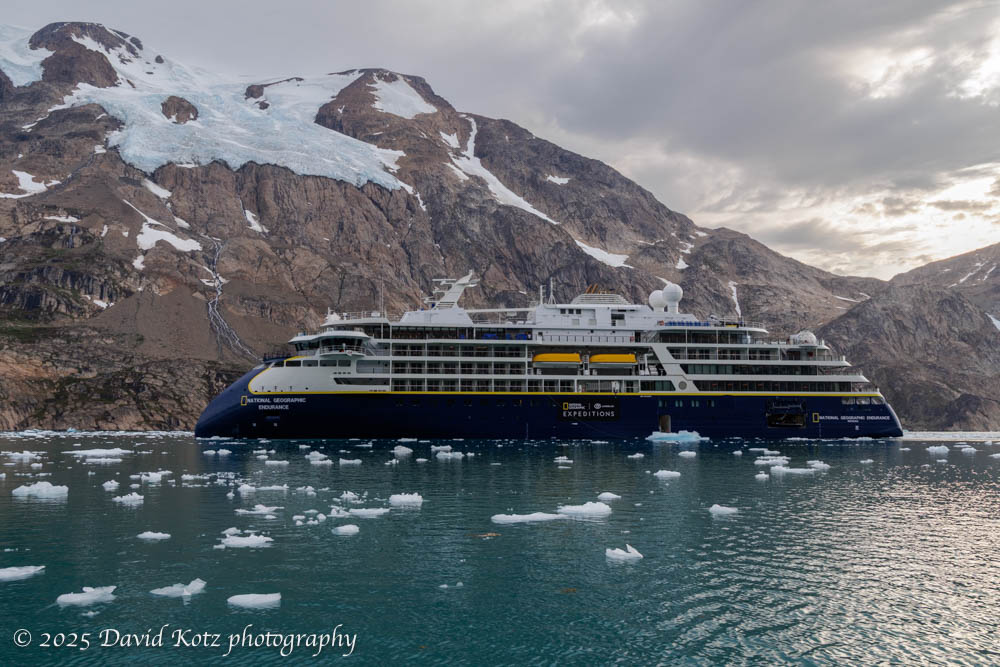
The Endurance, seen from the icy water near Thryms glacier; Skjoldungensund fjord, Greenland.Continue reading “Greenland”




 David Kotz