A lovely hike through The Weald region southeast of London.
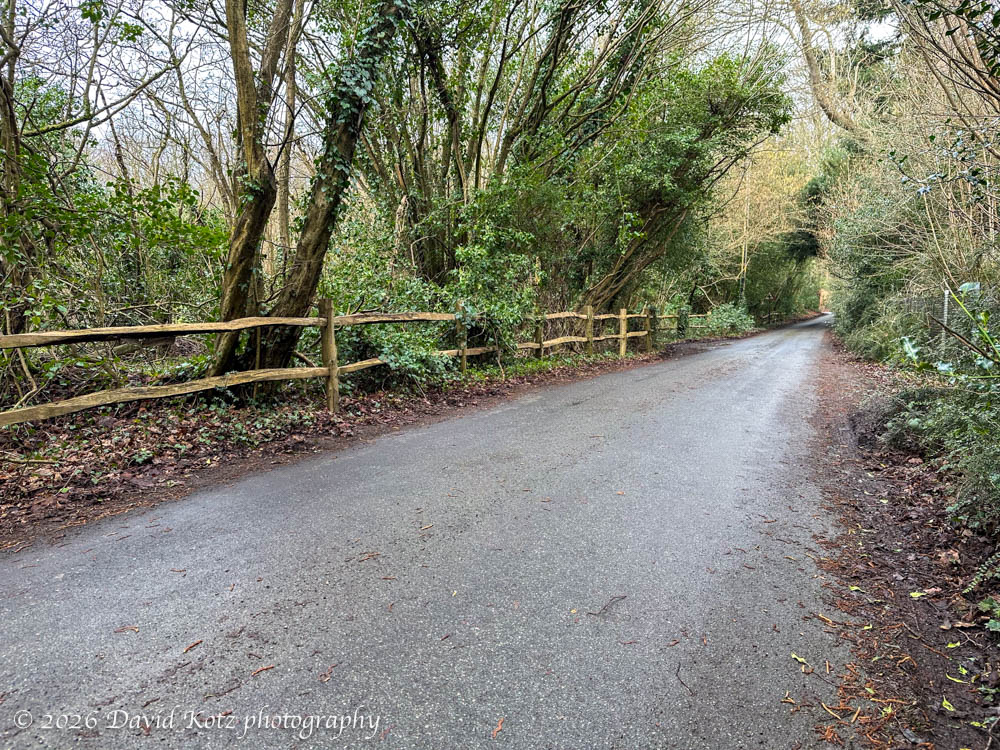
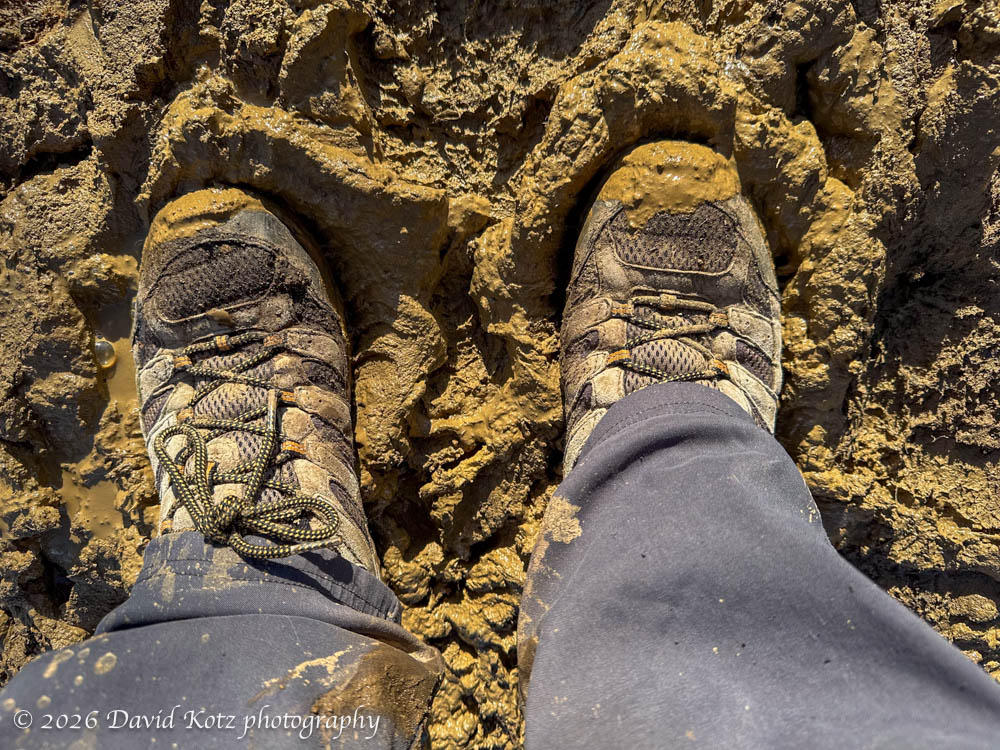
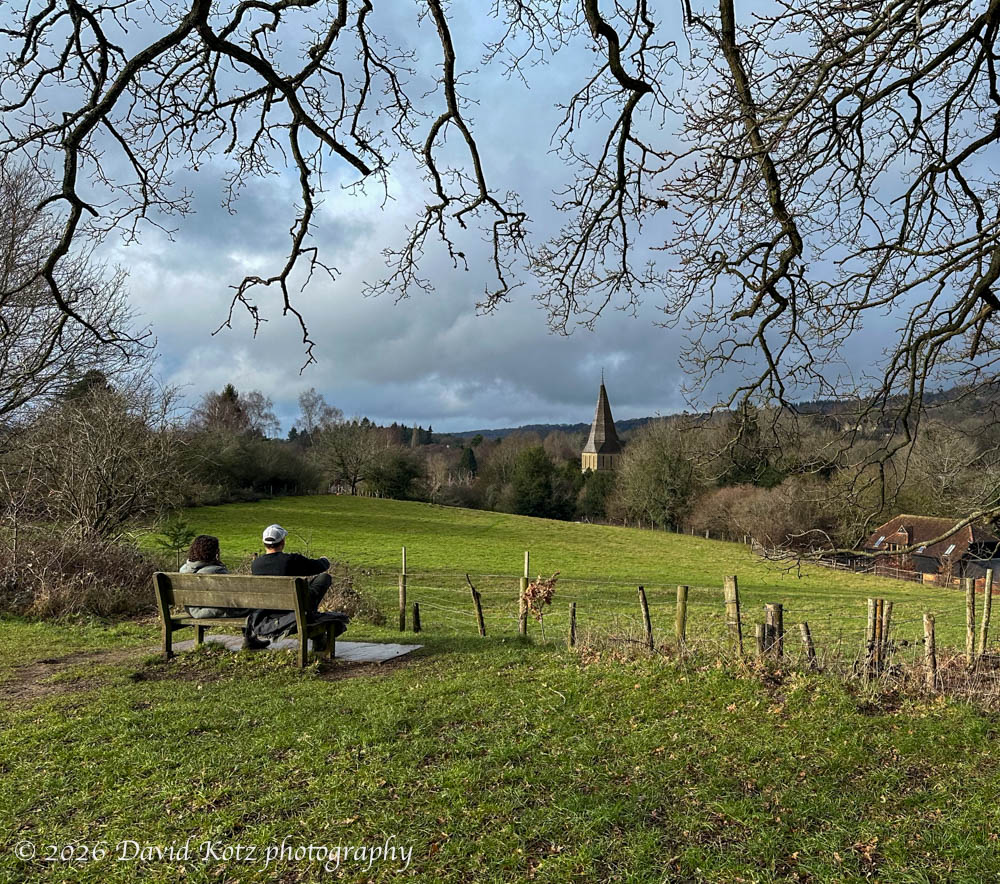
I hopped an early train southeast out from London, hoping to enjoy a morning of cloudy-maybe-sunny weather that didn’t involve any precipitation. (Such weather has been scarce for the past month, as we’ve received some rain nearly every day.) My goal for this hike – my 22nd consecutive weekend hike – was a region of rolling hills, pastures, and small villages called The Weald, between the North and South Downs. It was lovely! and very, very muddy.
It has rained nearly every day for two weeks, here in London. So when this morning broke sunny and clear, it was time to go hiking! I headed for Epping Forest, an extensive area of forests and meadows on the northeastern edge of London. The sunny (though chilly) weather inspired many other people to get outdoors – walking their dogs, riding their horses, strolling with friends, or jogging the muddy trails. Two weeks of rain + heavy foot traffic = muddy trails!
It has rained nearly every day for the past week, and the forecast today appeared to promise on-and-off drizzle. At best. Nonetheless, I was determined not to break my streak… and go hiking for this 20th consecutive weekend. I chose to walk end-to-end across the three Royal Parks in London’s West End: Hyde Park, Green Park, and St James Park, on my return from Saturday-morning coffee with colleagues to my home near Victoria Station. It was a surprisingly pleasant five-mile walk, and it seemed half of London was out to enjoy these parks today as well.
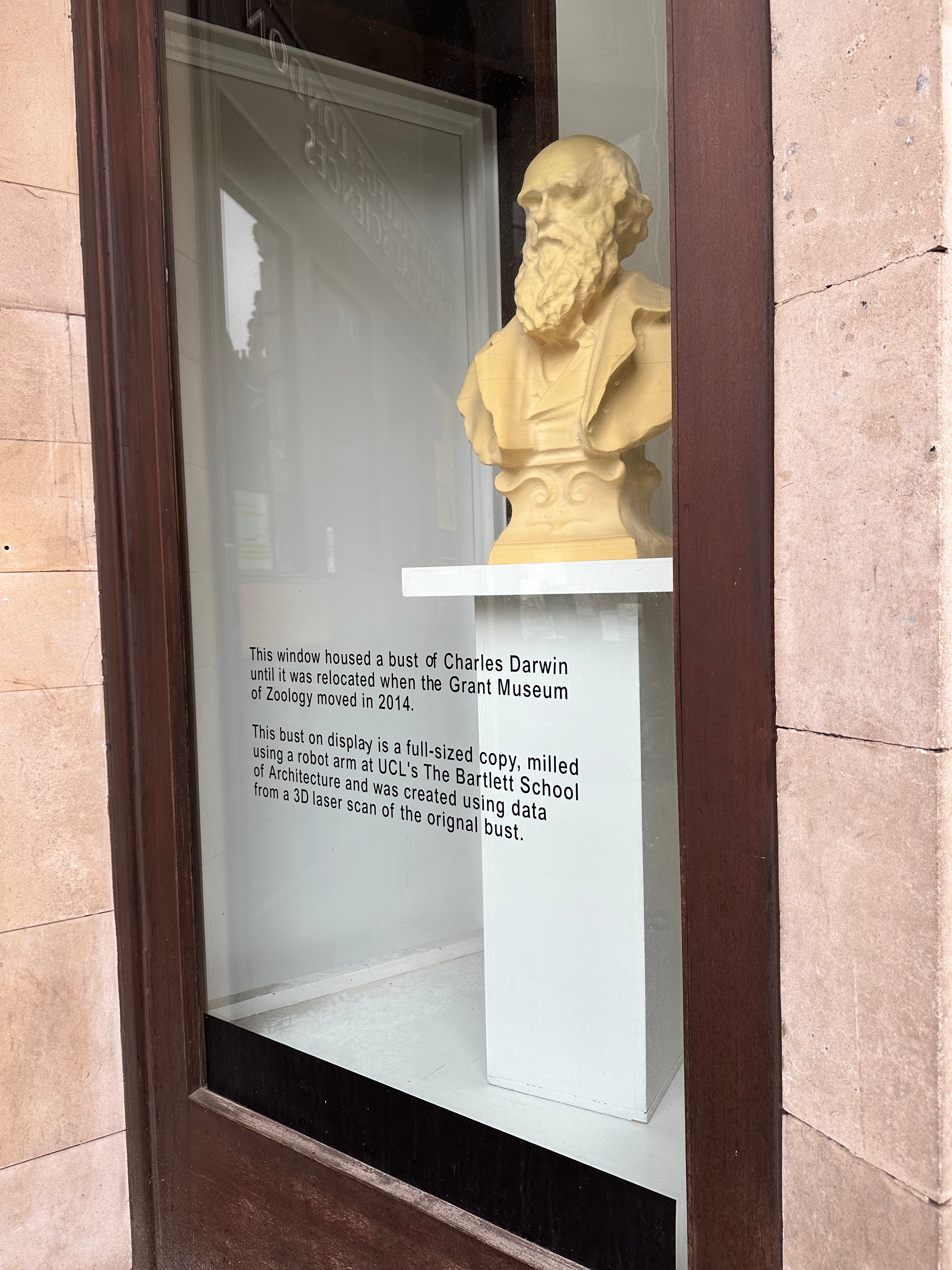
London is so steeped in history, it’s hard to go anywhere without running into it. Today I was walking through the London drizzle to an appointment at University College London and passed the Darwin Building. Really. How many universities have a biology building named after Charles Darwin? Wow. Although Darwin apparently never had any connection to UC London, he briefly lived in a home previously located at this site… so there is a historic marker on this building, and his bust is displayed prominently in the entrance.
A visit to the Royal Observatory Museum at Greenwich.
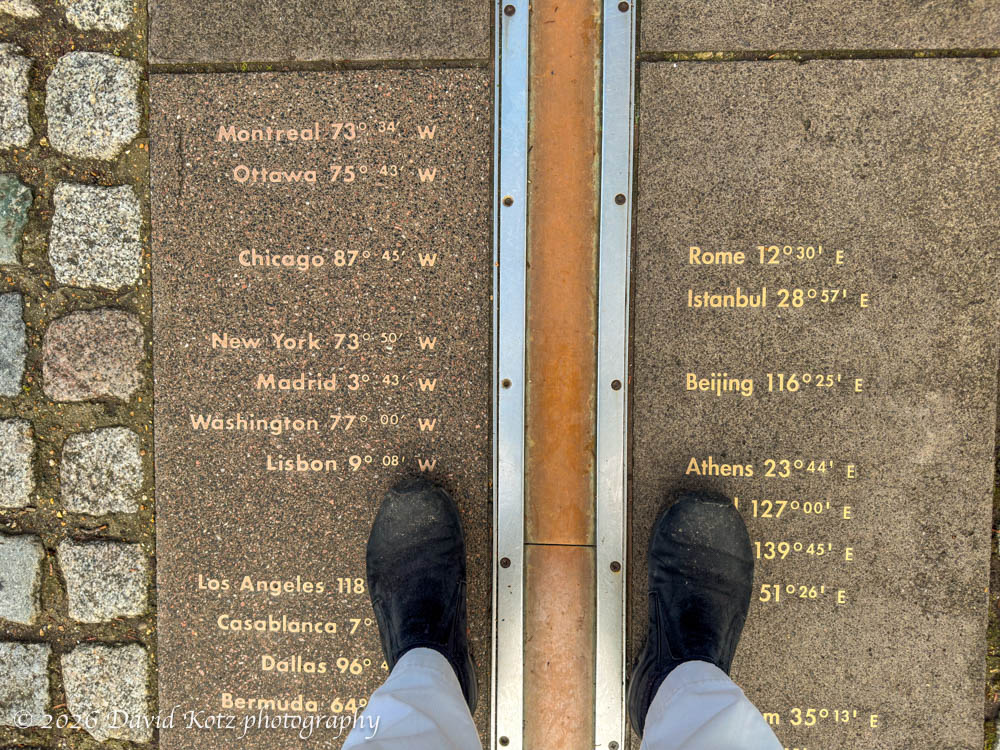
Today we visited Greenwich, and the Royal Observatory Museum that sits atop the hill in Greenwich Park. It has an expansive view across the park, past the Old Royal Naval College and the River Thames, to the skyscrapers in the Canary Wharf financial district of London. This observatory is where the question of longitude was studied – and in particular, a decades-long challenge to find a reliable means for mariners to estimate their longitude while at sea. As a result, it was later selected as the zero point – the reference point for 0º0’0″ longitude, aka the Prime Meridian. Given the importance of measuring time for measuring longitude, Greenwich was also designated as the basis for universal time – hence Greenwich Mean Time (GMT), now known as Universal Time (UTC). We and the other tourists had fun standing on the meridian, one foot in the Western Hemisphere and one foot in the Eastern Hemisphere.
The weather was a bit iffy, but I decided to head (once again) south of London to the region of North Downs for an extended hike through the countryside. Today’s hike began and ended in the pretty village of Gomshall, and passed through the tiny (and even prettier) village of Shere. The route strolled alongside sheep and horse pastures, past historic churches, and along a forested ridgeline following the North Downs Trail. Other than for a brief drizzle, the sun was a companion and the scenery pleasant.
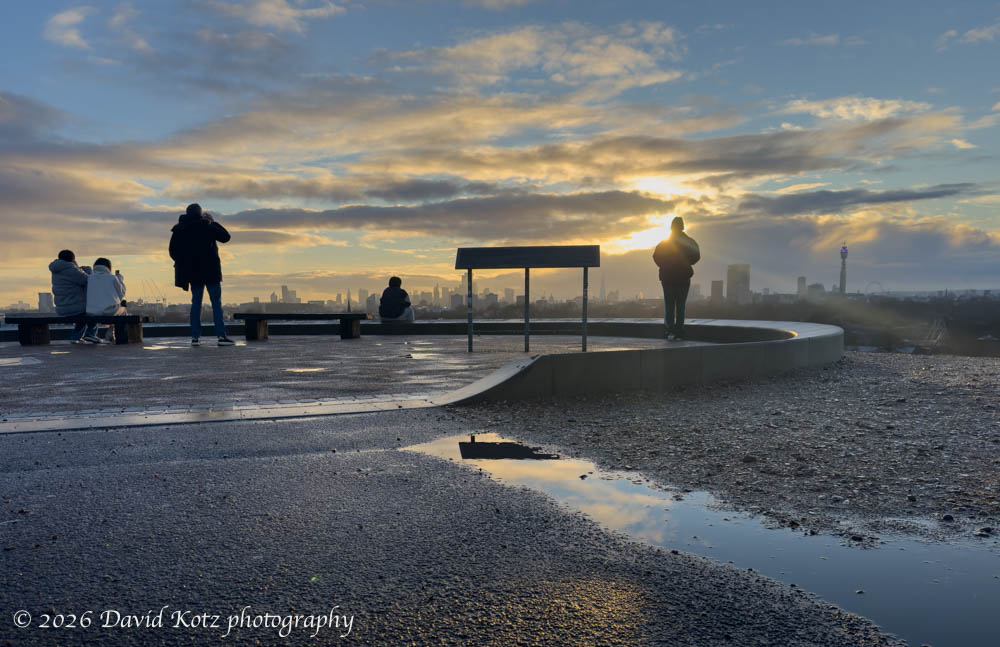
I glanced at my watch as I strode out of the Tube station and through the drizzle into the emerging daylight. The time was one minute before sunrise – but would the clouds cooperate? I was heading once again for Primrose Hill, a popular site for viewing the sun rise over London’s cityscape, which I’d first visited on the winter solstice. This was my fifth visit in four weeks, and I was determined to capture a particular scene, a particular moment, that I’d forecasted one month ago. To get the shot, the sun would need to actually show up, and in rainy London that’s never certain. At home in the pre-dawn darkness, it was raining hard and the forecast was gloomy. I need to make a go/no-go decision 45 minutes before sunrise to reach to Primrose Hill on time. It’s always a gamble. Today I gambled and won.
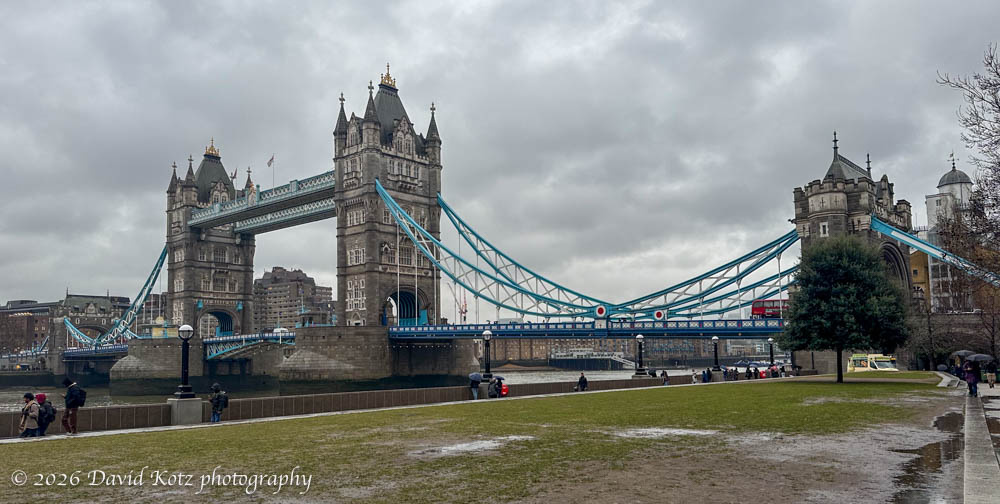
Although many Americans think this iconic bridge is called London Bridge, it’s actually called Tower Bridge – and is just upstream from its famous and historic neighbor, the architecturally bland London Bridge. Tower Bridge opened to the public in 1894; as a bascule bridge its central span lifts open to allow tall ships to pass, while its twin upper walkways allow sightseers like us to enjoy expansive views of the river and the city. Today we took the opportunity to visit. On this rainy winter weekday, there were few other visitors so we almost had the place to ourselves as we climbed the tower, walked across the high pedestrian bridges, and then down into the depths to view the historic coal-powered engine rooms.
An organ recital in a 13th-century architectural icon.
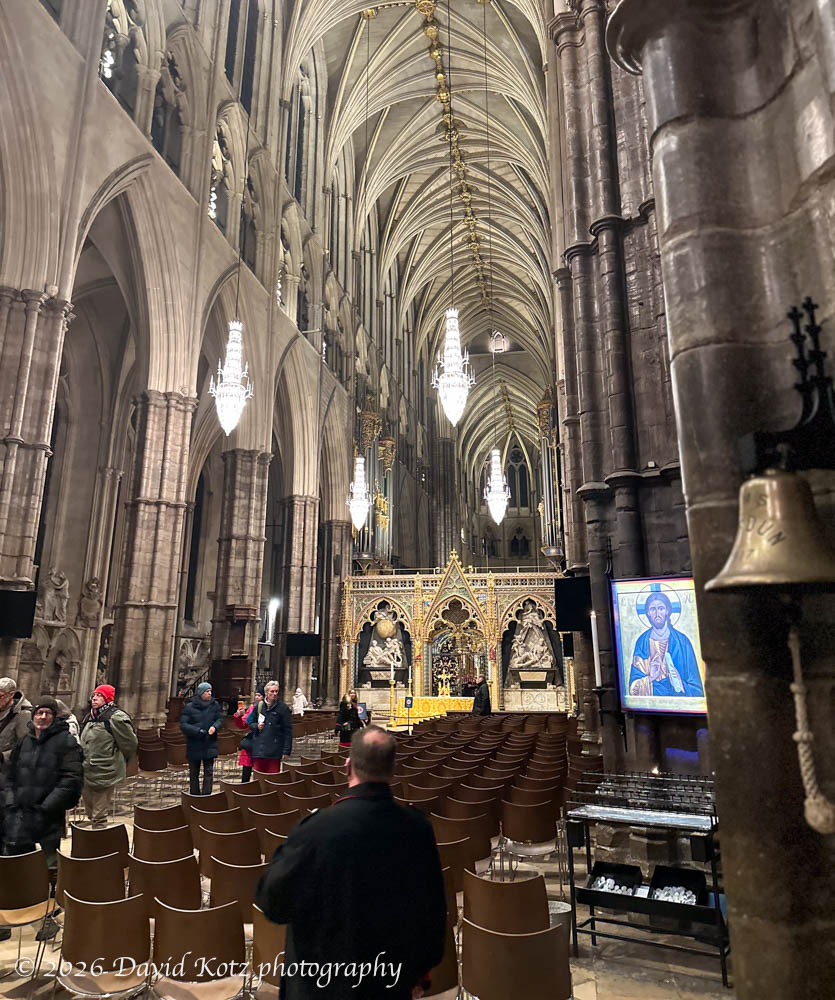
It is hard not to be moved when the first notes of the organ echo throughout an iconic 13th-century cathedral, especially one with such a storied history like Westminster Abbey. You feel the deeper notes resonate throughout your body as the music fills the hall with an even greater sense of grandeur.
After an organ recital at Westminster Abbey, London.
We were sitting near the front row, along with perhaps one hundred other lovers of music, history, and travel, and treated to a 40-minute organ recital by one of the Abbey’s senior organists. These weekly recitals are free and open to the public, as are weekly choral recitals and daily Evensong.
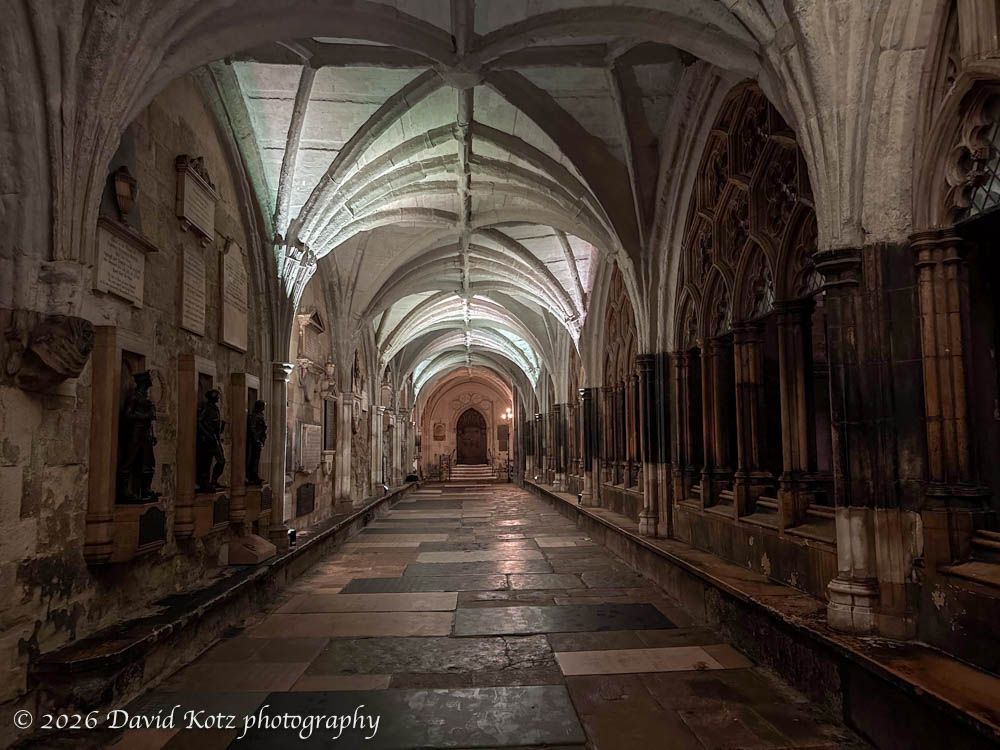
A side passage at Westminster Abbey, London.
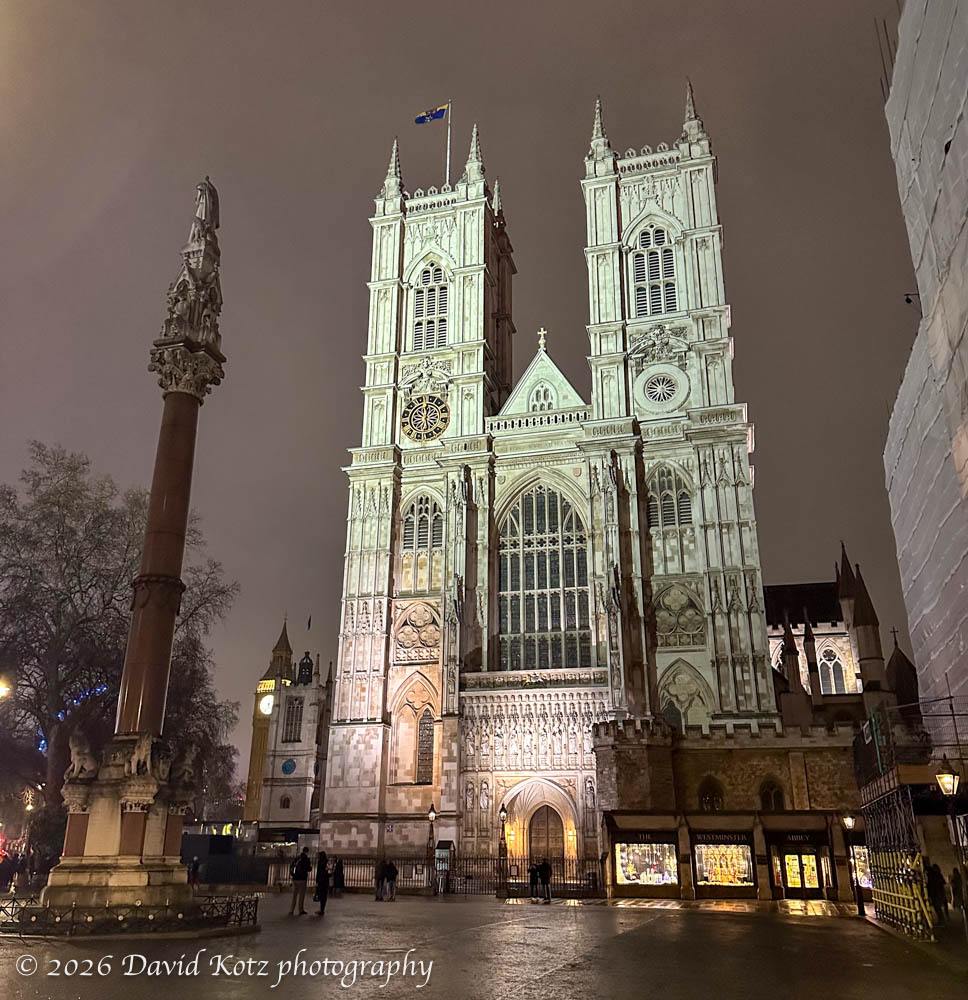
“Although Westminster Abbey was founded in 960AD, the building we see today dates from the reign of Henry III in the 13th century.” You can read lots more about the history of Westminster Abbey, which has been used for 16 royal weddings and every royal coronation since 1066.
Westminster Abbey, London.
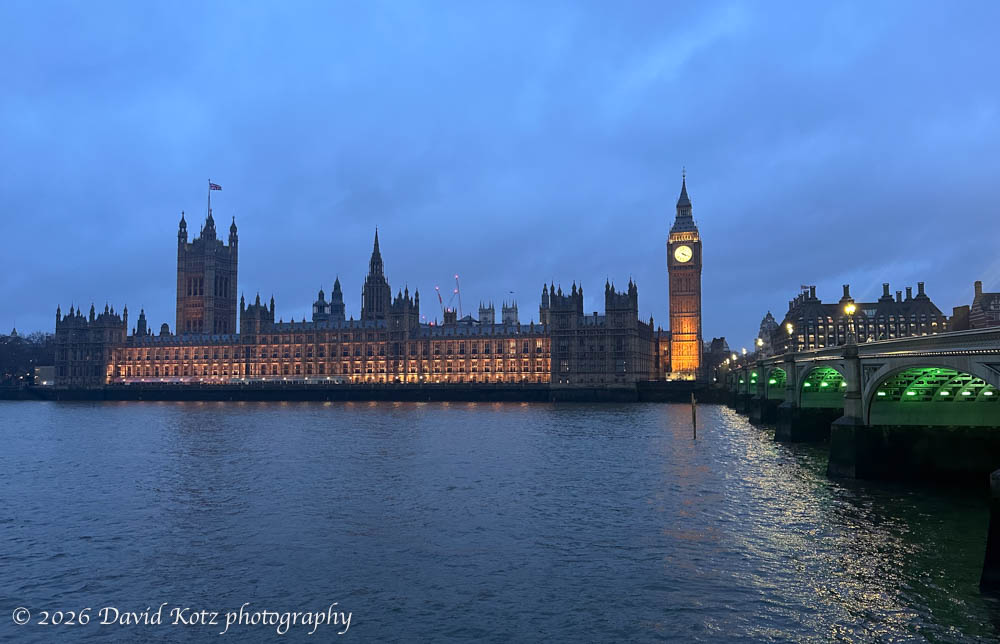
Just across the street from the Abbey is Westminster Palace; we crossed the Thames on Westminster Bridge for a good view of Westminster Palace (Parliament building) and Elizabeth Tower (with the bell named Big Ben). Westminster Abbey peeks out from behind the palace, just to the right of the construction cranes.
Westminster – Parliament building, Elizabeth Tower (Big Ben), and the River Thames. London.
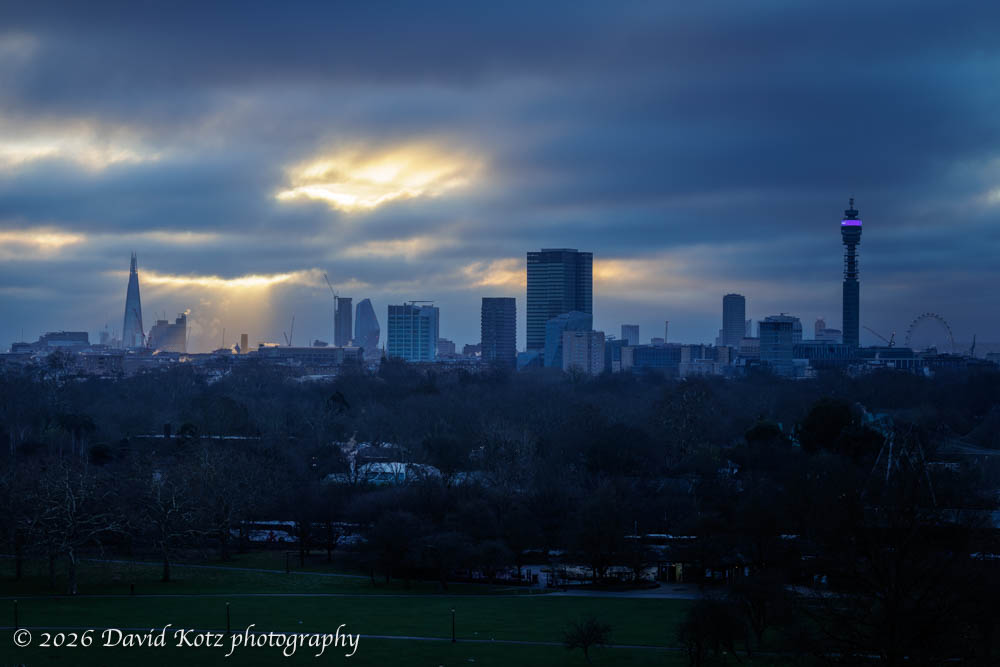
There’s one important feature about an unbroken streak: one is loathe to break it. So, despite my aching back (and bruised ego) left over from last week’s hike, I was determined to get out this weekend for my 16th consecutive weekend hike. The weather was promising for sunrise – cloudy, with periods of sun – so I headed back to Primrose Hill to see what I might find.
When I arrived, a bit after sunrise, the sun was hidden behind thick clouds – just as it had when I was last standing on this spot, on solstice. Today, unlike then, patience paid off… and the sun emerged, spilling “god rays” among London landmarks like The Shard.
Sunrise view from Primrose Hill, London, with views of London landmarks.
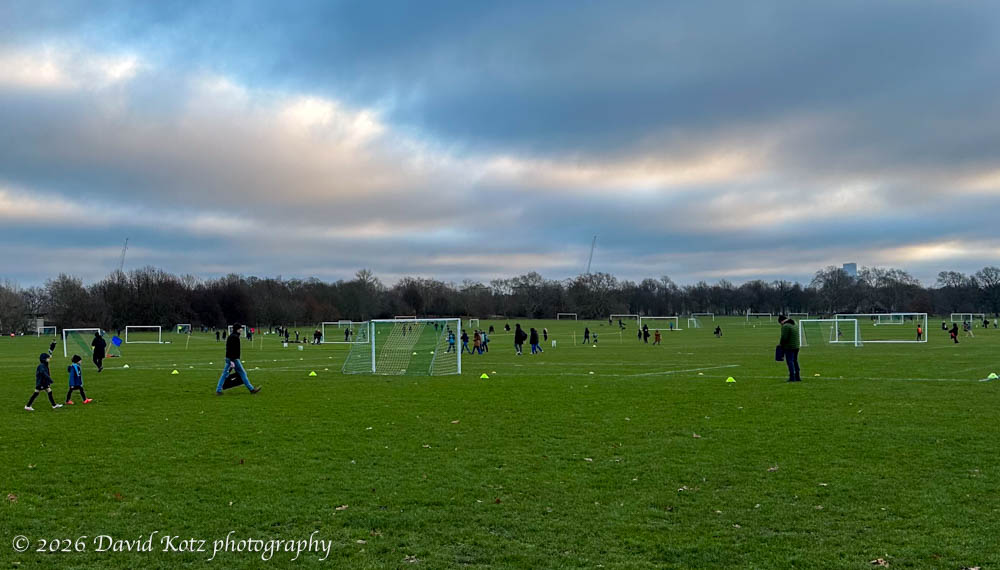
I walked down the hill and past London Zoo into Regent Park – with a brief glance at Regent Canal as I crossed over the path of one of my December hikes. Along the pathway I joined a crowd of parents and children heading for the football pitches. Although the ground was frosted and the sun was struggling to eke its way through the clouds, the children were buzzing with excitement as they warmed up for Saturday matches.
Children preparing for football matches – Regents Park.
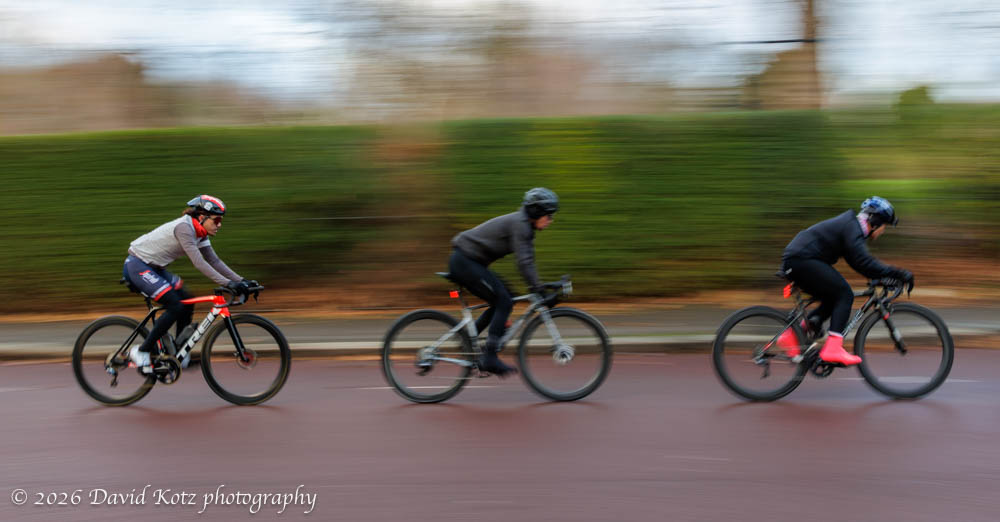
At the heart of Regent’s Park is Queen Mary’s garden, enclosed by a perfectly circular roadway. A quite street with almost no traffic on this Saturday morning, the “inner circle” road was spinning with lycra-clad bicyclists. As I walked round this circle, I recognized the same group of speedy cyclists zipping past me every few minutes, as they lapped the circle again and again. I took the opportunity to practice panning shots, that is, panning my camera sideways to photograph a fast-moving subject so the subject is clear and sharp and the background is blurred. Much harder than it looks! I need more practice.
Panning shot of cyclists riding the “inner circle” at Regents Park, London.
I walked a few more miles through the streets of London until I reached a favorite café, where I joined some computer-science colleagues over a chai and a croissant.
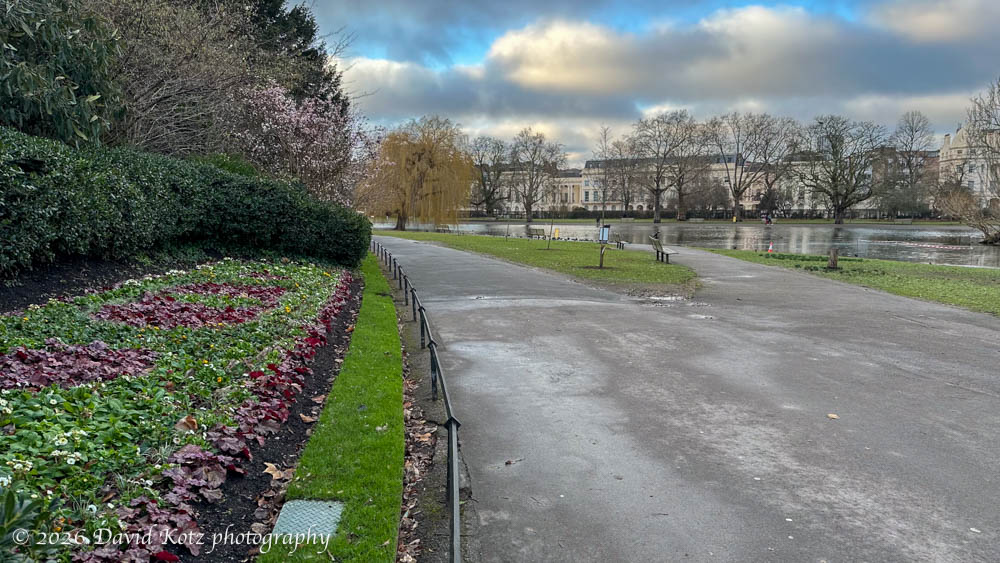
Regents Park. I still find it astonishing to see flowers blooming in January.
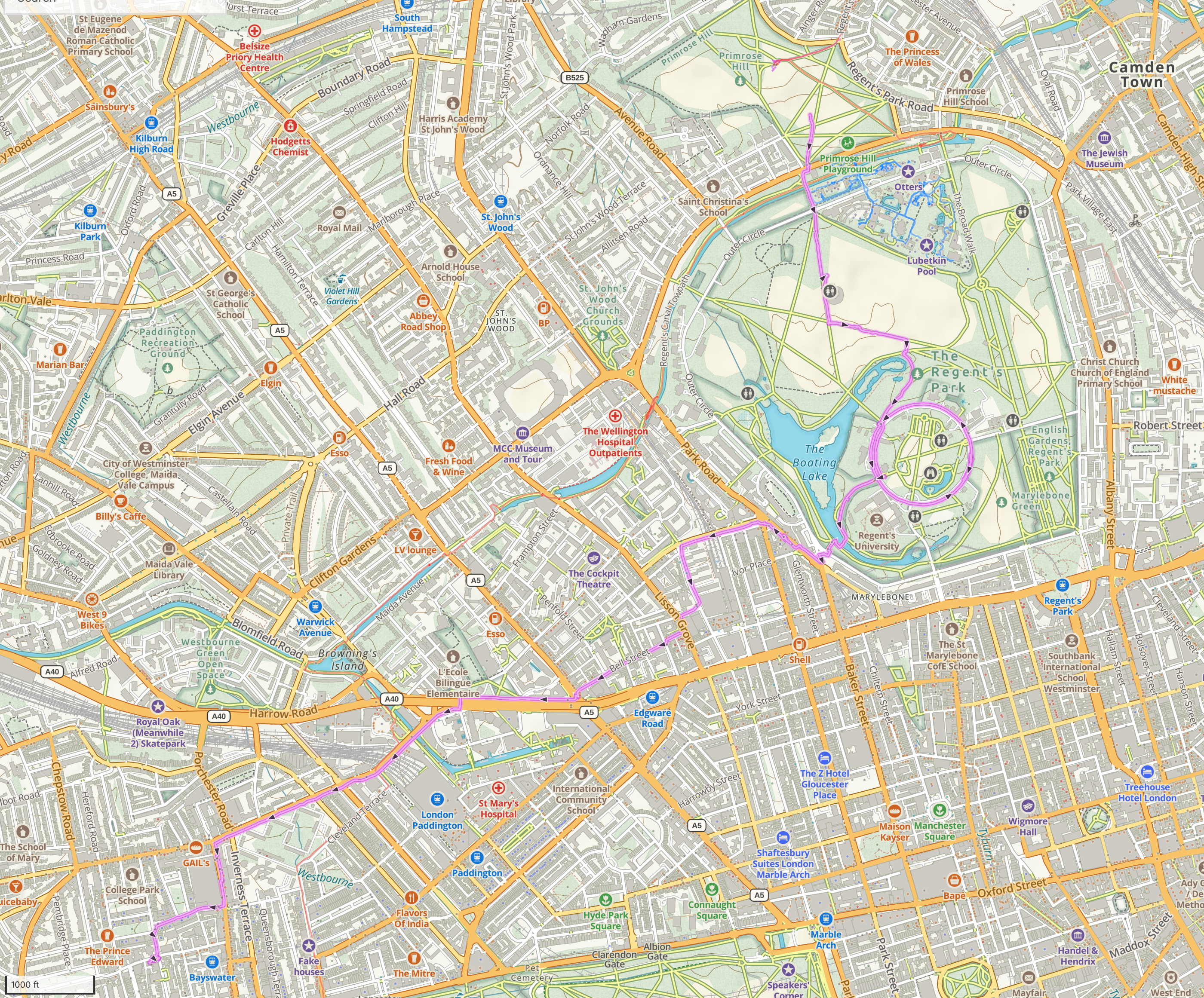
Hike stats: Distance: about 7.5 miles total
I didn’t track the whole hike with GaiaGPS, so the map is incomplete. The distance estimate is from the Health app on my iPhone.
Sunrise view from Primrose Hill, London, with views of London landmarks.


 David Kotz