Yesterday morning brought us a nice snowfall, re-decorating the lawns and trees as they should be this time of year. It was a heavy wet snow, never amounting to more than 2-3″, but was pretty while it lasted. Sebastian was especially fascinated, spending hours on various windowsills, waiting for the moment when a sheet of snow would slide off the metal rooftop and, with a earth-shaking whump, hit the ground below.
Sebastian watches for chunks of snow to slide off the rooftop, while a wet snowflakes accumulate outside.
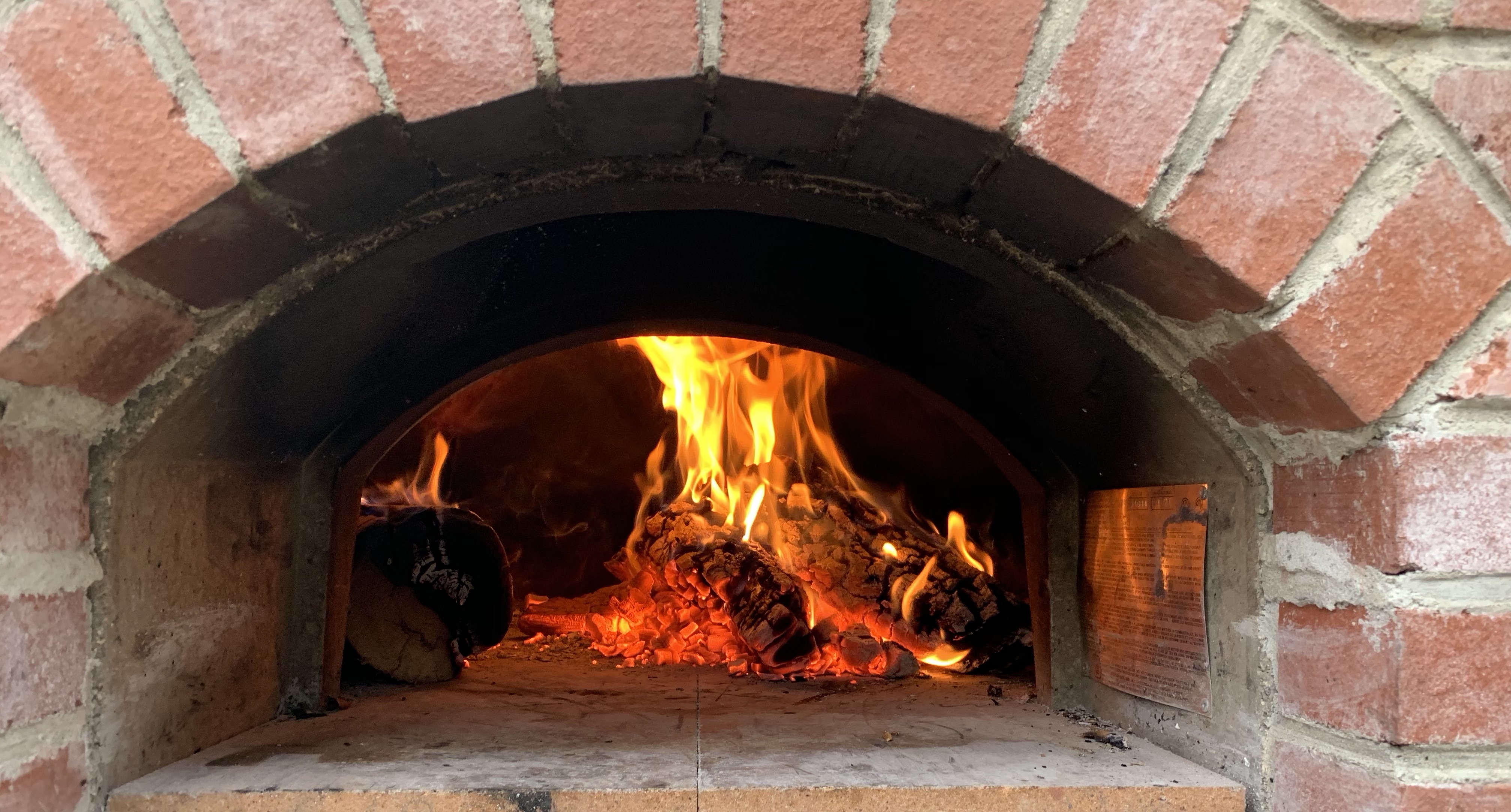
We’d made pizza the night before, and kept the pizza oven warm overnight. This morning I shoveled a pathway and stoked it up, making it ready for the next big experiment: cedar-smoked salmon.
The pizza oven is fired up and ready to go, during a snowstorm.
The salmon came out really well, though Andy says we learned a lot of lessons and it will surely be awesome next time. 🙂
We celebrate New Years’ Day with two traditional foods from the South Carolina Lowcountry: Hoppin’ John and Collard Greens. These classic dishes were inspired by African traditions and have been a New Year’s tradition in the Carolinas for at least a hundred years. Pam (who grew up in lowcountry South Carolina) made a wonderful meal for us this year, guaranteeing us good luck and financial prosperity: “Eating those two dishes will ensure prosperity in the new year, and the collards represent greenbacks and the black-eyed peas coins. Or so they say.” [Moss 2014]
A small serving of collards (left) and hoppin’ john (right).
In preparing this post, however, I looked around a bit and found that fascinating article ([Moss 2014] from a Charleston food writer in 2014) about the history of Hoppin’ John… providing interesting background on the African origins of this dish, and how the commercial evolution of the key ingredients (bacon, rice, beans) mean it’s difficult to really accomplish the original quality of this dish. Next time, we’ll strive to find the original ingredients and see how it turns out!
Tim, David, and Kathy, on a hike to Blueberry Mountain.
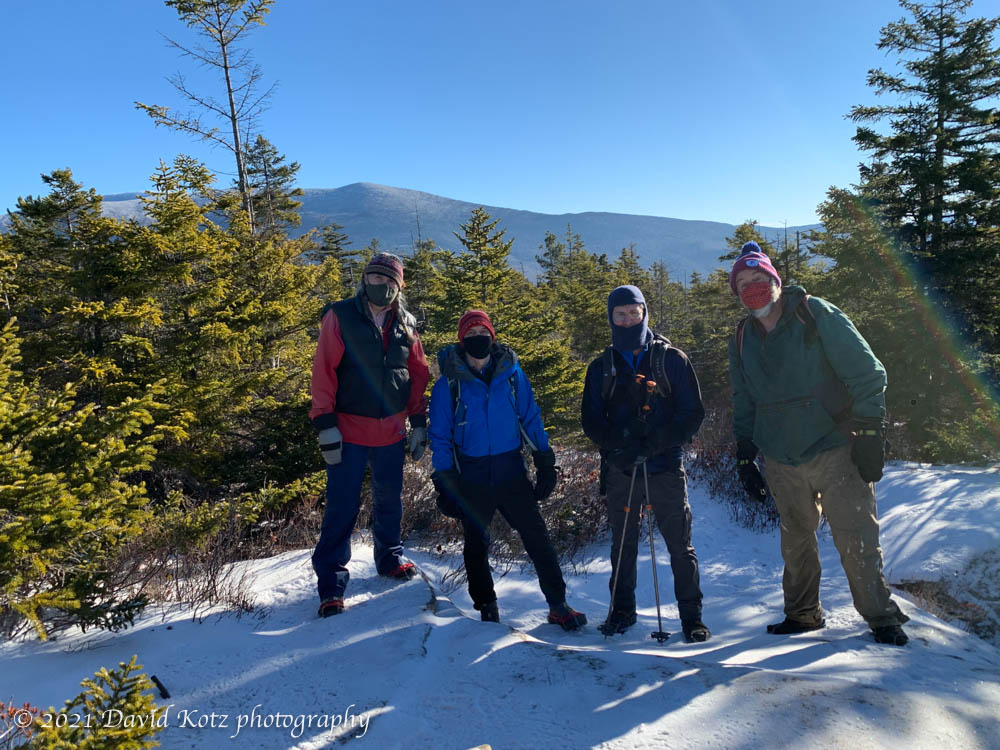
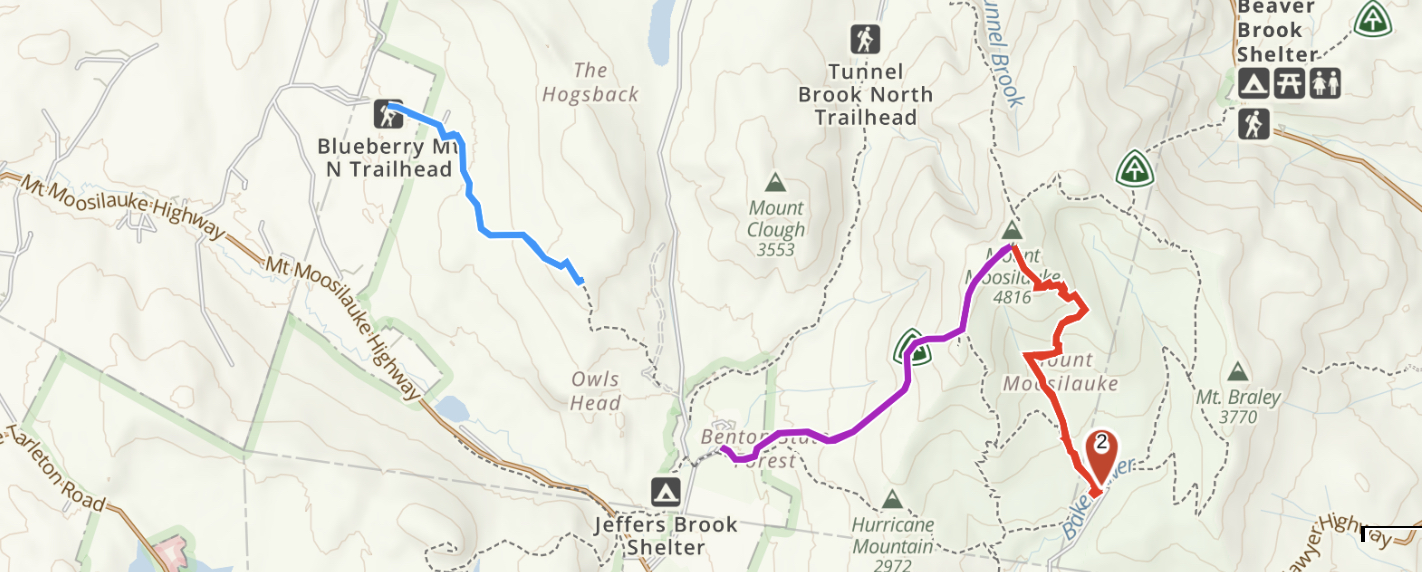
It has long been a tradition for my Dartmouth friends and me to hike a mountain on New Year’s Day. Today we were fortunate to have outstanding weather: a blue-sky day with moderate temperatures (20-30º), and a fresh (though thin) layer of powder snow at higher elevations. We had eyes for Moosilauke – our traditional destination for New Years – but with weather this nice, we anticipated huge crowds. Instead we headed for Blueberry Mountain, a pretty little (2,663′) bump to the southwest of Mount Moosilauke.
I’d been up here once before, but from the east, and today we came up from the west. The west is a longer approach, but a pretty trail nonetheless. We were the first to travel this trail since the snowfall a few days ago. To be more precise, we were the first humans on the trail since the snowfall – we were following a coyote’s tracks for most of the way up! Indeed, the coyote often provided clues about the route when the trailbed was not so clear.
The view from the summit is partly obscured by trees, but Moosilauke was visible and delightfully clear from this close. It must have been a grand day up there! In the photo below, the south peak is most visible.
On the summit of Blueberry Mountain: Kathy, Tim, David, David.
The sign at the trailhead advertised 2.2 miles, but my GPS track shows we walked 8.52km round-trip (5.3 miles, or 2.65 mi each way). Two smartwatches also indicated a distance closer to 2.7 miles for the ascent.
A fresh dusting of snow decorate the trail near the summit of Blueberry Mountain on New Years’ Day.
There’s something magical about gathering with old friends, even after a long absence. It reminds me of the experience of slipping on a well-traveled pair of hiking boots: they fit just right and enable you to walk for miles in comfort. So it was for us today, a group of friends who have been hiking together for more than three decades. We met at the base of the Rivendell Trail on Mt. Cube – a trail that is one of my local favorites, because it gives one a dose of the “White Mountains” without a long drive or a major hike. Standing apart, and forgoing the usual hugs, we donned a layer of warm clothes as the wind whipped through the trees overhead. Read on!
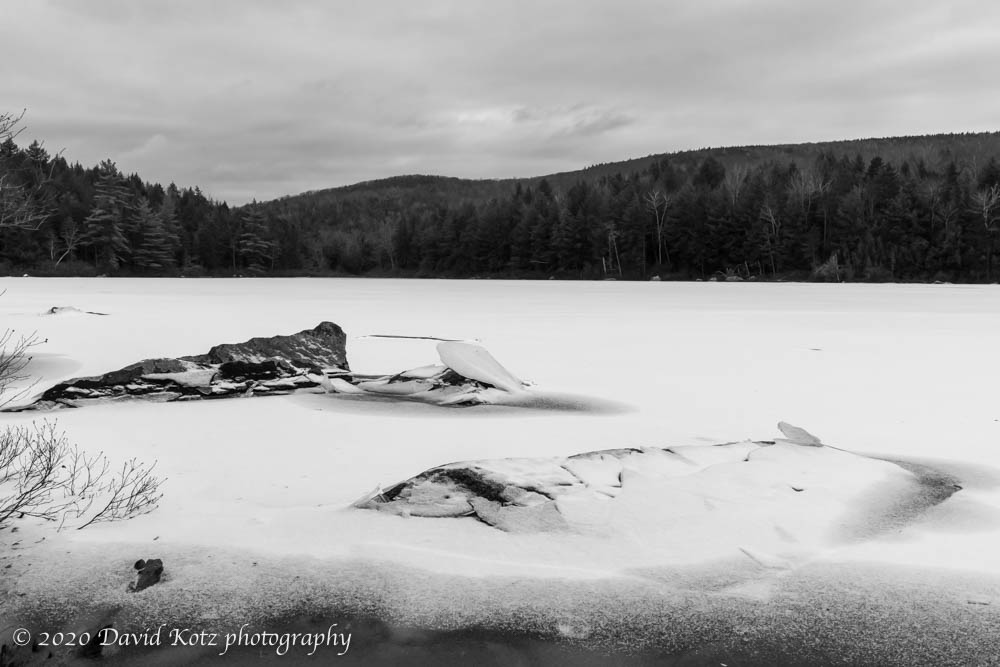
Lyme is home to many hidden natural treasures. Trout Pond is one: nestled in the hills on the north side of town, at the end of a dirt road followed by a forest road and reached by a footpath, this small pond offers quiet respite from the bustling world outside its little valley. It’s not a long hike, nor a difficult climb, barely clocking in at 2 miles round-trip along a fairly level route, but it’s interesting in every season.
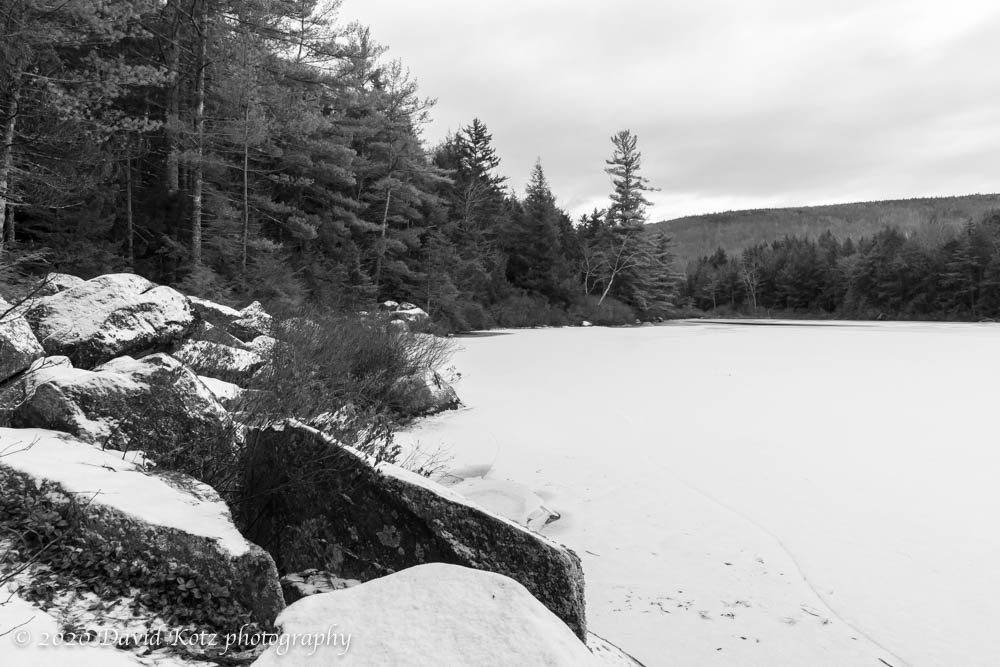
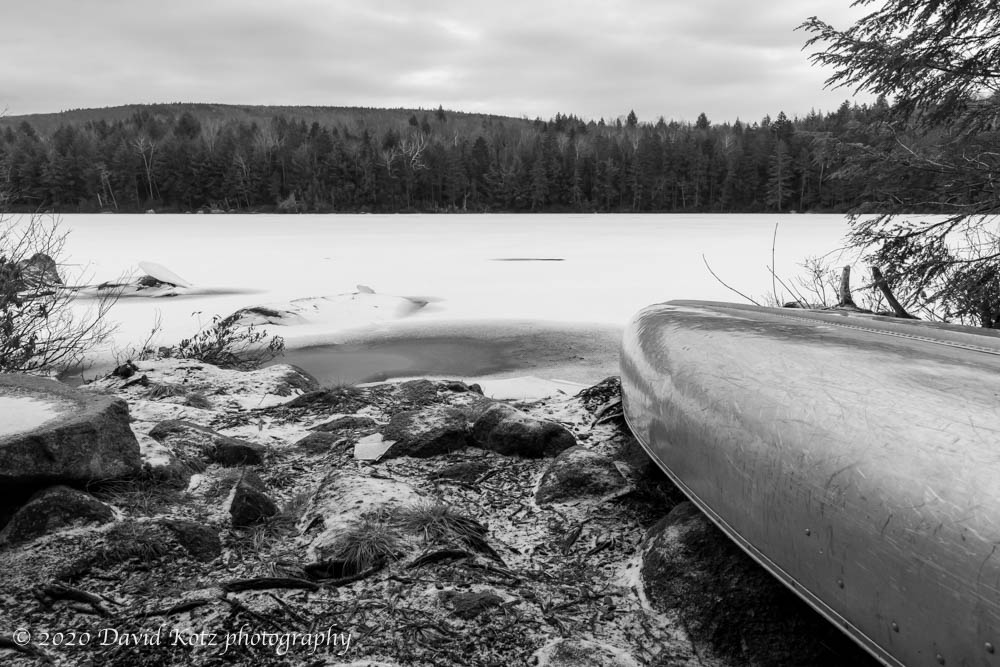
Today, the woods were entirely snow-free after the Christmas rainstorm, but there was a fresh dusting of powder along the exposed rocks and coating the skim of ice across the pond. A canoe and paddles, apparently left for anyone who wishes, rest on the shore where trail meets pond.
As noted by the page on TrailFinder, “The land around Trout Pond has been a working forest for some two centuries, while stone walls, foundations, and barbed wire seemingly swallowed by trees indicate that the western part of the tract had an agricultural history. By 1855, several families homesteaded in the area near the present trailhead. The Piper brothers, who ran a steam-powered sawmill near the outlet of Trout Pond, bought the timber lot in 1891. Two other sawmills on the brook also processed lumber that was probably cut in the Trout Pond Forest. A stack of hemlock bark, found on a ridge south of the pond, suggests this material was gathered for the leather tanning trade. By 1870, the Pliny Allen place had found its future as a cellar hole, and by 1946 so too the Gilbert/Smith place.”
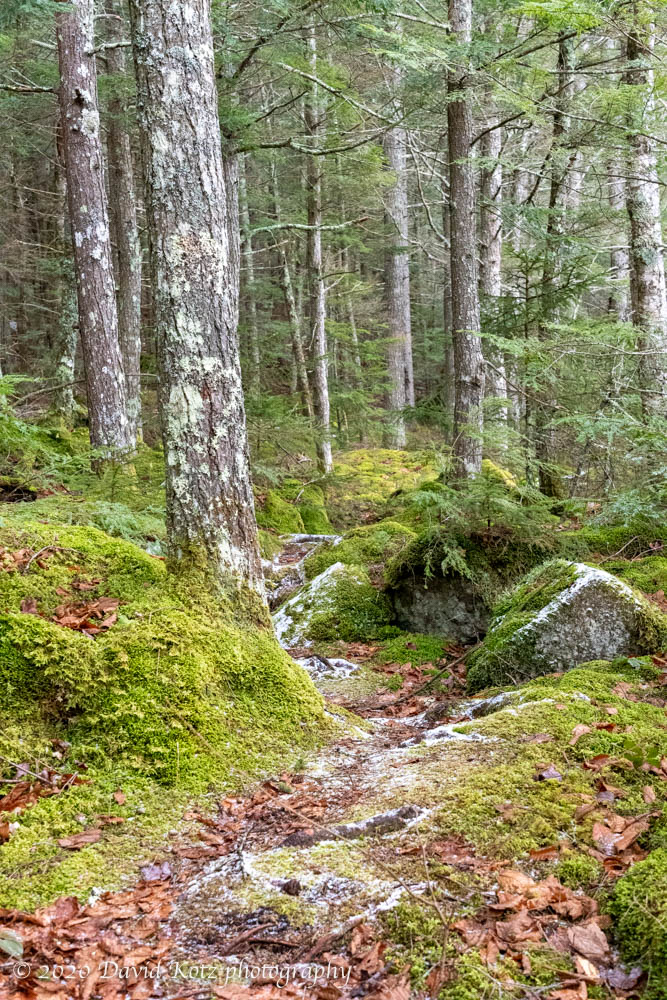
I know little about black & white photography but decided to process these snaps of the pond in black & white because, well, this presentation seemed to fit the monochrome pond, gray sky, and dark forest. In contrast, here’s a photo of the trail along the shoreline:
One nice thing about a having a pizza oven at home is that you make a lot more pizza… and start experimenting. We are also lucky to have a curry-leaf plant at home; its pungent leaves are commonly used in South Indian cooking. So I made a simple pizza by spreading a thin layer of curry sauce (admittedly, from a jar) and sprinkling on some fresh curry leaves. Yum!
About a month ago, as it became clear we would be staying home for Christmas rather than spending Christmas with family in SC, Andy looked on the bright side: the potential for his first “white Christmas”, with a snowy landscape all around. This, his 20th Christmas, is the first time we’ve spent it in New Hampshire; last year we were in Switzerland, twice before in India, and otherwise always in South Carolina. No snow in any of those places!
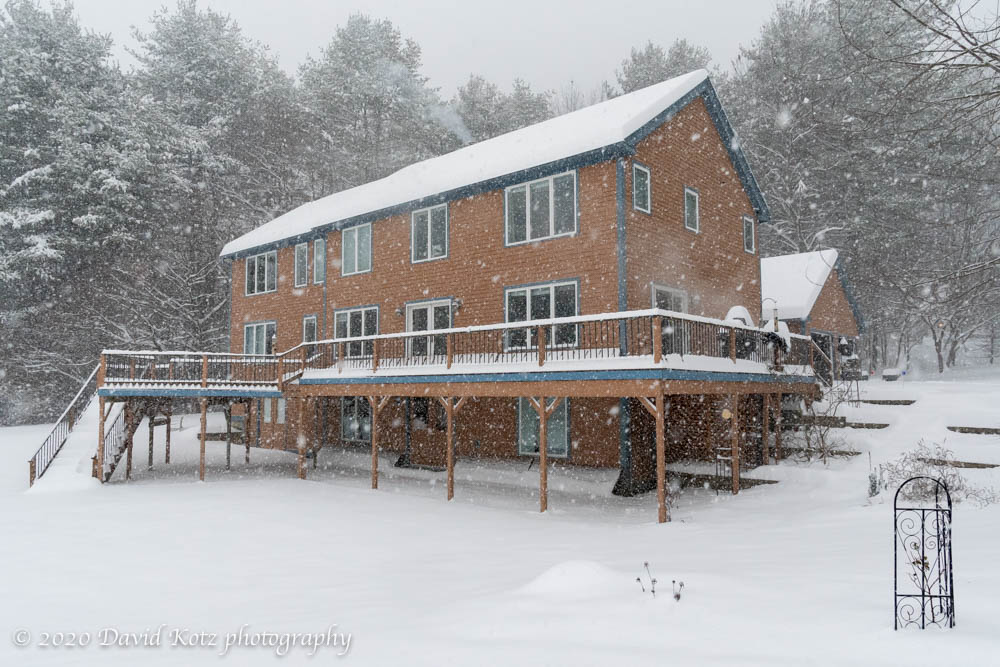
So when winter arrived last week, with a glorious foot and a half of fresh powder, it seemed he would get his wish!
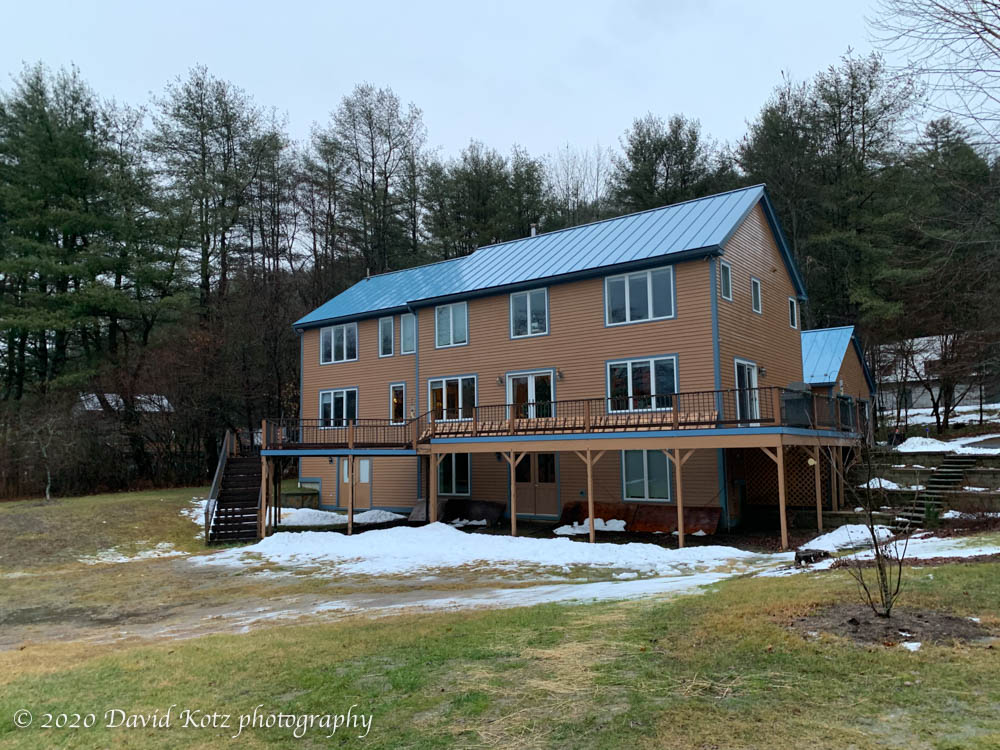
Our home in the season’s first real snowstorm.
Last night, however, a terrible warm front blasted through, bringing temperatures near 60º and a torrential downpour. Most of the snow (other than snowbanks) melted rapidly… from shin-deep to bare ground overnight.
Overnight rain and warm temps decimated the snow on Christmas Eve, leaving us without a white Christmas.
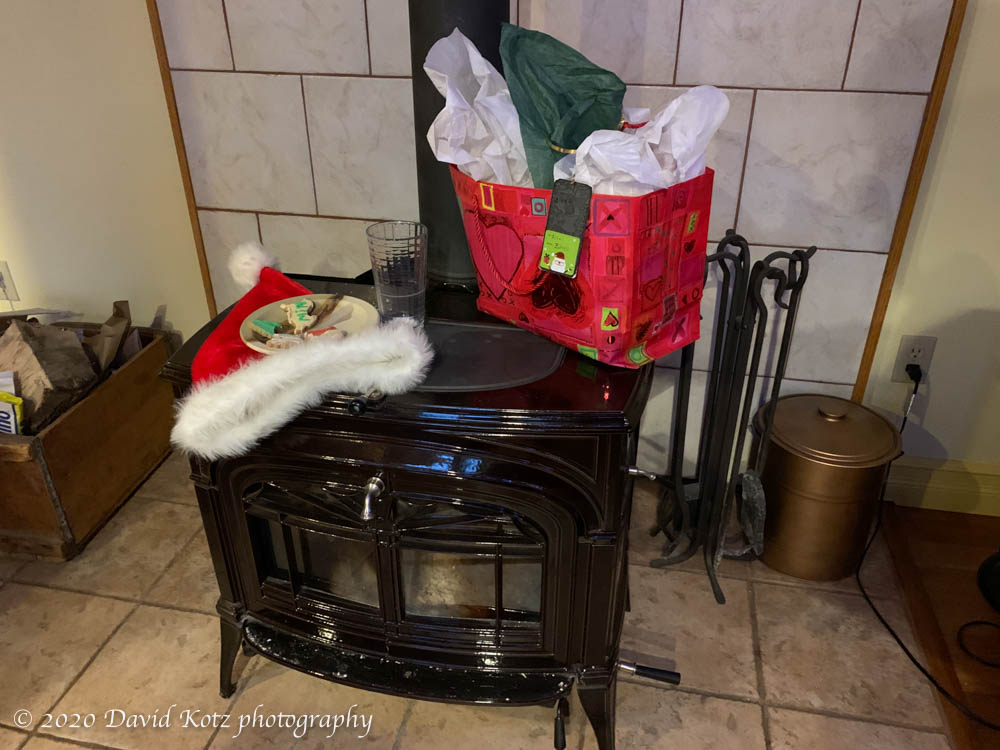
Still, it appears that Santa made it through the storm! … lured as always by Granny Kate’s famous Christmas Cookies.
Santa Claus came through! lured by Granny Kate’s Christmas Cookies.
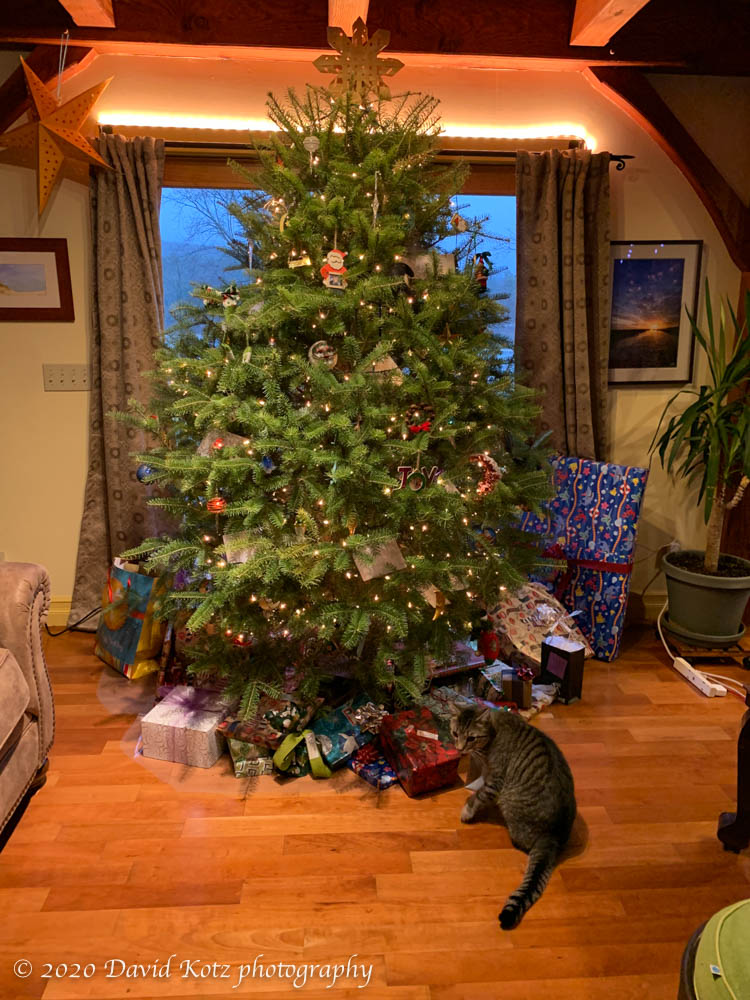
At dawn, Sebastian identifies the presents he is most interested in opening, but the children are still nestled all snug in their beds.
Sebastian is ready to open presents at sunrise on Christmas morning.
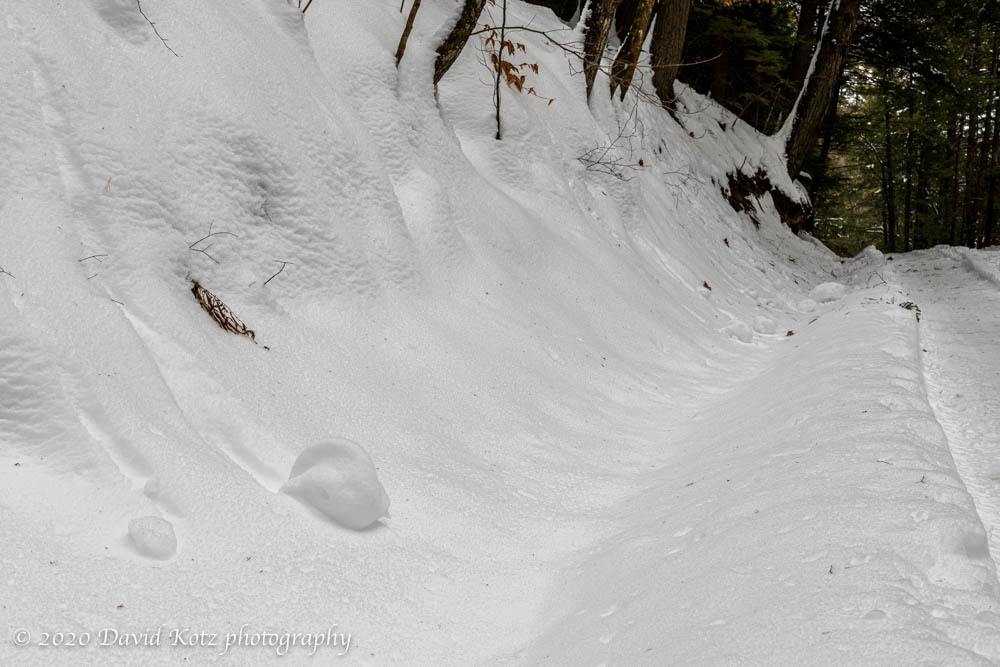
Recent snow conditions appear to have been ideal for the creation of snow rollers, an extremely cool (but uncommon) phenomenon. I’ve only seen them once before. Yesterday, Andy and I drove past a roadside hill south of Windsor, VT that was decorated with literally hundreds of small snow rollers – a most impressive collection! Unfortunately, that stretch of VT Rt.44 has no safe place to stop, so we were unable to photograph any of those rollers.
Today, I was out for a walk on a neighborhood road along a steep hillside, and came across an old snow roller. In this photo I’ve increased the contrast and texture to help see it a bit better against the snowy background.
You can see the track it made as it rolled down the hill from left to right. This roller is not particularly impressive, about 8-10″ in diameter and somewhat melted from today’s warm temperatures. Below is a tight crop:
The snowstorm five days ago brought us a sudden beginning for winter, laying down deep powder across the mountains and trails. I’ve been out every day to enjoy the snow, prime conditions for skiing and snowshoeing. With bad weather looming for tomorrow and the next day (Christmas Eve and Christmas Day), Andy and I set out today to make the most of the snow before the rain spoils it.
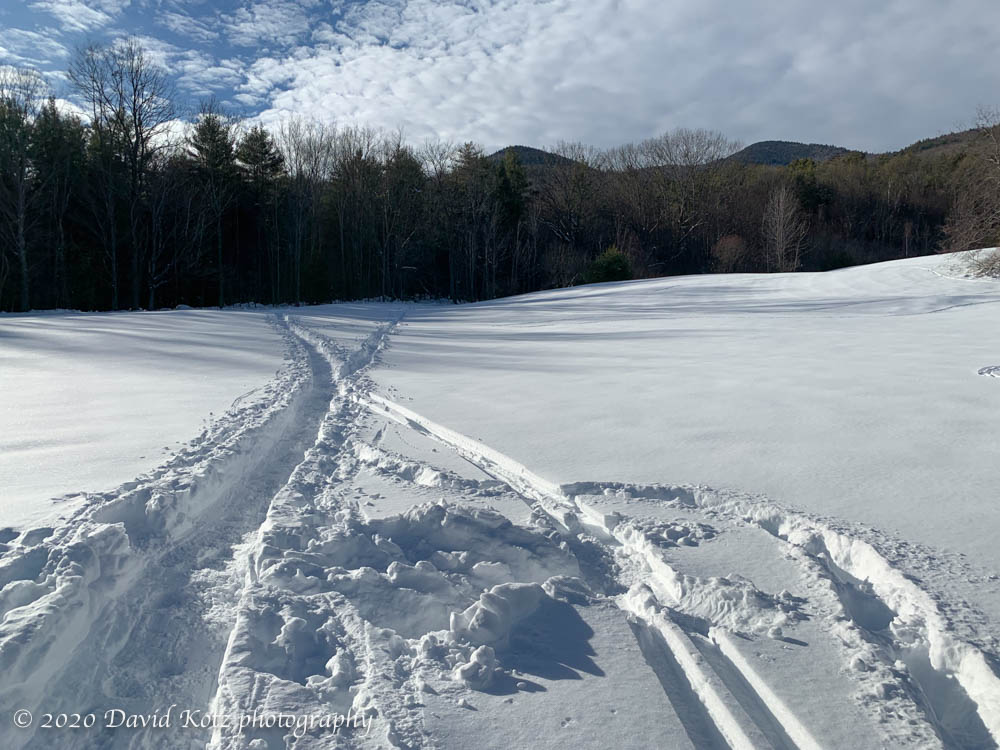
Tracks in deep snow on Mount Ascutney’s Windsor Trail.
Although we were interested in a return to Moosilauke, the favorite, the forecast showed morning sun with increasing clouds and I feared we’d simply climb into the clouds. So I selected Ascutney; it has lower elevation but 360-degree long-distance views. And heck, it’s been more than four years since I was last there in winter.
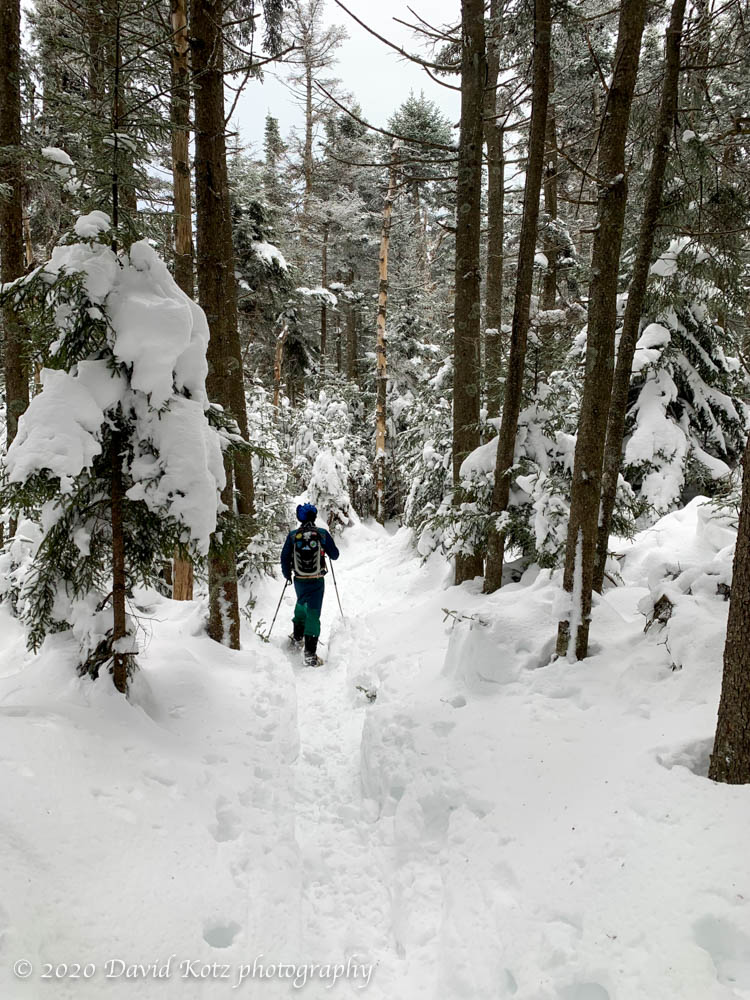
The Windsor Trail is very popular, so it was not surprised to see it broken out. Indeed, it had clearly seen a lot of traffic… skiers, snowshoers, and bare-booters. Andy and I made good time in bare boots for the first half of the climb, passing only three other hikers, and then switched to snowshoes as the snow became deeper and softer.
Andy hiking up Mount Ascutney on a snowy winter day.
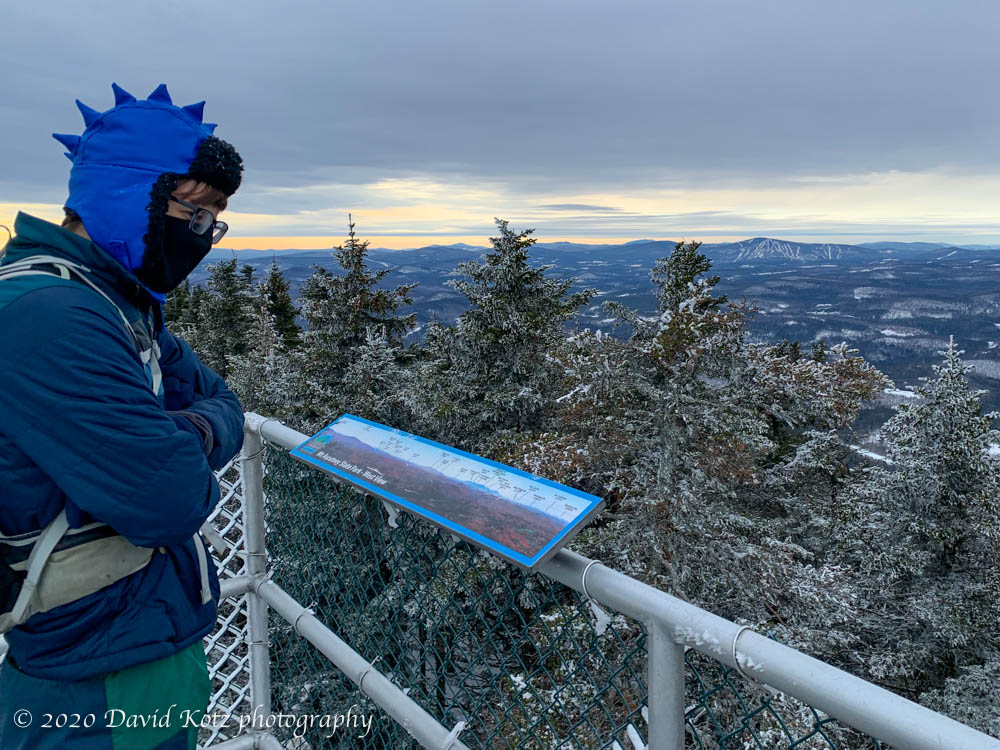
Soon we were at the summit, climbing the observation tower. There’s really no way to capture the scene with a mere smartphone camera, but the 360-degree views span nearly all of Vermont and New Hampshire.
Andy surveys the wintry view from Mount Ascutney.
Clouds were moving in, pulling us under an overcast sky… but to the northeast, the summits of Moosilauke, Franconias, and Presidentials were blindingly white in the afternoon sunshine. (No wonder the range is called the White Mountains.)
Our descent was speedy, boot-skiing down the trail, passing only two other hikers. A fine hike indeed. A few more photos in the gallery.
Hike stats: 5.6 miles (per the guidebook), elevation gain 2,800′ (per Apple Watch). 4 hours.
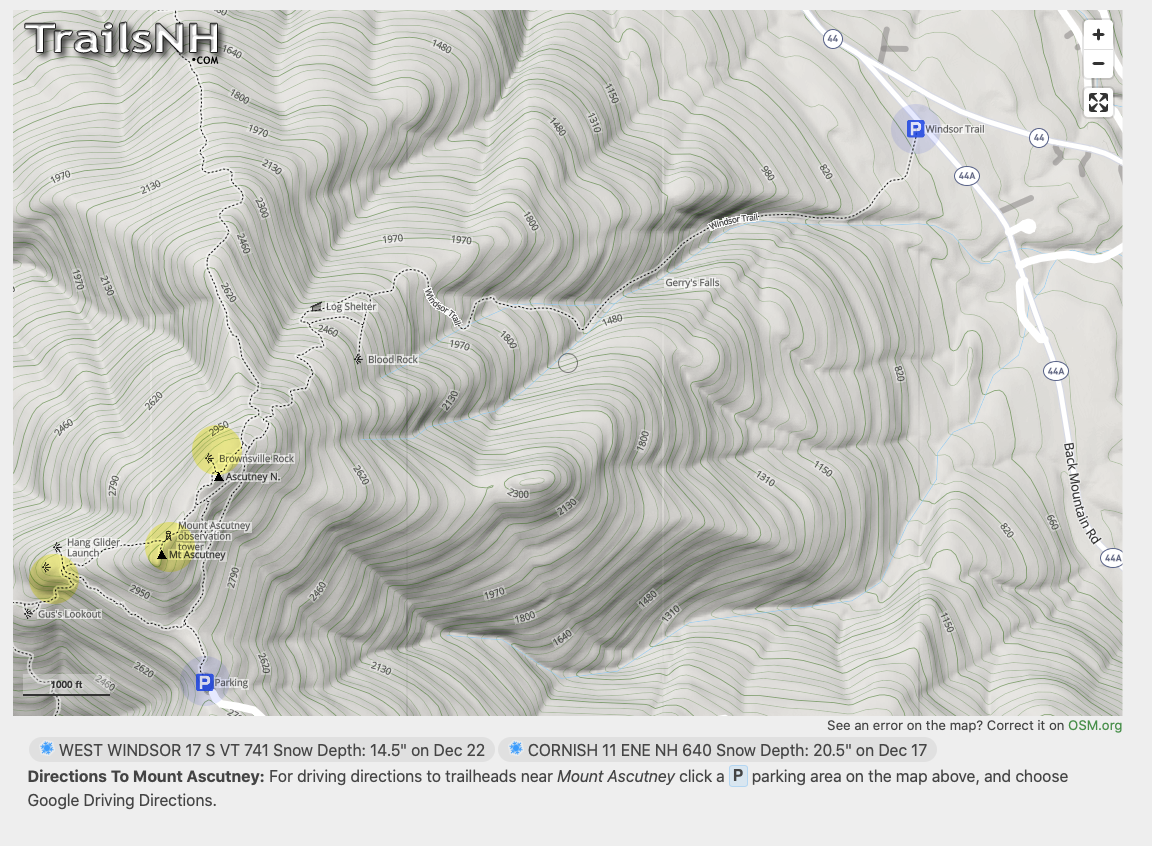
The Windsor Trail begins at Parking in the upper right and ends at the summit (the middle yellow peak).
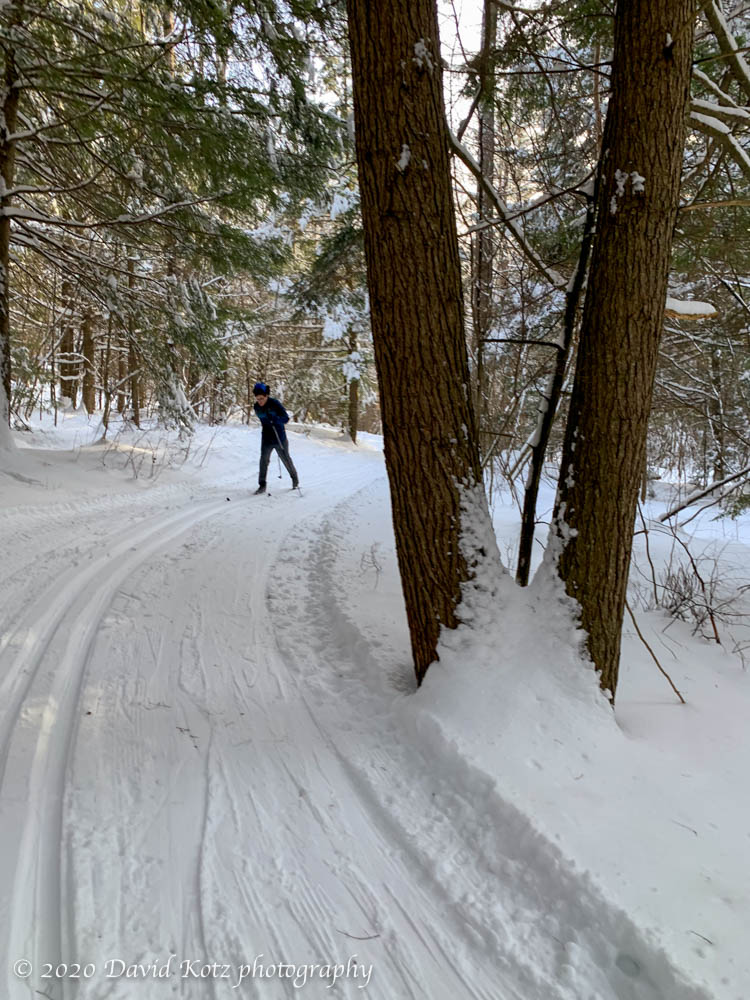
Cross-country skiing on the downtown trails in Lyme.
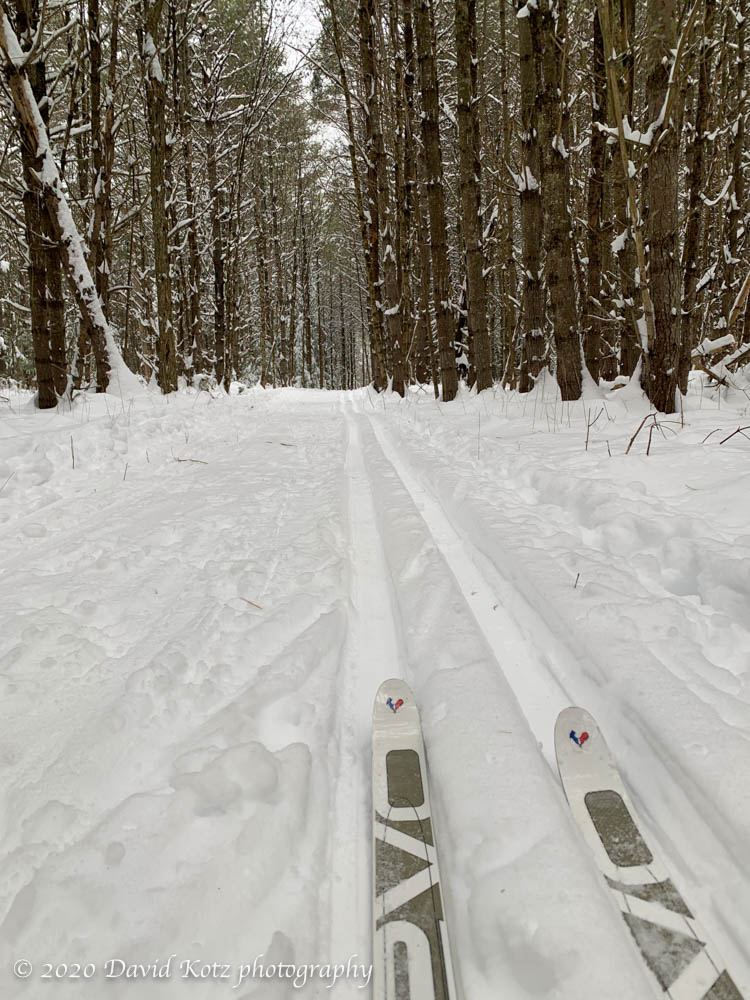
On Saturday and Monday (today) we went cross-country skiing, right here in Lyme. One of the wonderful things about our little town is that there are miles of beautiful skiing trails available to the public, thanks to the generosity of the landowners and the hard work of volunteers who maintain the trails in summer and groom the tracks all winter. It really is an incredible resource, especially in the covid era when activities outdoors in the fresh air are more important than ever.
I’m especially grateful to Kevin and the crew who maintain the Stone House Farm trails in downtown Lyme (where I skied today), and to Bob and the extensive network out at the Greens (where Andy skied today).
Skiing the Stone House trails in Lyme.
We went from zero snow to a solid base, in this recent storm. The conditions softened today, with temps exceeding 32ºF (gasp!), but were still a joy to ski. Sadly, the rest of the week will bring more warm temperatures and rain on Christmas Day. Let’s hope for little rain and then a new snowstorm to bring back the skiing soon!





 David Kotz