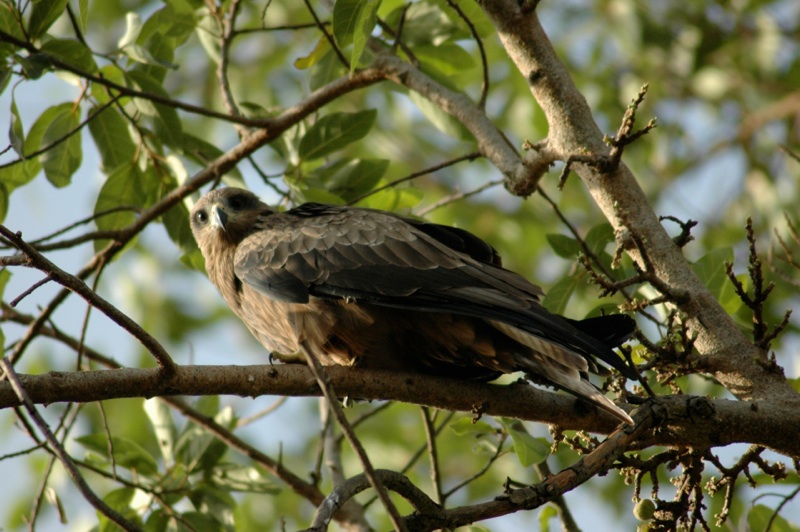
“Being Indian”

Pavan Varma’s interesting and insightful book.

I’ve been reading Being Indian, Pavan Varma’s interesting and insightful book about the culture and psyche of India today.  At times it is a bit repetitious or tedious, but for the most part it is a fascinating look at India.

Here’s a book review.

Here’s a link to the book at Amazon.

This post was transferred from MobileMe to WordPress in 2020, with an effort to retain the content as close to the original as possible; I recognize that some comments may now seem dated or some links may now be broken.

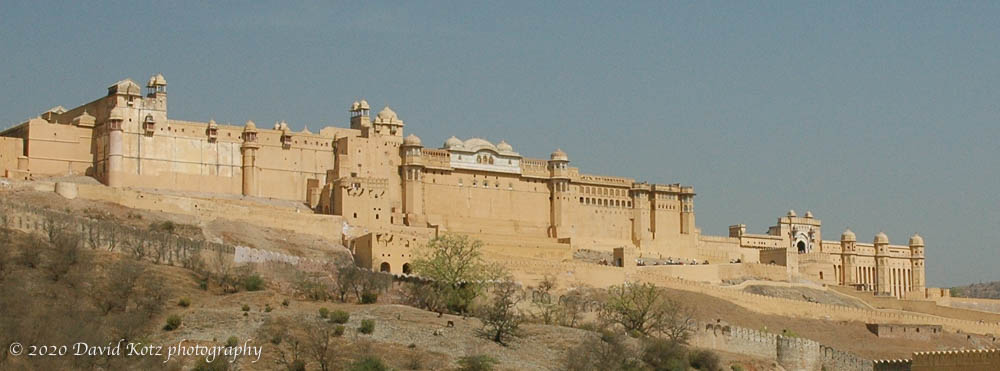
Air travel

Air travel in India is easy.

Air travel in India is easy – based on my limited experience – and inexpensive, due to some low-cost no-frills airlines that induce competition.

Today I took my first trip outside Bangalore, flying Kingfisher Red (the former Deccan Airlines), a low-cost carrier, from Bangalore through Mumbai to Lucknow.

It was trivial to purchase e-tickets online, using cleartrip.com, the best on-line travel site I’ve ever used.  Its website is clear and clean, and once my flight was booked they instantly sent me an SMS with the details as well as an email.

I arrived early at the Bangalore airport.  The airport is brand new, open only a few months, and is beautiful; lots of nice shops and places to eat, clean and bright and comfortable.  (It is a far cry from the icky old airport, which I used on my trip last year.  Crowded, dirty, few services, and fewer chairs than passengers.)

I was caught by a few surprises.  I was sent back from the security line because I needed to have put a new bag tag on each piece of hand luggage. (They stamp the bag tags when you go through security, and later check when you board the plane.)  Then I made it almost through security, but they told me that my boarding pass (printed at home) had not yet been stamped.  They handed me my bags and I left security again to go back to the front counter.  While waiting in line there, I remembered something that made my stomach sink.

My laptop was not in my backpack.  I had removed it for the xray, of course, but when the guard handed me my bags he had not thought to include the laptop.

I did a little nervous dance, thinking of my laptop sitting at the end of the conveyor, but knowing I could not get to it until I got to the front of this line and got the little stamp on my boarding pass.  tick tick tick.  Stamp!

I dashed back up to security, got new tags for my bags – because the guard took the other ones off for some reason – and waited in line at security.  tick tick tick.  Lots of people going through.  People getting their laptops out.  People putting their laptops back in.  tick tick.  I finally get through security, and there’s my laptop, sitting right in the same place, waiting to be claimed.  By me.  phew.

The flights were comfortable, although the seat pitch was the smallest I’ve ever seen, and everything was smooth and on-time.   When the captain made an announcement, I must say I was struck by the pleasant but surprising sound of a woman’s voice, with that sing-song Indian accent.  The entire crew on this plane was women, the first I’ve ever seen that.

I can’t say much about Mumbai.  I never even left the plane.  As we landed, I noticed large areas around the outskirts of the city that seemed polka-dot blue.  That seemed odd.  As we came lower, I realized that they were slums – miles of them – a hodgepodge of shacks with corrugated roofs, perhaps 1 in 10 of them covered by a blue plastic tarp. (below)

Landing in Lucknow was different.  Green was the color of the day – a vast patchwork of green fields, a totally flat agricultural terrain.  Areas that were slightly lower than the rest were flooded – this is the monsoon season, after all.

Mumbai from the air:

This post was transferred from MobileMe to WordPress in 2020, with an effort to retain the content as close to the original as possible; I recognize that some comments may now seem dated or some links may now be broken.
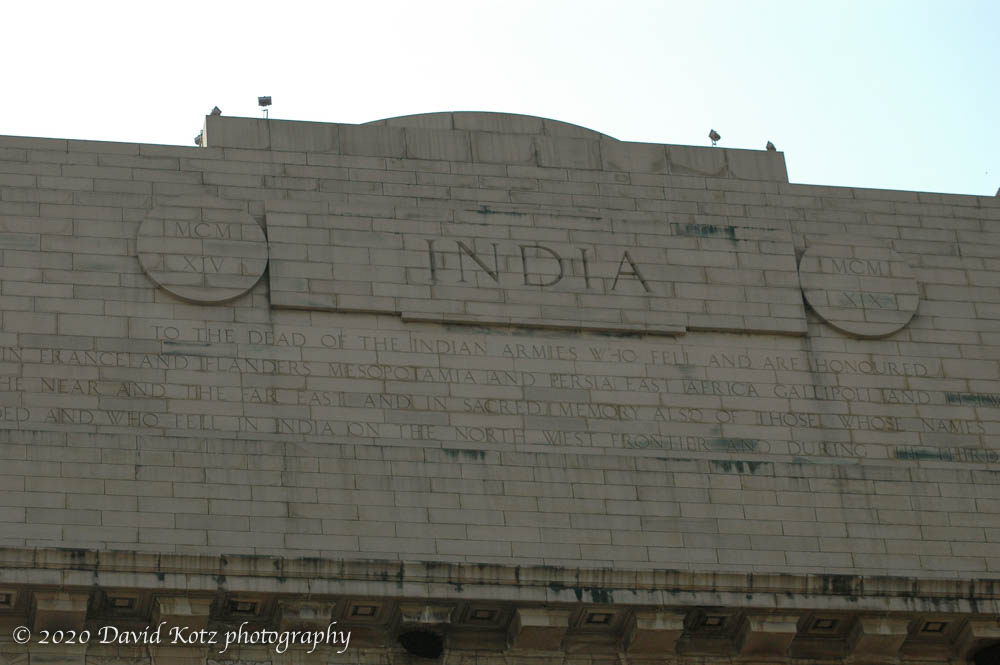
IISc photos

Some photos of our new campus home (Aug-Dec 2008).

I’ve been playing with my new digital SLR camera; I’m just starting to get the hang of it.  The IISc campus is a rich opportunity for photographs. Here are a few photos from around campus; this gallery expanded to include more photos taken in 2008. The original 2008 galleries, posted when this blog was on MobileMe, were split into several albums and may have included a slightly different set of photos. In 2020 I re-created them as best I could when that blog was migrated here to WordPress.

IISc street sweeper.

This post was transferred from MobileMe to WordPress in 2020, with an effort to retain the content as close to the original as possible; I recognize that some comments may now seem dated or some links may now be broken.

IISc video

A video gives a sense of where we live.

To give a sense of where we live at IISc, I captured a brief video walking down the street to our apartment.


This post was transferred from MobileMe to WordPress in 2020, with an effort to retain the content as close to the original as possible; I recognize that some comments may now seem dated or some links may now be broken.
Trash – recycling?

There is so much trash.

There is so much trash. In one sense, nothing seems to be recycled; on the other hand, some people say, everything is recycled. In any case, there is trash everywhere you look.

Bangaloreans seem to ignore the trash all around them; dumped in the creeks that pass through the city, heaped on vacant lots, and scattered about the streets and alleys.  Even here on the beautiful IISc campus, trash is inexplicably left here and there, caught in the weeds beside the road or dumped in the woods.   Indeed, the standard operating procedure for contractors seems to be to simply dump their refuse in the woods, beside the road, not even out of sight.  When electricians came to our apartment to replace old light fixtures, we later found all the old fixtures and packaging materials dumped in the back yard.  Around the academic buildings there are clear piles, some old and some new, of bricks, tiles, old sinks, and the like.  Despite the 100th anniversary celebration coming up in December, nobody seems concerned about the trash and dumps around campus.

Many people drink bottled water – when we go out to eat, it’s the only thing safe to drink. So India is awash in plastic bottles.  It is very hard for me to simply throw plastic bottles, beer cans, and wine bottles in the trash, but there is no other option.  

On the other hand, as one IT company person told me, everything in India is ultimately recycled anyway. The poorest people go through the trash, picking out bottles and other useful items. Pavan Varma writes, “A million kabadiwallahs (peddlers of junk) make a living from finding something of value in trash.  They are willing to buy or sell any junk, from newspapers to empty bottles.  Their business premise is simple: everything has the capacity of being recycled, because everyone is looking to minimize costs. Thus the neighborhood grocer keeps paper bags made out of trashed newspapers, the poor look to make a bargain on the throwaways of the rich, and used plastic bags are recycled by plastic manufacturers.  It is estimated that 60 per cent of India’s plastic waste is recycled, compared to 10 per cent in China and 12 per cent in Japan.” [BeingIndian] Not bad, considering that I’ve never seen a single recycling bin in India.

trash dumped behind a wall, not far from our apt.

This post was transferred from MobileMe to WordPress in 2020, with an effort to retain the content as close to the original as possible; I recognize that some comments may now seem dated or some links may now be broken.

Dinner time

Good home cooking.

We were lucky to quickly find and hire a cook, who comes to our apartment 6 days a week to cook dinner for us.  I think the convention is for a cook to come 7 days a week, twice a day, but it’s good to have a day off and we like to make our own breakfast. The kids get a hot meal in the school cafeteria.

Our cook, Vijayalakshmi, makes dishes in the local South Indian style, and so far we have asked her to stick with vegetarian food.  She typically cooks rice, a curry, a soup or side dish, and often a bread (roti, chapati, papad, etc.).  She makes everything from scratch, and generally does the shopping as well.  (This bit is important, as it is hard for us to get out to the grocery store and we don’t know enough about finding and using the local markets.)  I think most of what she cooks is fantastic, although I have no idea what it’s called – I need to do a better job of asking her the name for these dishes.  She uses many local vegetables I can’t identify, including some little leaves for which she even doesn’t know the name.

The first meal was very spicy – I thought it was great, but we’ve asked her to tone it down because the kids don’t like it as spicy.

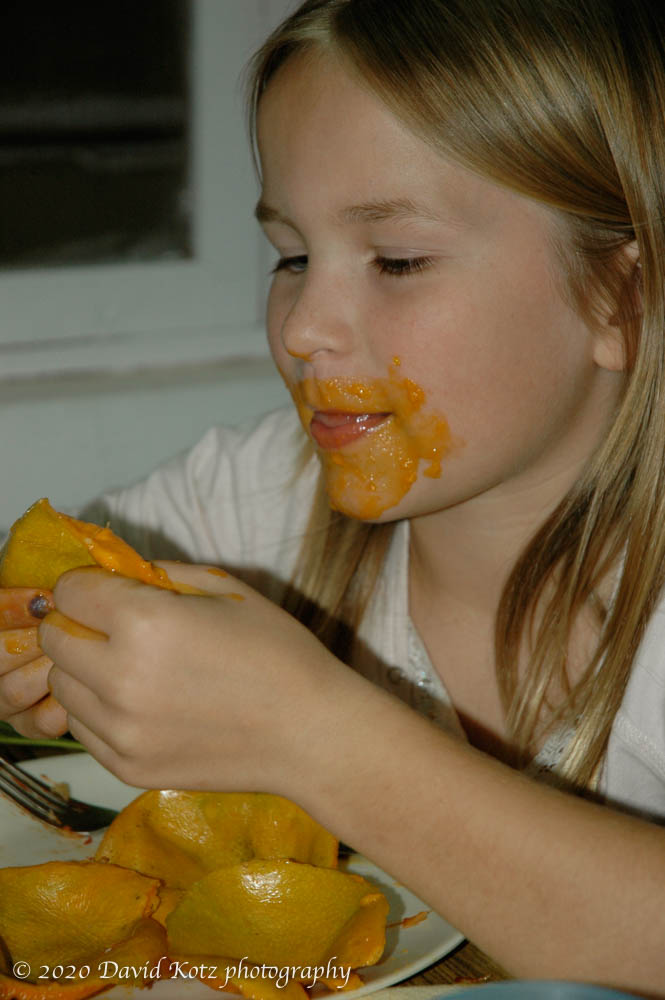
I took a few photos of the kids eating a dinner that they particularly liked – chapatis and a potato/curry dish.  This meal, like many, is to be eaten with your hands.  More precisely, with your right hand, as Indians find it offensive if you use your left hand for eating.

This post was transferred from MobileMe to WordPress in 2020, with an effort to retain the content as close to the original as possible; I recognize that some comments may now seem dated or some links may now be broken.

Inglish

I was naively expecting people in India to speak English.

I was naively expecting people in India to speak English.  Sure, I know very well that there are hundreds of local and regional languages, but I thought everyone also knew English, at least people in major cities.  Wrong.

The local language in the Bangalore region is Kannada; most signs around town are in both English in Kannada, although some state- and local-government signs (which they seem to expect only locals to read) are only in Kannada.  The language on the street is uniformly Kannada, and if you go into a shop the first shopkeeper you meet will, after hearing you speak English, beckon a second shopkeeper who might understand a little more.  Even on the IISc campus, which caters to students from all over India (who therefore know Hindi or another regional language, rather than Kannada), the maintenance workers and security-gate guards speak little English.  I need an interpreter to speak to the women who clean my office or the electricians who come to the apartment.

On the other hand, Indian authorities love formalities.  To get anything done you need a formal letter from someone important.  To get a pass for the gym, I needed a letter of introduction from the department chair.  Same for the library.  Same for the pool.  Same for the security gate.  I have other letters from Fulbright.  The language in these letters express a formality that I guess comes from British days. My favorite phrase is that which asks the reader to “please do the needful” and accept the request of the letter’s carrier.

The limited English ability of many Indians shows on the English written on many products. I find this odd, considering that Indian manufacturers could surely find someone with strong English skills to proofread their labels.  I found this cereal box especially amusing, partly for its “Inglish” and partly for the sentiments it tries to communicate. “…avoids dowdy or slacking & keeps one alert, attractive, young, impressive, dominating, and longevity. … maintain smart physique, stamina & sexual urge.” You don’t see health claims quite this explicit on US cereal boxes! 

This post was transferred from MobileMe to WordPress in 2020, with an effort to retain the content as close to the original as possible; I recognize that some comments may now seem dated or some links may now be broken.
Bannerghatta National Park

We visited the Bannerghatta National Park and reserve.

We made a day out of a visit to Bannerghatta National Park, an 11,000 hectare reserve about 25km south of Bangalore [location]. Although it seems close, it is nonetheless a 2-hour drive from our home in the northern section of Bangalore.  Heavy traffic and poor road conditions, not to mention frequent diversions around cows in the road, make for slow going.

We stopped for a quick lunch at a tiny, run-down restaurant along the way.  The food was cheap – the five of us ate for $6 – but I perhaps I can characterize the atmosphere by its bathroom facilities: his & hers outhouses in the backyard.

Our first priority was to take a ride on the Lion and Tiger Safari.  About 20 people piled into a small bus – with windows covered in strong mesh – for a 45-minute drive into the reserve. It was easy to find, and get close to, the lions and tigers, because they do not roam freely over the park; they live in fairly small enclosures.  The park has 6 lions and 25 tigers in the forested enclosures, plus more lions in their circus-lion rehab center.

The zoo itself was interesting, with many fascinating creatures: leopards, cobras, pythons, macaques, birds, and even some from Africa (zebras and hippos).  My favorites, though, were the elephants and monkeys.  At one point, the elephant handlers brought three elephants on a walk through the zoo, and stopped to let us touch the elephant.  Neat!  I was told that there were many wild elephants that roam the broader park, but they only come out at dusk after the park closes.

The monkeys were not part of the exhibit. At a US zoo, you might see squirrels roaming the grounds, picking through the trash and perhaps even checking out some of the zoo animals.  At this zoo, local monkeys roamed freely.  They and their babies are very cute!

See photos.

This post was transferred from MobileMe to WordPress in 2020, with an effort to retain the content as close to the original as possible; I recognize that some comments may now seem dated or some links may now be broken.

What we miss

The things we miss.

India is great – we do like it here – but of course we do miss some things from home.

  • Mara misses snow already. (Pretty good, since NH has yet to see Fall!)
  • John misses his friends, his cats, and his house.
  • Andy misses his favorite toys, particularly a box of electrical parts he uses to make contraptions.
  • Pam misses a soft bed and fitted sheets.
  • David misses good beer, rowing, and foggy September mornings. And all the above 😉

This post was transferred from MobileMe to WordPress in 2020, with an effort to retain the content as close to the original as possible; I recognize that some comments may now seem dated or some links may now be broken.

Ganesh Chaturthi

Ganesh Chaturthi is an important festival day.

Ganesh Chaturthi is an important holiday, “a day on which Lord Ganesha, the son of Shiva and Parvati, is believed to bestow his presence on earth for all his devotees” [Wikipedia].  We luckily chose to visit one of the major Ganesha temples in the city and got to experience the whole ceremony.  

Ganesha is seated at center right.

When we learned that school was closed for the day, so that families could celebrate Ganesh Chaturthi, we decided that we should explore and find a way that we could learn more about this festival celebrating the birthday of Lord Ganesha.  We headed out mid-morning, and noticed that the majority of shops had been closed for the day.

We arrived at the Bull Temple, usually one of the more interesting but rather quiet tourist attractions in the south-central part of Bangalore.  Ah! But right next to the Bull Temple is a Ganesh temple, lavishly decorated for the occasion, with a huge crowd and a long line to get in. 

Ganesh temple near the Bull Temple

We waited in line for an hour, with many other families – no other tourists like us.  The mood was festive, and children in line were dressed in their best.  Near the front of the line we passed many sidewalk vendors, doing a brisk business offering the goods you might need to make an offering, and a few beggars.

We passed through the temple, receiving the blessing of Ganesh and then a small meal – a rice curry served in a bowl handmade from dried banana leaves, plus a modakam (a sweet ball of coconut, dried fruits, and sugar).  

Bull Temple

We visited the Bull Temple too, though it was decidedly less crowded on this day, Ganesh’s birthday.  

Tonight, as I write this at home on the IISc campus, I can hear many fireworks displays; at 10pm a rowdy truckload of students passed by, chanting something about Ganesha.

Ten days from now, as I understand it, all the families who have purchased a Ganesha figure for their home (like these) will take it to a nearby waterbody for submersion.  [Read more on Wikipedia.]

See my photos.

This post was transferred from MobileMe to WordPress in 2020, with an effort to retain the content as close to the original as possible; I recognize that some comments may now seem dated or some links may now be broken.