
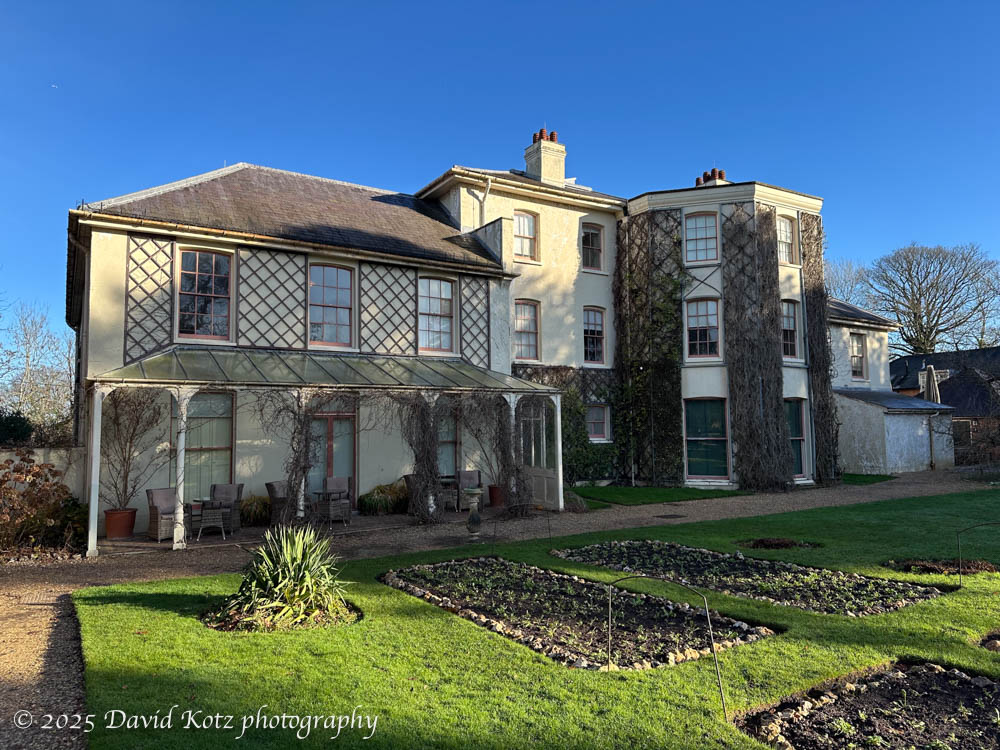
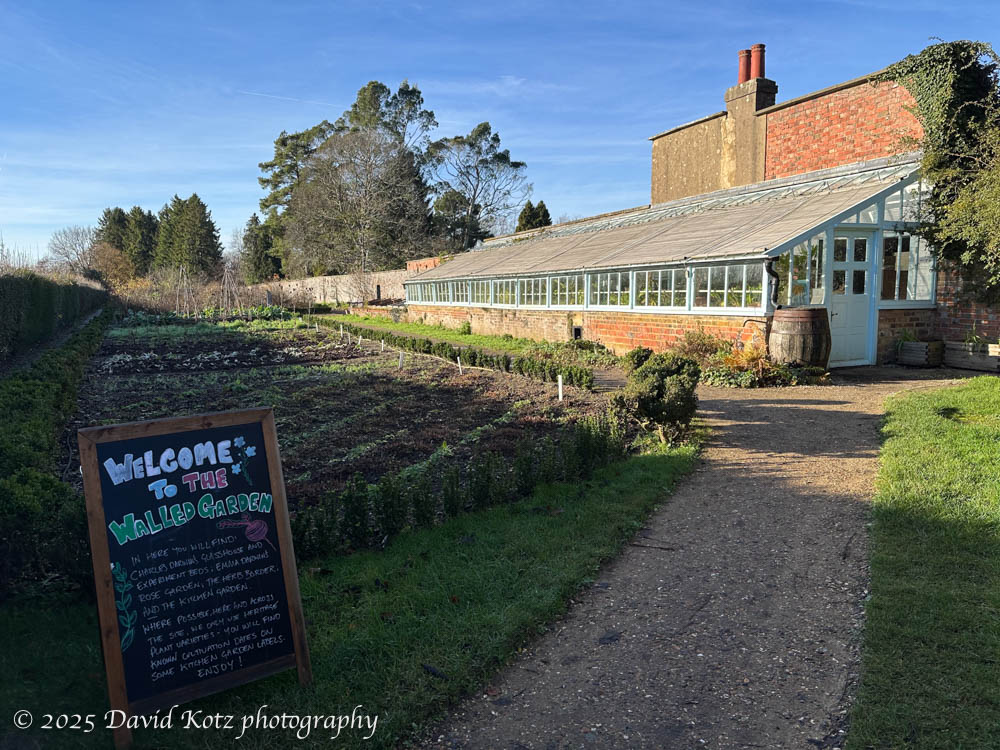
“Welcome to Down House,” said the cheerful manager as I wiped the mud off my hiking boots at the entrance to Charles Darwin’s home. “Sorry for the wait, I was just out back checking on the sheep.” As I stepped across the threshold in search of a scone and a spot of tea, I felt more like I was stepping back 150 years as I skirted around the Drawing Room in search of the Tea Room. Out back, gardens and greenhouses (and sheep) still thrived, much as they had during Darwin’s day, though resting now as winter approaches.
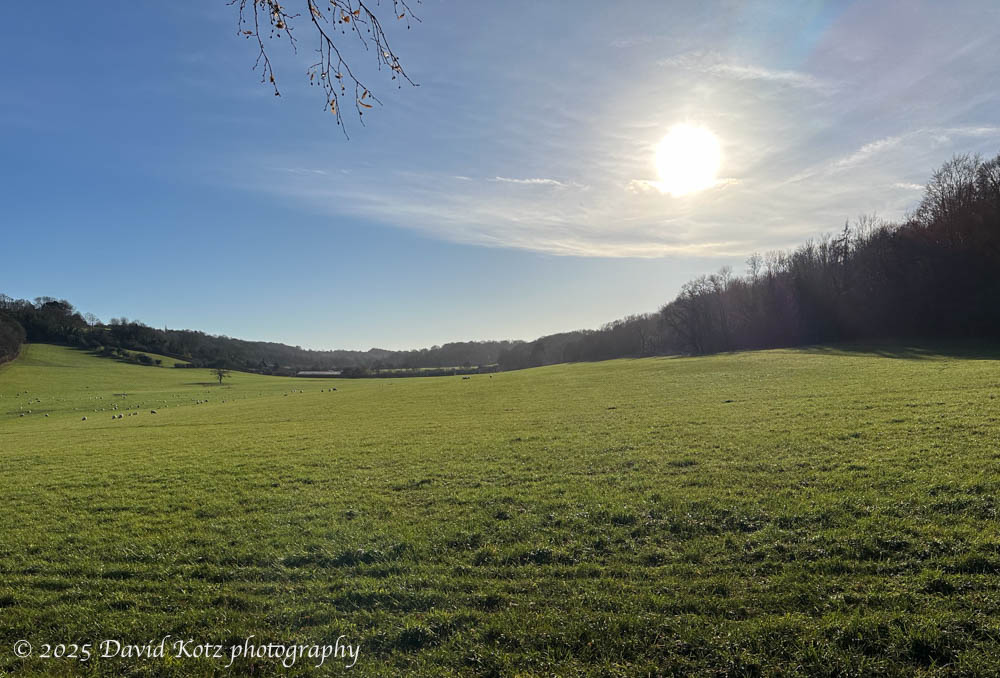
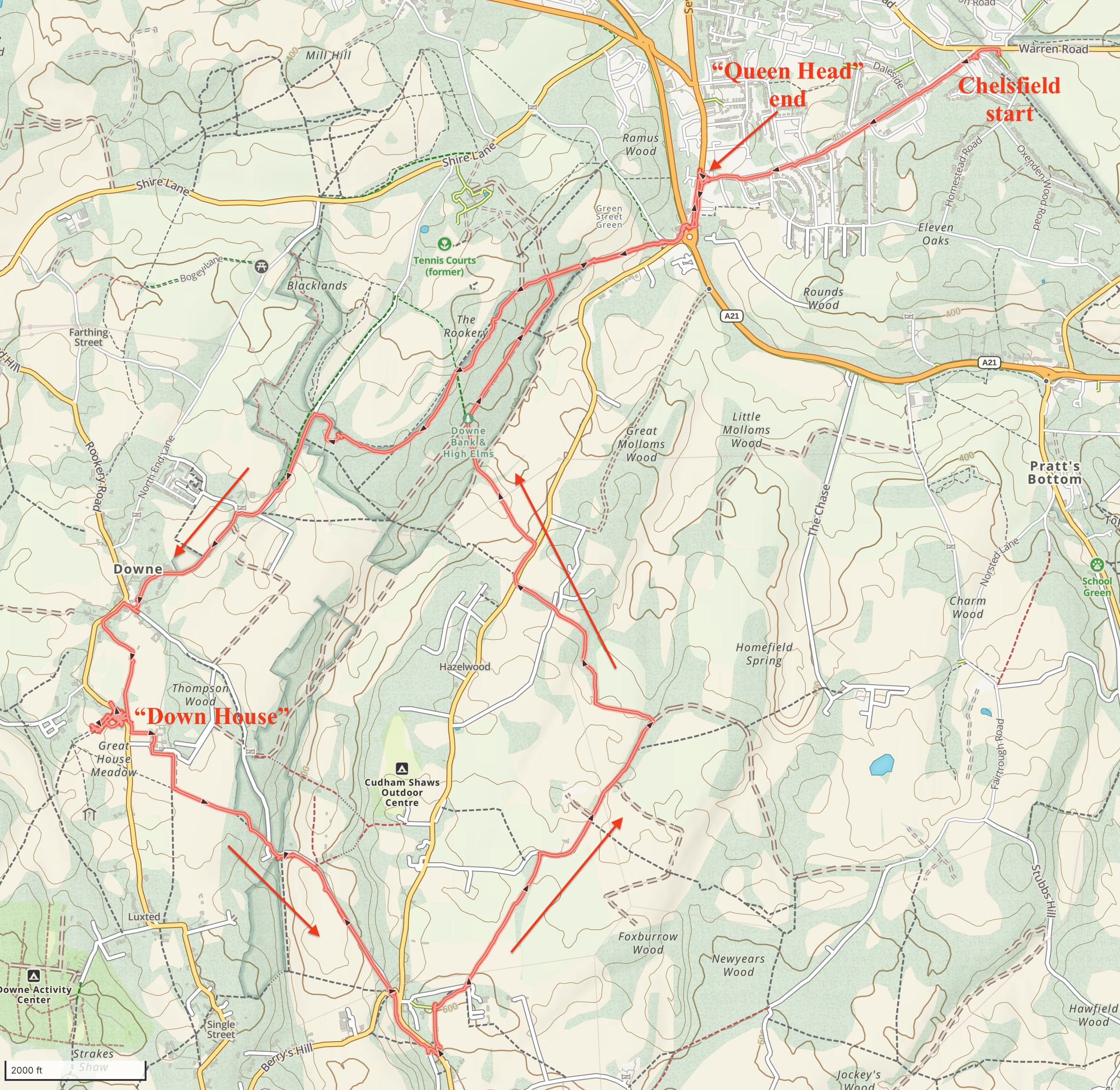
For my hike today – my twelfth consecutive weekend out hiking, on three continents (see last week’s post for more detail), I chose a 14km stroll through the countryside in the North Downs just south of London. From the train station at Chelsfield, through the Cuckoo Wood and forests of High Elms estate, through the tiny town of Downe (and visit to Down House), up through the meadows to the tinier town of Cudham, and back to Chelsfield… where I stopped in at the Queens Head pub for lunch and a pint. From here, I hopped the bus and train back to London, as the sun set (3:51pm!) and darkness arrived. Indeed, the days are short, here at 51º20′ north (much further north than our New Hampshire home, at 43º47′ north). Today, the sun never rose higher than 15.5º above the horizon, even at noon.
Charles Darwin lived in Down House for 40 years, until his death in 1882. It was here, with his wife (and first cousin) Emma, they raised 10 children and enjoyed the quiet life away from the hustle and bustle of London, 15 miles distant. It was here that he studied the many specimens he’d collected during his five-year expedition on the Beagle, and developed his theory of natural selection as an explanation for evolution. It was here, after twenty years of work, he published the groundbreaking book On the Origin of Species, and numerous other scientific volumes building on his observations abroad as well as meticulous and innovative experiments in his own backyard. The home’s interior has been restored with period furniture to match its appearance during Darwin’s lifetime, and filled with informative displays and artifacts about Darwin’s life and work. The gardens, too, have been restored to align with their use in his time, and the greenhouse is filled with orchids and insectivorous plants of the sort he spent years studying.
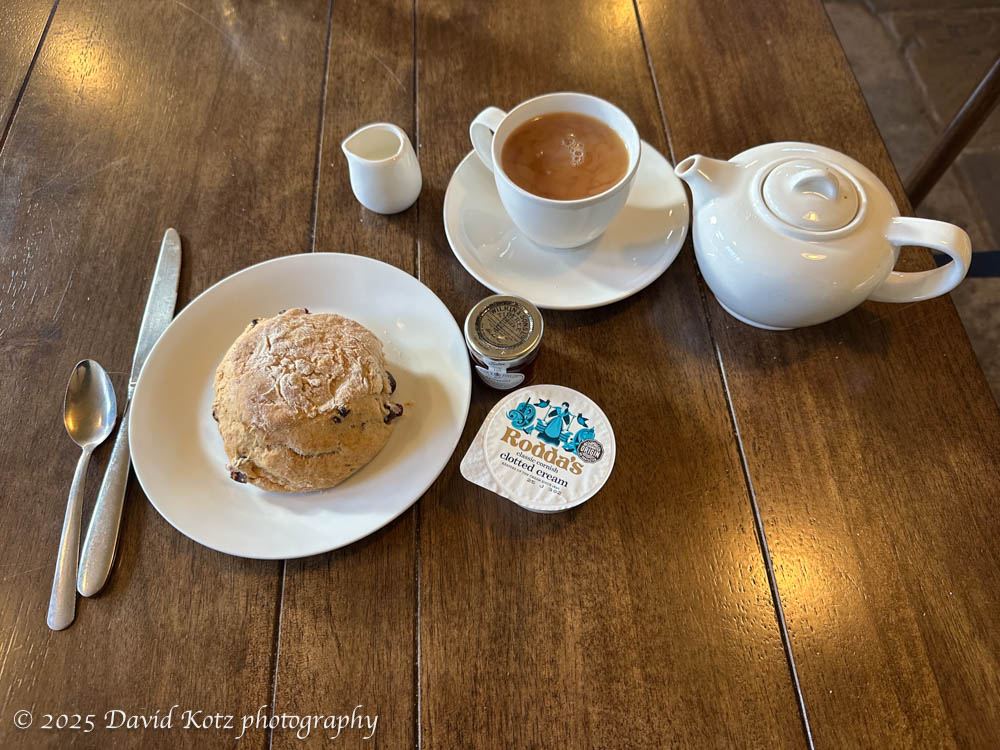
And, yes, the tea room serves delicious tea and scones, which were an especially warm welcome on this chilly winter day.
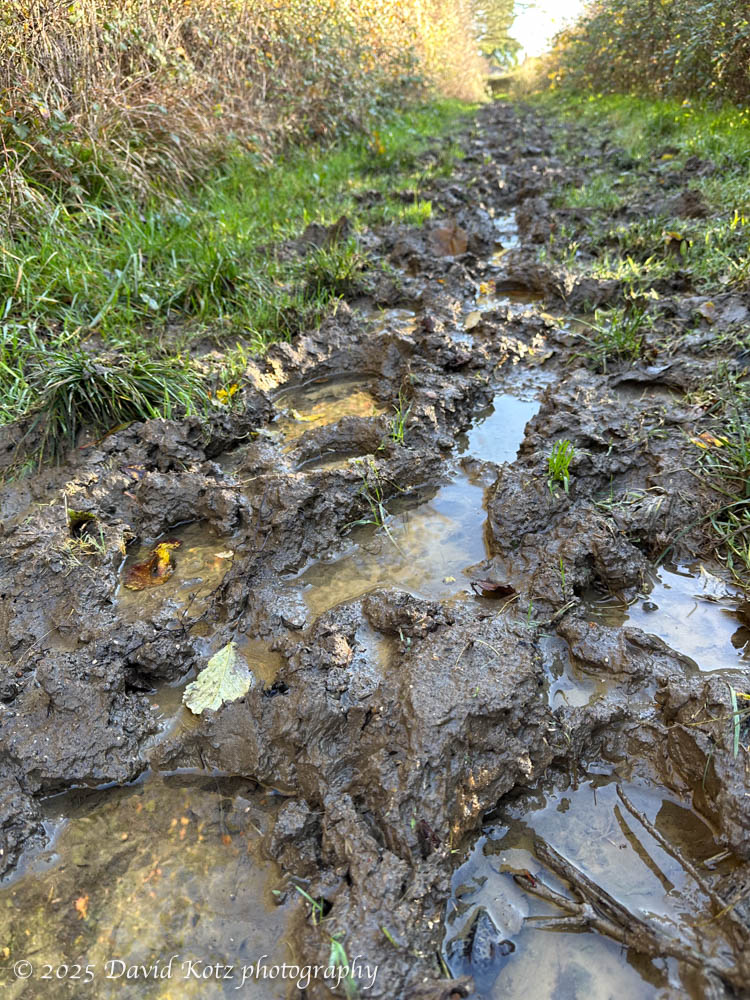
I spent a good hour exploring the exhibits indoors (no photos allowed) and the gardens out back (some photos captured), then resumed my hike. I had more than half the day’s hike ahead of me, and it was already past noon. The rest of the hike was a blend of open meadows, active pastureland, fallow crop fields, and intermittent patches of forest. Most of the trails seemed to have been used more often by horse and deer than by human hikers, judging by the footprints in the muddy track. One section was particularly muddy, and narrowly hedged by briars, forcing me to choose between a squish and a sharp place.
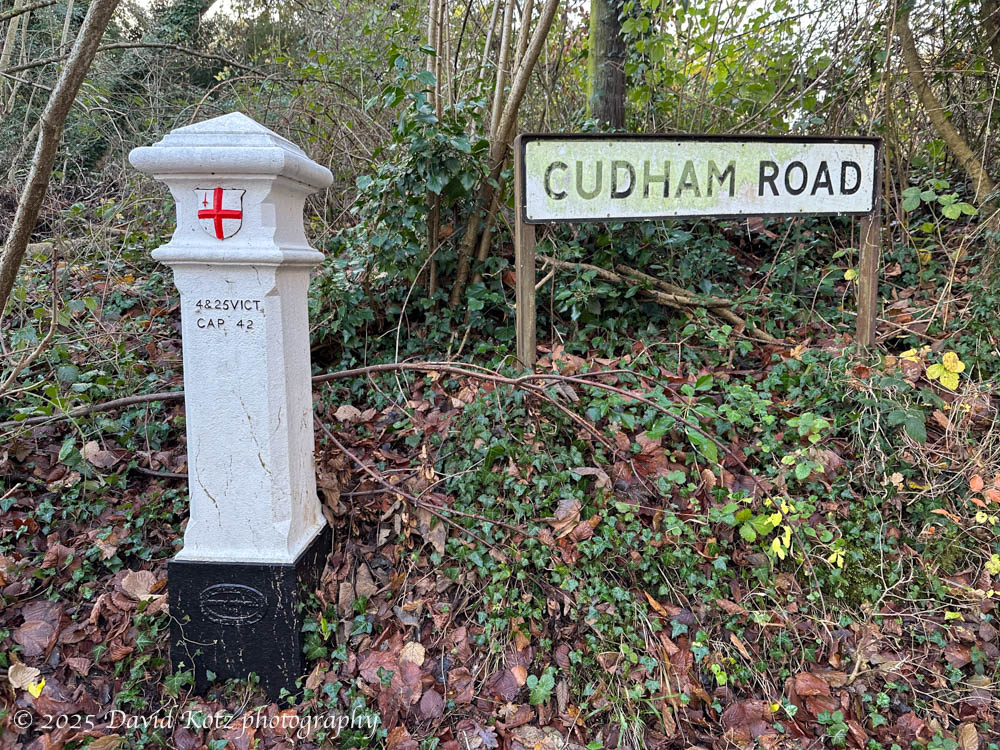
At several points on my journey yesterday I came across a mysterious marker, made of cast iron and freshly painted white with red insignia and black lettering. At first I thought it might be a mile marker along an ancient route. By the end of the day, I realized all the markers had the same inscription: “4 & 25 VICT, CAP 42”, discounting my hypothesis that they marked location or distance. Puzzled, I ordered a pint at the Queens Head pub and started my research. Thanks to Google, I quickly determined these to be 19th-century boundary markers. Not property or municipal boundaries; tax boundaries. Specifically, this marker is one of about 210 “London Coal and Wine Duty Boundary Posts” still standing, and now an officially listed heritage monument. (This particular post is number 1186814 on the Historic England official listing of national heritage sites.) These posts result from “the London Coal and Wine Duties Continuance Act 1861 (24 & 25 Vict. c. 42)”, with which London taxed the import of coal and wine into the greater London area. “The purpose of the posts was to give notice of where the boundary ran so that no-one could claim ignorance of liability to pay the duties. However, in general, duties were not actually collected on the boundary.” The taxes were revoked in 1889. Read more, it’s interesting tidbit of local history!
Check out the gallery for more photos of the hike and of Down House.
Hike stats:
Distance: 9.9 miles (of which ~1 mile is GPS wobble at Down House) = 16km
Time: 5h44m (of which 1h35m included my stop at Down House)
Gain: 615′ (187m)
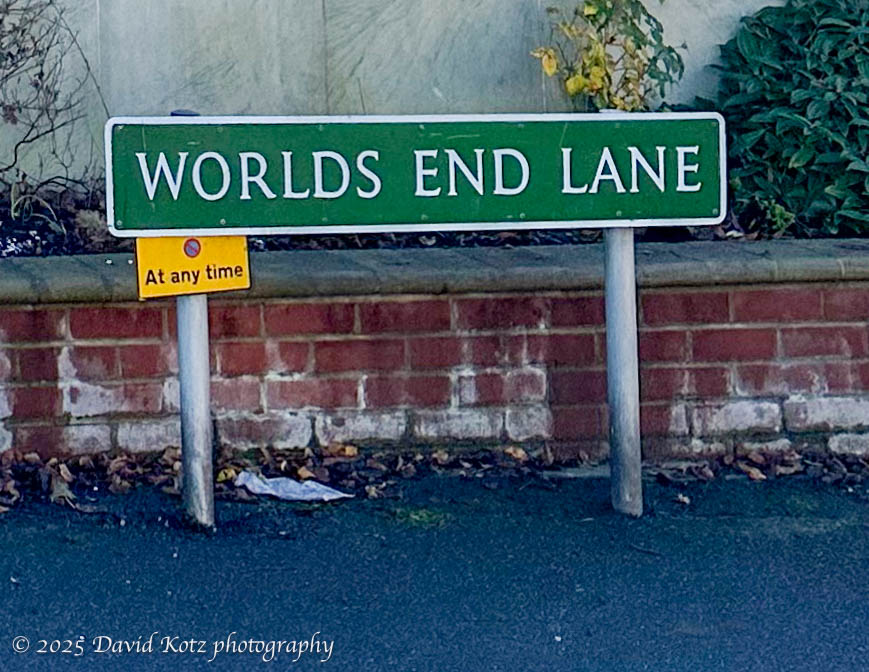
Final tidbit – on a corner in Chelsfield, two signs that are ominously paired. 😏

 David Kotz
One thought on “Downs and Darwin”