
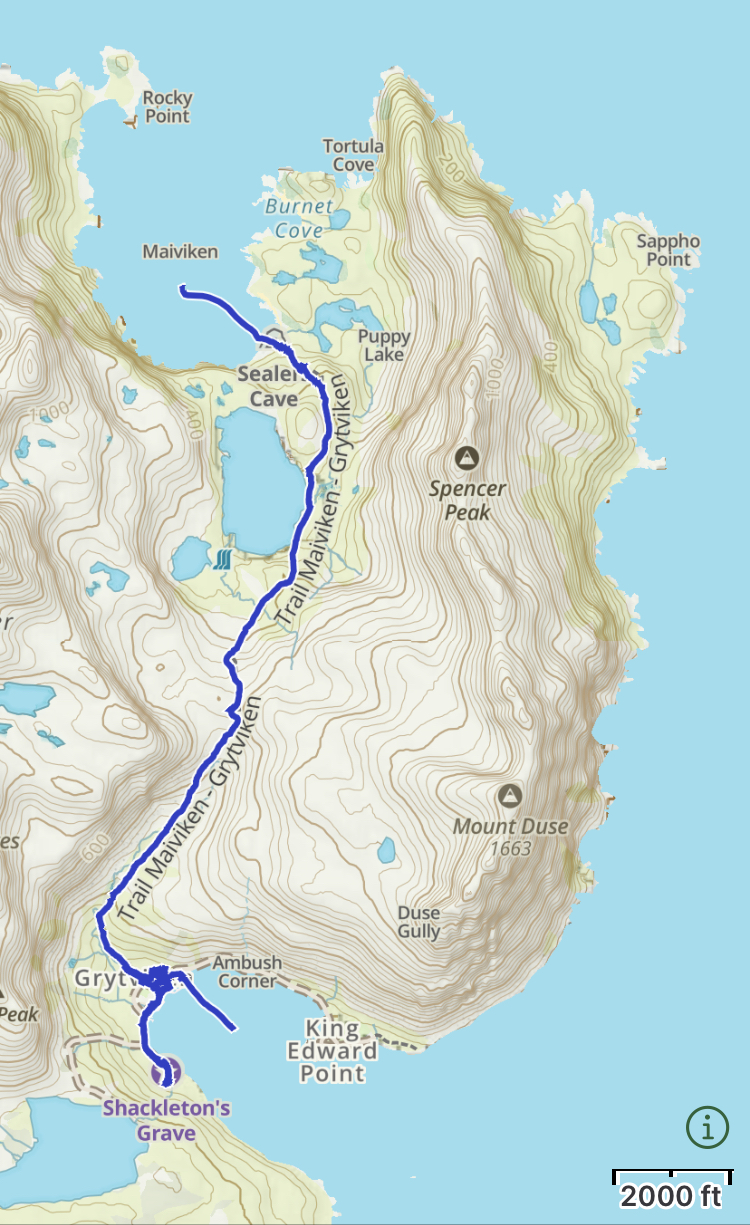
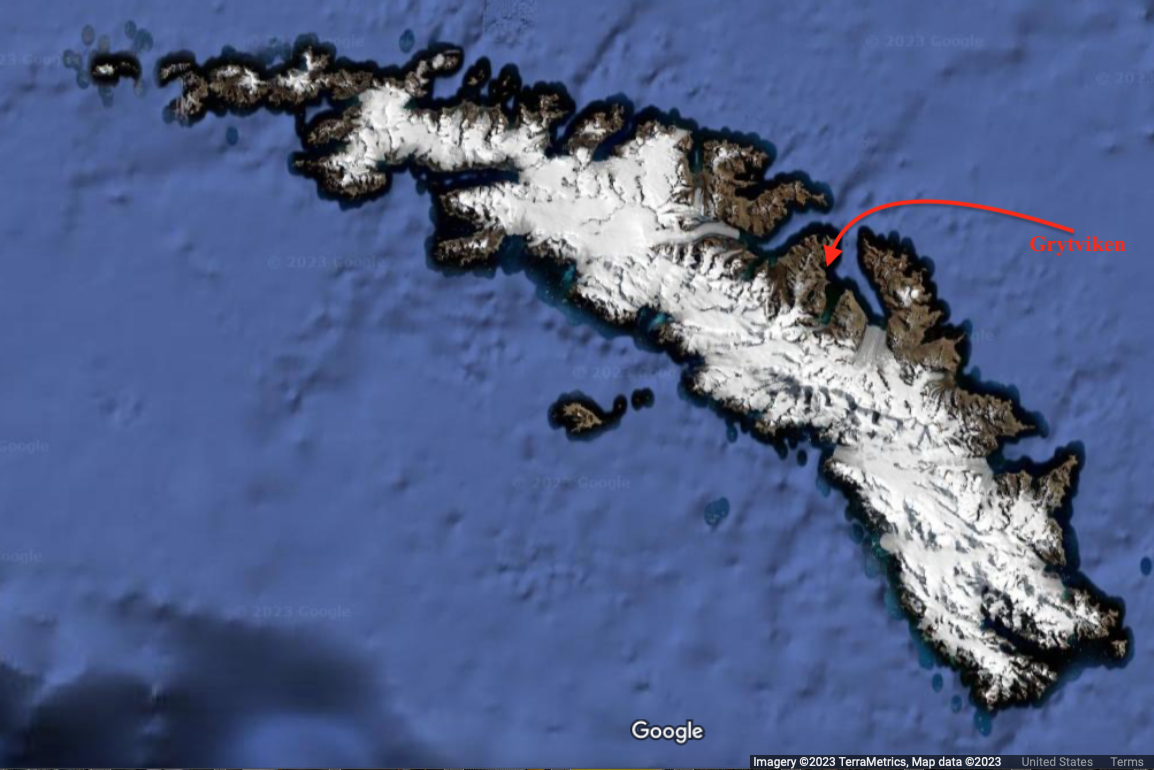
Before breakfast on the misty morning of 7 March, I was among a hardy group that was shuttled via Zodiac to the shore in Maiviken, a small bay in the center of South Georgia’s eastern coastline. We sloshed our way up through the soggy hillside to the rocky height of land on the Thatcher peninsula, and down into the storied whaling village of Grytviken. This tiny settlement encapsulates, in a few small acres, every important aspect of South Georgia human history – sealers, whalers, explorers, soldiers, governors, researchers, and even tourists. Read on and check out the gallery!

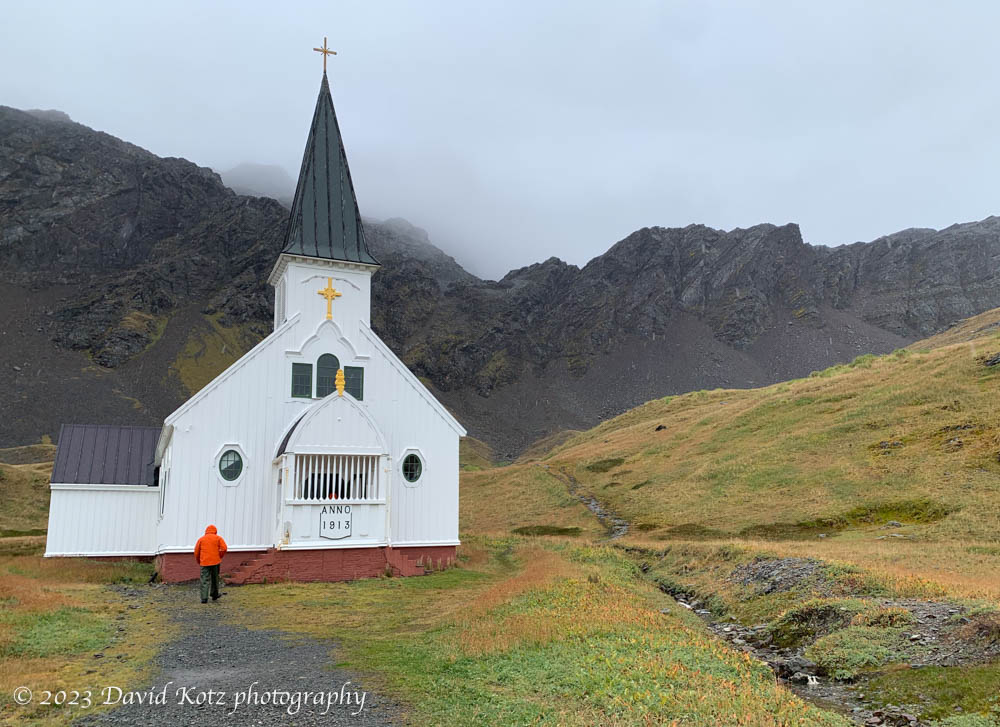
Grytviken was first inhabited by British sailors hunting fur seals. In 1904 a Norwegian established a more permanent base for hunting and processing whales, which was ultimately abandoned in 1966 as the international community was imposing bans and limits on whaling worldwide. Today, the ruins of the whaling station have become a museum, and the whaler’s church has been restored and is still in use – hosting a wedding exactly a week after our visit!
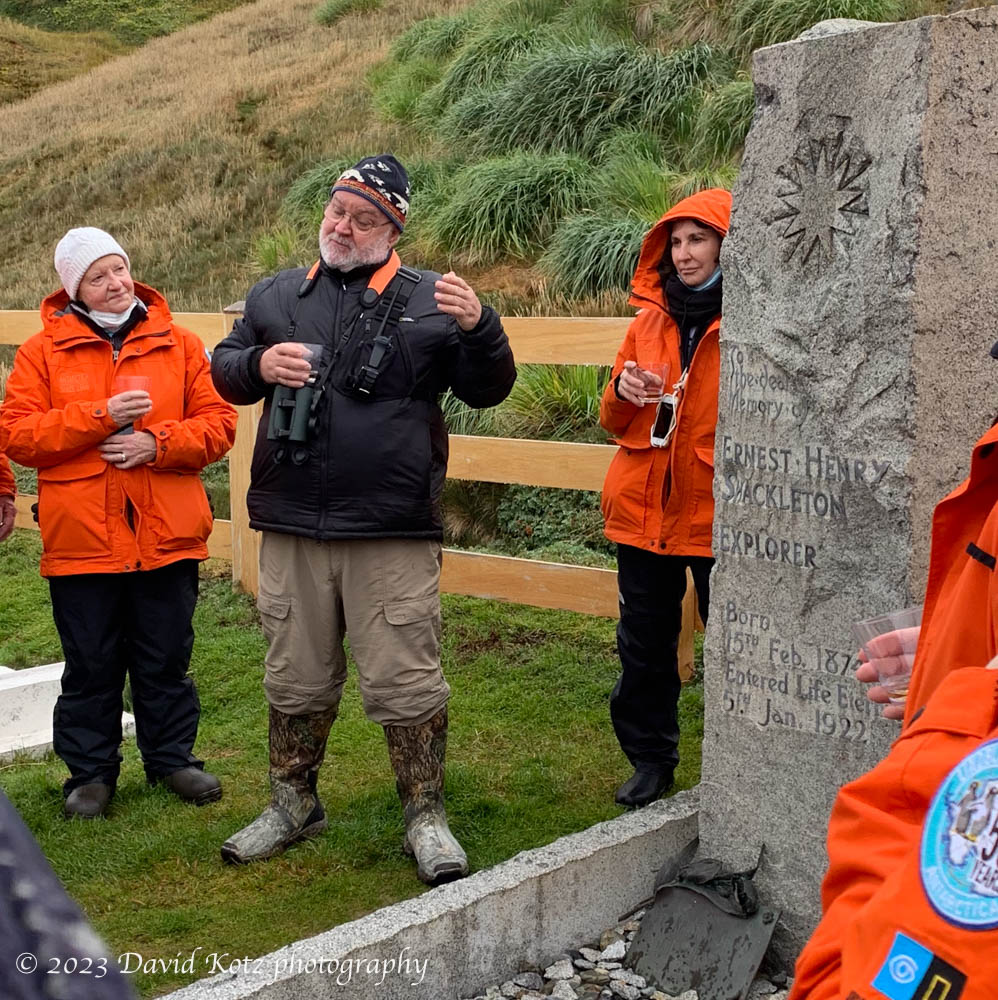
Grytviken is also famous for its whaler’s cemetery, largely because the famous Antarctic explorer Ernest Shackleton is buried there, with his trusty colleague Frank Wild alongside. Indeed, our group paused at his graveside, as is the tradition, to offer a toast to “the boss” – a sip of whiskey for the visitor, a sip poured on his gravesite.
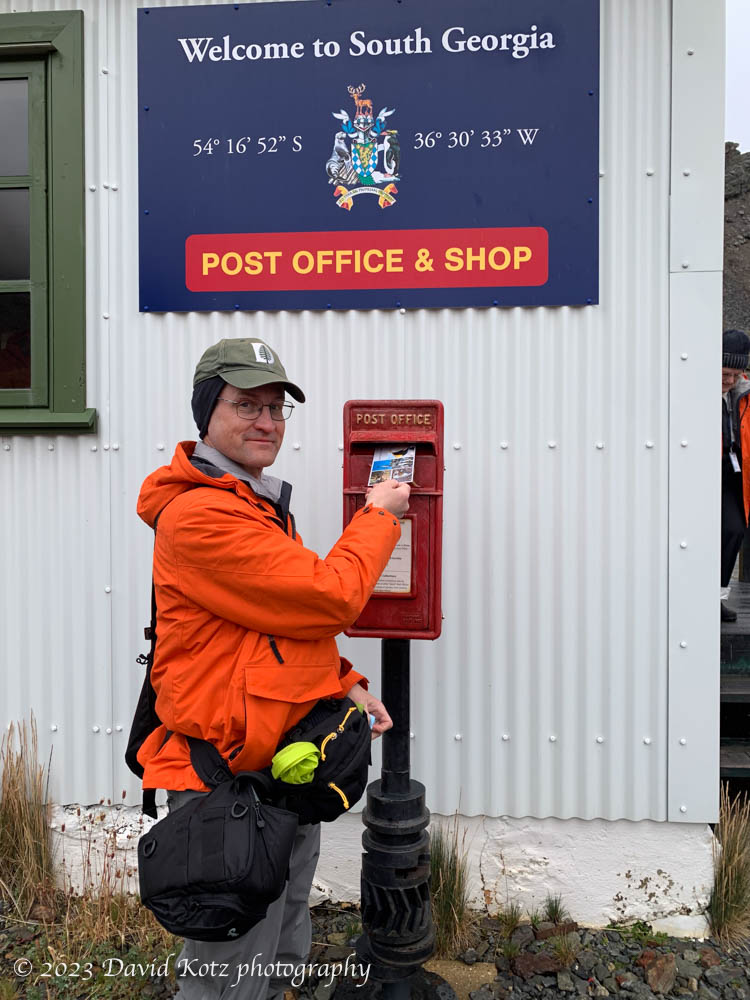
In addition to the museum (two buildings with indoor displays of artifacts from both the Shackleton expedition and from the days of sealing and whaling), and the ruins of the old whaling station (see this 14s video for a peek at some), Grytviken is now home to the only year-round settlement on South Georgia: the British Antarctic Survey’s research station at nearby King Edward Point. That facility is also home to the government of South Georgia and the South Sandwich Islands, which is an autonomous British Overseas Territory. Most of the government (less than a dozen people) are based in the Falklands, but a few government officials reside seasonally at King Edward Point. They stamped our passports; I bought a postcard and added an official South Georgia stamp to mail it home. (It arrived two months and one day later.) Two of the officers boarded our ship, the Endurance, and tagged along for a couple of days, inspecting our ship’s compliance with biosecurity regulations and giving them an opportunity to visit some locations on South Georgia they might not otherwise easy reach.
King Edward Point was also the site of the only military invasion of South Georgia, in 1982 when Argentine forces captured the facility and held it for three weeks before the Royal Marines re-captured it three weeks later. [Wikipedia]
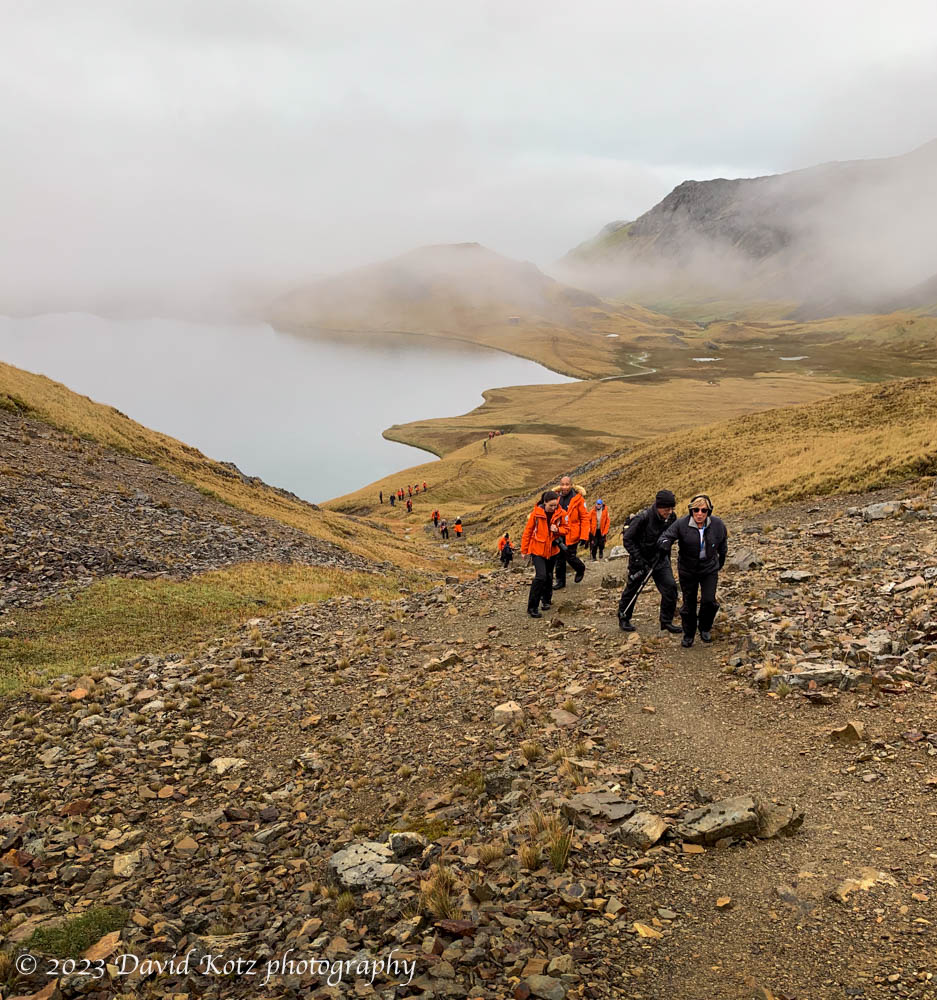
For me, the hike was one of the most interesting aspects of our visit. We were led by Jamie, one of the expedition staff, who had recently spent a couple of years as a researcher in residence at King Edward Point. He thus knew this terrain well, and during the hike he was able to tell us more about the research – and the daily life of researchers – here at Grytviken.
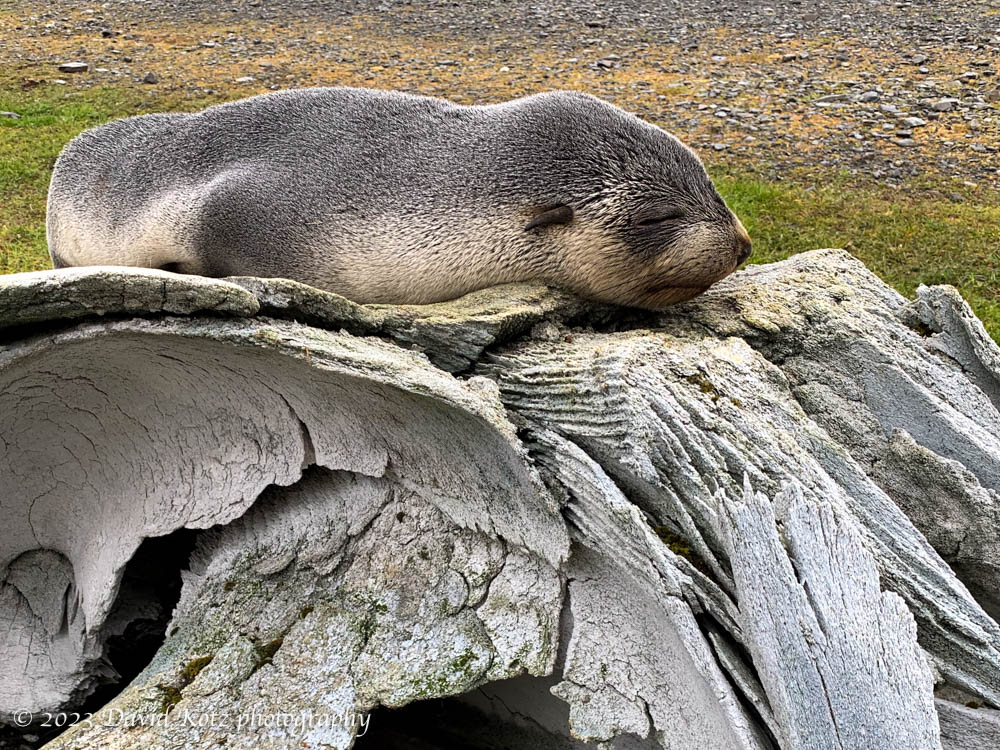
Meanwhile, the wildlife is reclaiming Grytviken. Fur seals have moved in, occupying many of the old ruins, and even the cemetery. Below, a young fur-seal pup decided an old whale bone was a comfortable spot for a snooze.
Don’t miss the gallery – with more photos and videos!

 David Kotz