Time lapse: equinox to solstice

Watch spring arrive in New Hampshire!

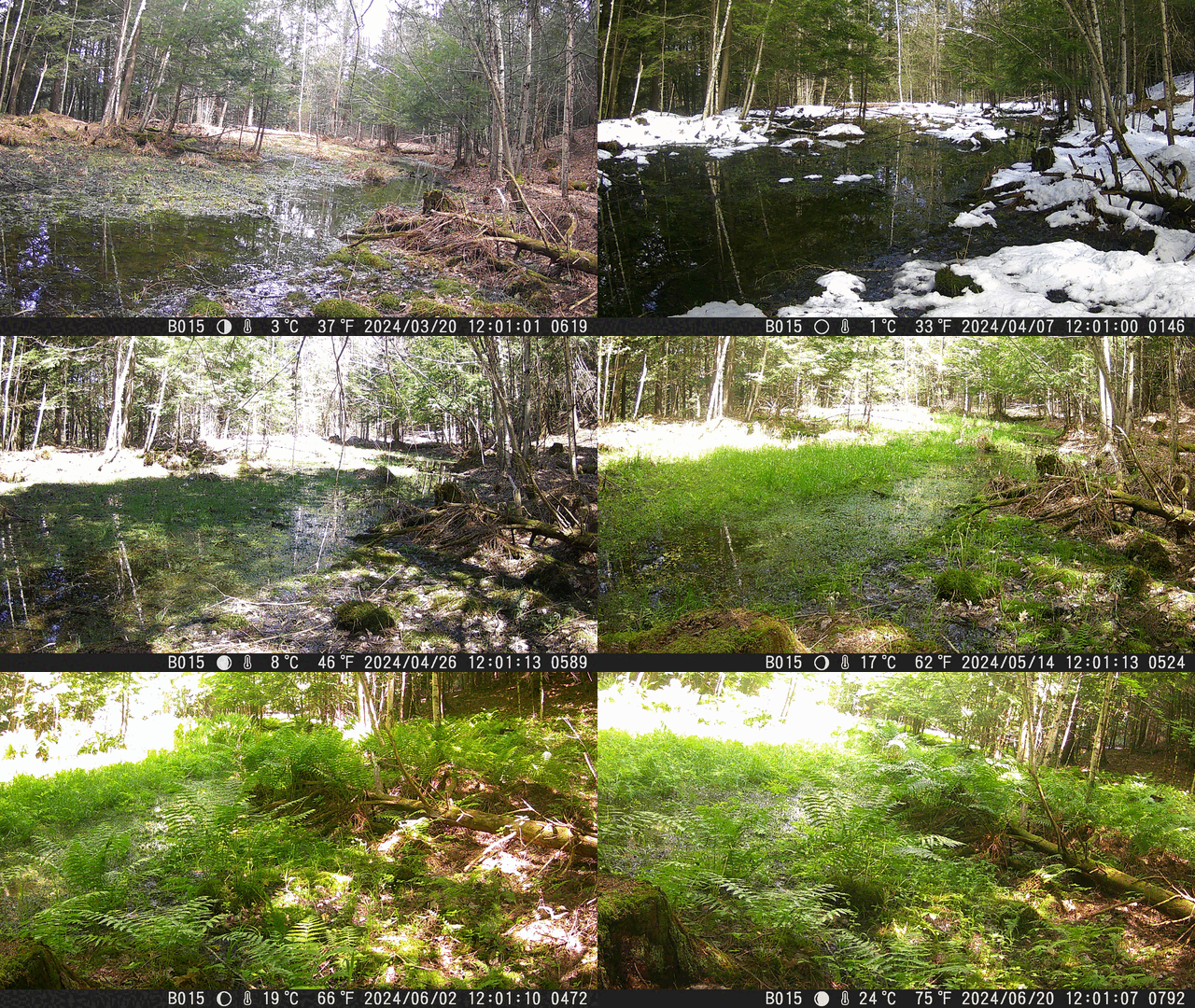
As regular readers know, I have placed several wildlife cameras in a forest near home, and have captured many enjoyable videos of wildlife like deer, bear, fox, coyote, bobcat, turkey, and more. The same cameras can be set to capture photos on a regular schedule, which can later be stitched into a timelapse video. Back in March, a few days before the spring equinox, I placed a camera at the edge of what I knew to be a vernal pool; this month, a few days after the summer solstice, I removed the camera. The camera snapped an image every five minutes from sunrise to sunset, resulting in 14,697 images. Watch the pool evolve from a snowy landscape into a lush fern-filled glade. Watch the heavy snow of March 23 lay its burden on the branches, and then watch those branches relax on March 23 and 25; watch the pool freeze and then re-thaw; watch the April 4th snowstorm bury the pool once again; watch snow melt and the grasses stretch toward the April sun; watch the ferns unfurl into the May sunshine. Below is an abbreviated timelapse, one photo per day at noon. See the full-res noon-time video (1 minute), and the full-length video (10 minutes). If you watch very, very closely, you might see a animal or two.

Continue reading “Time lapse: equinox to solstice”

Summer solstice

Longest day of the year?

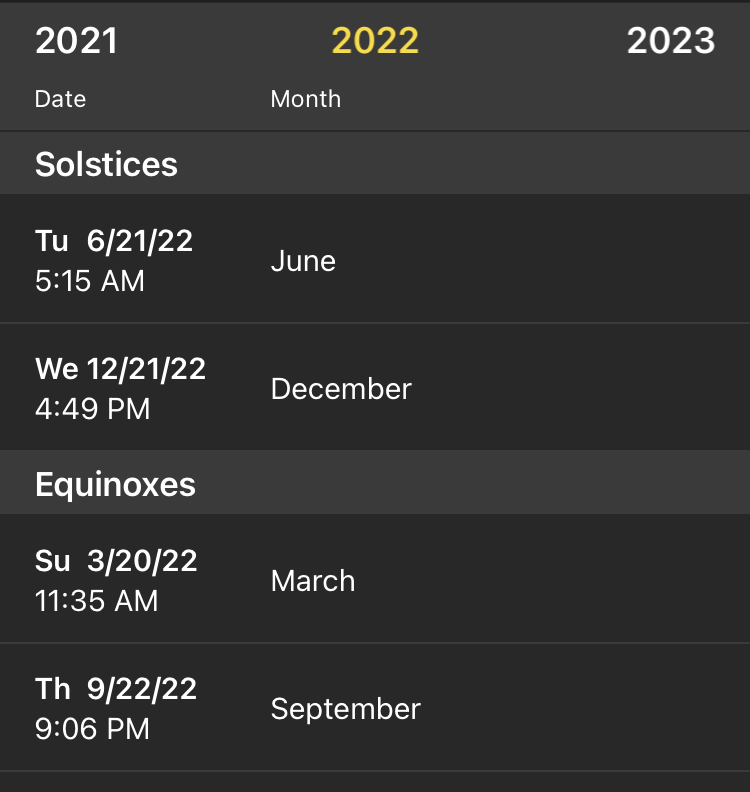
PhotoPills screenshot showing time/date for equinoxes and solstices.

Today is the summer solstice (in the northern hemisphere). More precisely, the solstice occurred at 5:15am here in the Eastern timezone. The summer solstice is the moment at which the sun has ‘traveled’ to its northernmost latitude, in its annual cycle of apparent movement to the north in summer and to the south in winter. (It’s a great day for those of us with solar panels, because it means we’re getting hours of sunlight!) Read on.

Continue reading “Summer solstice”

Alpine view

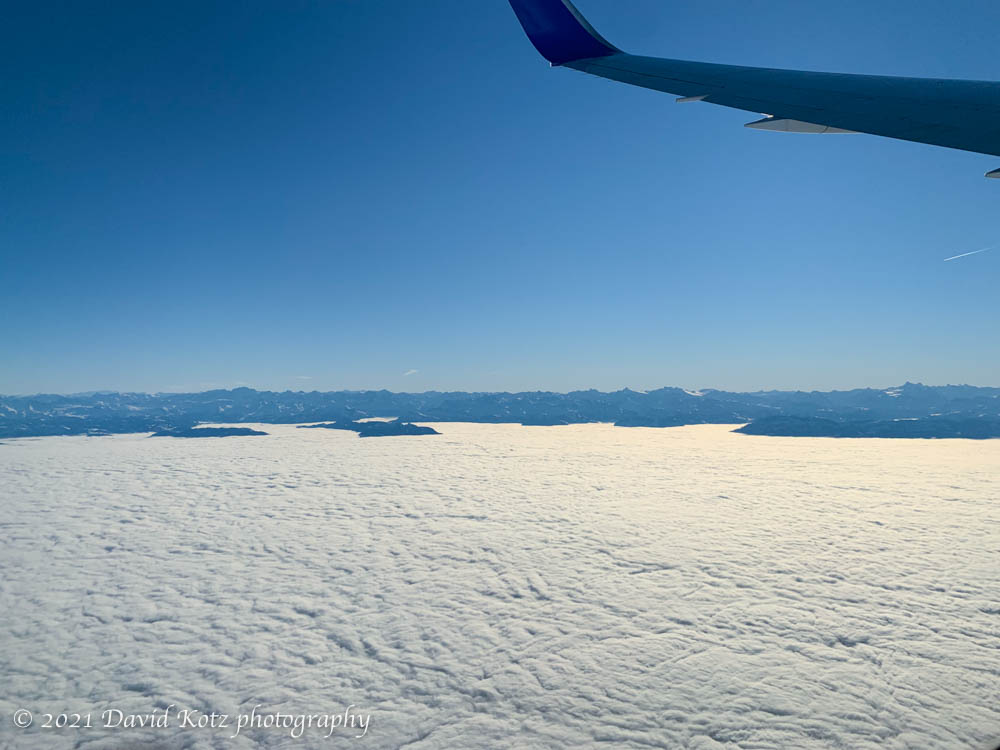
All the Alps in one view.

Zürich woke to yet another cloudy morning, as the sun rose on winter solstice. On this, the shortest day of the year, we hopped on a plane to Washington, DC, following the sun to the west. Flying high above the clouds, we enjoyed daylight for 15+ hours, though inside the plane we never really got to enjoy the sunshine. When I checked out the window, soon after we reached cruising altitude, I was blessed with a grand panoramic view of the Alps – the French, Swiss, and Italian Alps – spread out beyond a sea of clouds.

The Alps, seen from the airplane leaving Zurich… with low clouds covering all the lowlands.

Summer Solstice

Maximal sun makes maximal power.

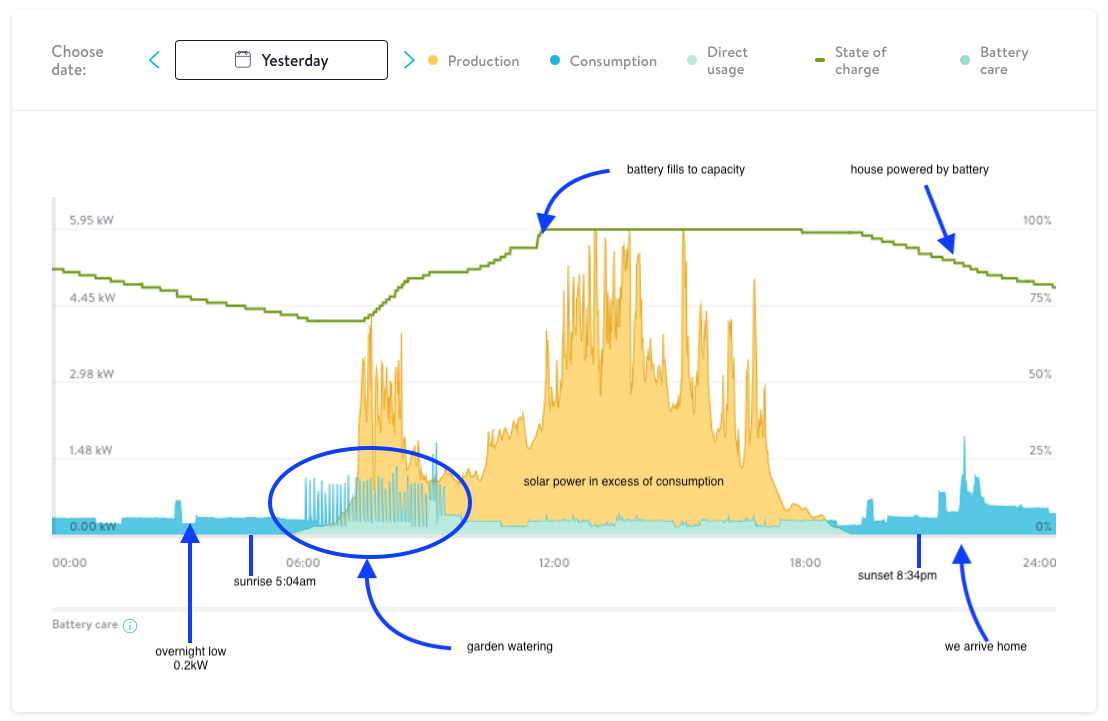
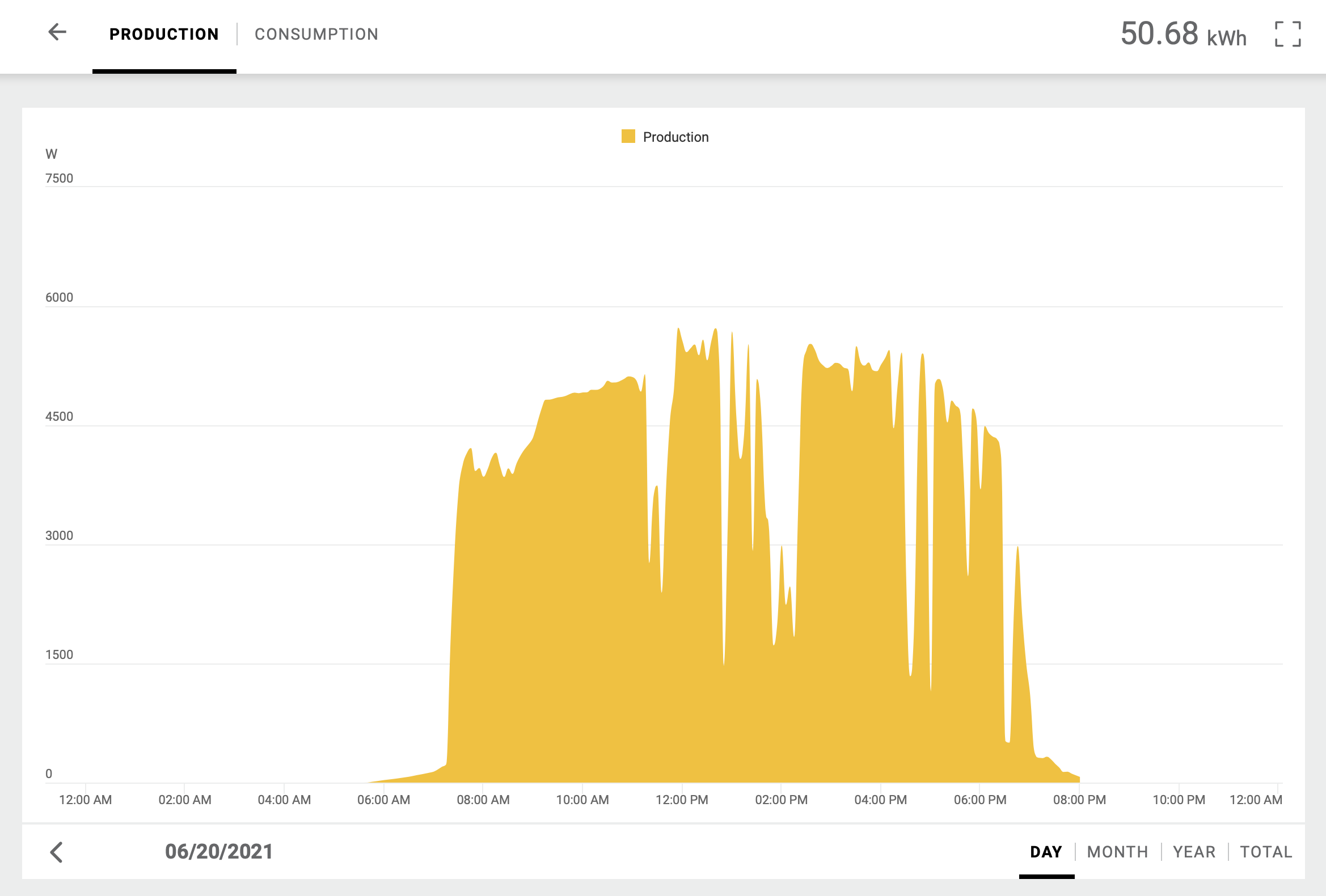
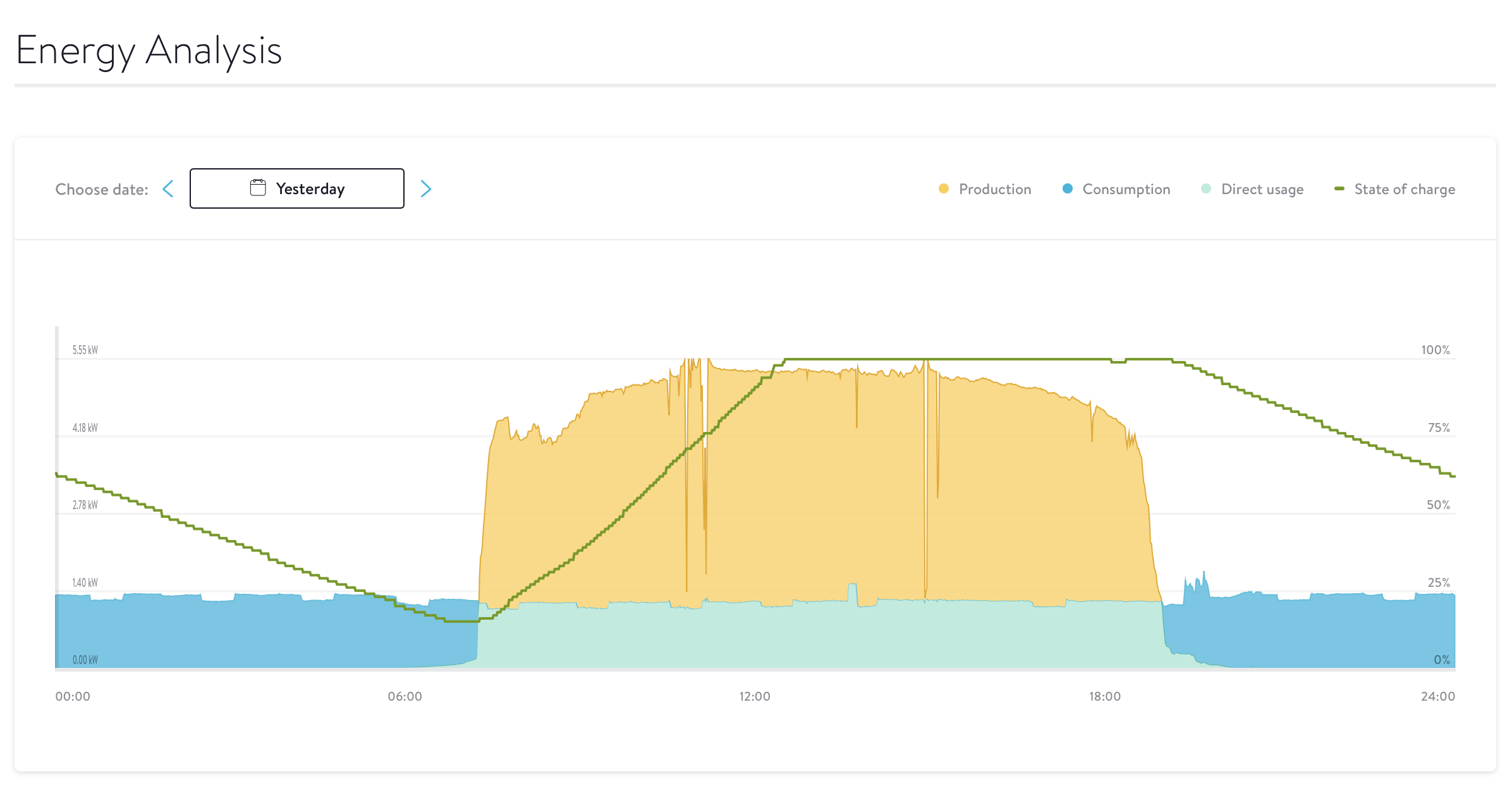
Today is the summer solstice in North America, so I was especially interested to see how our solar tracker managed on the longest day of the year. A few weeks ago we doubled our battery storage so we could extend our independence from the grid. Given the extended daylight (15 hours and 27 minutes, from 0507–2034), and the extra battery, the batteries can now last through until sunrise. Although today’s weather was not purely sunny, the system produced over 50 kWh.

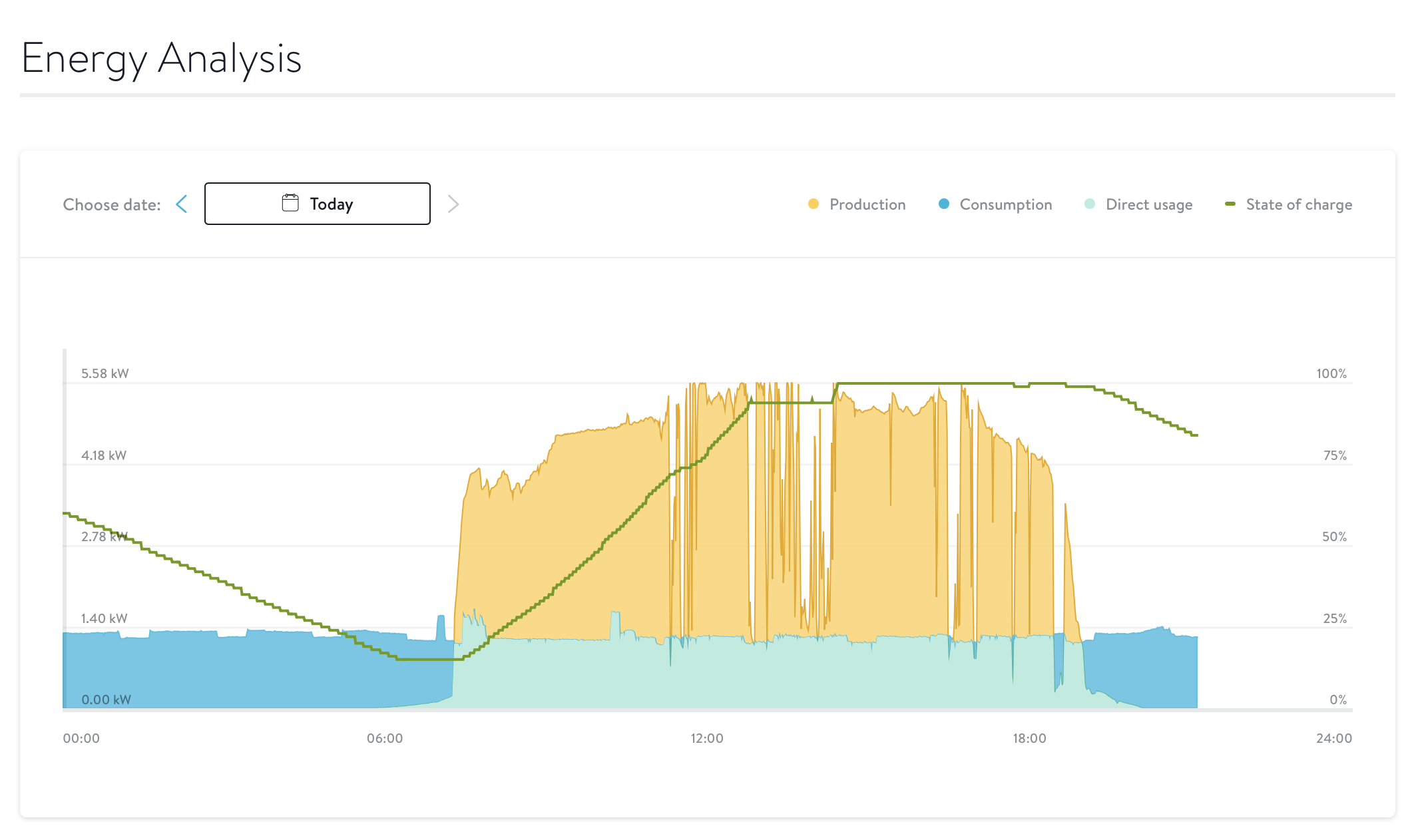
In the graph below, the green line shows the battery level declining in the early hours, and climbing after sunrise. The dark blue region shows the house consumption, and the gold region shows the excess solar production… used first to replenish the batteries, and then, after 2pm, to feed back to the grid.

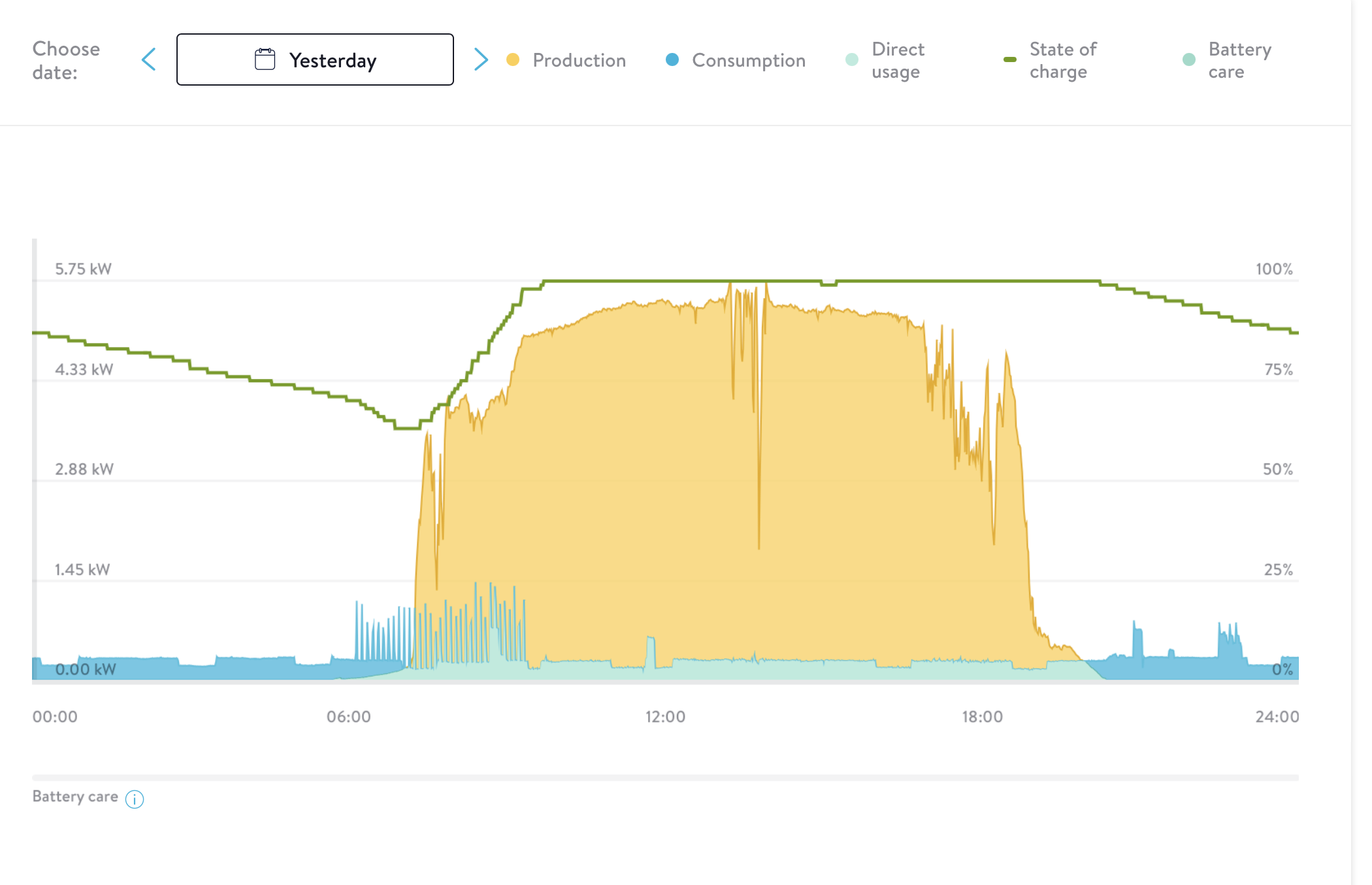
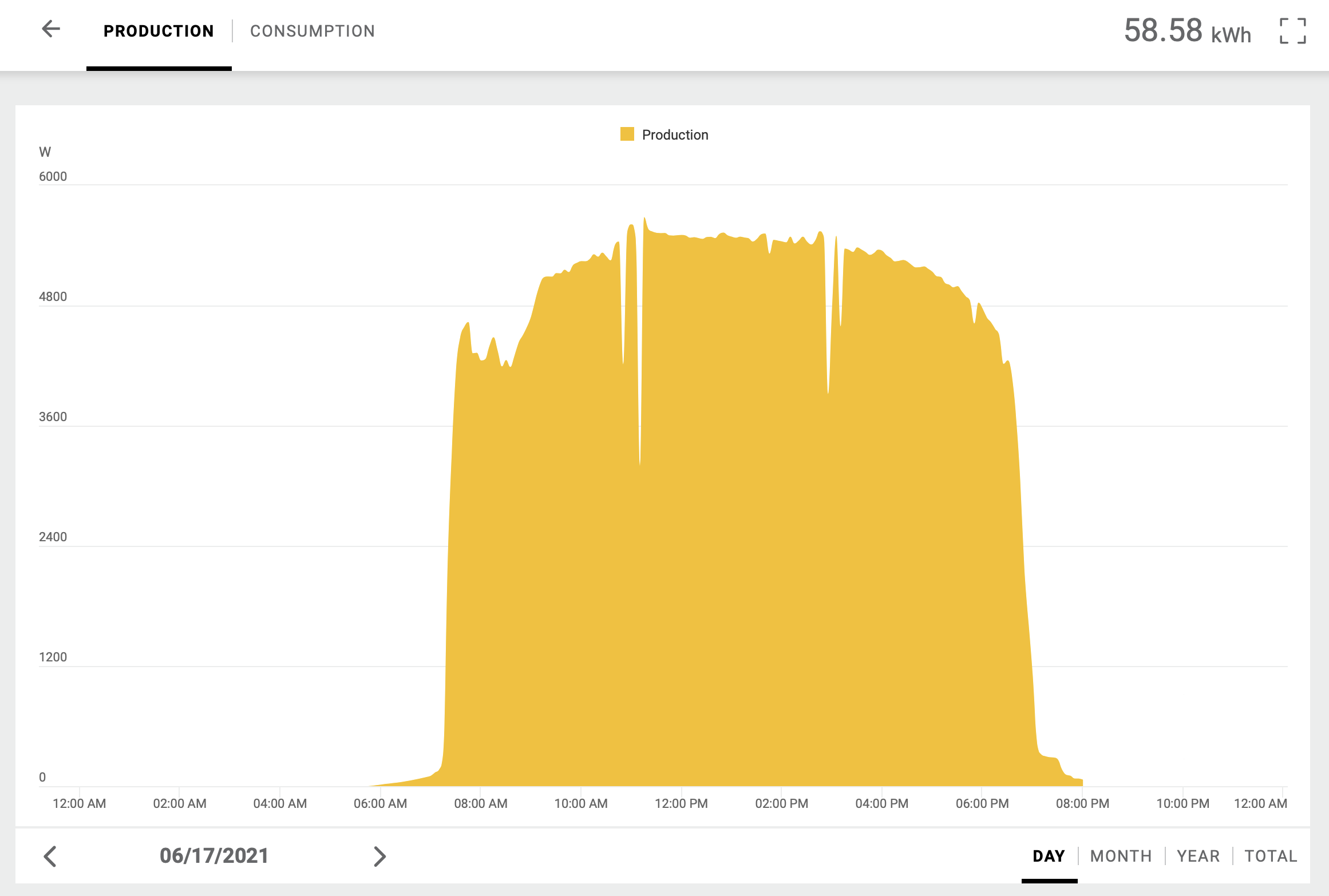
Today was a good day… but not the best day yet. Two days ago was more sunny, and we set a personal record for solar production: 58.58 kWh: