
When offered a chance to tour Buckingham Palace, how can one say no? After all, we live within walking distance, and I often walk past the palace on my way for a stroll in Green Park or St. James Park. Out front, the grand gates attract throngs of selfie-taking tourists, gawking at the grandeur of the palace and snapping photos of the iconic guardsmen. Today, we stood with a small group of others who waited by the front gate for our designated entry time.
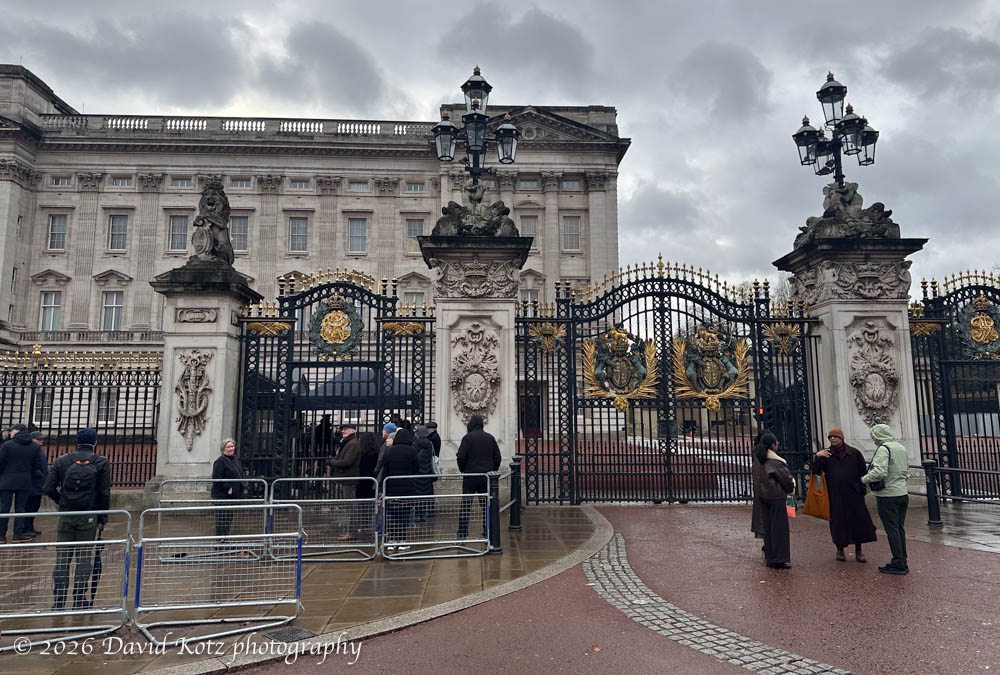
To be clear, it’s not like we were heading for an appointment with His Majesty King Charles, or others in the royal family. We’d bought tickets for a tour of the East Wing, along with a dozen other locals and tourists. Our wait, on a chilly gray winter’s day, gave us an opportunity to study the decorative gates and the heavily armed police just behind them.
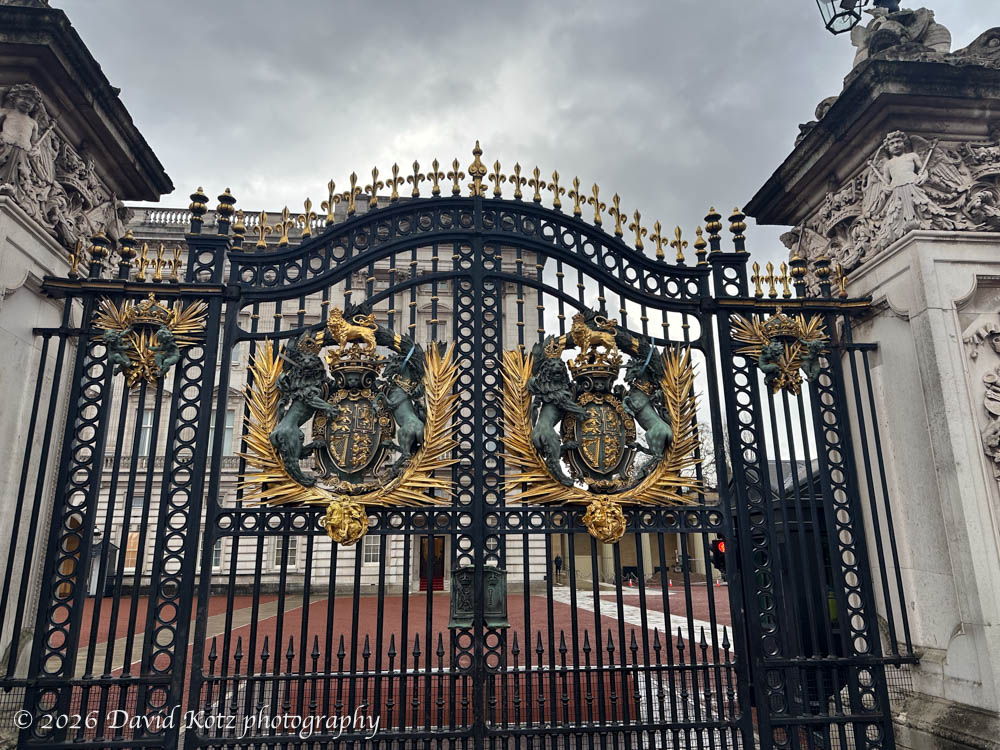
and entered Buckingham Palace.
Unfortunately, photography was not permitted once we passed through the gates, through airport-style security screening, and throughout the tour. Our tour guide walked us through three or four elaborate rooms and along a grand corridor spanning the front of the palace. (The East Wing has over 200 rooms; we saw four.) She explained that this wing had never before been open to the public, having been designed and used primarily as a residence for the royal children. Now, its rooms are used for meetings, and receptions. (They are separate from the State Rooms, which are only open for public tours in the summer.)
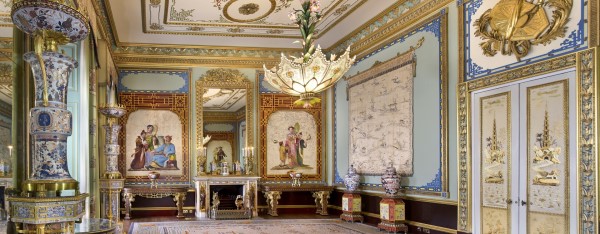
Many walls decked with massive paintings of the sort one might expect in the National Gallery, or National Portrait Gallery – depicting famous figures or heroic scenes, like Queen Victoria or the Battle of Trafalgar. Our tour guide, who noted her two art-history degrees, delighted in telling us the backstory on many works of art, including murals, painted ceilings, and exquisite porcelain from China. Indeed, many of the rooms were thoroughly decorated in chinoiserie style, which apparently had been quite fashionable. (Indeed, that Wikipedia link includes an (outdated) photo of the Yellow Drawing Room we visited today; the caption says it is “rife with chinoiserie designs. King George IV was a keen patron of chinoiserie, and had many other rooms created in this style such as the Centre Room, also located in the East Wing.”) Much of it reminded me of the palace we visited in Brighton; no coincidence, because when Queen Victoria sold that palace she relocated most of its decorations to Buckingham.
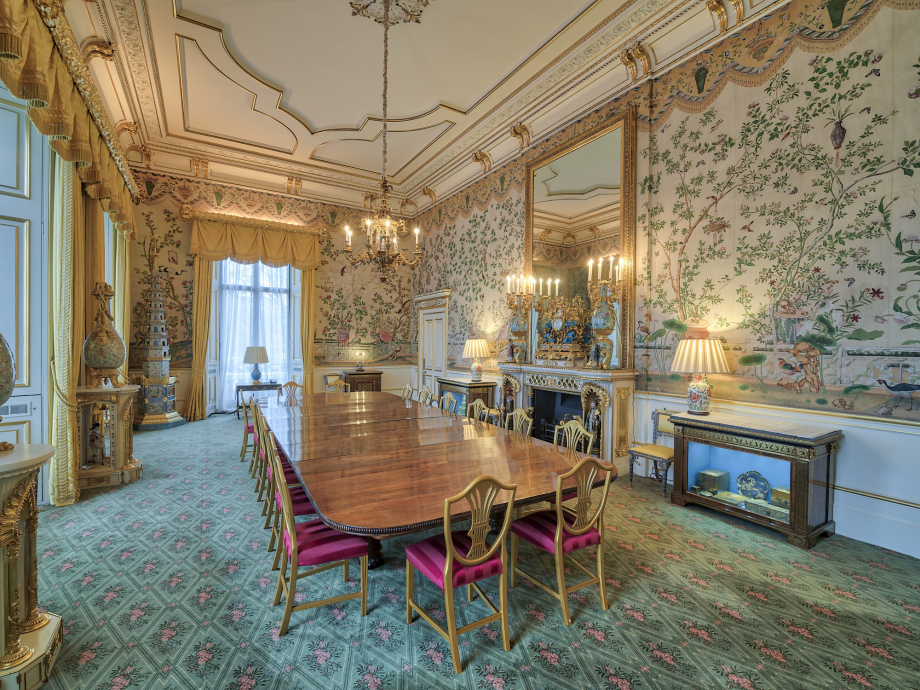
Many more photos are available on the royal family’s webpage. We visited parts of the East Wing that has just been reserviced (renovated and restored), as described in this short YouTube video from seven years ago when the work began. Other wings of the Palace are currently under similar restoration.
In the final room, we were standing right behind the front, central balcony that looks out on the forecourt, past the grand Victoria Memorial, and down the mall central to St. James Park. The guides excitedly described how, just two years ago, King Charles arrived at Buckingham Palace after his coronation, walked through the same corridors, and waved to the crowds from this very balcony.
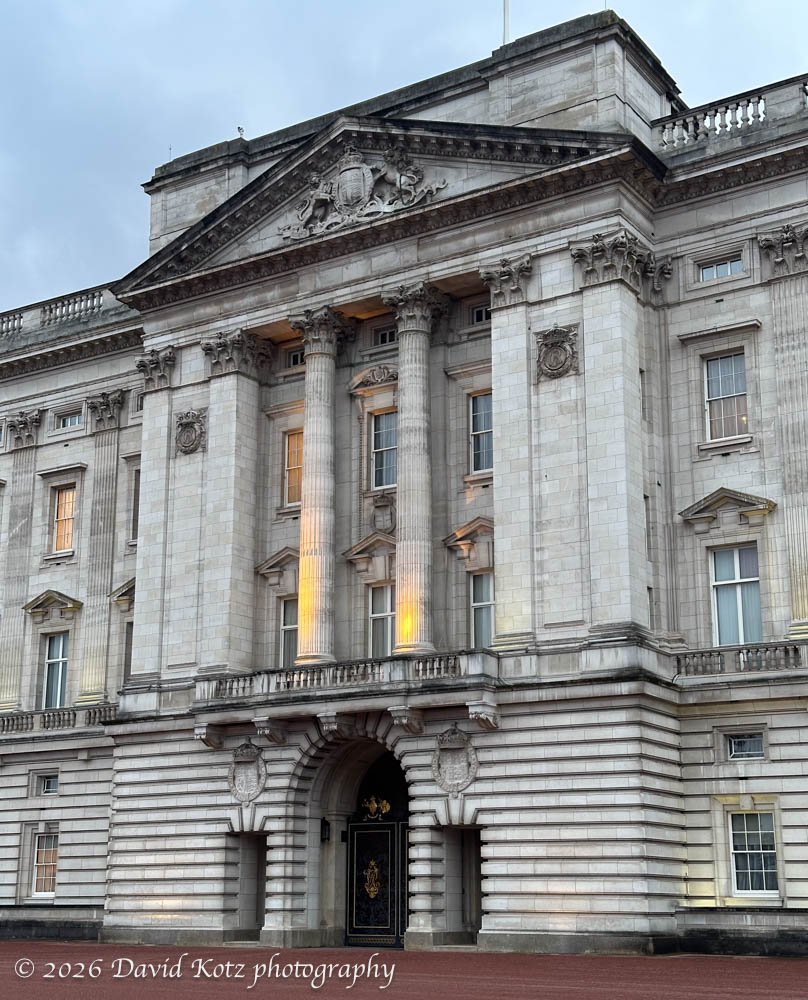
behind the front/central balcony.
 David Kotz