I was fortunate to be able to visit Bangalore once again, to attend the COMSNETS conference.
It is so nice to be back in India, in Bangalore. I came so I could attend COMSNETS, a computer networking conference, at which I had organized the NetHealth workshop. Those were great, as was an afternoon spent visiting Microsoft Research. What was best, though, was a chance to visit some of my favorite places, including MG Road, Cauvery, Infinitea, Sampige Road, the IISc campus, and friends in our old IISc neighborhood. Read on…
I had many reasons to return to India. There are the professional reasons, of course – I had a paper accepted at WISARD (a workshop associated with COMSNETS in Bangalore), and I was invited to participate in an Indo-US workshop on infrastructure security, held at IISc. But, personally, I was really missing India. The friendly people, the fantastic food, the sights and sounds and smells, and let’s face it, the nice weather this time of year. Read on for more…
We’re home! After just 24 days less than a year away from home, we’re back. According to the airline, we flew 29,000 miles, from Boston to Paris to Bangalore to Sydney to Auckland to Fiji to Charleston to Boston, not to mention all the layovers in between.
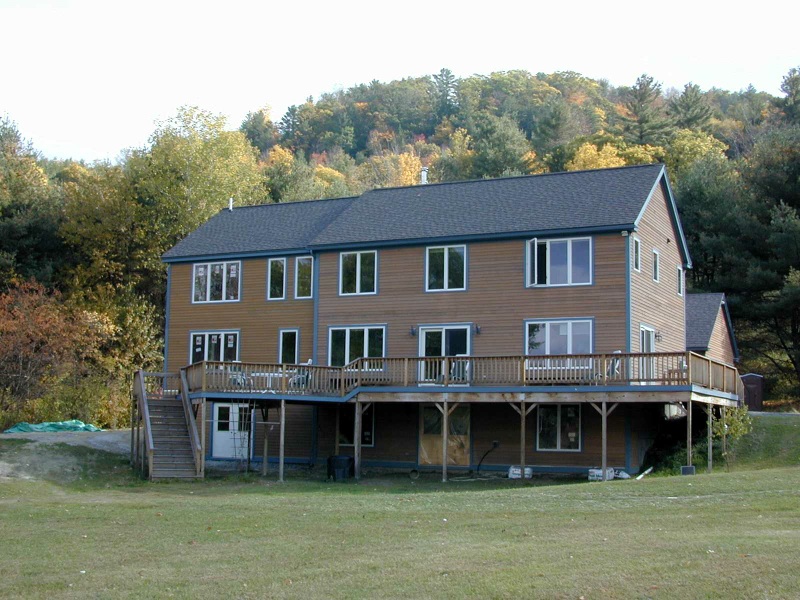
It’s nice to be back, although a little strange. The house is pretty much the same, though I now see it through different eyes. It seems huge, and we seem to have so much stuff. The cat recognizes us, and seems to he happy that we’re back. We’re buried in boxes, having shipped home almost two dozen bags and boxes as well as the 10 checked and 6 carry-on bags we brought with us (and which, believe it or not, I managed to fit into my Prius along with all five of us, to get home from the bus stop.)
I’m not sure I’ll be adding much to this blog for a while. I think it will be nice to not be traveling. If I find some time, I might dig through some of the videotape I shot while in India; although I focused most on still photos, some of the videos might be fun.
This post was transferred from MobileMe to WordPress in 2021, with an effort to retain the content as close to the original as possible; I recognize that some comments may now seem dated or some links may now be broken.
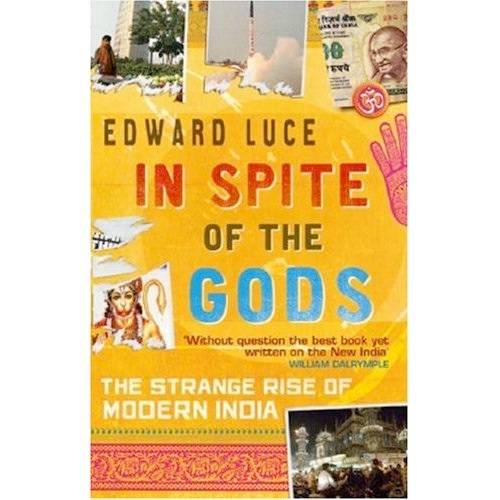
In Spite of the Gods: The Strange Rise of Modern India, by Edward Luce.
I’ve just finished reading this excellent 2006 book by Edward Luce, a journalist who lived in India for five years as the South Asia bureau chief for Financial Times, and who is married to an Indian. His prose is wonderful, his insights fascinating, and his anecdotes amusing. Definitely my favorite non-fiction about India so far [though I still recommend Nilekani’s more recent book Imagining India.] It is a must-read for anyone who wants to begin to understand India.
In his conclusion, Luce cites four major challenges that India must face in order to thrive:
“Lifting 300 million people out of poverty and providing the remainder with a more secure standard of living…,
“Overcoming the dangers of rapid environmental degradation…,
“Heading off the spectre of an HIV-Aids epidemic…,
“Protecting and strengthening India’s system of liberal democracy….”
Indeed, he quotes Vijay Kelkar in noting that “The twenty-first century is India’s to lose.” Huge challenges, and huge opportunity.
For a more extensive (and professional) review of the book, see the NYT reviews [Macintyre, Grimes]; the NPR interview with the author is also very interesting. The book is available on Amazon.
This post was transferred from MobileMe to WordPress in 2021, with an effort to retain the content as close to the original as possible; I recognize that some comments may now seem dated or some links may now be broken.
With 5,662 ‘keeper’ photos from India, it was awfully difficult to narrow them down to my favorites. I tried to select a dozen in each of several categories, based on a mixture of criteria – trying to represent the diversity of people and experiences, and also an amateur notion of what makes a nice photograph. I hope you’ll enjoy them!
This post was transferred from MobileMe to WordPress in 2021, with an effort to retain the content as close to the original as possible; I recognize that some comments may now seem dated or some links may now be broken.
A few weeks after we arrived in India I posted an entry in which I described the things that each of us missed about home. Now, about four weeks after departing India we are all missing many things about India. Here are some things that come immediately to mind.
David: colleagues; dosas, dal, and fresh mangoes!
Pam: friendly people, fresh mangoes
Mara; friends
John: friends, the food
Andy: friends, Indian music, gatorade
And the beautiful IISc campus.
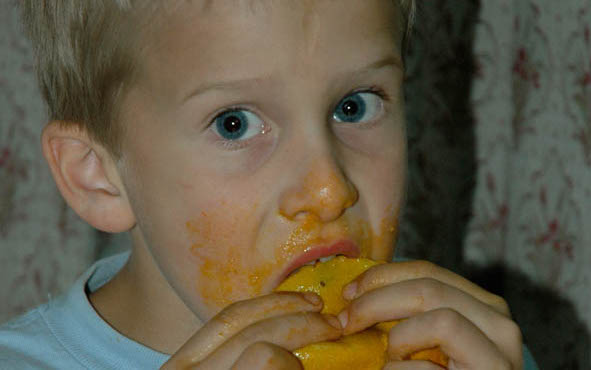
Andy discovers the wonders of fresh mangoes.
This post was transferred from MobileMe to WordPress in 2021, with an effort to retain the content as close to the original as possible; I recognize that some comments may now seem dated or some links may now be broken.
The monsoon arrived in Bangalore, and we left five minutes later. Or, at least, so it seemed as we struggled to load all our baggage into the taxi during a torrential downpour. It was a bittersweet ending; we are sad to leave India, though excited to begin the next leg of our travels. Read on…
Well, today is our last day in India; tonight we fly to Australia for the next leg of our journey.
I am sad to be leaving, and will surely miss many wonderful things about life here. Number one, the food! Second, the people, who I have found to be almost universally friendly, warm, and welcoming. Third, the weather, which in Bangalore at least is usually very nice. Finally, the chance to travel and learn about a incredibly beautiful country with diverse and deeply interesting cultures. I surely hope to come back sometime soon.
I am grateful to many people. To the staff at Fulbright offices in Delhi and Chennai, and the team at CIES, who helped with all the details of getting us here and helping us get established. To Prof. Anurag Kumar and Chandrika Sridhar, who helped in so many ways to ease my transition into IISc and to help us set up household here. To Vittal Kini, Kumar Ranganathan, Satish Rath, Amit Baxi, and Sasi Avancha at Intel, who enabled me to collaborate on a great project. And last but not least, to my family, who have made this year a fun exploration of life.
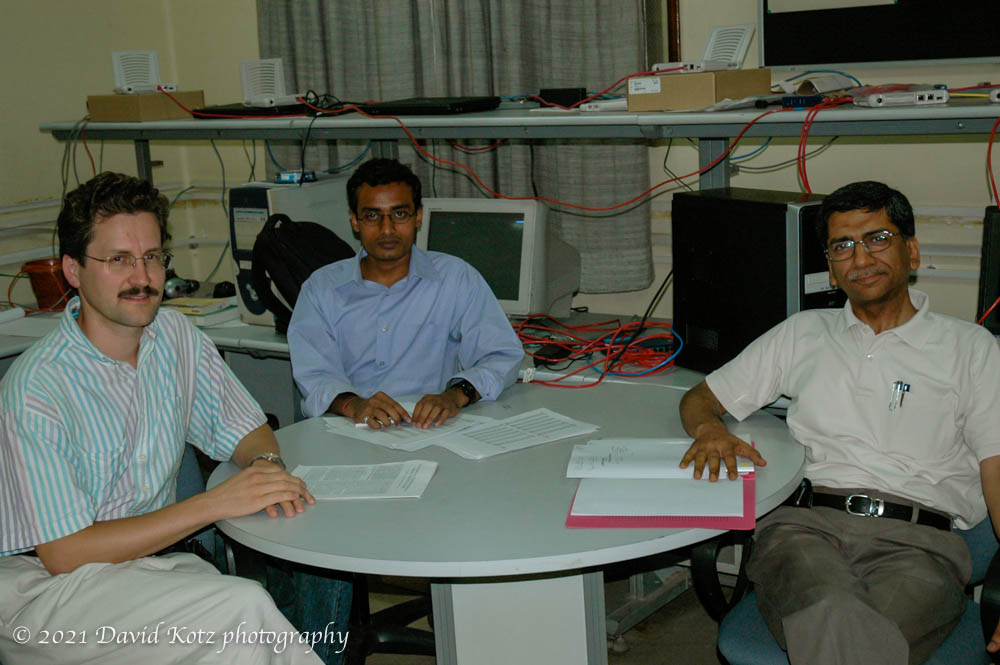
Below, I am with Prof. Anurag Kumar, right, who was my host during my stay at IISc, and Shrirang Mare, a project assistant we hired to work with us on a research project. I really enjoyed working with them both!
David at IISc with Shrirang (programmer) and Anurag Kumar (professor and host).
I’ve posted a few final photos from IISc/Bangalore.
This post was transferred from MobileMe to WordPress in 2020, with an effort to retain the content as close to the original as possible; I recognize that some comments may now seem dated or some links may now be broken.
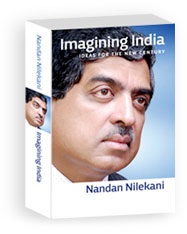
I just finished reading Nandan Nilekani’s new book,Imagining India. It is a wonderful look at the state of India, and how it got here, but more importantly it is an optimistic look forward at where India can go.
Nilekani is most famous as the co-founder of Infosys, the IT juggernaut that arguably led India’s outsourcing boom. He is also known as the man who inspired Tom Friedman with the idea that the World is Flat. I was honored to meet him at a conference in January, and was able to get my copy of the book autographed. Read on for a summary.
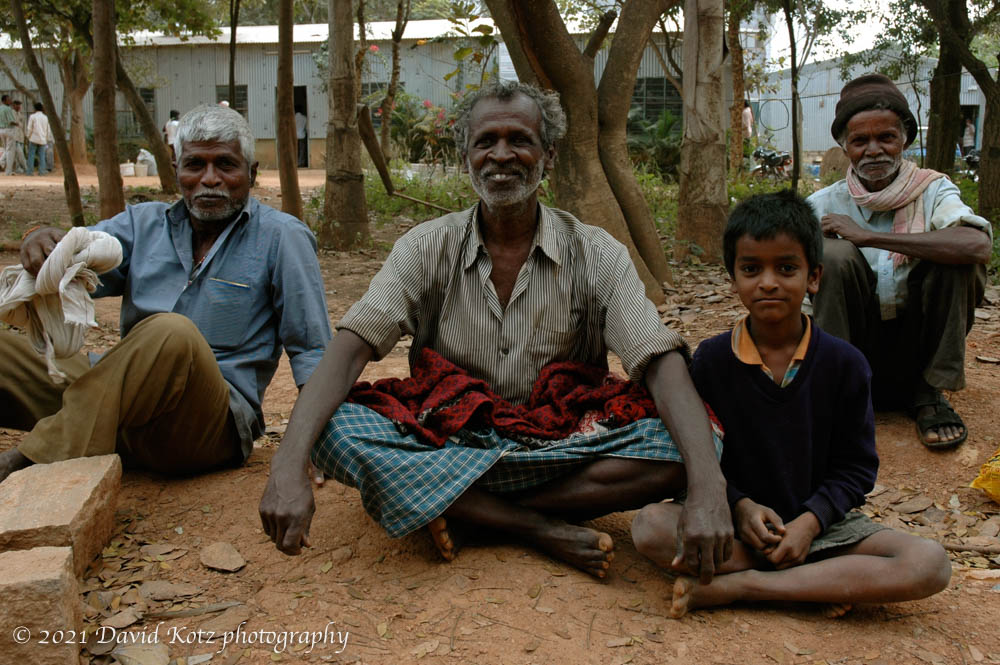
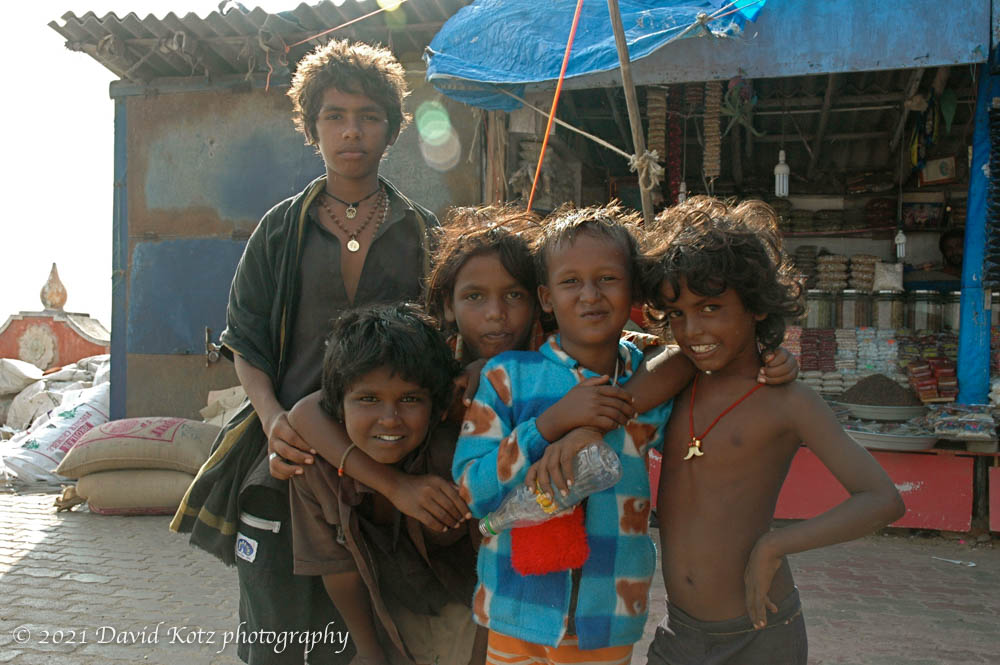
Kanyakumari street children, Tamil Nadu. December 2008.
After spending nine months in India we have grown attached to the place. India is a beautiful country filled with wonderful people. It is full of success stories – like the IT boom in the past decade – but it is also full of many challenges. Nearly a third of the people are in poverty, there is little care for the environment, and the educational system largely fails its children. We are planning to donate substantially to several charities that serve the children and environment in India. After asking around, here are some of the charities recommended by colleagues:
* These can take donations from the US, in US dollars, and are tax-deductible in the US. It may also be possible to donate to the others via wire transfer, but I’m not sure whether they are tax-deductible in the US.
This post was transferred from MobileMe to WordPress in 2020, with an effort to retain the content as close to the original as possible; I recognize that some comments may now seem dated or some links may now be broken.

 David Kotz