As we cruised the fjords on the southwest coast of Greenland, we had several opportunities to learn about the cultures of Greenland – historic and contemporary – and to visit archaeological sites, small villages, and busy towns. This post focuses on two historic settlements, each now recognized as a UNESCO world heritage site. Read on for more…
Although our route sometimes had the Endurance sailing offshore overnight south along the eastern coast, and sailing north along the western coast, most of our time in Greenland was spent in the extensive fjord systems that shape the southern tip of Greenland. In this landscape, a visitor can understand why the early Norse settlers named this land Grœnland (green land) when the Norse, led by Erik the Red, settled here in 982. Although these fjords have steep walls and deep waters, their shores and (rare) shallow glacial plains are covered in a green, grassy tundra sprinkled with heather, dwarf willow, dwarf birch, crowberries, blueberries, and a variety of wildflowers. Although “Iceland’s landscape is the world’s youngest and most dynamic, the rocks of Greenland are the oldest yet discovered on the planet.” [NatGeo] Read on for more…
A beautiful two days in the remote northwestern region of Iceland.
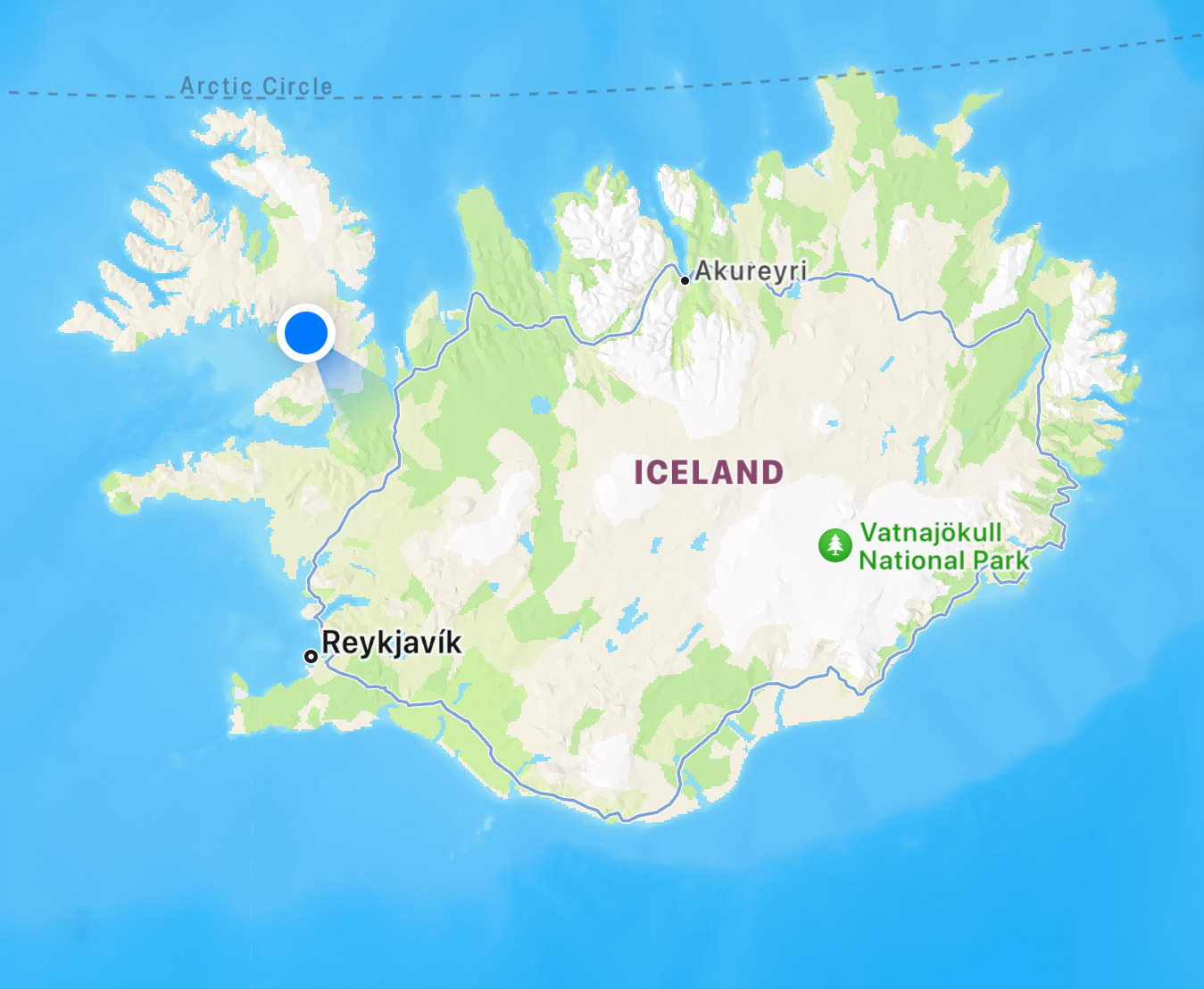
After a few days amongst throngs of tourists at the “Golden Circle” of sights near Reyjavik (see my prior post) we headed for the remote northwestern corner of Iceland, the Westfjords. We rented a rural house at the blue dot on the map below, and explored westerly from there – reaching the westernmost tip of Iceland, which is also the westernmost point in Europe. It required driving some remote, dusty, narrow, twisty, and sketchy roads… but also led us to stunningly beautiful landscapes. Read on! and check out the galleries linked below.


 David Kotz