A beautiful two days in the remote northwestern region of Iceland.
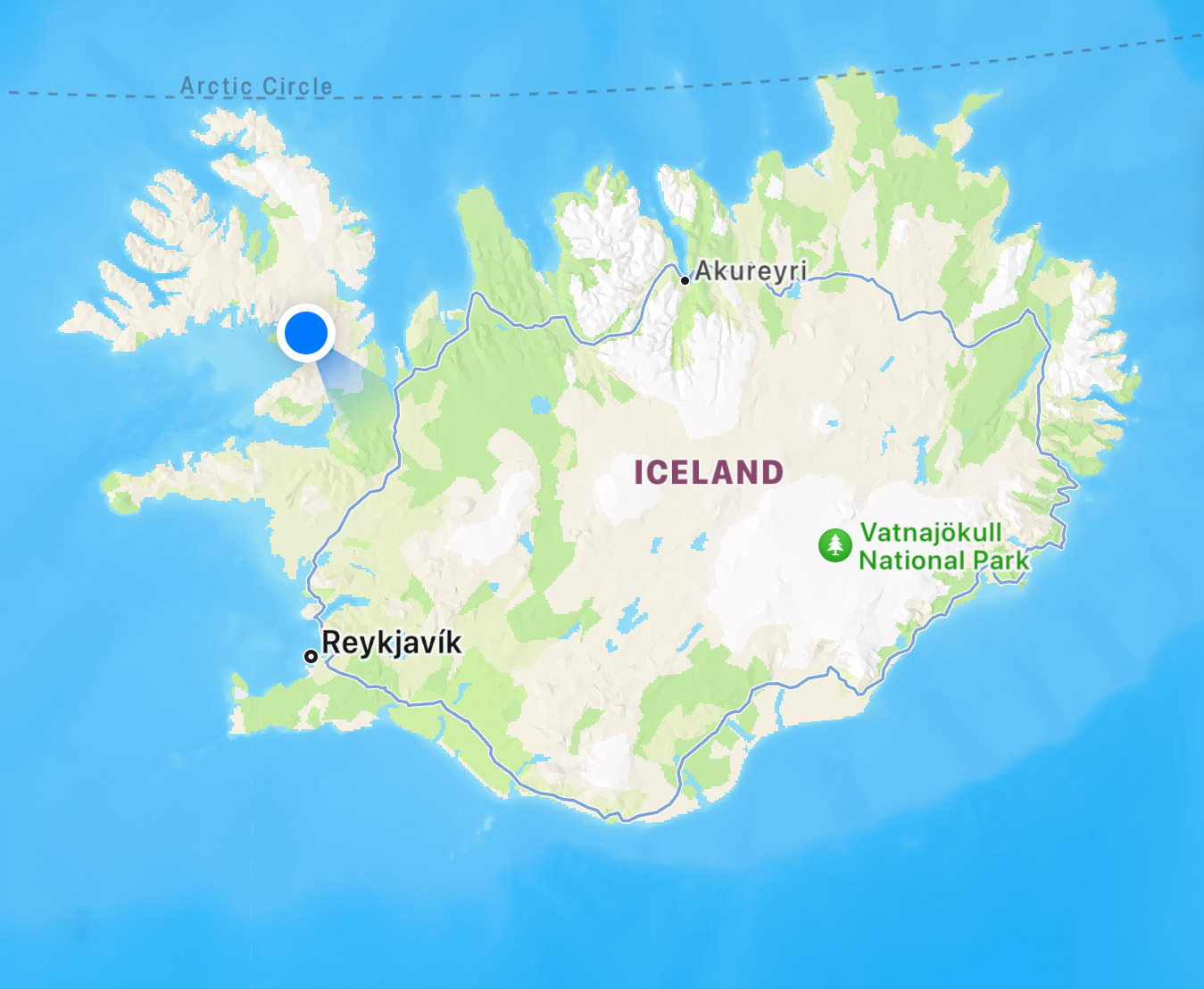
After a few days amongst throngs of tourists at the “Golden Circle” of sights near Reyjavik (see my prior post) we headed for the remote northwestern corner of Iceland, the Westfjords. We rented a rural house at the blue dot on the map below, and explored westerly from there – reaching the westernmost tip of Iceland, which is also the westernmost point in Europe. It required driving some remote, dusty, narrow, twisty, and sketchy roads… but also led us to stunningly beautiful landscapes. Read on! and check out the galleries linked below.
Our week in Iceland began with a tour of some classic sights.
Our extended family loves to travel. We sought an interesting destination to celebrate a graduation and two birthdays, and settled on Iceland. So eleven of us met up in Reykjavik for a busy week of touring this beautiful country. Iceland’s northernmost point just grazes the Arctic Circle, but even at Reykjavik (on the southwest coast) and on our dates (three weeks after solstics) the days were still very long: sunrise at 0342 and sunset at 2325; it was never dark! Although Iceland is a small island, a one-week visit is really only enough to scratch the surface – we focused on the area around the capital of Reykjavik (and the crowded “Golden Circle” of nearby sights) and the remote Westfjords peninsula. This post focuses on the Reykjavik area; see the combined gallery or the location-specific galleries below. Read on!
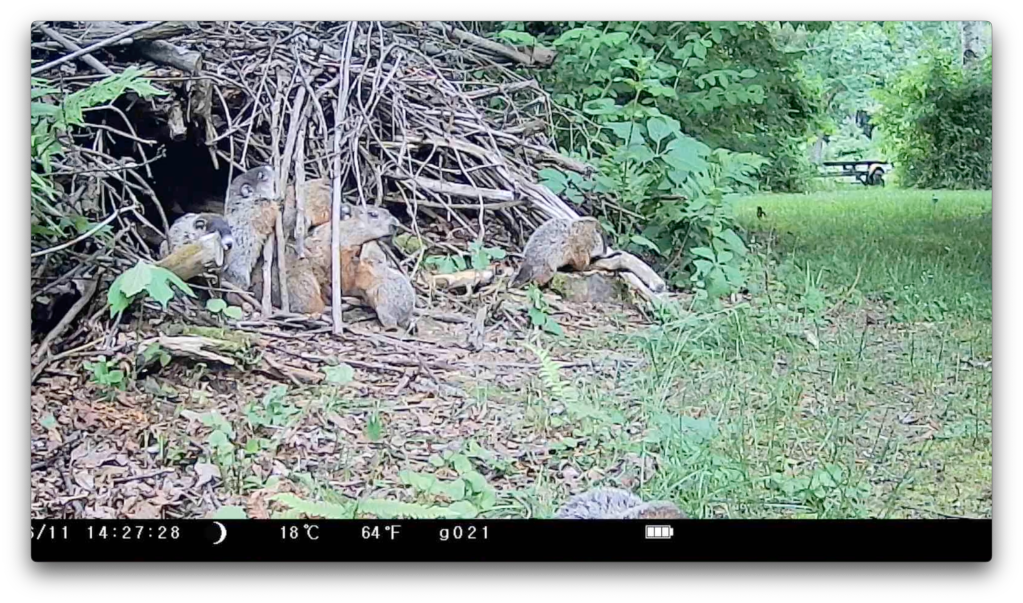
Far in the back of our backyard is a pile of sticks – woody debris we’ve piled up for over 25 years as we trim trees and clear brush. With time, the pile has decomposed and compressed into a thick, firm dome-shaped structure. Last fall I discovered that some critter had burrowed under the pile. This spring I placed one of my wildlife cameras a few feet from the entrance and, in early June, I started capturing video of a big fat groundhog (woodchuck) emerging from the burrow. Then one day, I saw tiny faces appear deep in the burrow. Within a day, seven groundhog pups were exploring the burrow’s “front yard.” Wow, do these little pups have energy! Mama would come and go, presumably to feed (and perhaps to catch a little ‘me’ time), and sometimes to bring back a mouthful of dried leaves to freshen up the interior of their home. Meanwhile, the pups would play, wrestle, climb, and explore. I collected hundreds of minutes of video capturing some fascinating behaviors; here, I edited it down to an eight-minute compendium of my favorite clips. Settle in for eight minutes, and enjoy the video!
An hour wading among wildflowers on a summer morning.
A meadow near our home has been planted with wildflowers, bringing smiles to everyone who rides or drives by. One foggy morning I spent a happy hour collecting photographs as the sun rose and started to burn off the fog. Check out the full photo gallery!
Wildflowers along River Road in Lyme.
Many thanks to the Upper Valley Land Trust (UVLT) for conserving this former farm field, and to the landowners for planting beautiful wildflowers!
All images shot with Canon R5 with the RF 100-500 lens.
Bagging another two peaks – one NH48 and one 52WAV.
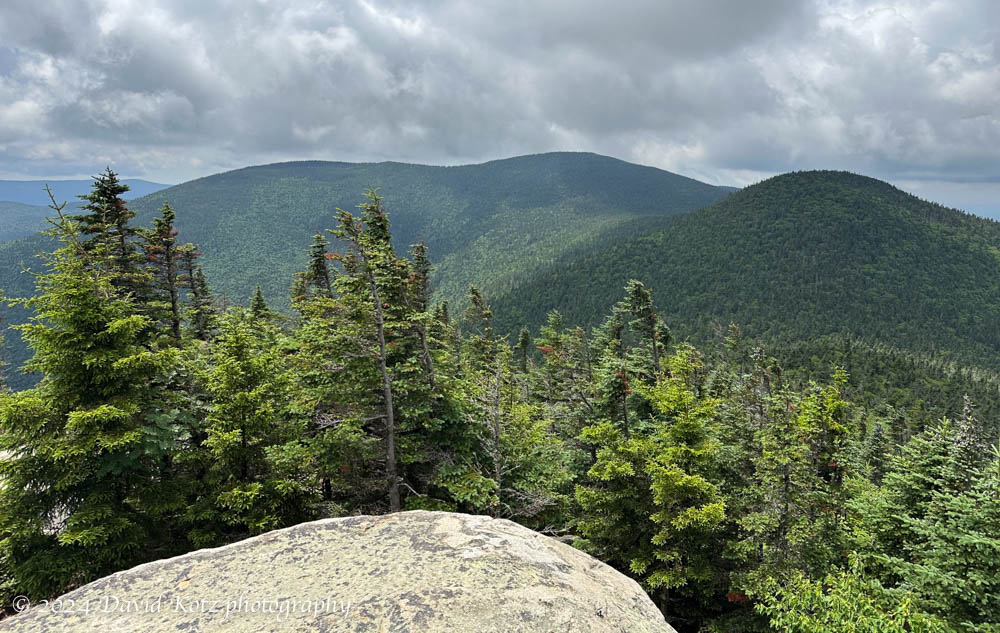
After bagging some of the more prominent New Hampshire peaks three days ago – in the Pemigewasset Wilderness, at the heart of White Mountain National Forest – I was still itching for another hike on this long holiday weekend. So early today my son and I headed back north, through the fog lining the Connecticut River Valley. We passed through the Sunday-morning quiet in small towns like Groveton and tiny towns like Stark, ending up on a remote gravel road leading to the New Hampshire Fish Hatchery near York Pond. As the sun struggled to beat back the morning fog, we dove into the damp, green forests below Mount Cabot. Our goal was an 11.5-mile triangular loop over Cabot and another less prominent – but more promising – bump called The Horn. Read on!
The July 4th holiday provided me an opportunity to get back to the White Mountains, to revisit some peaks I had visited on my first days as a college student in 1982. The weather forecast looked good, and although a brief sprinkle spritzed my car as I approached the trailhead, spirits were high as I met up with two friends and their two dogs. Our goal was to climb two of New Hampshire’s 48 four-thousand-foot peaks: South Twin, and Galehead. We succeeded and had some fantastic views along the way. Read on!
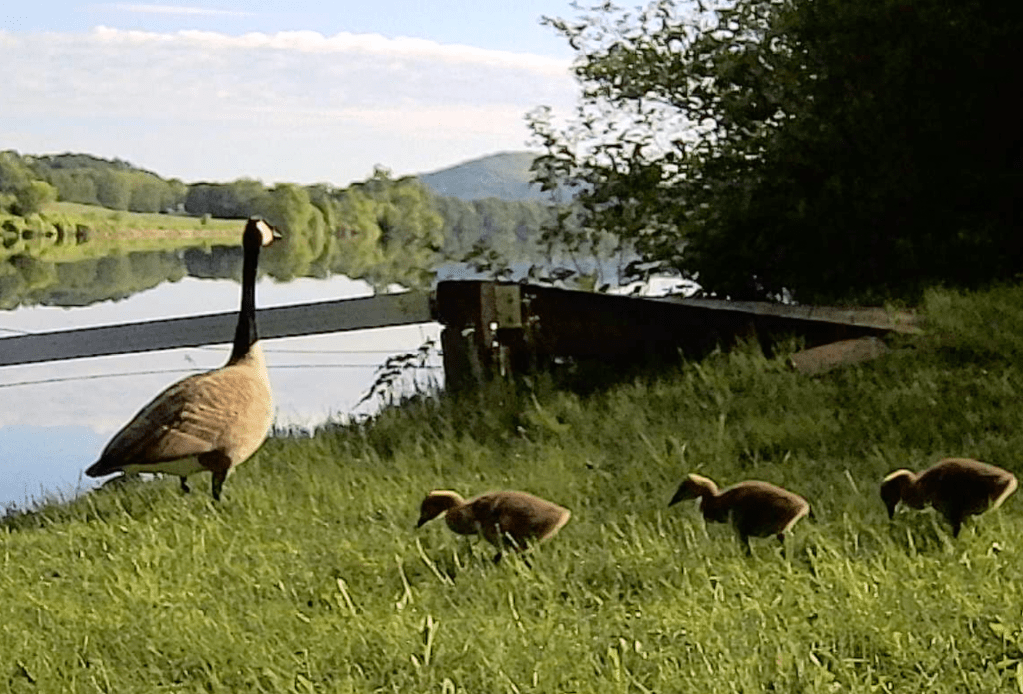
My wildlife cameras have been busy this month! With the return of spring, I placed a camera back down by the riverside… and started capturing the daily visits of a couple of Canada Geese and their brood of little goslings. As the weeks wore by, the goslings grew bigger… and fewer. (We started with four, then three, then two.) They were fun to watch, but the really cool stuff came later. Read on!
I made a short timelapse movie using one of my wildlife cameras to photograph our solar panels throughout a solar day: after a foggy start, the solar panels track the sunshine from sunrise to sunset. This movie is from June 25 – less than a week after summer solstice – and at midday you can see the sun is very high in the sky; check out the video!
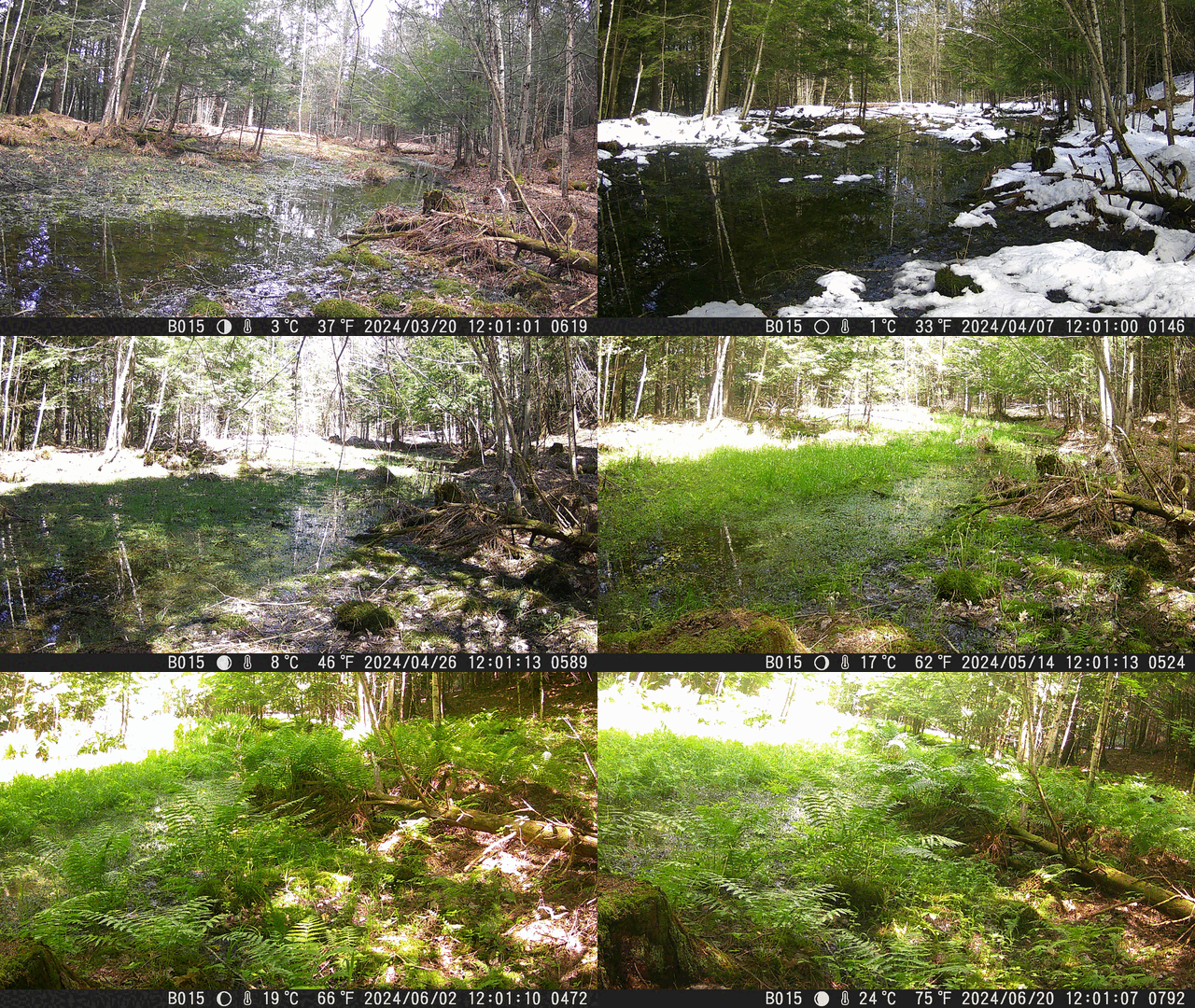
As regular readers know, I have placed several wildlife cameras in a forest near home, and have captured many enjoyable videos of wildlife like deer, bear, fox, coyote, bobcat, turkey, and more. The same cameras can be set to capture photos on a regular schedule, which can later be stitched into a timelapse video. Back in March, a few days before the spring equinox, I placed a camera at the edge of what I knew to be a vernal pool; this month, a few days after the summer solstice, I removed the camera. The camera snapped an image every five minutes from sunrise to sunset, resulting in 14,697 images. Watch the pool evolve from a snowy landscape into a lush fern-filled glade. Watch the heavy snow of March 23 lay its burden on the branches, and then watch those branches relax on March 23 and 25; watch the pool freeze and then re-thaw; watch the April 4th snowstorm bury the pool once again; watch snow melt and the grasses stretch toward the April sun; watch the ferns unfurl into the May sunshine. Below is an abbreviated timelapse, one photo per day at noon. See the full-res noon-time video (1 minute), and the full-length video (10 minutes). If you watch very, very closely, you might see a animal or two.




 David Kotz