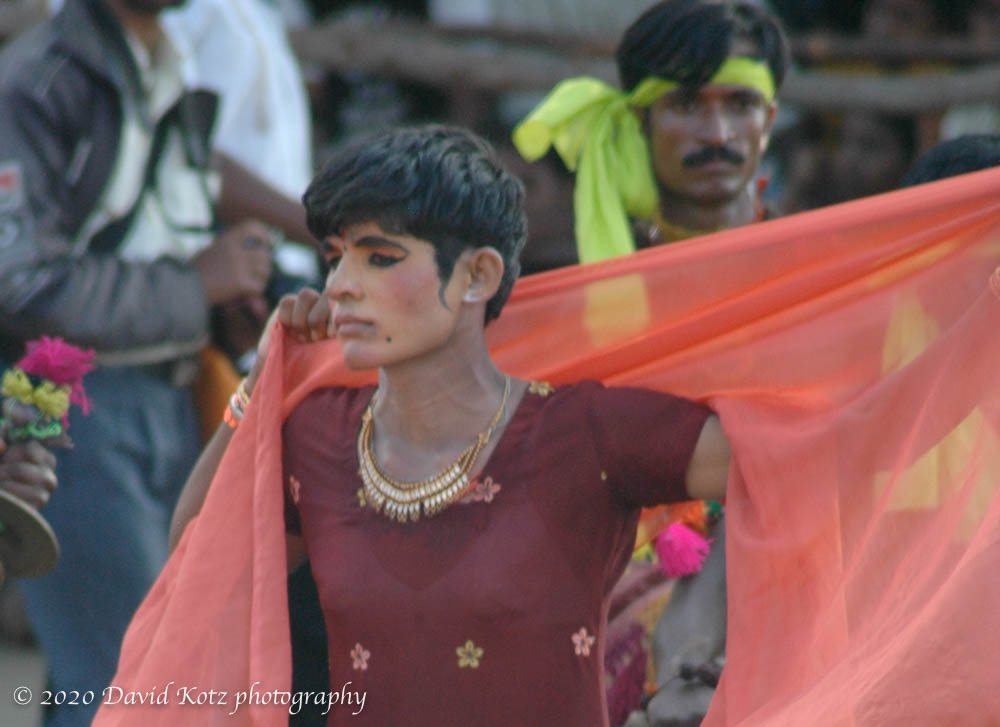
One of the most bizarre encounters I have had in India occurred while I was sitting in a car at a traffic light. It’s not uncommon to have beggars or street vendors weave through the cars, two-wheelers, and autorickshaws stopped at a light. The vendors sell fruit, newspapers, toys, cell-phone charger cables, even Q-tips. This time, I watched a sari-clad woman approach one driver after another. Each one seemed to give her money. She came to our taxi… and the driver fished around for some change. She smiled at me and brushed her hand along my cheek. “Daahling,” she purred, as she moved to the next car. Um, ok. Read on…
MTR cannot be beat for fast, tasty, healthy pure veg food.
The famous Mavalli Tiffin Room (MTR) is a restaurant in central Bangalore that cannot be beat for fast, tasty, healthy pure veg food.
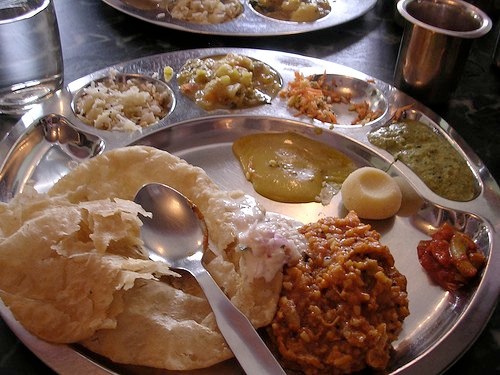
Thali at MTR – an image borrowed from another blog.
Almost as soon as you enter on the ground floor you walk through the kitchen – don’t step on the guy who is rolling out chapattis on a wooden board, while sitting on the floor – and don’t tip over any of the bubbling vats (yes, vats) of curry and sambar and rasam – before you climb the stairs to the first floor. Room after room of long tables, filled with hungry people. Waiters, barefoot and wearing a striped red shirt and a white dhoti, scurry from table to table with buckets of food. Yes, buckets. Ok, they are stainless steel buckets, with stainless steel shovels, er, ladles. No ordering here – just sit down and soon a stainless steel platter lands in front of you, followed quickly by waiters who slop out ladles-full of delicious South Indian pure veg food. I’m being a bit dramatic about the service, but that’s the way it is – and don’t get me wrong, the food is great. Curries, salads, rice dishes, sambar, rasam, pickles and as many dosas as you can eat. I was having extra helpings until I realized that they kept bringing more and more new things… I can recall at least 10 courses, plus dosas and ice cream and, to finish it all off, fresh paan. Customers come and go, and the waiters scurry about wiping tables as fast as they can. They must serve many hundreds a day, very efficient and very healthy and very tasty food.
Here are two other reviews; the first one seems to be about a different MTR location, and the second one has great photos of the food.
This post was transferred from MobileMe to WordPress in 2020, with an effort to retain the content as close to the original as possible; I recognize that some comments may now seem dated or some links may now be broken.
You meet the most interesting people while eating at an IIT Guest House.
Each campus of the Indian Institutes of Technology (IIT) has a Guest House, essentially, an on-campus hotel in which they house visitors. I have stayed in the Guest House of IIT Delhi, Kanpur, and Kharagpur. The guest rooms are basic, but each is nice in its own way. The dining room, at least in those I’ve visited so far, is set with large tables for 8-10 people and the food is served buffet style or family style. Thus, guests sit and eat together. As a result, I’ve met many fascinating people. Read on!
Today I visited the Department of Computer Science and Engineering, IIT Delhi [location]. I enjoyed my stay at the Guest House and my conversations with faculty and students in the department.
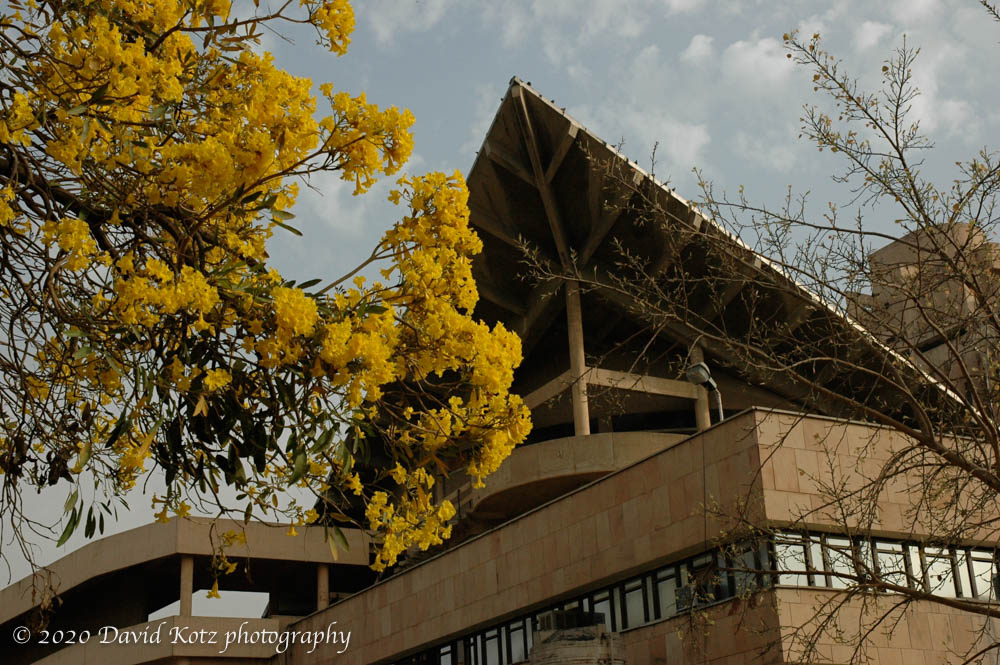
IIT Delhi: the computer services building.
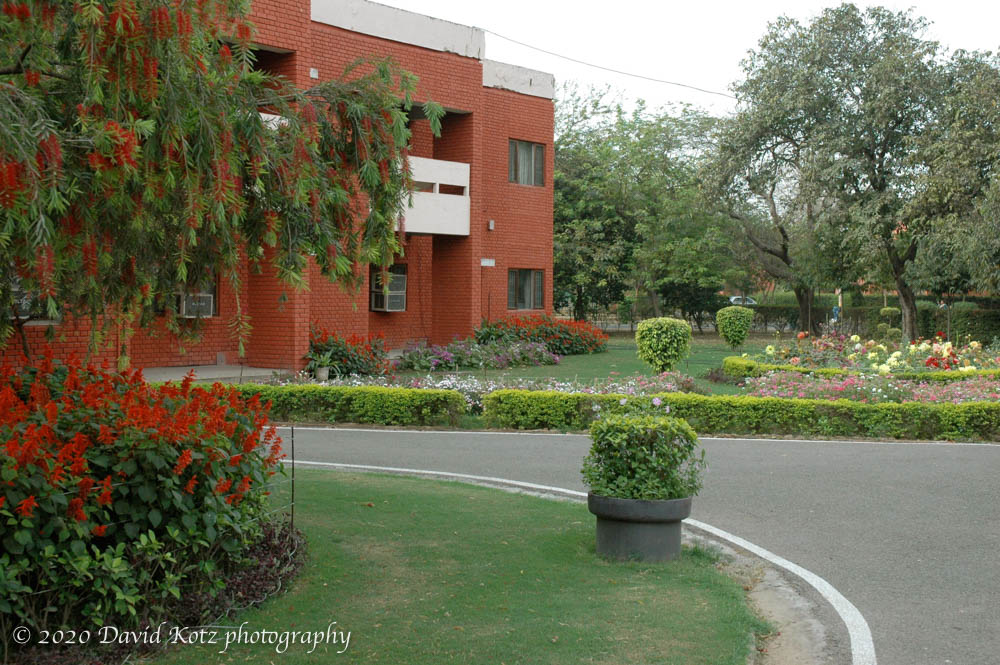
Before breakfast I took a walk around campus, capturing a few photos. It is a beautiful campus, though much smaller than the other IIT campuses.
This post was transferred from MobileMe to WordPress in 2020, with an effort to retain the content as close to the original as possible; I recognize that some comments may now seem dated or some links may now be broken.
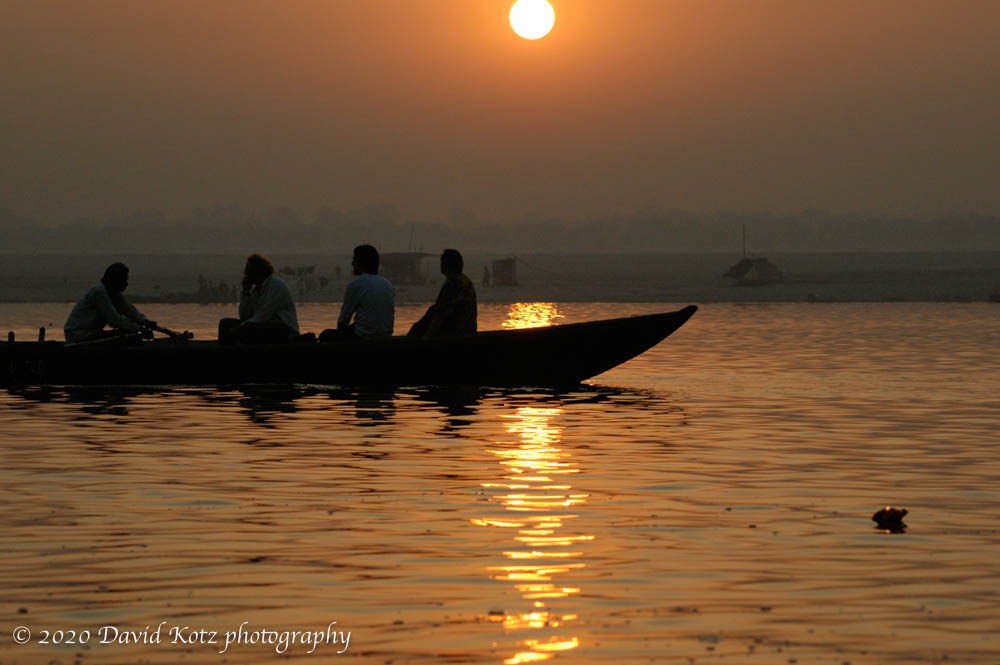
Varanasi, one of the oldest cities in the world, is an ancient, spiritual city on the bank of the River Ganges. For thousands of years, Hindu pilgrims have made their way to Varanasi for a ritual cleansing in the river, at one of the many riverside ghats [location]. Read on!
After our early-morning visit to the Taj Mahal [location] we returned to our hotel and spent the rest of the day visiting other sights in Agra. Inded, the city of Agra [location] has many interesting sights other than the Taj Mahal! We visited the Itmad-Ud-Daulah, the Agra Fort, and a marble-inlay shop. Read on!
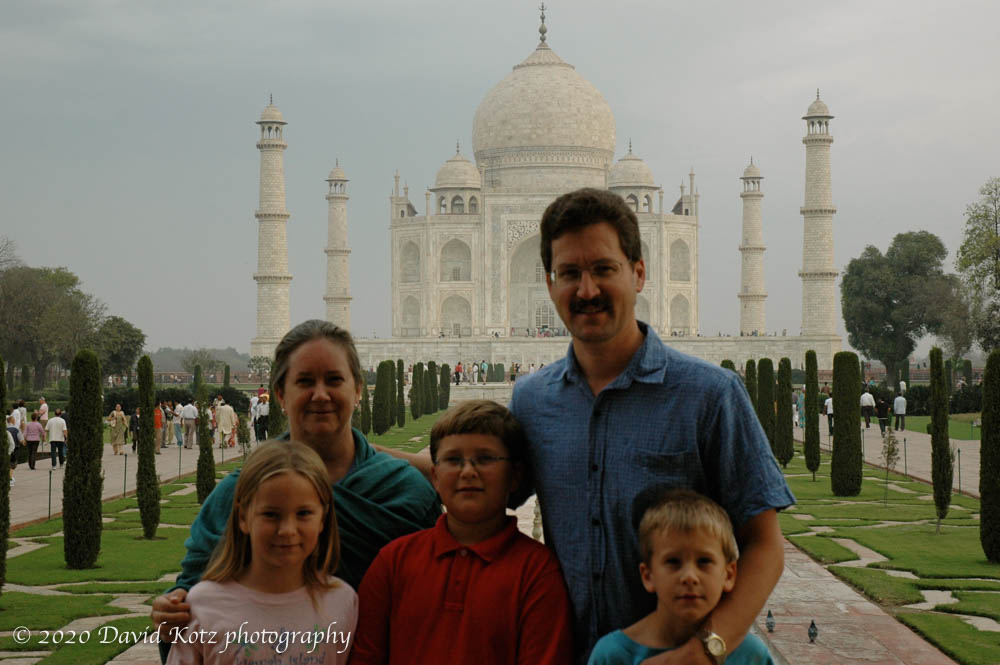
Everyone has seen the canonical photos of the Taj Mahal, all beautiful, but none of them really prepare you for the experience of visiting the place yourself. The Taj is, quite simply, stunningly beautiful, exquisitely crafted, and a marvel of engineering and art, nearly 400 years old. It is made entirely of white marble, exquisitely carved and inlaid with semi-precious stones. All of the colors and design work you can see (up close) are inlay, not paint. Even the arabic letters conveying quotes from the Koran are inlaid stone. Read on!
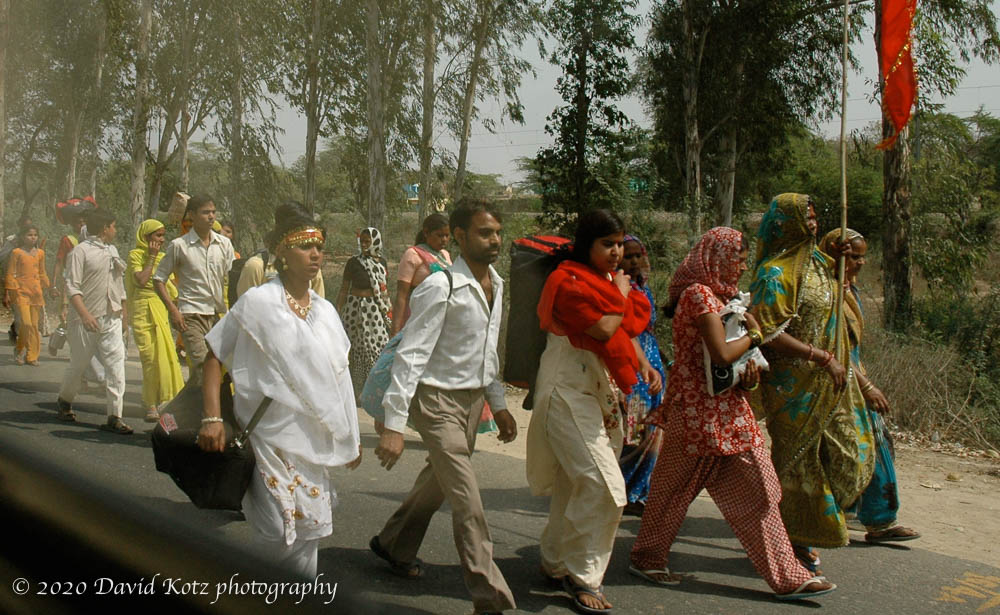
On the road to Agra, we pass thousands of pilgrims.
We’re moving upstream against a river of humanity, as we drive eastward toward Agra. We’ve just left Rajasthan and entered Uttar Pradesh. On the other side of the road is a steady flow of Hindus, walking 200km or more on their pilgrimage into Rajasthan. On Monday there is a huge 9-day holy festival (Navratri, I believe), which we’re told will attract 100,000 pilgrims on foot and 100,000 more by train, plane, or car. Along the roadside, individuals and organizations have set up tents, chairs, water stations, and food, as a charitable service to the pilgrims. The people are cheerful, waving colorful red banners and chatting among themselves. A few children ride on bicycle carts, but most folks balance their few travel needs on their head.
India. Ranthambore to Agra. People.
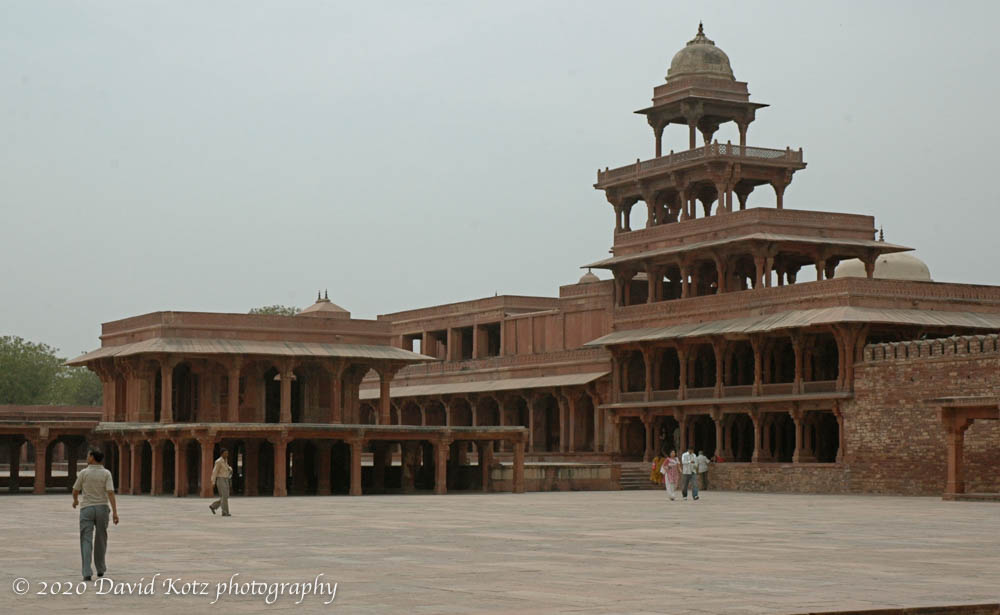
Today began before dawn, so we could catch an early morning train from Ranthambore to Bharatpur; our driver picked us up there for the two-hour trip to Agra. Along the way we visited Fatehpur Sikri, the capital of the empire of India from 1571 until 1585 [location]. This impressive city, made almost entirely of red sandstone, was built by the Mughal emperor Akbar, son of Humayan (see blog entry about Delhi) and grandfather to Shah Jahan (who built the Red Fort in Delhi and the Taj Mahal, among other things). “Fatehpur Sikri is regarded as Emperor Akbar’s crowning architectural legacy” [Wikipedia]. Akbar, a Muslim like all the Mughal emperors, was remarkably cross-religious, marrying a Hindu princess from Amber (Jaipur, which we visited a few days ago) as well as Muslim queens. He is a fascinating and deep character, though; read his Wikipedia page for much more.
the 5-story Panch Mahal at Fatehpur Sikri.
The patio of one courtyard embeds a huge game board, on which members of his harem were the ‘pieces’ that could be moved about the game board.
This post was transferred from MobileMe to WordPress in 2020, with an effort to retain the content as close to the original as possible; I recognize that some comments may now seem dated or some links may now be broken.
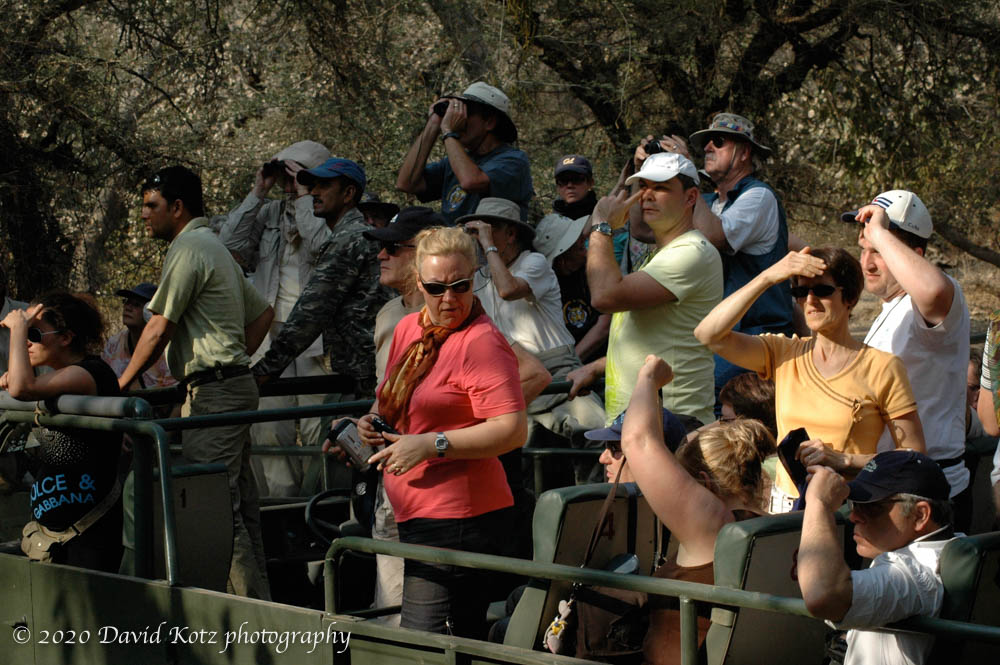
Ranthambore National Park [location], named for the 1,050-year-old Ranthambore fort within, is a sprawling 400-square-kilometer reserve for wildlife. It is most famous for its population of Royal Bengal Tigers, which currently number 36. We were lucky to see one up close, but there are many other beautiful animals and birds, including jungle cat, spotted deer, sambar deer, antelope, wild boar, langur (right), crocodile, turtle, egret, heron, stork, peafowl, treepie, kingfisher, parakeet, lapwing, and ducks. Not to mention many, many homo touristicus, crammed into 20-seat topless buses and wielding cameras. Read on – we saw a tiger! and See lots more photos.
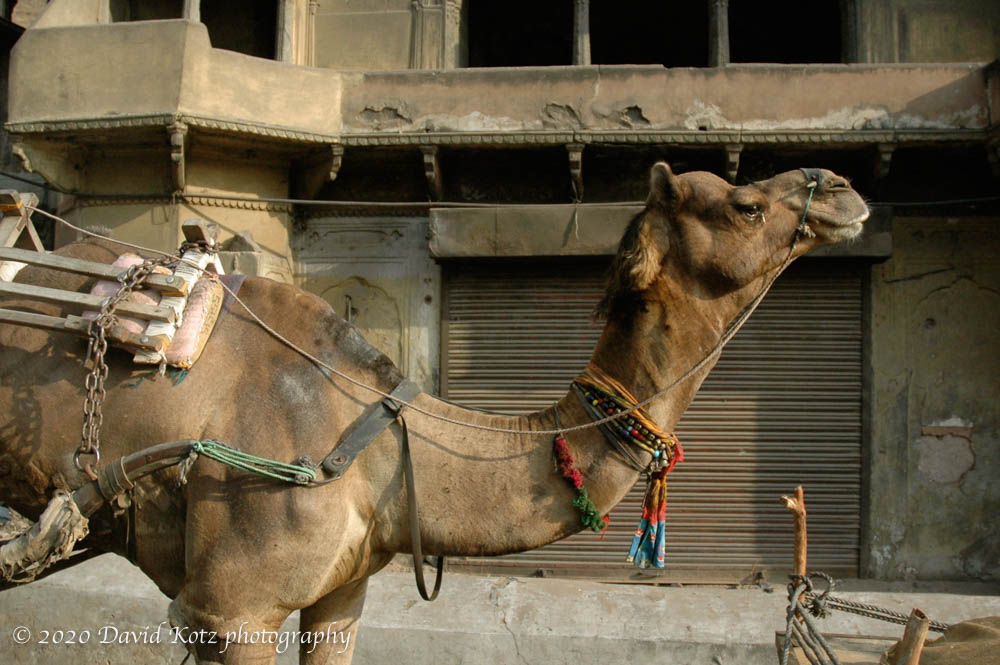
The drive from Jaipur to Ranthambore only lasted about four hours, but was a fascinating trip through rural Rajasthan. I was able to capture many pictures of farm and village life. Although only a fleeting glimpse, it was an interesting peek into a lifestyle that, in many ways, appears to be similar to the way it has been for hundreds of years. Camels are the primary pack animal, the scythe is the tool for harvesting wheat, and pounding and shaking the way to separate wheat from chaff. The roadsides are lined with cowpatties drying in the sun, to be used as fuel for cooking fires. Many are packed into dung-and-straw boxes – some decorated quite attractively, to keep them dry even during the monsoon. We passed a camel train of gypsy nomads. Children wave from their front yards.
A common pack animal, camels are often decorated (Jaipur).

 David Kotz