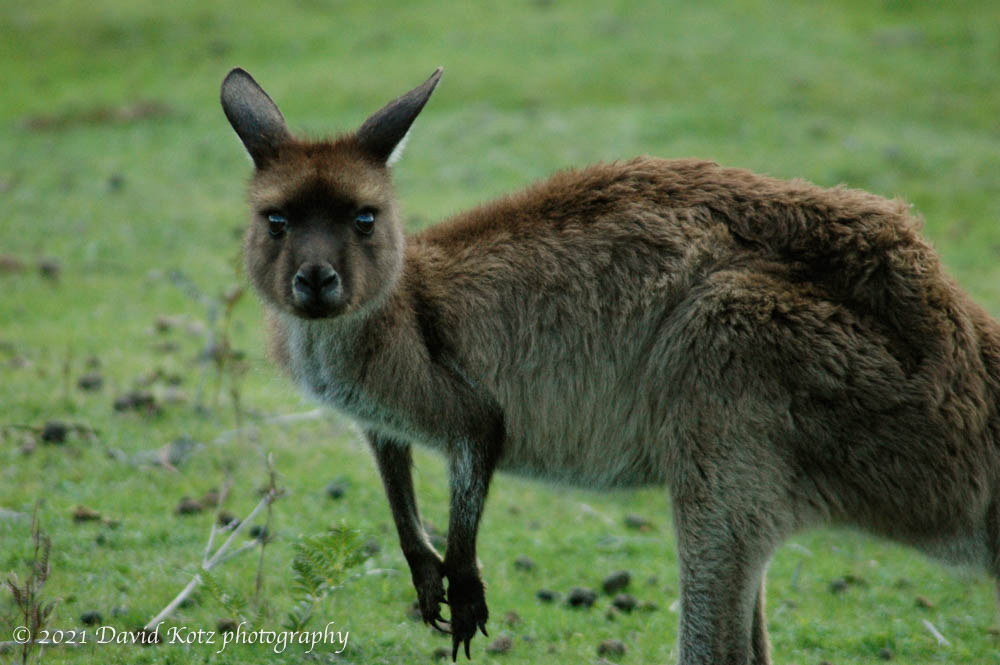
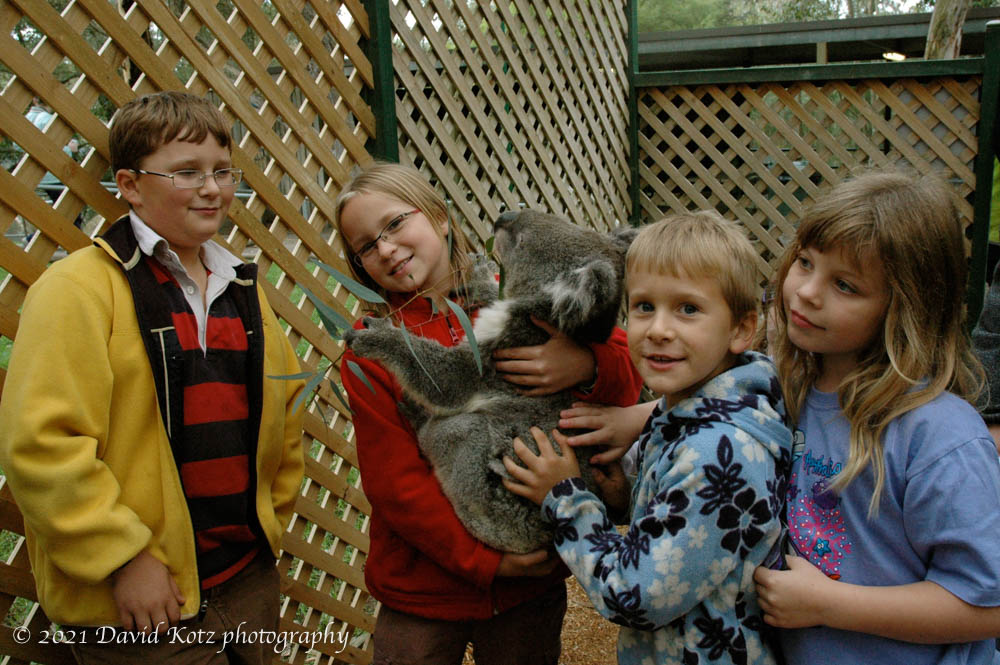
Kangaroo Island is a large island off the coast of South Australia, roughly south of Adelaide [location]. It has small villages – perhaps 4,500 year-round residents farming, working in the national parks, or in the tourist industry – and a lot of wildlife. We saw kangaroos, fur seals, sea lions, koalas, birds, and a lot of beautiful bushland. Read on and check out the photos!
We spent a lot of time with the animals in Adelaide.
Qantas Airlines took us across the corner of the continent from Sydney to Adelaide, a pretty city in the center of the southern coast [location]. It is winter now, of course, and so the weather is cool and rainy. The upside is that everything is green and lovely; otherwise, they’ve had a drought for several years and everything was brown. For the most part, the rain hasn’t dampened our activities. Read on, and see the photos.
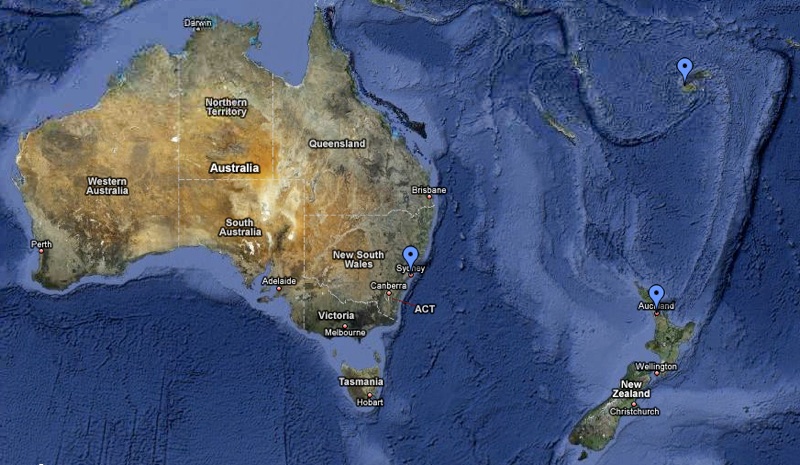
After spending nine months in India, hey, why not keep on going around the world? So, we’re spending two weeks in Australia, two weeks in New Zealand, and 10 days in Fiji before returning to the US. See map; our tour of Australia includes Sydney, Adelaide, Melbourne, and the south-east coast.
This post was transferred from MobileMe to WordPress in 2021, with an effort to retain the content as close to the original as possible; I recognize that some comments may now seem dated or some links may now be broken.
The monsoon arrived in Bangalore, and we left five minutes later. Or, at least, so it seemed as we struggled to load all our baggage into the taxi during a torrential downpour. It was a bittersweet ending; we are sad to leave India, though excited to begin the next leg of our travels. Read on…
Well, today is our last day in India; tonight we fly to Australia for the next leg of our journey.
I am sad to be leaving, and will surely miss many wonderful things about life here. Number one, the food! Second, the people, who I have found to be almost universally friendly, warm, and welcoming. Third, the weather, which in Bangalore at least is usually very nice. Finally, the chance to travel and learn about a incredibly beautiful country with diverse and deeply interesting cultures. I surely hope to come back sometime soon.
I am grateful to many people. To the staff at Fulbright offices in Delhi and Chennai, and the team at CIES, who helped with all the details of getting us here and helping us get established. To Prof. Anurag Kumar and Chandrika Sridhar, who helped in so many ways to ease my transition into IISc and to help us set up household here. To Vittal Kini, Kumar Ranganathan, Satish Rath, Amit Baxi, and Sasi Avancha at Intel, who enabled me to collaborate on a great project. And last but not least, to my family, who have made this year a fun exploration of life.
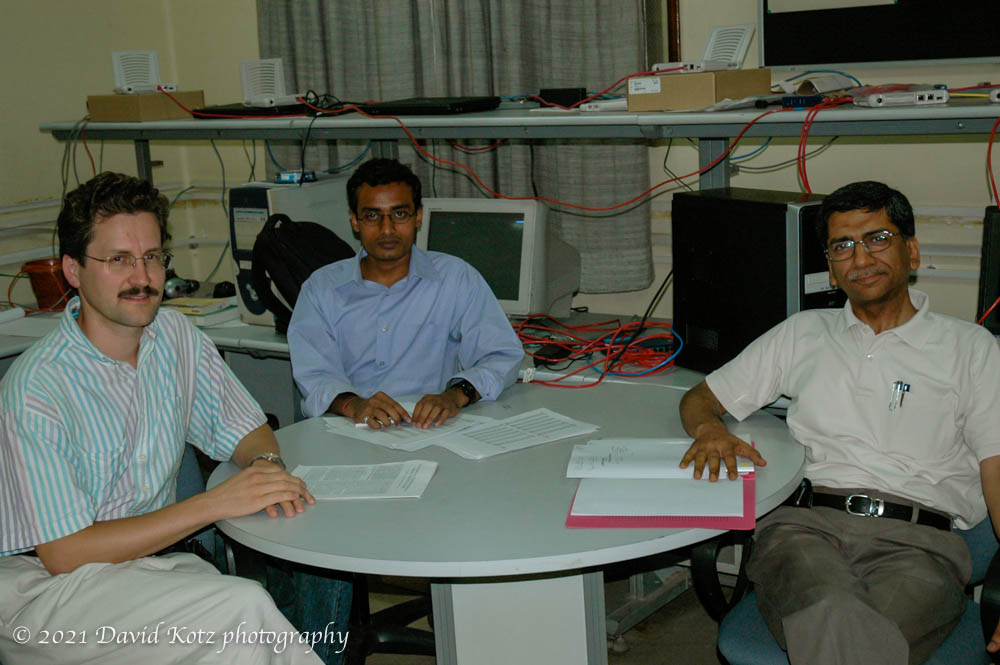
Below, I am with Prof. Anurag Kumar, right, who was my host during my stay at IISc, and Shrirang Mare, a project assistant we hired to work with us on a research project. I really enjoyed working with them both!
David at IISc with Shrirang (programmer) and Anurag Kumar (professor and host).
I’ve posted a few final photos from IISc/Bangalore.
This post was transferred from MobileMe to WordPress in 2020, with an effort to retain the content as close to the original as possible; I recognize that some comments may now seem dated or some links may now be broken.
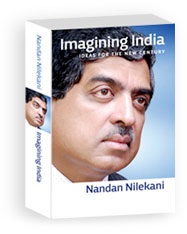
I just finished reading Nandan Nilekani’s new book,Imagining India. It is a wonderful look at the state of India, and how it got here, but more importantly it is an optimistic look forward at where India can go.
Nilekani is most famous as the co-founder of Infosys, the IT juggernaut that arguably led India’s outsourcing boom. He is also known as the man who inspired Tom Friedman with the idea that the World is Flat. I was honored to meet him at a conference in January, and was able to get my copy of the book autographed. Read on for a summary.
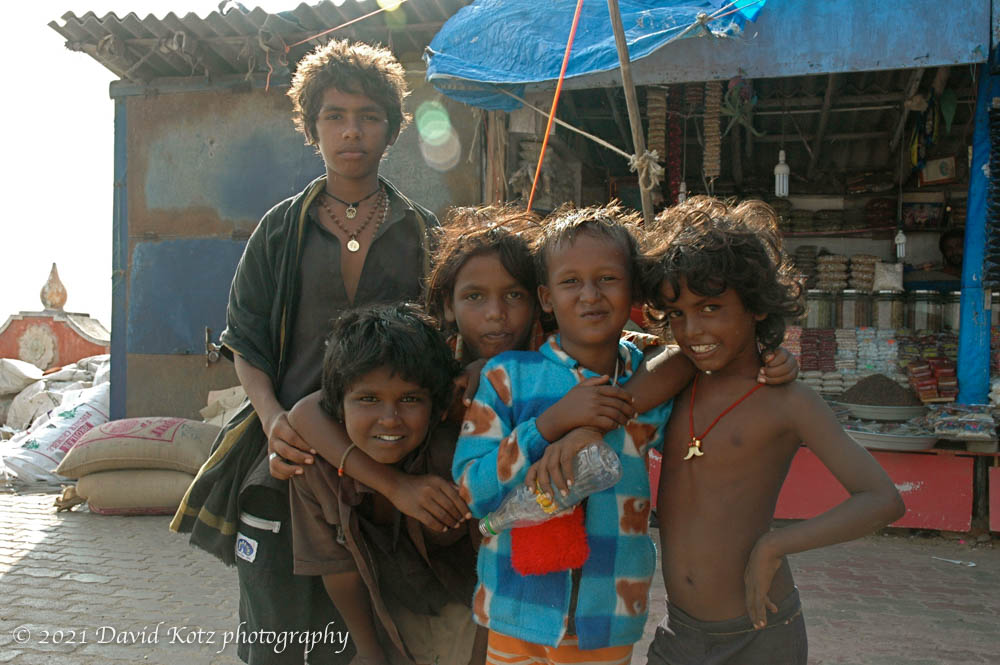
Kanyakumari street children, Tamil Nadu. December 2008.
After spending nine months in India we have grown attached to the place. India is a beautiful country filled with wonderful people. It is full of success stories – like the IT boom in the past decade – but it is also full of many challenges. Nearly a third of the people are in poverty, there is little care for the environment, and the educational system largely fails its children. We are planning to donate substantially to several charities that serve the children and environment in India. After asking around, here are some of the charities recommended by colleagues:
* These can take donations from the US, in US dollars, and are tax-deductible in the US. It may also be possible to donate to the others via wire transfer, but I’m not sure whether they are tax-deductible in the US.
This post was transferred from MobileMe to WordPress in 2020, with an effort to retain the content as close to the original as possible; I recognize that some comments may now seem dated or some links may now be broken.
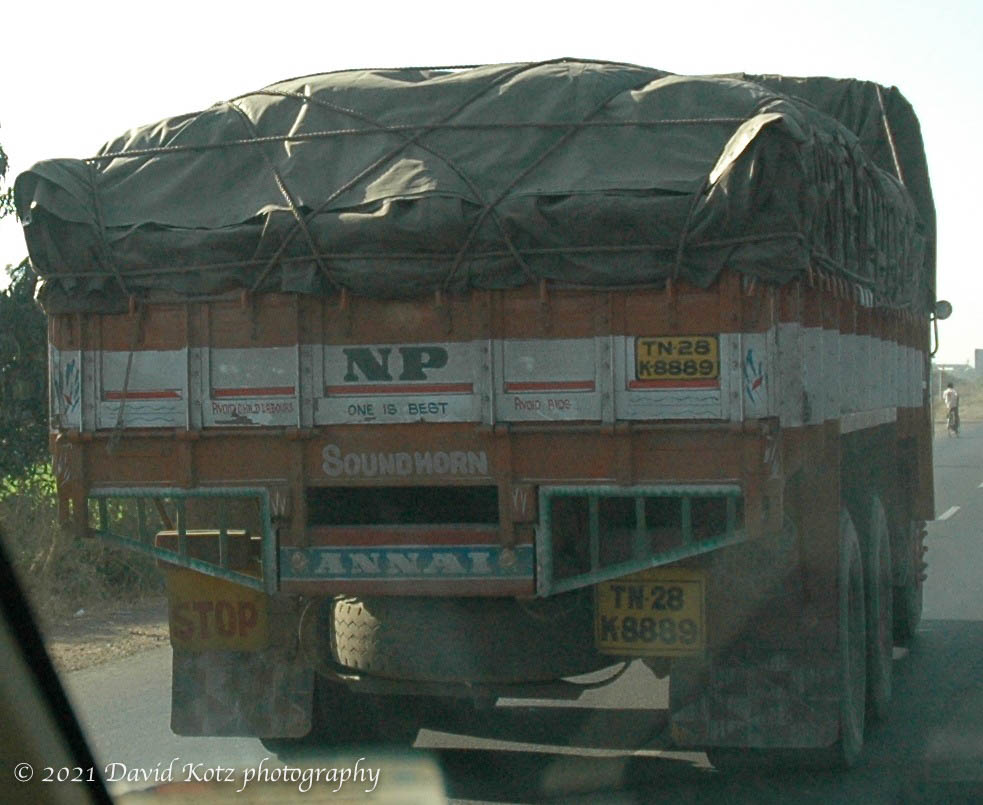
India’s big trucks – “goods carriers” – are always colorfully painted and usually say something like “HORN OK”. But occasionally I see a social message, like “One is best” or “We two ours one”.
“One is best”, an old slogan, painted on a truck in Maharashtra, India.
India has long struggled with poverty and a rapidly growing population. Decades ago, the government launched aggressive campaigns for family planning and even sterilization. (Nandan Nilekani’s book has a searing indictment of those programs, which often led to abuse when some health workers sought to meet their monthly sterilization quota.)
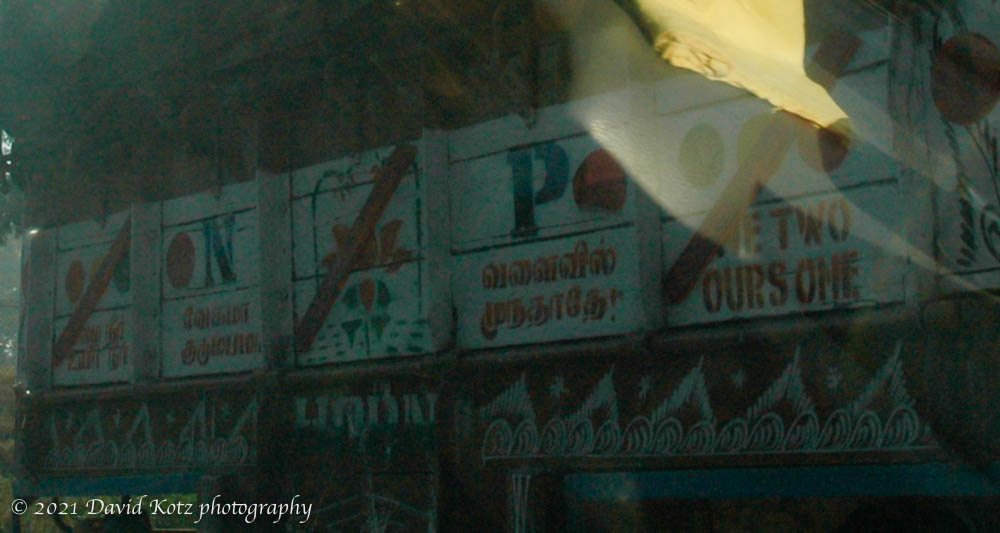
I still see the occasional sign or message referring back to this campaign, like the truck below that refers to “We two ours one.” I asked the taxi driver what it meant, and he explained to me that it referred to a married couple (two) who were to be encouraged to have just one child.
“We too ours one”, an old slogan, painted on a truck in Maharashtra, India.
This post was transferred from MobileMe to WordPress in 2020, with an effort to retain the content as close to the original as possible; I recognize that some comments may now seem dated or some links may now be broken.
Cellular telephony is spreading rapidly across India.
Recently, it was widely reported in the US media that cellphone-only households (20.2%) outnumber homes with only a landline [SF Chronicle].
In India, on the other hand, “There are 65 times more cellphone connections than broadband Internet links, and the gap is widening” [NYT]. India is a very young country – the median age is something like 20 years – and they are adopting mobile technology rapidly.


 David Kotz