Agra

Agra is more than the Taj Mahal!

After our early-morning visit to the Taj Mahal [location] we returned to our hotel and spent the rest of the day visiting other sights in Agra. Inded, the city of Agra [location] has many interesting sights other than the Taj Mahal! We visited the Itmad-Ud-Daulah, the Agra Fort, and a marble-inlay shop. Read on!

John and Mara greet the hotel guard at ITC Mughal, Agra.
Continue reading “Agra”

Taj Mahal

Overwhelmingly impressive, stunningly beautiful.

Everyone has seen the canonical photos of the Taj Mahal, all beautiful, but none of them really prepare you for the experience of visiting the place yourself.  The Taj is, quite simply, stunningly beautiful, exquisitely crafted, and a marvel of engineering and art, nearly 400 years old. It is made entirely of white marble, exquisitely carved and inlaid with semi-precious stones.  All of the colors and design work you can see (up close) are inlay, not paint.  Even the arabic letters conveying quotes from the Koran are inlaid stone. Read on!

Family photo at the Taj Mahal! Mara, Pam, John, David, Andy.
Continue reading “Taj Mahal”

On to Agra

On the road to Agra, we pass thousands of pilgrims.

We’re moving upstream against a river of humanity, as we drive eastward toward Agra. We’ve just left Rajasthan and entered Uttar Pradesh.  On the other side of the road is a steady flow of Hindus, walking 200km or more on their pilgrimage into Rajasthan. On Monday there is a huge 9-day holy festival (Navratri, I believe), which we’re told will attract 100,000 pilgrims on foot and 100,000 more by train, plane, or car.  Along the roadside, individuals and organizations have set up tents, chairs, water stations, and food, as a charitable service to the pilgrims.  The people are cheerful, waving colorful red banners and chatting among themselves.  A few children ride on bicycle carts, but most folks balance their few travel needs on their head. 

India. Ranthambore to Agra. People.

Today began before dawn, so we could catch an early morning train from Ranthambore to Bharatpur; our driver picked us up there for the two-hour trip to Agra.  Along the way we visited Fatehpur Sikri, the capital of the empire of India from 1571 until 1585 [location]. This impressive city, made almost entirely of red sandstone, was built by the Mughal emperor Akbar, son of Humayan (see blog entry about Delhi) and grandfather to Shah Jahan (who built the Red Fort in Delhi and the Taj Mahal, among other things). “Fatehpur Sikri is regarded as Emperor Akbar’s crowning architectural legacy” [Wikipedia]. Akbar, a Muslim like all the Mughal emperors, was remarkably cross-religious, marrying a Hindu princess from Amber (Jaipur, which we visited a few days ago) as well as Muslim queens.  He is a fascinating and deep character, though; read his Wikipedia page for much more.

the 5-story Panch Mahal at Fatehpur Sikri.

The patio of one courtyard embeds a huge game board, on which members of his harem were the ‘pieces’ that could be moved about the game board. 

See photos of our journey and of Fatehpur Sikri.


This post was transferred from MobileMe to WordPress in 2020, with an effort to retain the content as close to the original as possible; I recognize that some comments may now seem dated or some links may now be broken.

Ranthambore National Park

A safari in the heart of India.

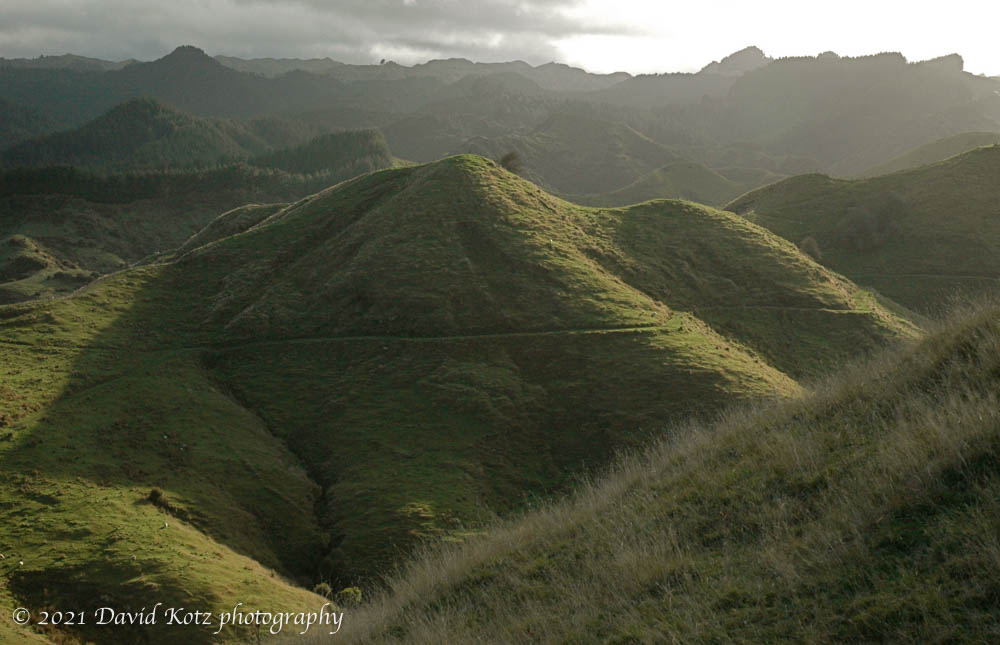
Ranthambore National Park [location], named for the 1,050-year-old Ranthambore fort within, is a sprawling 400-square-kilometer reserve for wildlife. It is most famous for its population of Royal Bengal Tigers, which currently number 36. We were lucky to see one up close, but there are many other beautiful animals and birds, including jungle cat, spotted deer, sambar deer, antelope, wild boarlangur (right), crocodile, turtle, egret, heron, stork, peafowl, treepie, kingfisher, parakeet, lapwing, and ducks.  Not to mention many, many homo touristicus, crammed into 20-seat topless buses and wielding cameras. Read on – we saw a tiger! and See lots more photos.

homo touristicus, in 20-seat open buses.
Continue reading “Ranthambore National Park”

Jaipur to Ranthambore (Rajasthan)

Rajasthan is a colorful place.

The drive from Jaipur to Ranthambore only lasted about four hours, but was a fascinating trip through rural Rajasthan. I was able to capture many pictures of farm and village life.  Although only a fleeting glimpse, it was an interesting peek into a lifestyle that, in many ways, appears to be similar to the way it has been for hundreds of years.  Camels are the primary pack animal, the scythe is the tool for harvesting wheat, and pounding and shaking the way to separate wheat from chaff.  The roadsides are lined with cowpatties drying in the sun, to be used as fuel for cooking fires.  Many are packed into dung-and-straw boxes – some decorated quite attractively, to keep them dry even during the monsoon.  We passed a camel train of gypsy nomads.  Children wave from their front yards.

A common pack animal, camels are often decorated (Jaipur).

Read on…

Continue reading “Jaipur to Ranthambore (Rajasthan)”

Jaipur

Jaipur, a city with tremendous history.

Jaipur is a fascinating city [location].  One thousand years ago the Hindu kings built a huge fort and palace, surrounded by an 18km wall, on the nearby hills.  They ruled the area for 900 years, and the current king is the 40th generation of the same family!  About 400 years ago, they moved their palace to the valley – due to difficulty in maintaining a good water supply in the hills – forming the planned city of Jaipur. The current maharaja (king) is, of course, only a figurehead, but the forts and palaces are stunning. Read on!

the Amber Fort, just outside town.
Continue reading “Jaipur”

Back to Delhi

First stop on a tour of northern India.

We returned to Delhi, where we met up with Pam’s sisters Amy and Karen, and niece Louisa.  We’ve embarked on a tour of northern India, specifically Delhi, Jaipur, Rathambore, Agra, and Varanasi. Read on.

Top of India Gate.
Continue reading “Back to Delhi”

“IT for all”

The BJP outlines their technology vision.

Today one of India’s leading political parties, the BJP, documented their vision for the use of Information Technology to “help India overcome the current economic crisis; create productive employment opportunities on a large scale; accelerate human development through vastly improved and expanded education and healthcare services; check corruption; and make India’s national security more robust.”

The list includes some pretty aggressive goals; I highlight some of the more interesting items in the quotation below. Please note that my quoting this information is in no way meant as an endorsement of the BJP. Although I’m skeptical of whether these goals could be achieved at the scale and in the timeframe they propose, such a pervasive use of technology would bring many exciting new opportunities – and new risks if the devices or the infrastructure was not secure.  There is some press coverage here.

“The highlights of the 30-page IT Vision document are:

  1. Multipurpose National Identity Card (MNIC) with unique Citizen Identification Number (CIN) for every Indian citizen in 3 years; to replace all other identification systems.

2. 1.2 crore (12 million) new IT-enabled jobs in rural areas.

3. 1 crore (10 million) students to get laptop computers at Rs 10,000 [$200]. Interest-free loan for anyone unable to afford it.

4. National Digital Highway Development Project to create India’s Internet backbone, and Pradhan Mantri Digital Gram Sadak Yojana for last-mile access even in the remotest of villages.

5. Broadband Internet (2 Mbps) in every town and village, at cable TV prices (less than Rs 200/month).

6.All schools and colleges to have Internet-enabled education.

7. 100% financial inclusion through bank accounts, with e-Banking facilities, for all Indian citizens. Direct transfer of welfare funds, preferably to the woman of the house.

8.Every BPL family to be given a free smart mobile phone, which can be used by even illiterate users for accessing their bank accounts.

9. Number of mobile subscribers to be increased from 40 crore at present to 100 crore in five years. Internet users to equal mobile subscribers. India to equal China in every IT parameter in five years.

10. Video conferencing to be made affordable and universally accessible.

11. Primary Health Centre in every village to be linked to the National Telemedicine Service Network.Basic health insurance scheme for every citizen, using the IT platform. Cashless hospitalisation.

12. India’s ranking in the United Nations’ Human Development Index, which is currently 128, to be improved to 50 in five years, with the long-term objective of bringing India within Top Twenty by 2020.

13. Massive expansion in the use of IT in agriculture, rural development, SMEs, retail trade, and informal and unorganised sectors of the economy.

14. National e-Governance Plan to cover every Government office from the Centre to the Panchayats. The ‘E Gram Vishwa Gram’ scheme, launched by Shri Narendra Modi in Gujarat, to be implemented nationwide.

15. Government spending to be made corruption-free. A former Prime Minister had once said, “If I put Rs. 100 in the pipeline in Delhi, only Rs. 15 reach the end beneficiary.” In contrast to Congress governments’ Leaky Pipeline, the BJP’s IT Pipeline will ensure 100% benefit to people. Those who misappropriate public funds will be punished.

16. All post offices to be converted into IT-enabled Multi-Service Outlets. All telephone booths to be upgraded to Internet kiosks.

17. Citizens will have a simple 1-800 BSNL Toll Free Number, which will be accessible 24x7x 365 days of the year, to contact their Member of Parliament.

18. Unlimited VoIP access to all

19. e-Bhasha: National Mission for Promotion of IT in Indian Languages.

20. Special focus to bring women, SC/STs, OBCs and other weaker sections of society within the ambit of IT-enabled development.

21. Use of IT for the protection of India’s priceless cultural and artistic heritage.

22. Government to standardise on ‘open standard’ and ‘open source’ software.

23. Domestic IT hardware industry to be aggressively promoted to minimise dependence on imports.

24. Domestic hosting industry to be promoted to minimise international bandwith [sic] charges.

25. An independent body, Digital Security Agency (DSA), to be set up for cyber warfare, cyber counter-terrorism, and cyber security of national digital assets.


This post was transferred from MobileMe to WordPress in 2020, with an effort to retain the content as close to the original as possible; I recognize that some comments may now seem dated or some links may now be broken.

Mangos!

Mango season is here!

I’ve been a fan of mangos for years, but the ones we get in NH are nothing like the fresh mangos we get here! Mango season has arrived, and they are sogood.  So ripe, so sweet, so tasty.  We eat several kilograms a week, and have tried several different varieties. At first, the kids turned up their nose, but one day Mara decided that she’d have a little taste.  Next thing you know, she devoured two and a half mangos.  John and Andy dug into some too – things got a little messy!

Mara discovers the wonders of fresh mangoes.

This post was transferred from MobileMe to WordPress in 2020, with an effort to retain the content as close to the original as possible; I recognize that some comments may now seem dated or some links may now be broken.