
We decided to spend the day visiting Dover, a seaside city to the east along the English Channel. Famous for its chalky white cliffs, and for its history. Because it is the closest point in the United Kingdom to France and the continent, it has been strategically important for centuries. We spent most of our time at the Dover Castle atop the cliffs, where we toured the underground tunnels cut for military use in the 1790s and used extensively during World War II.
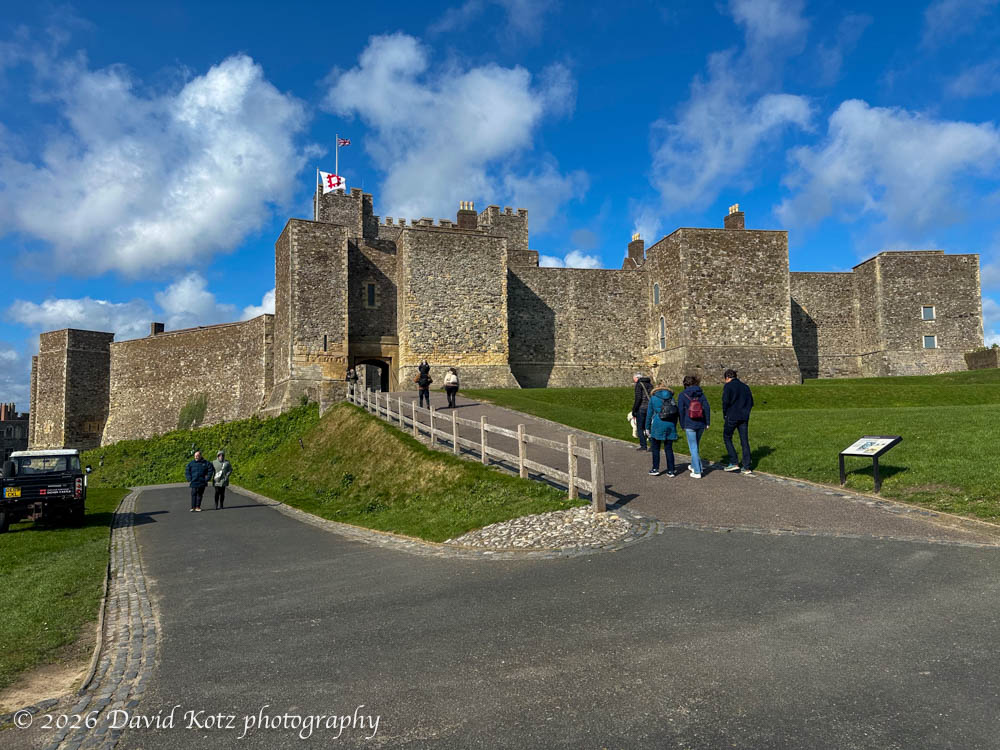
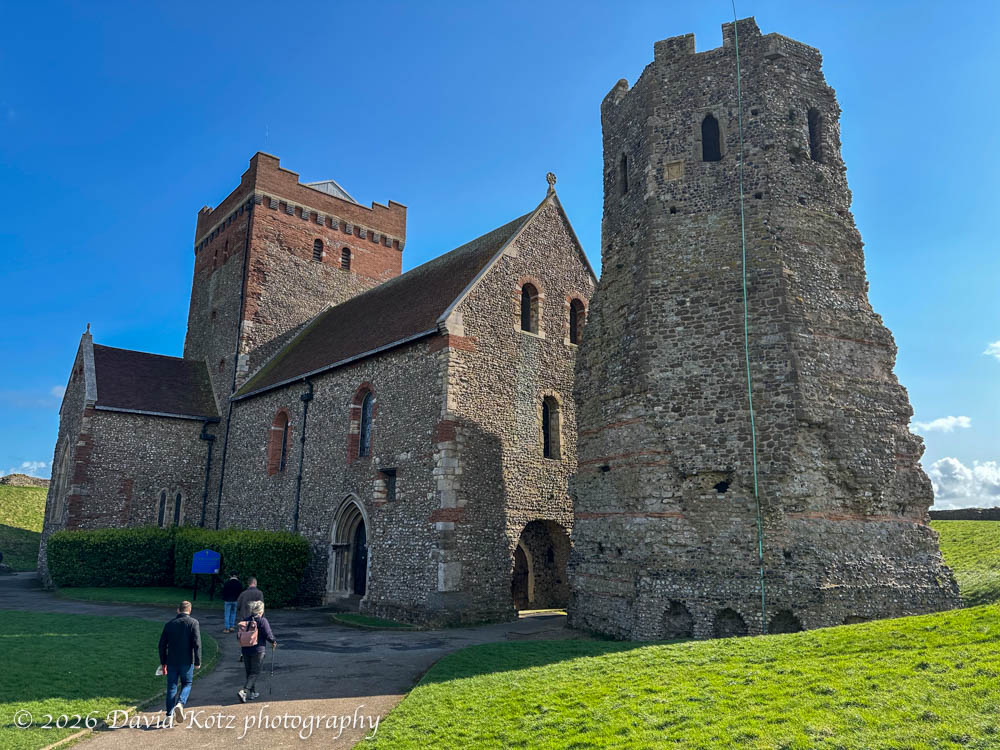
From the hilltop complex of buildings and nested fortifications, built and revised over centuries, we could see the French shoreline if we squinted through the sunshine and haze. Huge ferries came and went from the harbor terminal immediately below, carrying passengers and freight between Great Britain and the continent. We spent some time wandering the complex, visiting the earliest structure – a lighthouse (pharos) built by the Romans, a church later added by the English, and the castle itself.
Perhaps most interesting, and surprising, was an interactive multimedia tour conducted deep underground. During World War II, the underground network of tunnels and rooms were refined and expanded, housing officers and troops and forming a command center with space for telecommunications, planning, and mission oversight. The focus of the presentation was the Dunkirk evacuation, a logistically phenomenal operation that evacuated more than 338,000 Allied soldiers to Dover – in a matter of days – as the German army swept across France. I have no photos – photography was not allowed underground.
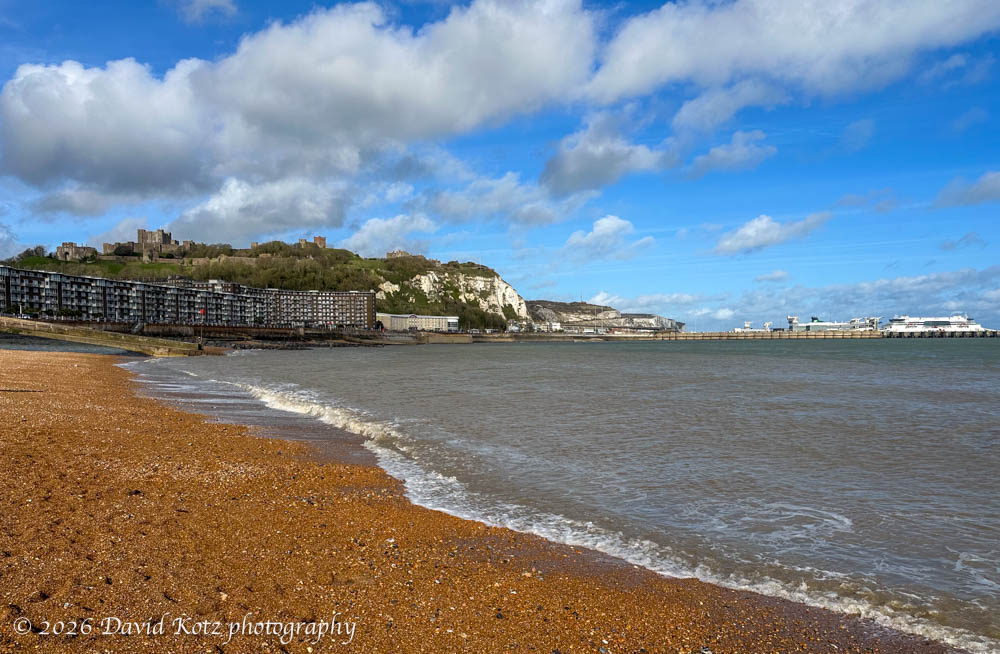
After a bite to eat at the castle café, we descended back to town and explored the shoreline. To the north, under the imposing cliffs, it was rather industrial and the roads were busy with heavy traffic to and from the ferry terminal. To the south, into the town itself, we explored the stony beach and shopping district, before returning home. Check out the photo gallery for more.

 David Kotz