
The ancient site of Stonehenge is one of those world-heritage sites that really must be on anyone’s life list. It’s only two hours from London, so I’ve been eager to visit. And, because it was designed with exquisite solar alignment to the winter and summer solstices, with winter solstice being (likely) the more significant date, I sought to arrange our visit for yesterday, the winter solstice.
My research quickly dispelled that notion. Stonehenge was anticipating thousands of people to show up for sunrise, many of whom would need to walk miles alongside the road (in the pre-dawn dark) from remote parking locations. All the tour operators were sold out, and would require departing London before 4am. I decided, instead, to book a private tour for the day after solstice. Wow, was that ever a good move!

First, as it happens, the weather was gray and misty, and the sun never shone, on the morning of winter solstice (as I discovered during my outing to Primrose Hill here in London). Today, the moody clouds offered moments to view the stones in neutral shade and other moments of bright low-angle sun with lengthy shadows. (We toured the site from about 10-11am; sunrise had occurred just after 8am.) Second, there were no crowds! I think there were perhaps one hundred people scattered about the site as we strolled around. We could see, though, the muddy strips of grass trodden by thousands of people who visited yesterday.

I won’t elaborate on the impressive history of this site – which was important for centuries before the famous stones were erected about 4,500 years ago. The English Heritage website and Wikipedia website are a great place to start. I look forward to reading more about its history, archaeology, engineering, and evolving cultural significance; and, I hope to return one morning when it is possible to arrange access inside the circle, which (thankfully) is normally not allowed. (Primarily to prevent damage to the stones, it also allows the site to be visually unobstructed for those, like us, who walk the path around the monument.) I also hope to visit some of the many ancient sites that surround the well-known stones; the surrounding landscape, also protected, is teeming with hedges and barrows as far as the eye can see.
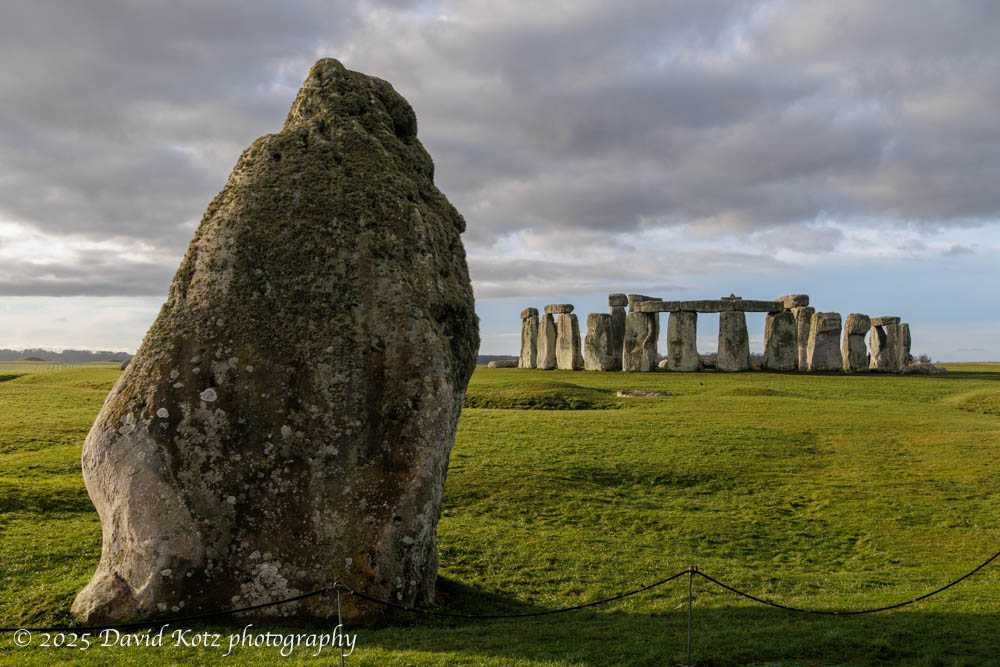
I encourage you to visit the full gallery, which showcases Stonehenge from multiple angles and in different light. Full disclosure: although the site was not crowded, I removed some people from the background of the photos during post-processing.
Windsor Castle and Salisbury Cathedral
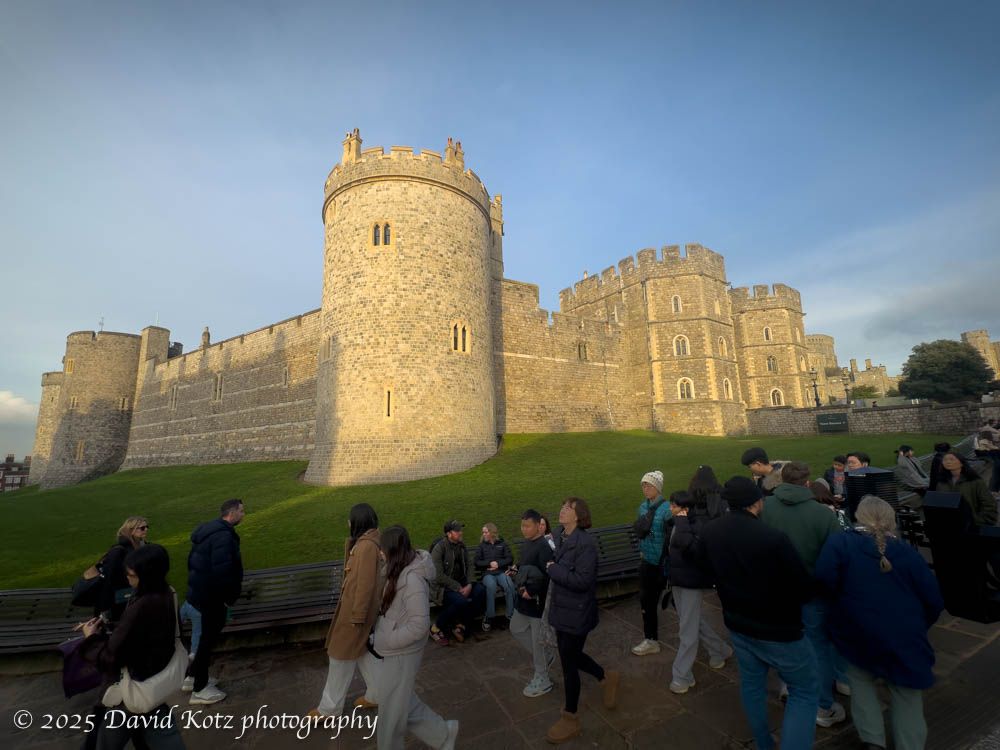
As part of our day-long outing from London we also visited Windsor Castle (for the self-guided audio tour of the State Apartments) and Salisbury Cathedral (where, due to lack of time, we did not explore inside). I don’t mean to diminish either site, which were wonderful and well worth the visit, but will leave you to explore the photo gallery.
Acknowledgements
Finally, a shout out to David, our wonderful tour guide! His explanations and commentary made a huge difference in our understanding and appreciation of this historic site, and provided door-to-door transportation from our home in London. I encourage you to look him up through his website, or through the broker we used (StonehengeTours.com).

 David Kotz