
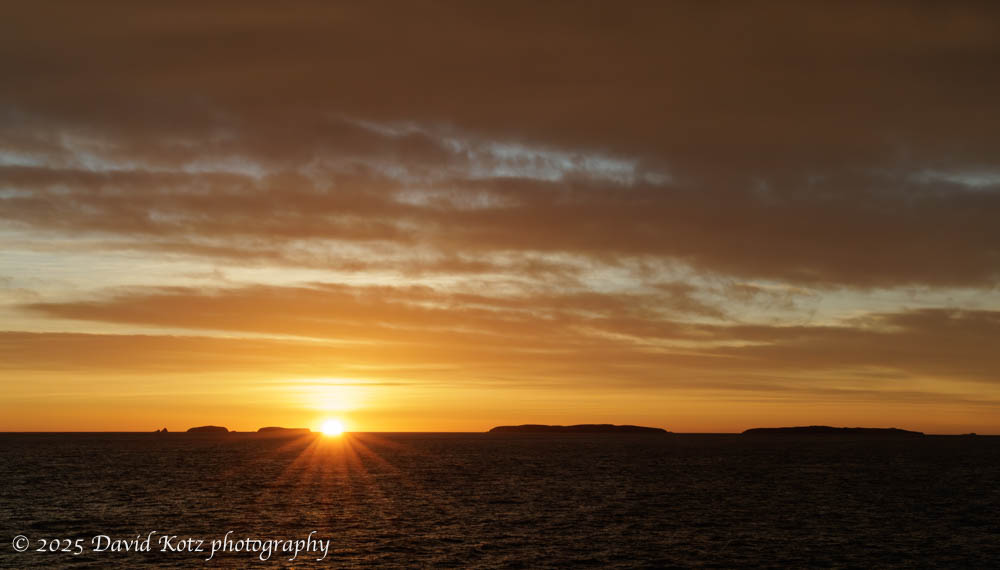
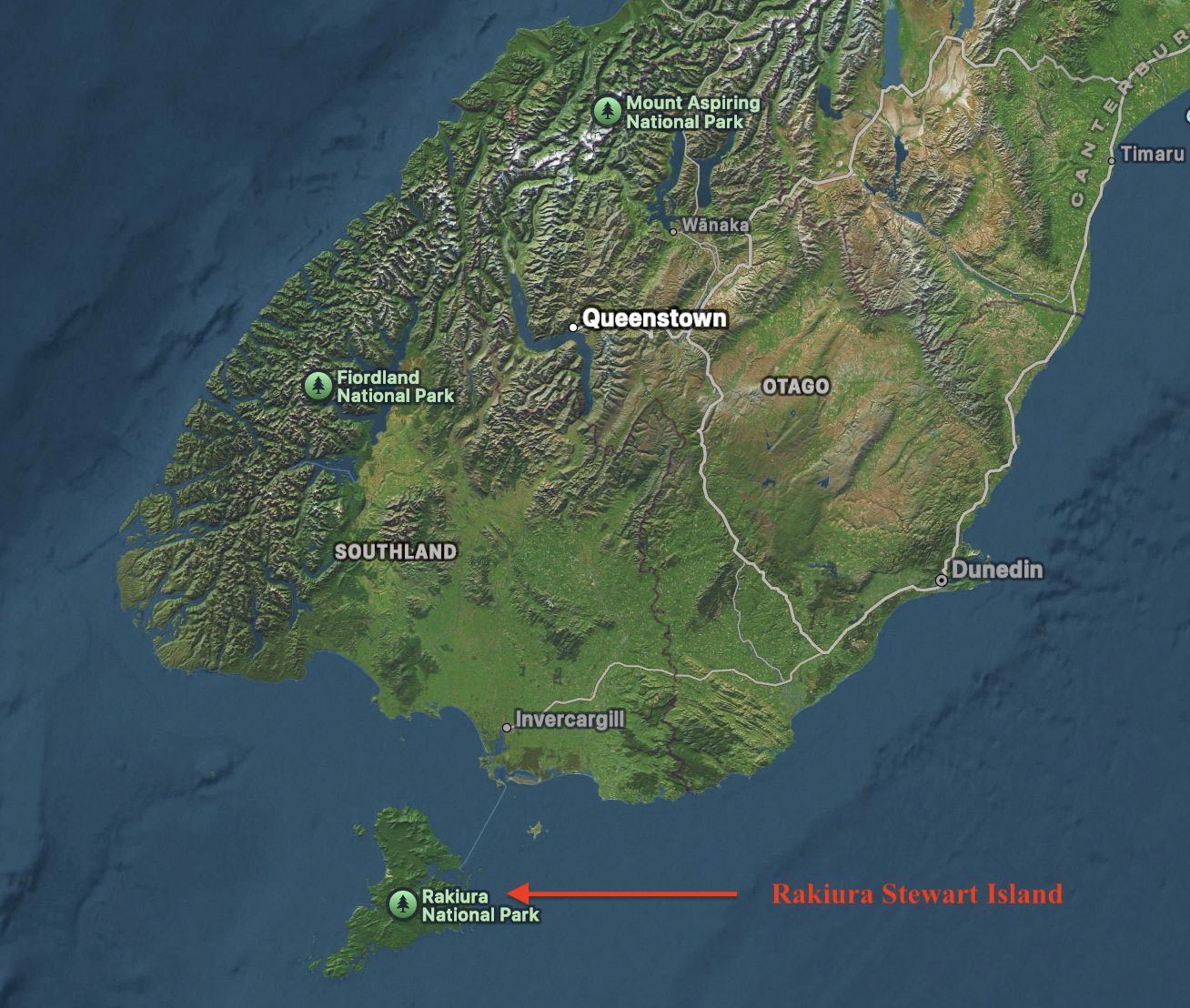
As the Heritage Adventurer cruised around the southern tip of New Zealand, leaving the fjords of the southwest behind, we eased into the strait at the southern tip of the mainland (aka, south New Zealand) under a spectacular sunrise. Our goal for the day was to explore two of its offshore islands.
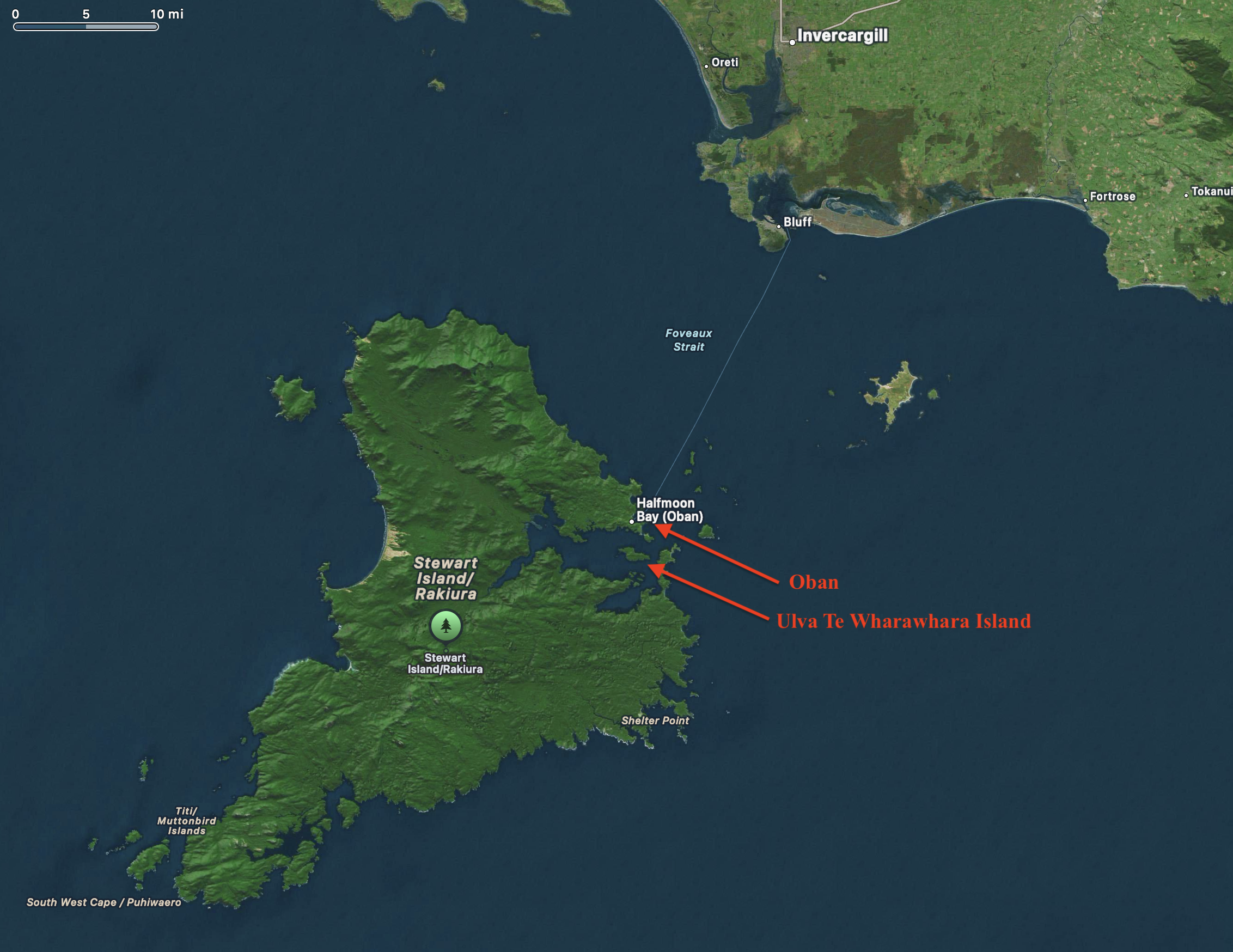
We spent the morning on a guided walk of Te Wharwhara (or Ulva) Island. This small island (now mostly a national park) has been declared pest-free after decades of effort eradicating the invasive predators like rats, stoats, and mustelids, and some of its non-native trees — allowing it to be a haven for some of the rare and endangered native species. We strolled along well-maintained gravel paths, made at great effort and expense by importing gravel from the mainland, after carefully screening and washing the gravel to ensure no stray seeds might make their way into this delicate ecosystem. We saw (or heard) many species of birds, flowers, and insects, including this stuffy-looking wood pigeon.

In the afternoon we were set loose to explore the village of Oban on a larger, neighboring island known as Rakiura or Stewart Island. I appreciated the chance to stretch my legs and headed out at my own pace, quickly climbing to the high point where I could get an overview of the area.

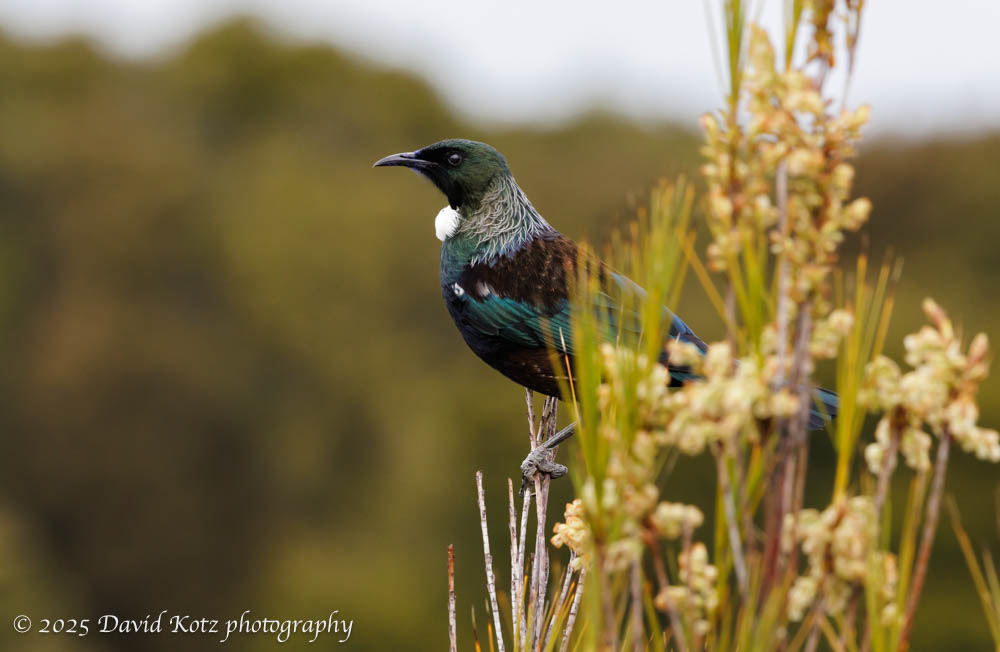
Here, in the sea breeze, I finally had a chance to snap a clear photo of the beautiful Tui bird.
After a stroll along the road into and through the village, I found a national-park trail back to the harbor where our boat was located, and decided to take another dip in Nature. Alone for the first time in the temperate rainforest of southern New Zealand, I took a moment to record some of the sounds of this beautiful place [44s video]. My peaceful moment didn’t long, as a flock of juvenile homo sapiens came running along the trail, full of noise and youthful energy… apparently, the village schoolchildren were all out for a scavenger hunt, criss-crossing the town in search of notes hidden by their teachers.

Finally, this day offered many examples of the tools and techniques used by the Department of Conservation to eradicate invasive predators that have been so harmful to the endemic species of New Zealand. Baited traps were a frequent sight along all the trails; at one point, I encountered a pile of new traps, waiting for deployment, each decorated by local schoolchildren as part of the broader education campaign. Along one street in Oban, though, I noted a poster from a group that opposes the use of poisonous bait, a point of controversy in this long-term battle for the integrity of the New Zealand ecosystem.

OK, enough for today. Please check out my photo gallery for more birds, plants, and scenery!

 David Kotz
Awww – Raikiura/Stewart looks amazing! One of my hardcore shipmates told me of hiking the length of it after one of our deployments, and visiting has been on my list ever since. But I’d never seen pictures like you shared, so now it’s *really* on my list!