
[part of a series of posts beginning here]
As we cruised the fjords on the southwest coast of Greenland, we had several opportunities to learn about the cultures of Greenland – historic and contemporary – and to visit archaeological sites, small villages, and busy towns. This post focuses on two historic settlements, each now recognized as a UNESCO world heritage site. Read on for more…
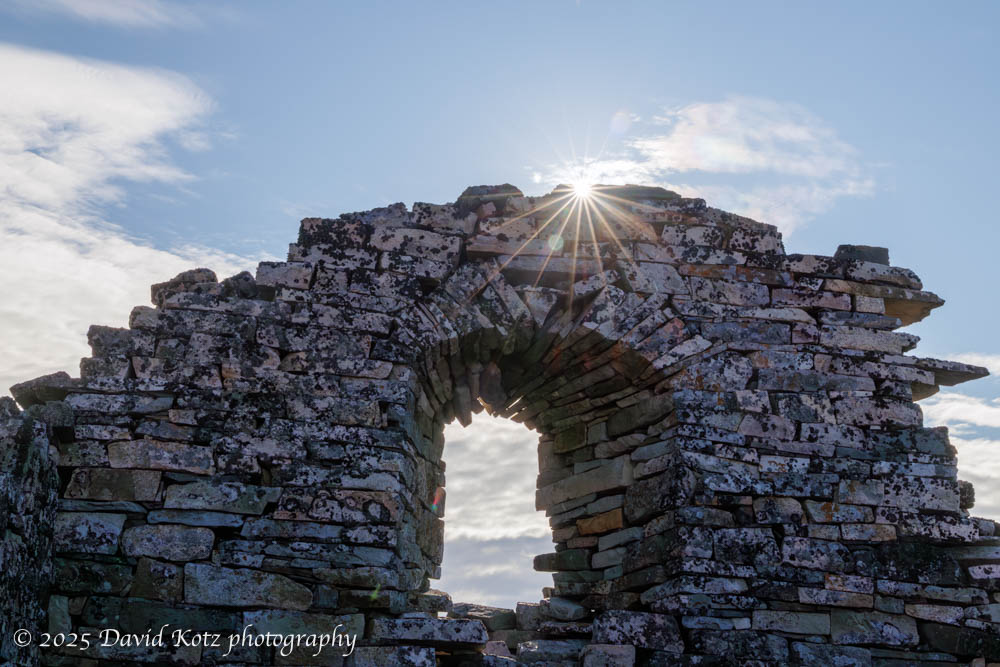
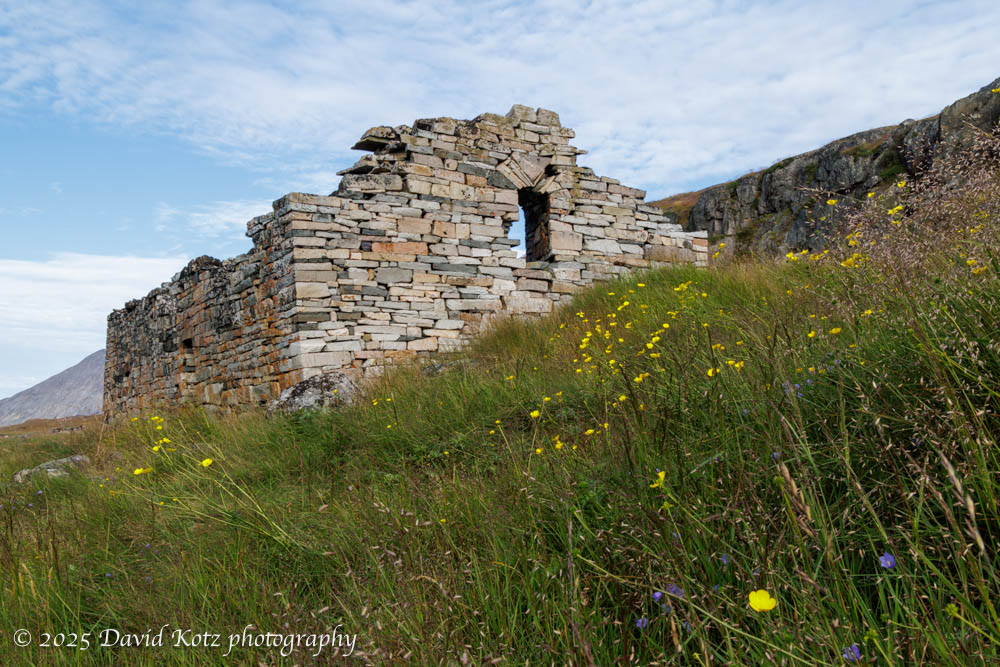
The expedition staff included an Arctic archaeologist who specializes in Greenlandic archaeology, to help interpret these ruins and to describe the challenges of Arctic archaeology. At Hvalsey, we walked through the ruins of one of the earliest Norse settlements – established by Erik the Red’s uncle in the late 10th century and occupied for about five hundred years. The walls of the church, and a longhouse, still stand. Indeed, the 14th-century stone church is the best-preserved structure remaining from the Norse era in Greenland, and includes intact window frames that may have once held stained-glass windows. Our resident archaeologist provided broad context and a local guide joined us for a more detailed explanation. Visit my photo gallery to see more.
The next day we visited Brattahlíð, the other location where Erik the Red established a settlement in 982 CE, having been exiled from Iceland. (Coincidentally, during our trip to Iceland last summer, we visited the ruins of his earlier settlement, where he had settled after being exiled from Norway!) Here, in a small sheep-farming community known as Qassiarsuk, we encountered a monument installed in 1982 to celebrate the 1,000 year anniversary of the Norse arrival. After a short walk to the edge of this tiny contemporary community, we viewed the ruins of a Norse longhouse and church, and went inside reconstructions of the same. The tiny church is believed to be the first church built in Greenland – indeed, likely the first church in the Americas!
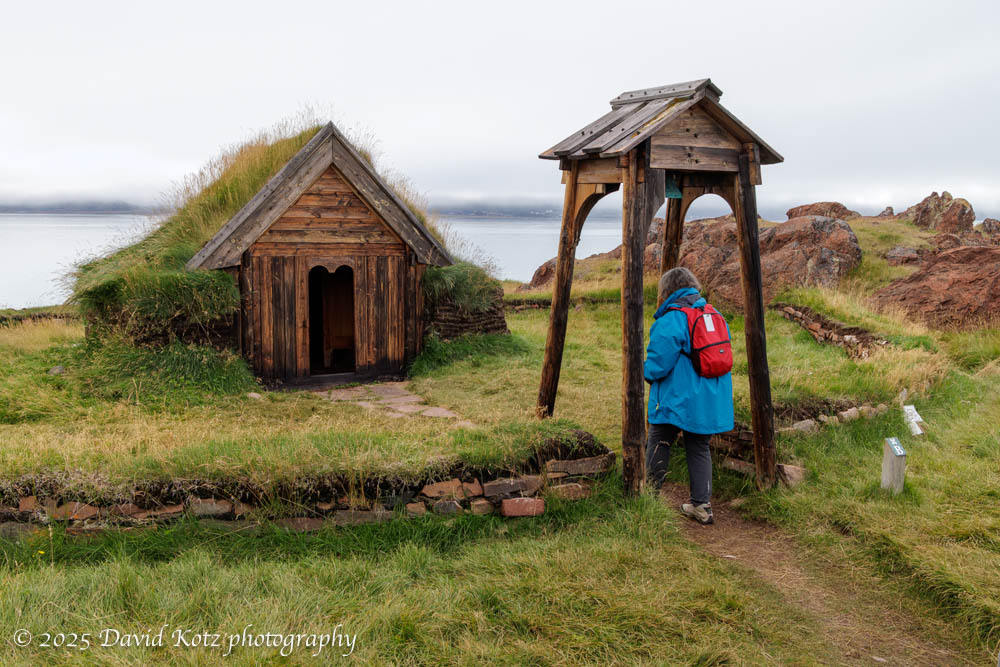
Local guides explained these ruins (and their reconstructions) and told us stories derived from Inuit and Norse oral traditions. I later learned that Erik’s son Leif used this settlement as a point of departure for explorations that led him to reach Vinland (Newfoundland).
See my photo gallery from the ruins at Brattahlíð. We’ll return to this location, the current settlement of Qassiarsuk, in my next post.

 David Kotz
My dad spent the summer of 1956 on the Greenland Ice Cap with a SIPRE (now CRREL) expedition.
His journal is available at Dartmouth’s Rauner Library:
https://search.library.dartmouth.edu/permalink/01DCL_INST/16rgcn8/alma991027473429705706
Rob Christie