
Back in August 2022 I posted “what’s in my pack“, detailing the content of my summertime hiking backpack – at least, the heavier model that I use when I want to carry my full-sized camera. In winter, however, I carry a much larger pack because I need to carry more warm clothing and more emergency gear. Read on to find out what’s different about my winter pack.
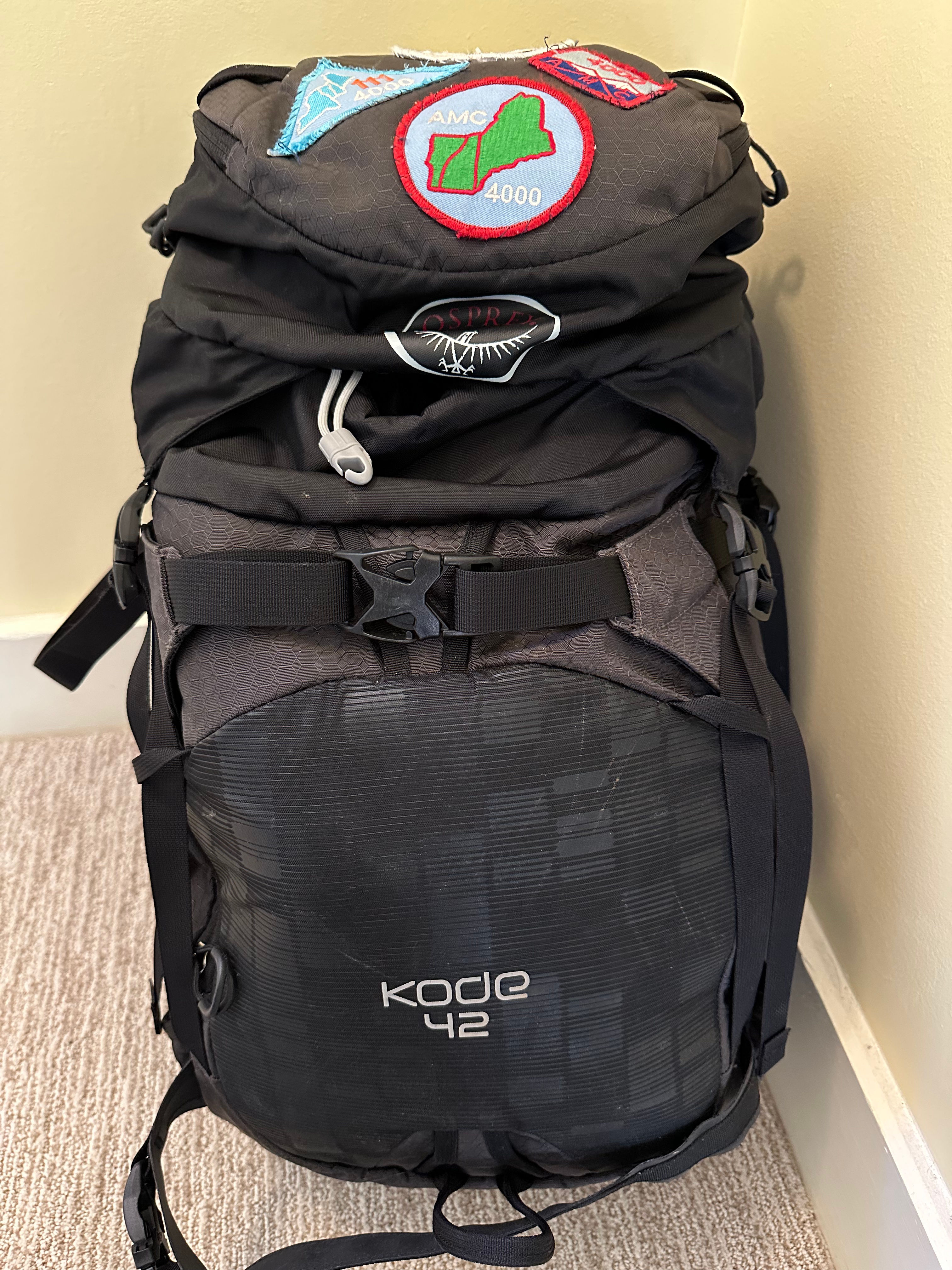
My winter pack, shown above, weighs more than 8kg (18.5 lb) when I checked it today. Part of the reason is the backpack itself – which is larger and heavier than either of my summer backpacks. I also carry extra/different gear.

I carry sunglasses (for bright, sunny days in snowy terrain) and ski goggles (for wind-blasted summit conditions). A thermos is heavy but, wow, that warm herbal tea really hits the spot when it is cold out. A wide-mouth Nalgene water bottle is usable even when partly frozen, unlike a water bladder with a frozen drinking tube. Hand and toe warmers are essential, at least for me. I add a metal Sierra cup and candle to my emergency pack… the latter to help as a fire starter, and the former as a tiny pot in which I could melt snow if needed. Heavy gloves and mittens are critical to keeping my fingers safe.
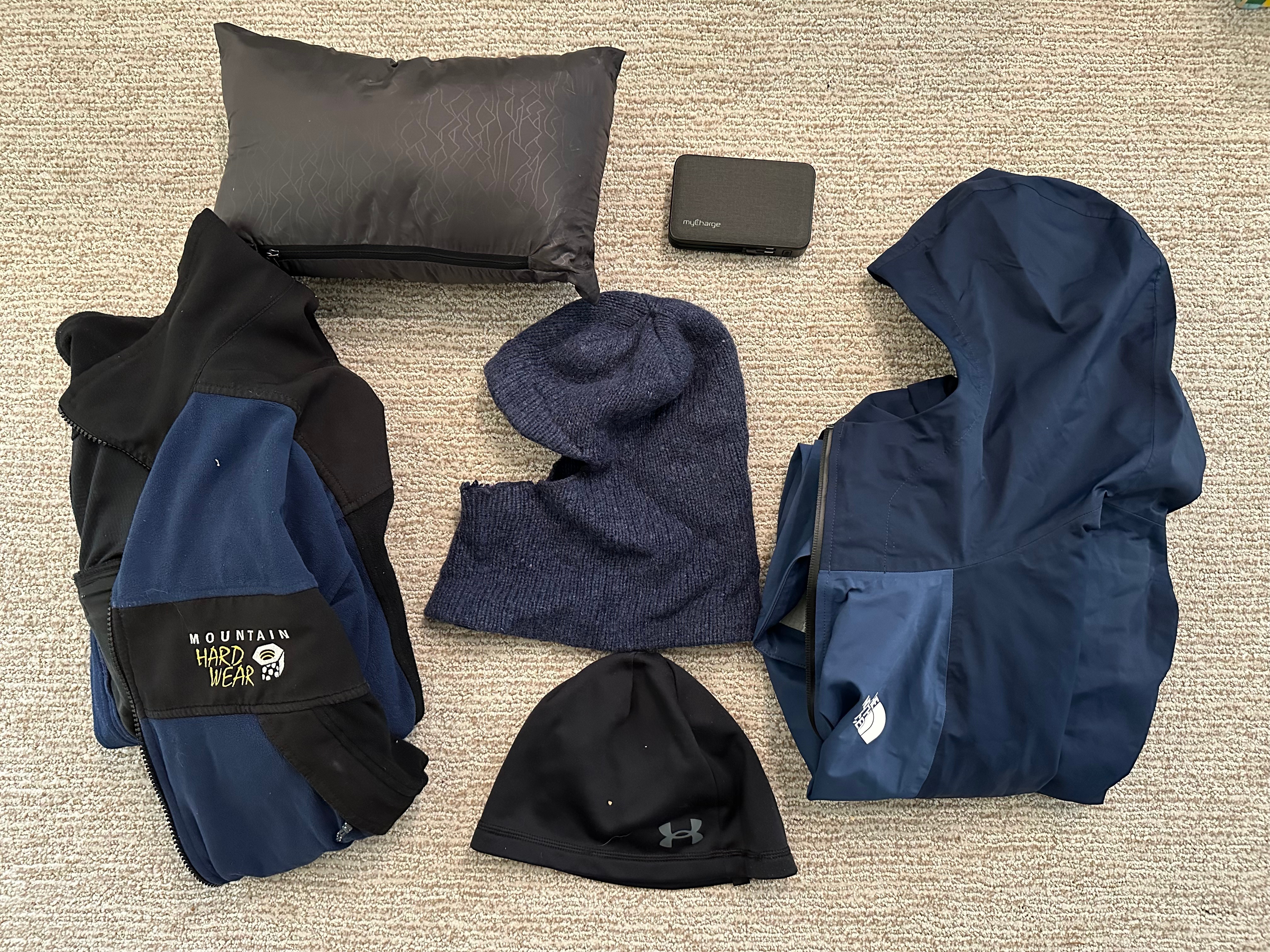
For clothing, what I carry is not all that different; I always bring my fleece and shell, and a thin hat, even in summer. In winter I add a wool balaclava and an light down jacket. I think of the latter as the “layer I hope I’ll never use.” It stuffs into its own pocket, then zips shut, light and compact. In the photo you’ll also see a power bank (battery) – which is a replacement for the one I showed in my prior post. I carry a cellphone and a Garmin inReach Mini; neither are useful if their batteries die, so this bank provides backup power!
Not shown: I wear a warm base layer (long underwear), in addition to long-sleeve shirt and long pants; I may wear two base layers on extra-cold days, and add windpants if the conditions are windy or snowy.
But there is another difference. I have a lot more on my feet! I wear insulated winter boots, gaiters, and snowshoes. Together, these weigh more than 4kg (9lb). Compare that to my typical summer hiking boots (1kg, about 2lb) or my light summer hiking shoes (less than 500g, 1lb).
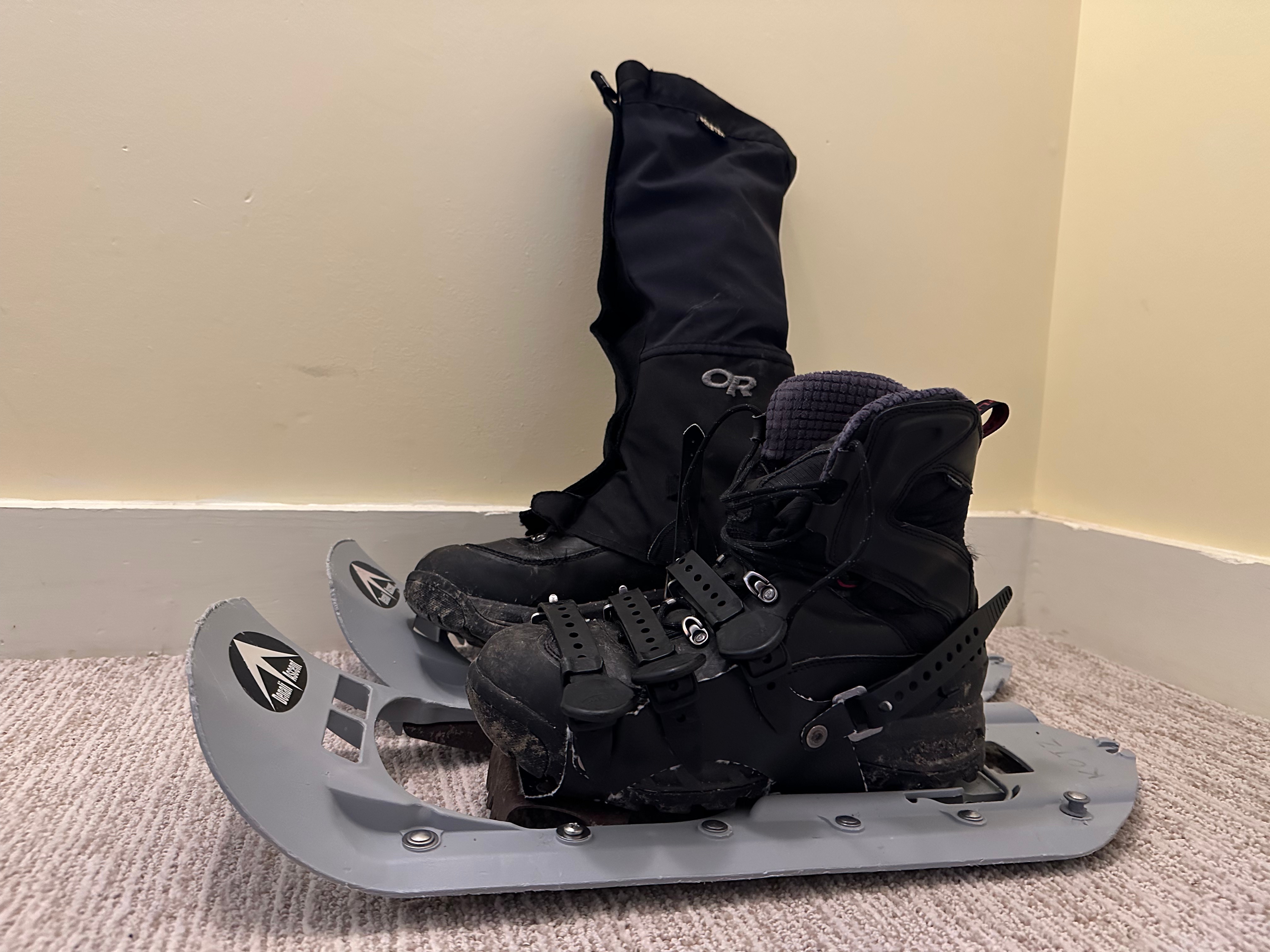
According to the 5 hiking rules of thumb, 1 Pound On Your Foot Equals 5 Pounds On Your Back. So 9 pounds on my feet equals 45 pounds on my back! Consider also that the snowshoes drag, a bit, with each step. Even though they are dragging on snow, the extra friction slows me down.
It’s no wonder that my winter ascents take longer! I have to haul all that extra weight up the mountain. I also have to stop more often in winter, to adjust layers or to adjust gear. On the other hand, winter descents are much faster! I can sometimes glissade (boot-ski) or slide (butt-slide), and the snow is more forgiving on the knees. On my most recent outing, it took me almost three hours to climb Mount Moosilauke, but only half that much going down.
Although we’ve passed the spring equinox, I’m still hoping for one or two more winter outings!

 David Kotz
One thought on “What’s in my pack – winter edition”