Well, that’s it for the Japan trip. Just a few more tidbits… read on!
Continue reading “Japan trip – redux”Japan trip – redux
Last post in the Japan series.

Last post in the Japan series.
Well, that’s it for the Japan trip. Just a few more tidbits… read on!
Continue reading “Japan trip – redux”We hop the Shinkansen bullet train to Tokyo, enjoy lunch, then explore.
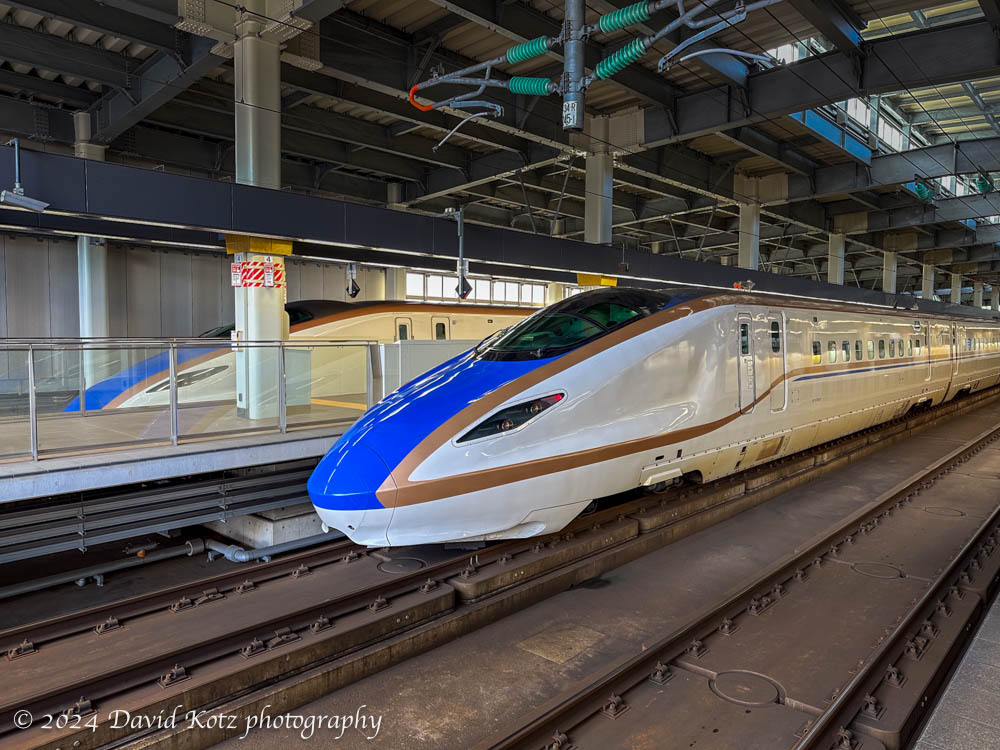
Today we disembarked for the last time, leaving the Resolution and boarding trains for Tokyo. In the Kanazawa train station we boarded the Hokuriku Shinkansen (bullet train), which left the station spot on time (Japanese bullet trains are never more than a few seconds late, and in 60 years have never experienced a single accident). Speeding at up to 260 km/h (162 mph) – and even faster between Omiya and Takasaki Stations, running at 275 km/h (171 mph) – we reached Tokyo in two and a half hours. Read on!
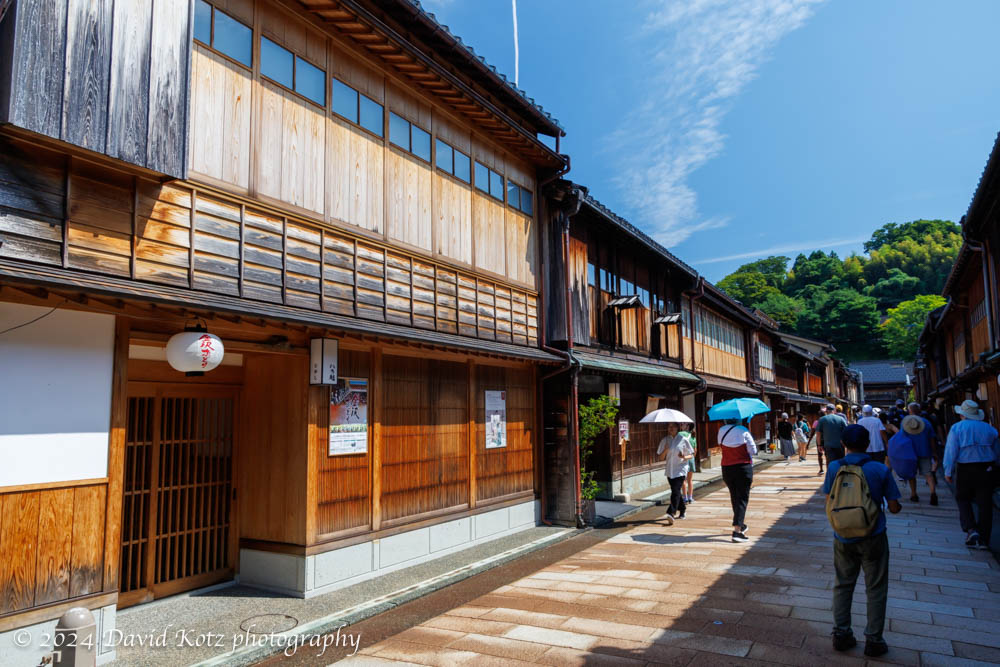
Our final port, Kanazawa. Historic Samurai home, Geisha district, and Kenroku-en garden.
After an overnight cruise we arrived in the port of Kanazawa. Known across Japan for its gold leaf, Pam went with a group to learn about the production of gold leaf and its application to jewelry and other uses. I spent the morning visiting two historic districts. The first was a Samurai village, including a historic Samurai house; it was interesting to walk through the preserved home and through a small neighborhood with other homes that retain the architecture of that period. We then visited a historic district that had been a center for Geisha (though here they refer to them as geiko), including a tour of a historic 1820 Geisha tea house (Ochaya Shima), now a museum. We strolled through streets retaining the historic architecture (with buildings now occupied by restaurants and souvenir shops). For the afternoon… read on!
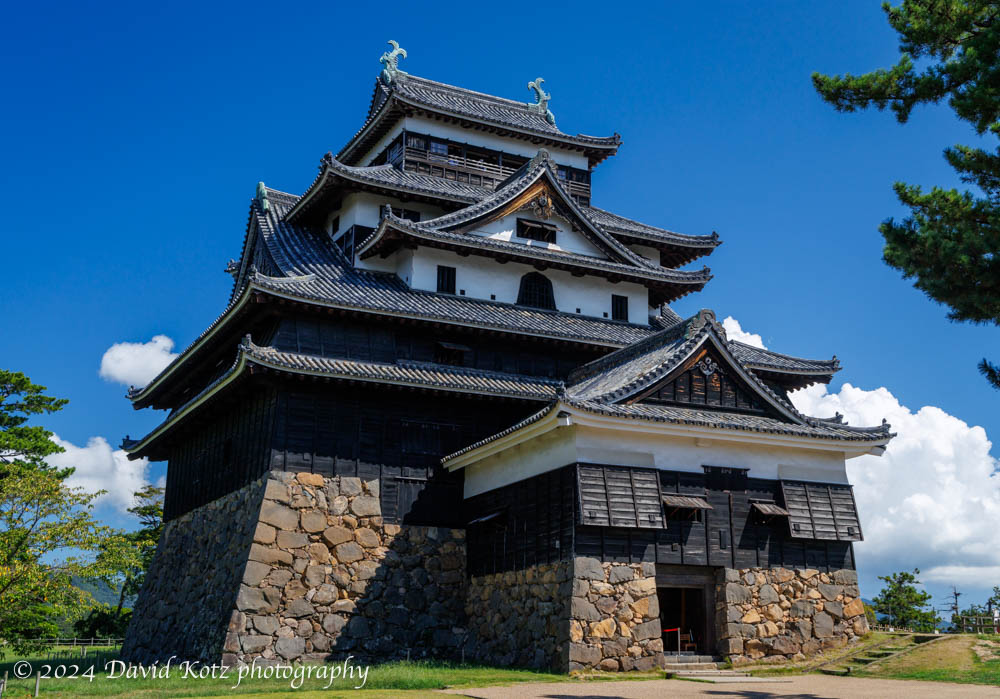
Returning to Japan, we visited Matsue Castle and the small fishing village of Mihonoseke.
We re-entered Japan at Sakaiminato, a city whose name literally means border port – because Sakaiminato sits on the border between two prefectures. We drove to the small city of Matsue (which means pine (matsu) water (eh)) to visit its castle. There used to be about 360 castles across what is now Japan; today, only 12 castles remain, partly because of a national order to destroy all the castles when the samurai period ended in ~1868 during the Meiji reformation; others had succumbed to fire, earthquakes, or war. Of the remaining twelve, five have been designated as ‘national treasures’ and are open to the public; Matsue Castle is the second-largest and third-tallest. Read on!
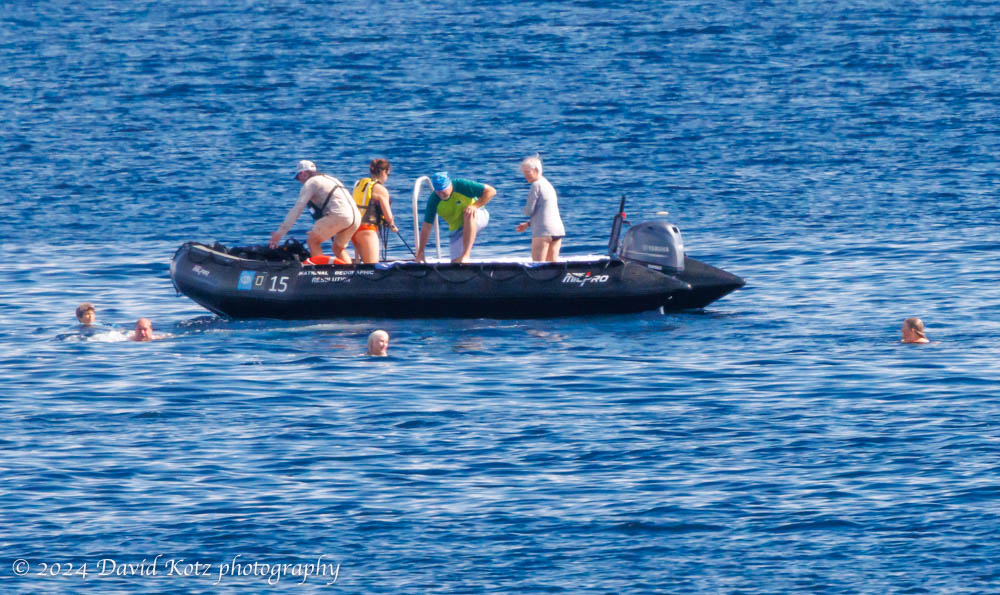
Swimming in the Sea of Japan.
We spent this entire day at sea, transiting the Sea of Japan to the east-northeast across blissfully calm seas. Indeed, the weather was so calm that the crew stopped the ship, shortly after lunch, and deployed the Zodiacs – allowing those who might be interested in a swim to motor away a safe distance from the ship and swim in the open ocean. What a treat! [Photo gallery]
A brief visit to South Korea.
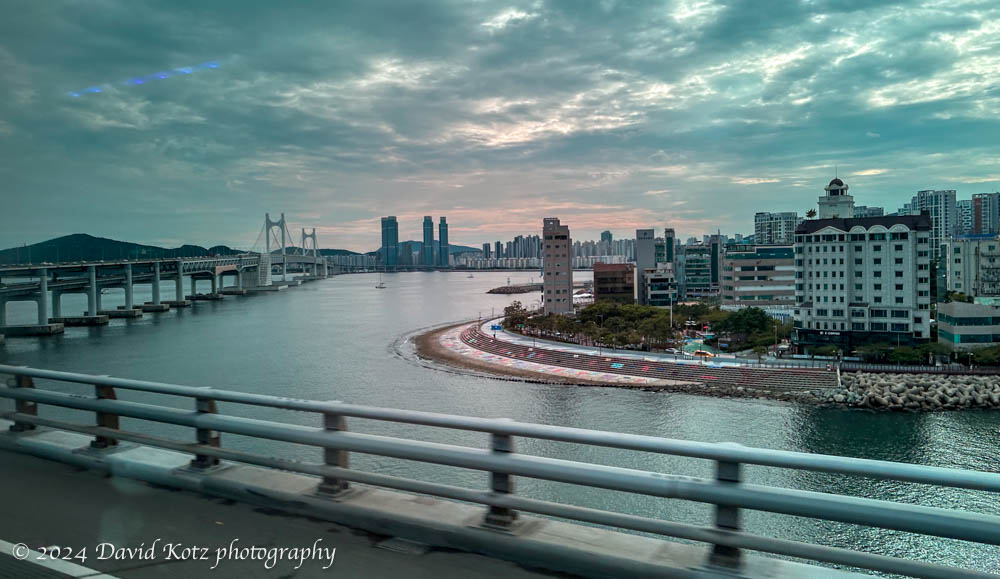
Due to some legalistic rules about cruise operators in the Sea of Japan – the strategically important sea between Japan and the Asian mainland, bordered by Russia and Korea – we sailed overnight to South Korea and docked in Busan just before dawn. We boarded buses in the pouring rain – the first real rain we’d encountered in our travels. The 90-minute drive through the bustling port city of Busan, and then the countryside to the north, was visually interesting as our local tour guides filled us in on Korean history and culture. Read on!
A second atomic bomb site, possibly even more moving than Hiroshima.
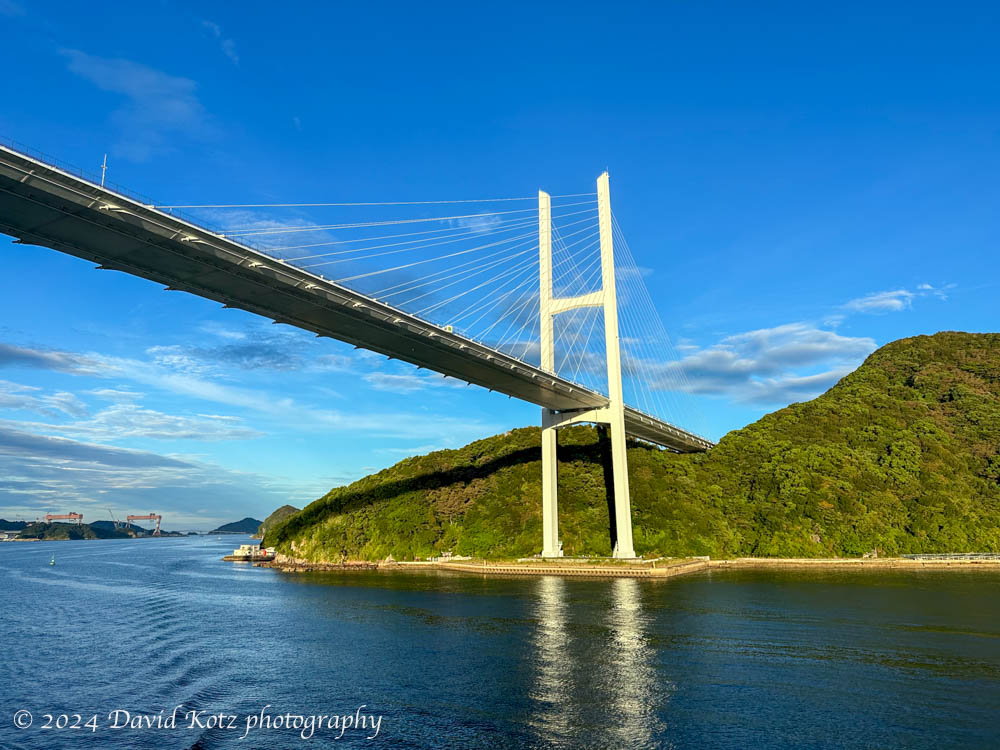
After an overnight journey we pulled into port at Nagasaki. To an American, and perhaps many others, that name evokes only sadness, as the site of the second atomic bombing in World War II. We were here to visit the Atomic Bomb Museum and the Peace Park, to be sure, but the city has a fascinating earlier history we also explored in a site known as Dejima. Read on!
Kagoshima, Sakurajima volcano, and the Sengan-en garden.
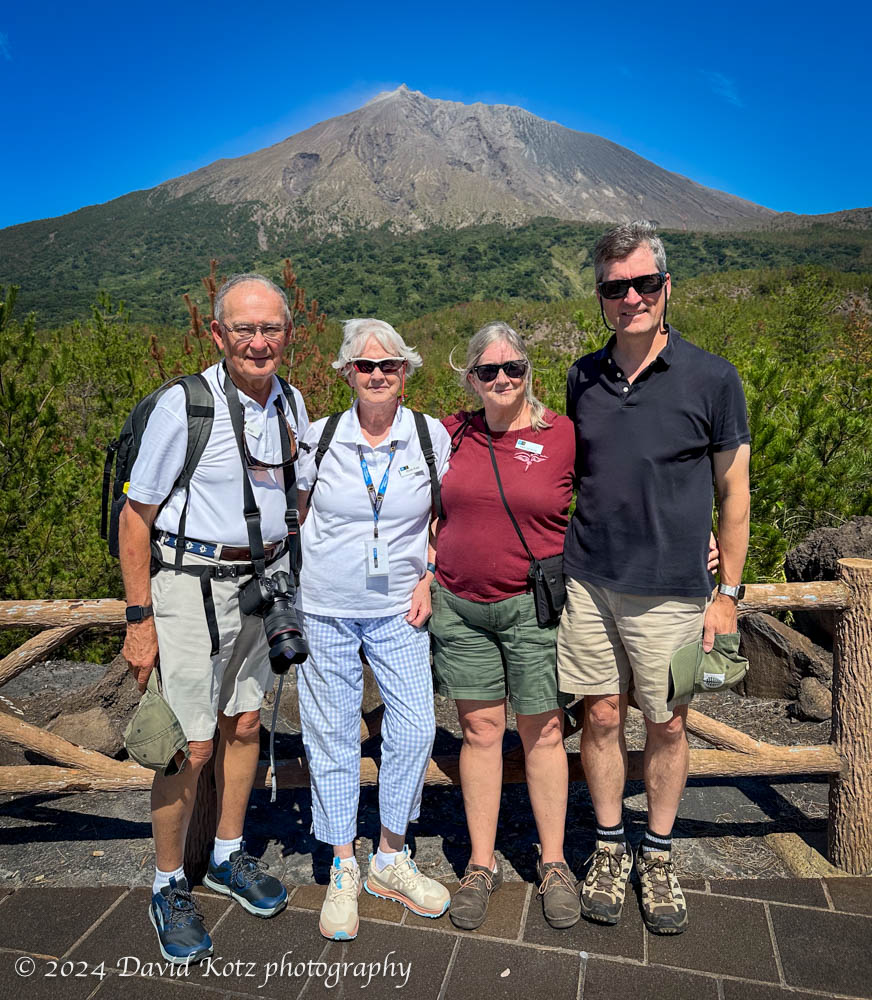
We sailed overnight back to the Japanese mainland, aiming for the city of Kagoshima, close to the southern tip. As usual, several of us were out on deck to enjoy the sunrise and our passage into port. Today, though, the ship paused as it arrived in port. Our berth in the port was taken by another ship, whose captain was missing! Several emergency vehicles were visible on the pier, leaving us mystified about the situation. Our bridge crew, and expedition team, pivoted remarkably quickly – and the ship moved around to the other side of the city and docked at the shiny new marine terminal (that is, a cruise-ship terminal). Although a beautiful location, it was farther from the center of town and thus farther from the ferry we were intending to catch. The expedition team did a fantastic job reshuffling all the schedules for the day, and soon we were on a bus to the ferry terminal. It all worked out… read on!
Continue reading “Japan, day 7 (September 9): Kagoshima, Sakurajima, and Sengan-en garden”Hiking through a virgin cedar forest atop an ancient volcano.
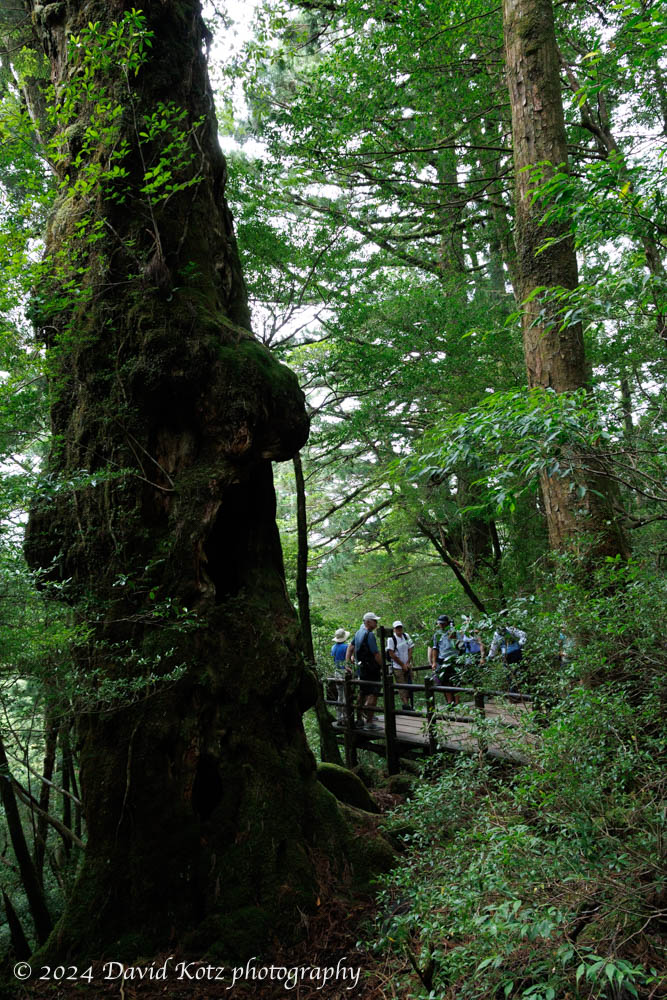
Overnight, the Resolution sailed out of the inland sea and south along Japan’s east coast. We spent the morning at sea, leaving Japan’s mainland behind as we headed for Yakushima Island. A small, round island, it is very tall – with 45 peaks over 1000m, made of granite – formerly, a lava plug inside a much taller volcano. It is one of the world’s wettest locations; the “annual precipitation in Yakushima is one of the world’s highest at 4,000 to 10,000 mm (160 to 390 in)” [Wikipedia], and its highest reaches are now a UNESCO world heritage site because it is covered in virgin forest. Read on, to learn more about our hike on this greenest of green islands.
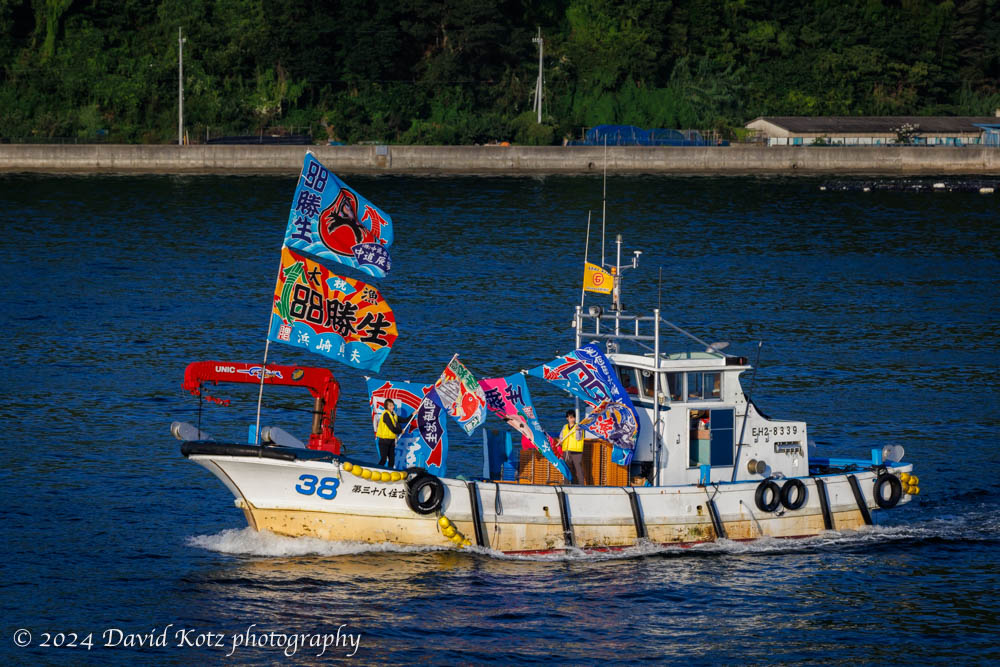
Continue reading “Japan, Day 6 (September 8): Yakushima Island”After an overnight transit to Uwajima, along Japan’s inland sea, I was up on deck to watch the sun rise… directly over a mountain peak! As the sun rose and we pulled into Uwajima’s harbor, our ship was escorted by four local fishing vessels that had been elaborately decorated with banners and flags. On each boat there were one or two enthusiastic volunteers who were waving massive flags, all meant to welcome us to their city. [video]. Read on!
 David Kotz