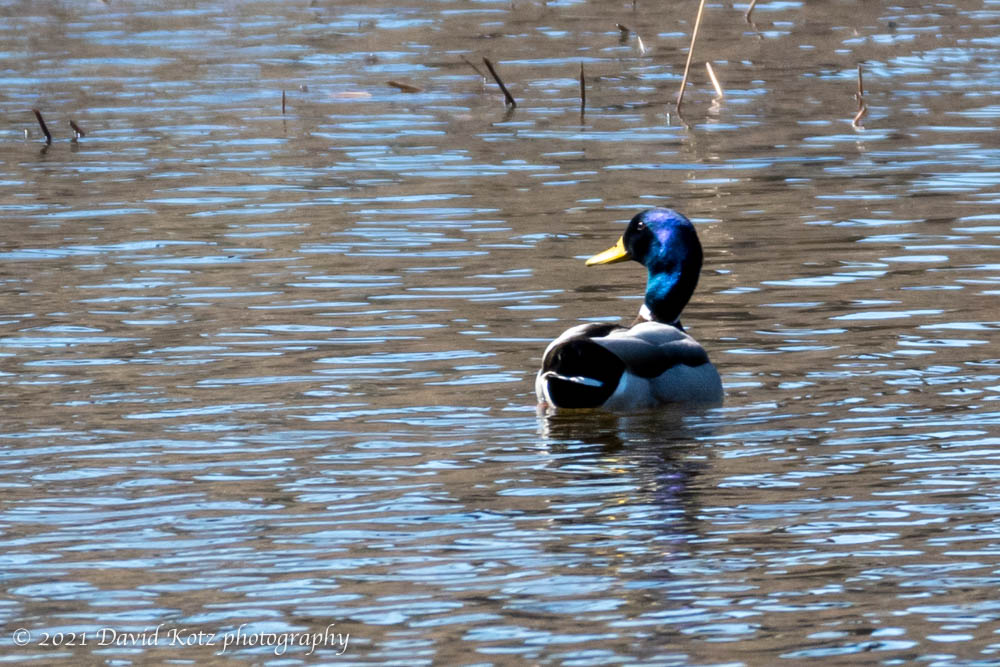
A stroll along River Road, just upstream, brought me an opportunity to see some of the local regulars as well as some unusual migrants – all at the mouth of Grant Brook. Although the winter’s ice has just begun to recede, the critters moved in quickly. We saw some green-headed Mallard ducks, but also a pair of Mallards with vibrant blue heads:
Unusual blue-headed (Mallard?) ducks at the mouth of Grant Brook, Lyme NH
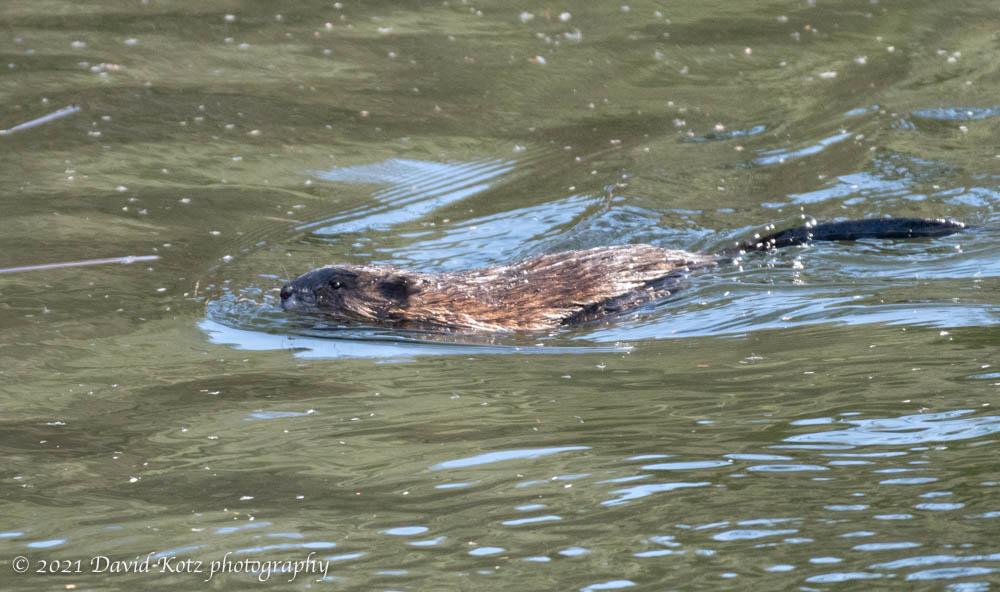
Meanwhile, a beaver zipped by, then dove.
A beaver swims at the mouth of Grant Brook, Lyme NH
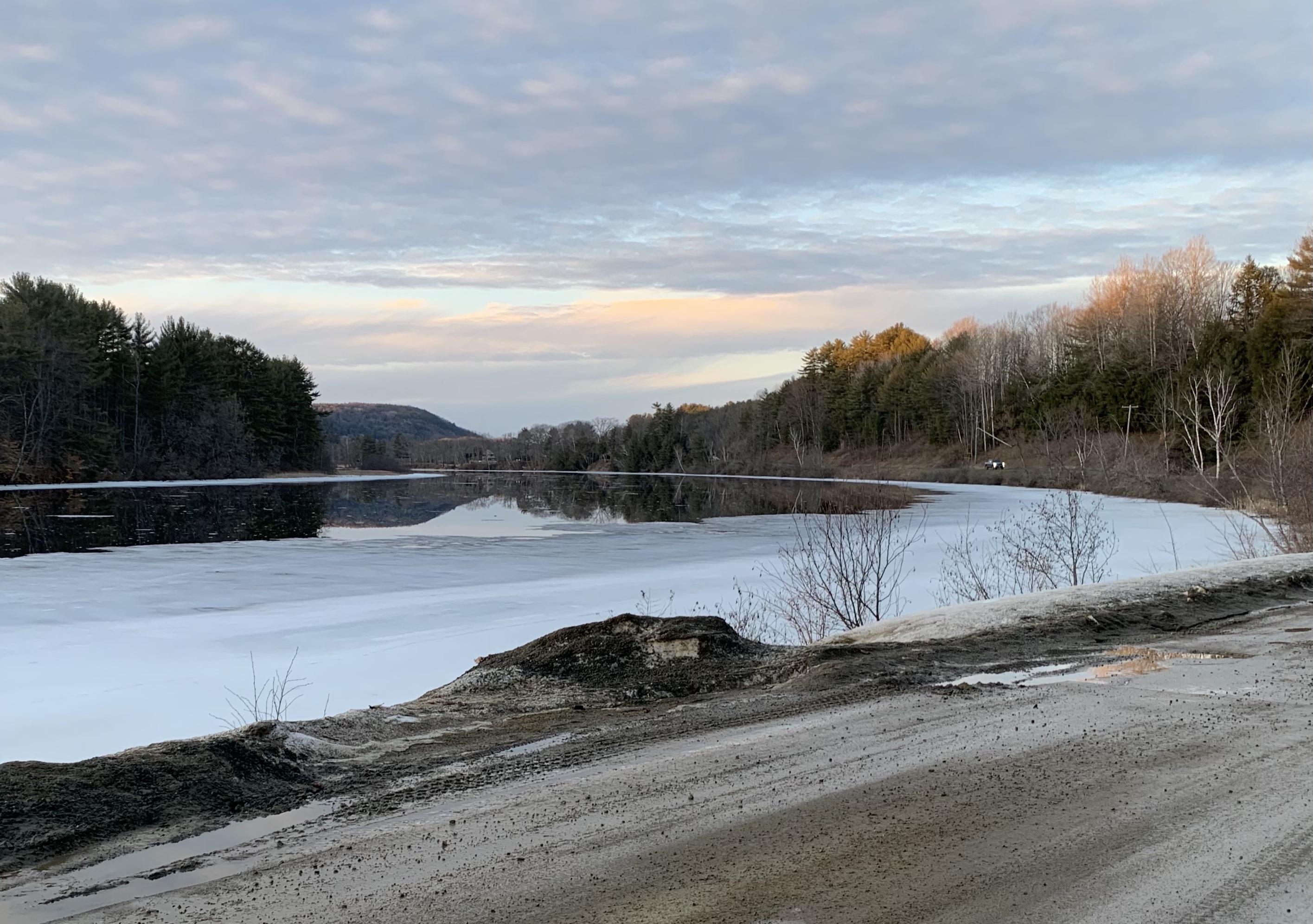
Tuesday morning I saw the first spots of open water along the river as I drove into town. By Tuesday evening the river had opened up a channel down the center, near home. By Wednesday evening, below, the water was widely visible, the ice slowly dissipating and breaking up. I don’t have good records, but this sure feels early…
Nothing like a deer carcass to bring everyone together.
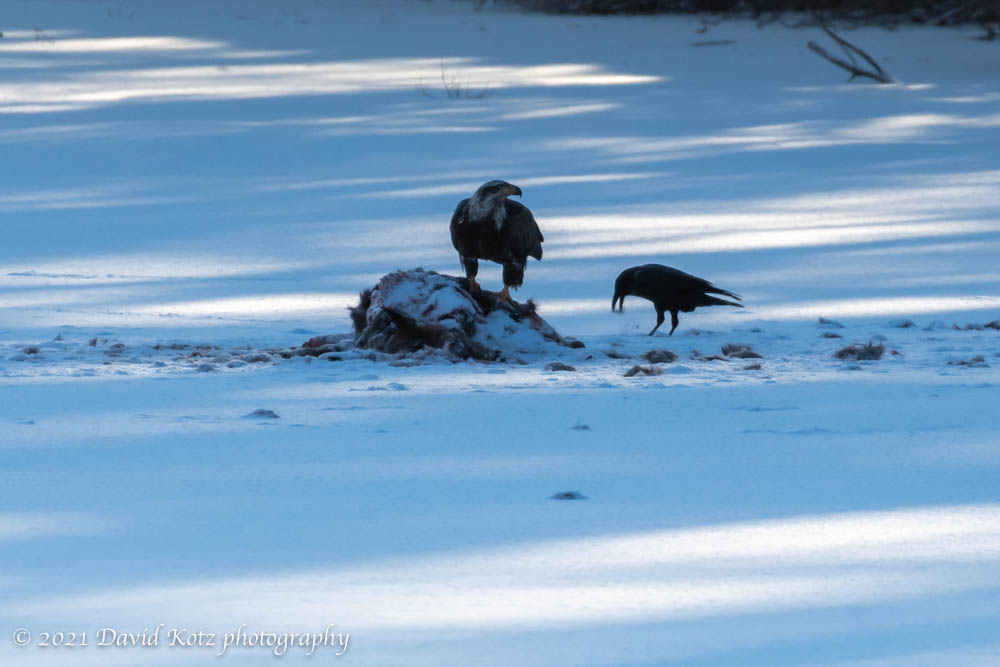
As I drove home today along the Connecticut River I noticed a dark object out on the ice – clearly, a carcass of some unfortunate deer. It was already attracting visitors that, from a glance, appeared to include a bald eagle. I dashed home to pick up my camera. When I returned, I found three bald eagles – one mature adult, and two juveniles – enjoying the spoils of this opportunity. Several crows were nearby, but were shooed away by the eagles whenever they came too close.
A bald eagle feeds on a carcass on the ice – and scolds a crow that tries to join in.
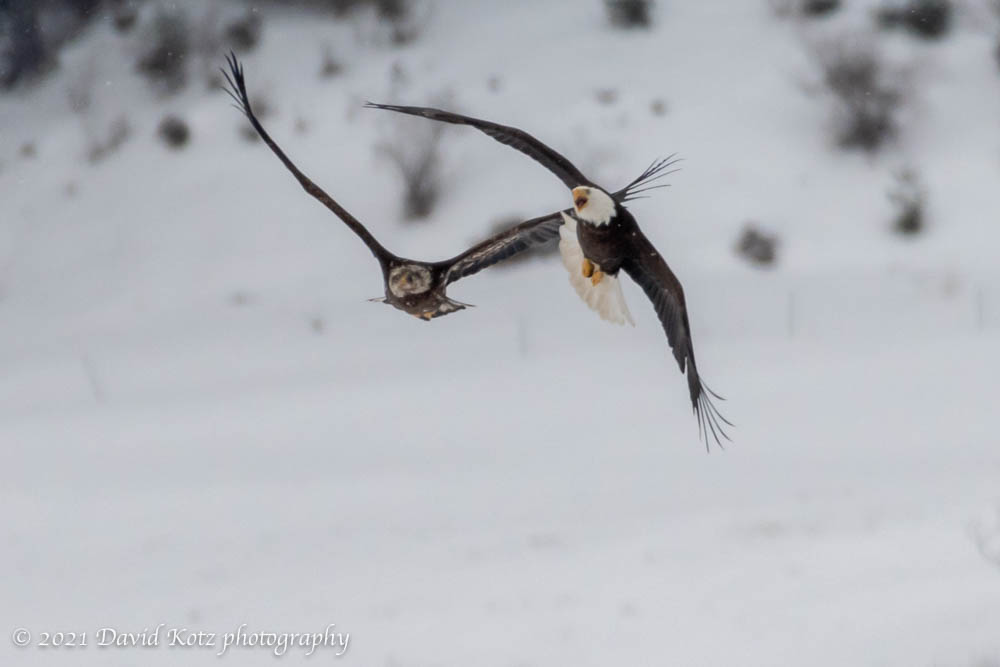
It was interesting to see that each eagle looked quite different – even the juveniles looked very different, perhaps of different ages. I also noticed the mature eagle flying alongside one juvenile several times. Family members? or rivals? hard to tell.
A pair of Bald eagles (one immature) flying (and fighting) beside the Connecticut River.
I shot well over six hundred photos, most of them out of focus – on my first visit it was snowing heavily and the snow wreaked havoc on the camera’s autofocus mechanism. But I returned later when the snow stopped and the sun came out. I saved a dozen decent photos for you in the gallery, where you can see each of the three eagles, sometimes together.
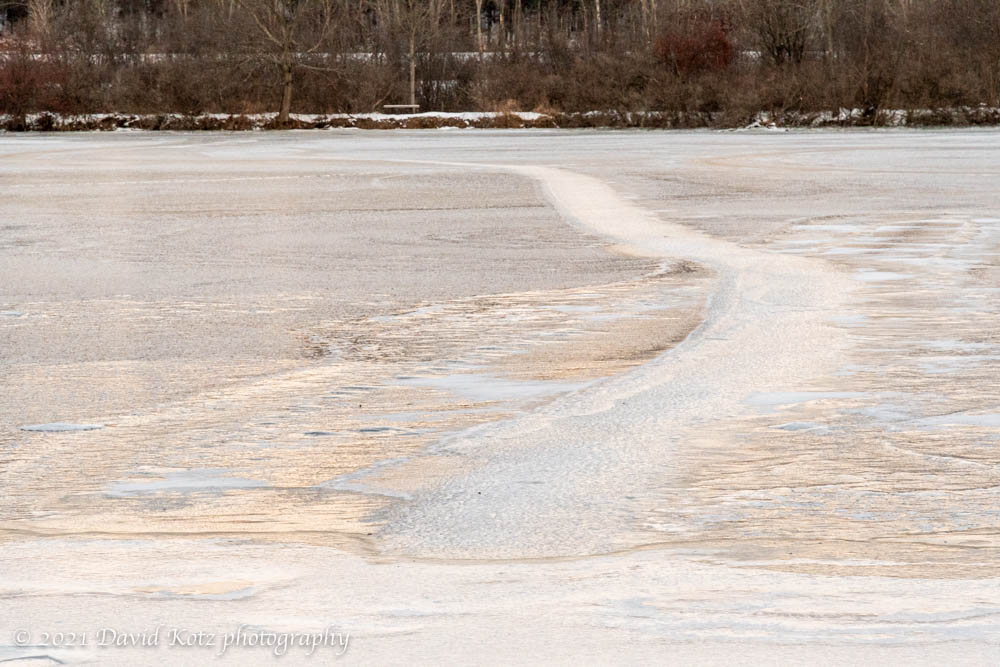
Last weekend was very cold, well below zero, and the river’s surface became even more solid. The cracks and fissures of a week earlier healed into sinuous patterns, which I found to be an interesting photographic subject – especially at the shoulders of daylight.
Ice and patterns on the river in front of our house.
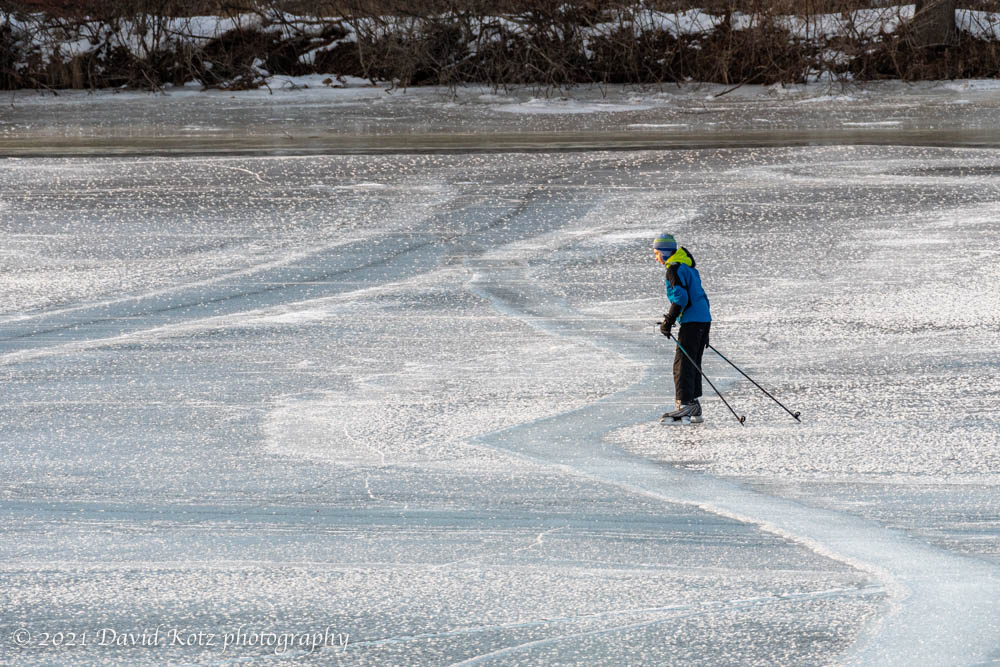
Twice on Sunday I saw skaters – traveling in pairs, some wearing nordic skates and carrying safety poles, and some (like the teen below) wearing hockey skates and using ski poles for support – enjoying the opportunity to skate for kilometers upon kilometers.
A skater travels down the center of the river in front of our house, late one afternoon.
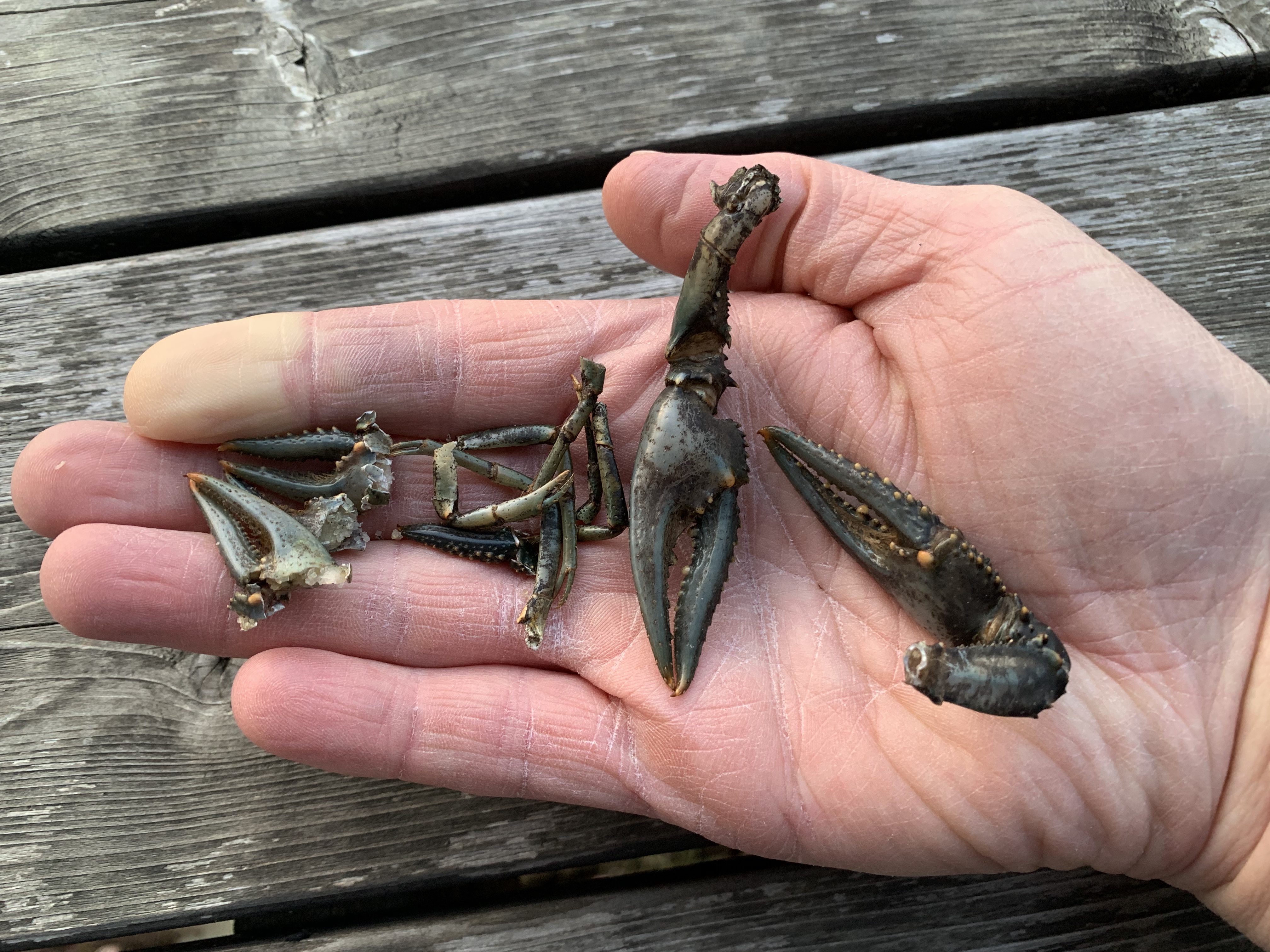
Once again – just like last fall – someone has been eating crayfish on our dock. Most likely the mink we saw here over the winter, or perhaps the otter I saw munching crustaceans this summer. I found parts of two or three crayfish this week alone!
The cold and darkness of late autumn has made it increasingly difficult to get out sculling on the river. With the end of Daylight Savings Time in a few days, I will regain the morning daylight but mornings are now too cold to row – my lower limit is 40ºF. Afternoon rowing has been feasible for the past week, but will surely be impossible (with my work schedule) next week. So today I bid farewell to the river, recalling the Great Blue Heron I saw browsing the reeds a few days ago, and the ducks I saw heading south this evening. Even the hunters have shifted inland, with duck season ending and deer season opening in a few days. Now my attention turns to winter – and six months later, back to the river.
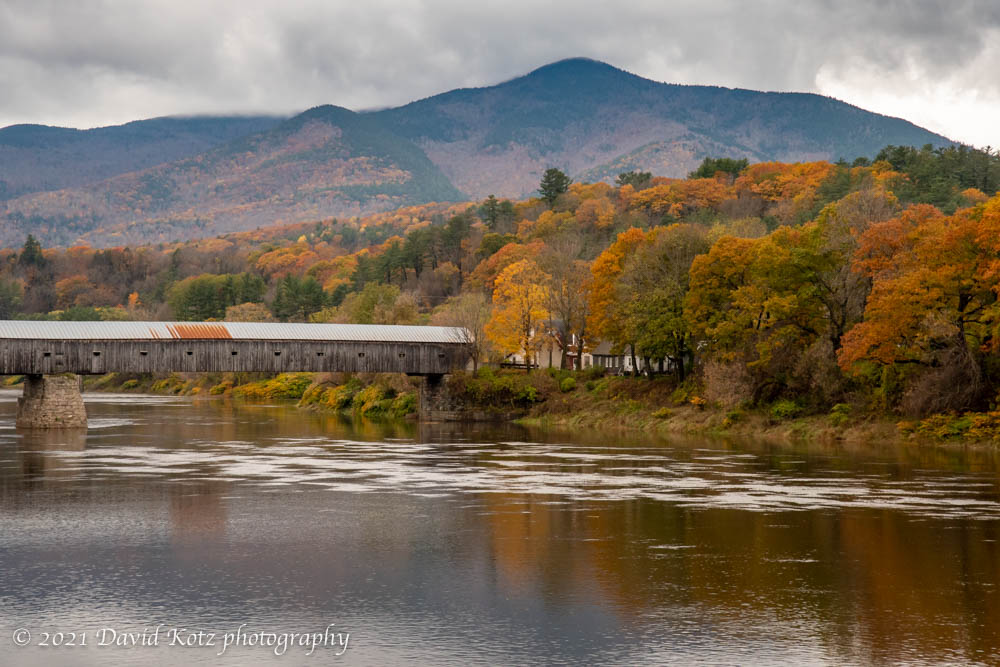
October has ended but the fall foliage is still brilliant – at least in certain pockets of our valley, and in valleys further to the south. On Sunday October 31, after photographing Dummerston Falls in southern Vermont, there were spectacular colors along the hillsides lining the interstate highway heading northward. So in Windsor I pulled off the highway to cross the Connecticut River on the iconic Cornish-Windsor covered bridge (the longest wooden covered bridge in North America, dating back to 1866), where I knew there was an opportunity for a view of the river, the bridge, and Mount Ascutney beyond.
Cornish-Windsor covered bridge, with Mount Ascutney at rear; NH-VT.
I was not disappointed; there is an informal pullout for parking nearby, and a quick dash across the road and a hop over the guardrail gives one access to this spectacular view. As I turned to head back to my car, I noticed a wooden post – rather new looking, with a square board screwed atop as if to form a seat. I looked up to see a man approaching, dressed for the weather, wearing a hunter-orange cap and carrying a camouflage bag. After a short greeting he sat on the wooden post, pulled a Canon camera out of his bag, and we began to chat as he began to photograph the same scene.
Dan lives and works nearby, and stops to sit on this post every day. He has captured a new photograph here pretty much every day for the past ten years, posting them to his blog The Shape of the Year. It’s quite interesting to see, for example, what this scene looked like on November 3, February 3, May 3, and August 3. It was fun to meet another photographer, and to exchange our calling cards. Here’s my shot of the similar scene, October 31.
See a gallery with a few more of my roadside fall-foliage photos from across the month and around the region.
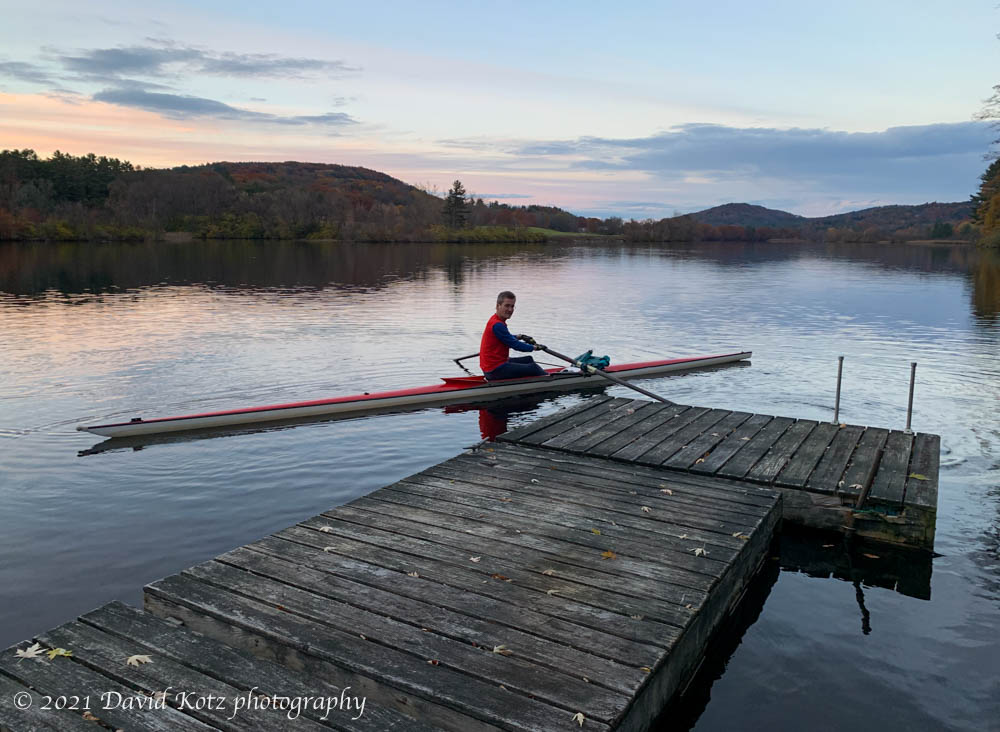
As I carried my rowing shell down to the river side this morning, a warm October morning with the river so calm it looked like a mirror, and light wisps of fog clinging to the riverside trees, I tried to remember when Duck season was set to begin. I knew it was somewhere in the first week of October.
So it was not too surprising, as I sculled past the Wilder Wildlife Management Area, a half kilometer upriver, that a gunshot rang out. Close by! I looked toward the sound and saw a duck falling from the sky, and a puff of gunsmoke hovering over the wetland I knew was behind the row of riverside bushes. I paused, listened closely, and could hear the murmur of conversation a few hundred meters away, where the duck hunters were celebrating Opening Day.
Good thing I have a bright red shell and wear a bright red jersey when I row. Still, I think I’ll head downriver next time.
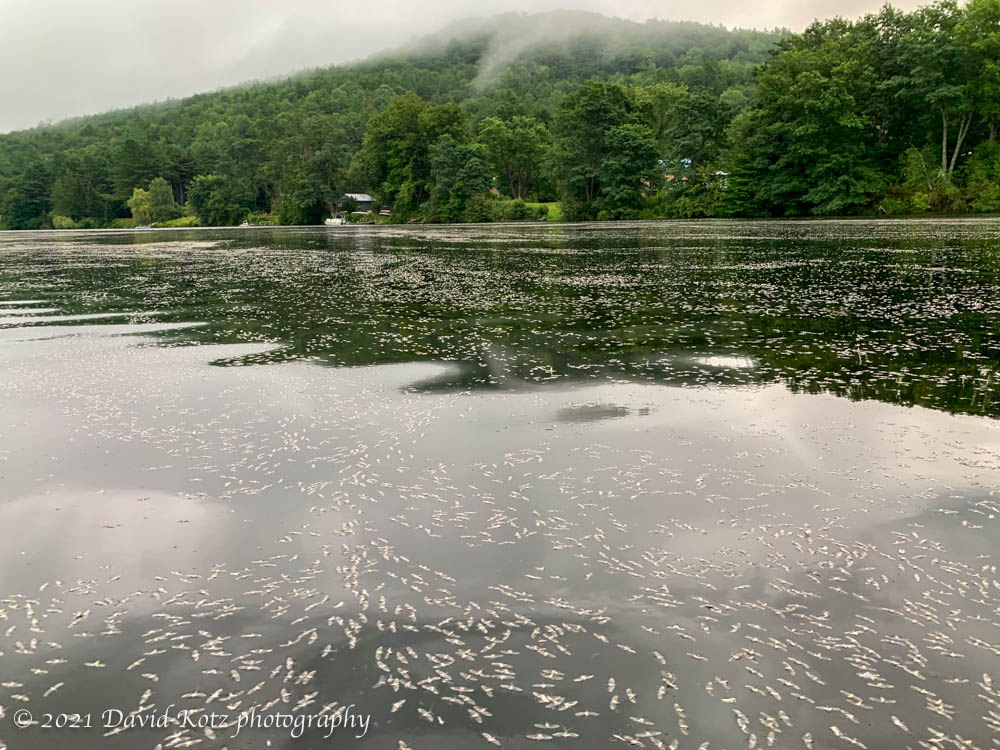
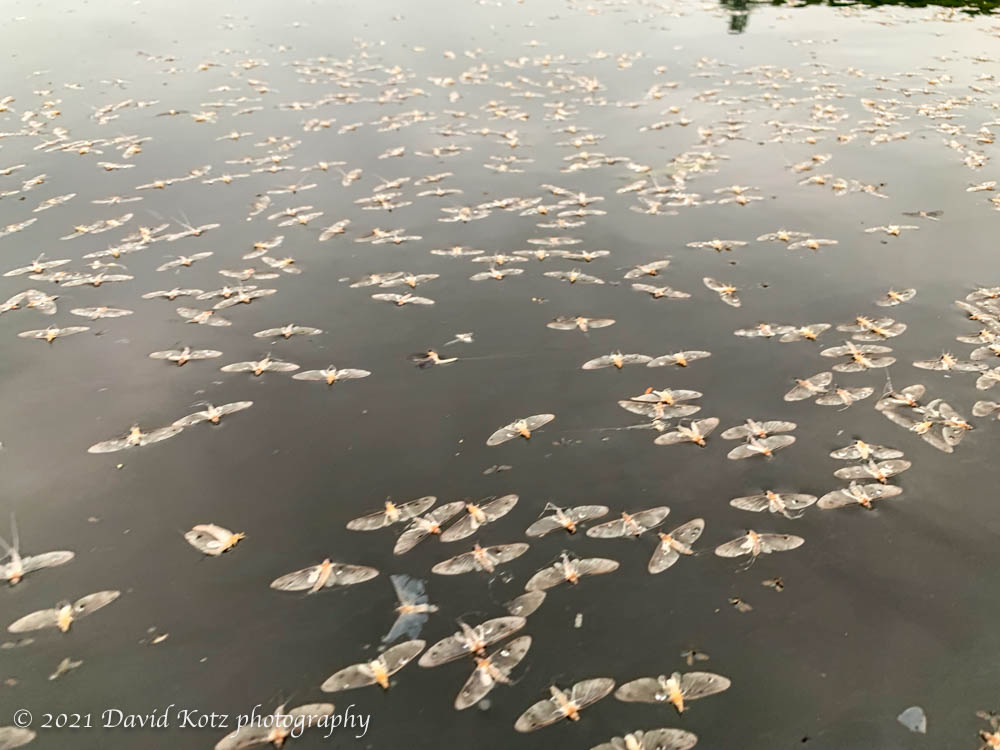
When I visited the river this morning I found it littered with thousands of upon thousands of dead mayflies.
These insects live in the river, then moult and emerge as a winged insect in a massive rush to procreate in their 24-hour lifespan as an adult, laying the eggs that will lead to next year’s batch. Apparently, for our stretch of the river, the emergence happened over the last couple of nights, though in some years I’ve seen them emerge in late June.
Mayflies scattered across the Connecticut river after a night of breeding.
“The lifespan of an adult mayfly is very short and varies depending on the species. The primary function of the adult is reproduction; the mouthparts are vestigial, and the digestive system is filled with air.
“It often happens that all the mayflies in a population mature at once (a hatch), and for a day or two in the spring or fall, mayflies will be everywhere, dancing around each other in large groups, or resting on every available surface. … Because of its short lifespan, the mayfly is called one-day or one-day fly in some languages…. “
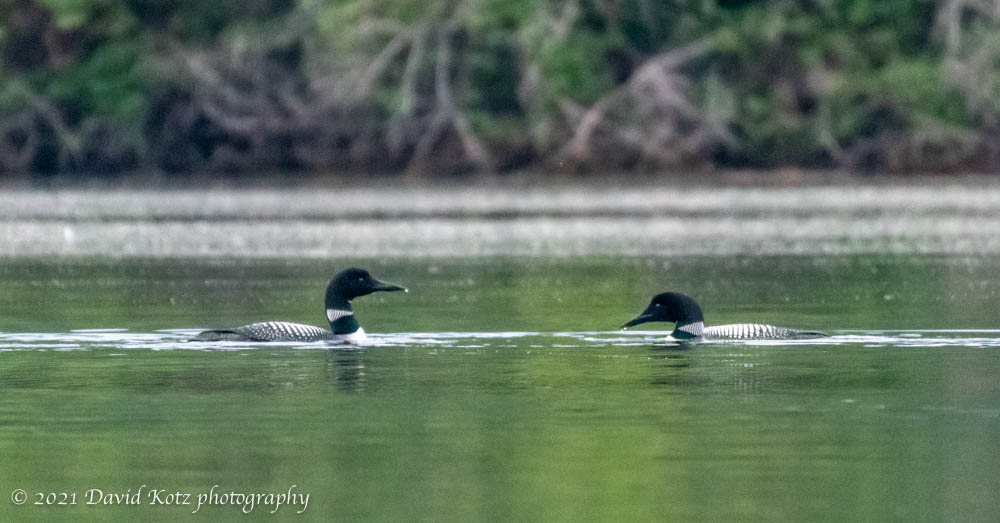
A pair of loons have been living along the Connecticut River, near our home. We often hear their plaintive cry early in the morning. I’ve sometimes had time to grab my camera and head down to the river edge, to see whether I can capture the beauty of these creatures. They have a remarkable ability to swim underwater, and will often disappear for several minutes while they feed on the vegetation below. Once, when the two met in mid-river, they spent close to 20 minutes doing a sort of dance, each ducking its head underwater, and then diving under and past the other, almost like a do-si-do.
Loon(s) on the river near our house in Lyme.
My photos are still a bit grainy… I need more light, or a longer lens, to capture crisp images. I’ll keep trying, and adding to the gallery.

 David Kotz