
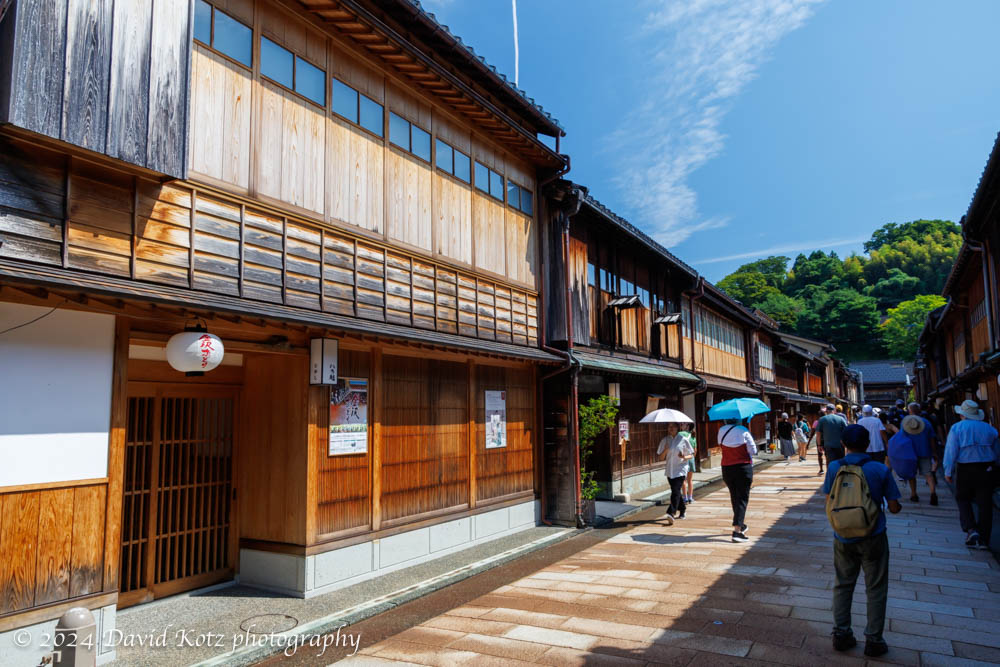
After an overnight cruise we arrived in the port of Kanazawa. Known across Japan for its gold leaf, Pam went with a group to learn about the production of gold leaf and its application to jewelry and other uses. I spent the morning visiting two historic districts. The first was a Samurai village, including a historic Samurai house; it was interesting to walk through the preserved home and through a small neighborhood with other homes that retain the architecture of that period. We then visited a historic district that had been a center for Geisha (though here they refer to them as geiko), including a tour of a historic 1820 Geisha tea house (Ochaya Shima), now a museum. We strolled through streets retaining the historic architecture (with buildings now occupied by restaurants and souvenir shops). For the afternoon… read on!
In the afternoon we visited the Kenroku-en garden, known as one of three best gardens in Japan. “‘The garden was named by Matsudaira Sadanobu in 1822 and literally translates as ‘Combined’ (Ken) ‘Six’ (roku) ‘Garden’ (en) to mean the ‘Garden of Six Attributes’” [Wikipedia]; it includes “…the six attributes of a perfect landscape: spaciousness, seclusion, artifice, antiquity, waterways, and panoramas.” It is famous for its asymmetric arched lantern near the entrance at the edge of the pond: “Kotoji-tōrō, a stone lantern with two legs, said to resemble the bridge on a koto. This lantern is emblematic of Kenroku-en and Kanazawa.” It also includes a simple but impressive gravity-fed fountain – water arrives via pipe from the lake above; thus, there are no pumps. It is “…the oldest fountain in Japan, operating by natural water pressure.” Some of the trees are 400 years old; one, the Neagari Pine, has been trained, over time, to have arched roots by slowly removing soil from beneath the roots. A massive statue of Meiji (who ended the samurai period by ending the Shogunate and thus brought Japan into the modern world; Japan began what is now known as the Meiji reformation in 1859) is the oldest bronze statue in Japan.

We entered the tea house for an authentic tea ceremony. Three women dressed in beautiful kimonos showed us how. The leader (teacher, sensei) and her two assistants brought each of us a tray with matcha tea in a bowl, and a sweet, spongy, cake made from bean paste. (To reach sensei status requires at least 10 years of training; she has been working for 30 years.) When instructed, we each cut our tiny cake using a bamboo sliver, and ate it. We lifted the bowl, held it in our left hand, and used our right hand to turn the bowl 2-3 times clockwise so the face of bowl was now facing away. Then, holding the bowl in both hands, we sipped several times, slurping loudly on the final short sip. Finally, we held the bowl again in our left hand and used our right hand to turn bowl 2-3 times counter-clockwise so the face of bowl was now facing ourself, again. We then inspected and appreciated the bowl outside, underneath, and inside, and set the bowl back on the tray.

Given free time, I roamed the garden widely, enjoying the opportunity to photograph such a lovely place, despite the continued hot and humid weather. Be sure to check out the gallery for more photos!
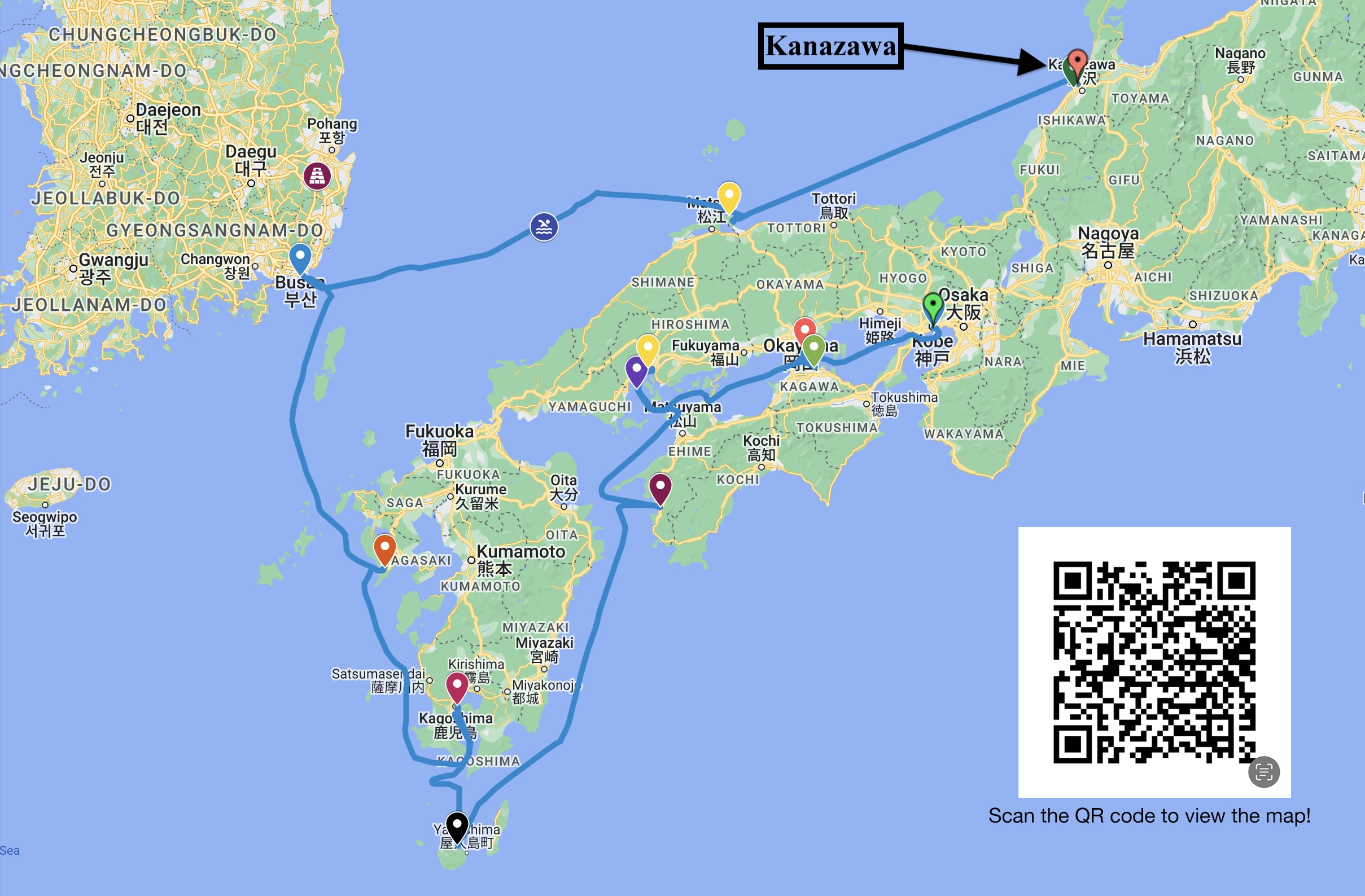
This post is part of a series about our Japan trip; the series starts here.

 David Kotz
Thank you for these pictures and stories! I’m finding myself sad that the journey is ending. (Bafflingly, in my year and a bit in Tokyo, I never once made it to a tea ceremony, so thank you for that vignette, too.)