
We re-entered Japan at Sakaiminato, a city whose name literally means border port – because Sakaiminato sits on the border between two prefectures. We drove to the small city of Matsue (which means pine (matsu) water (eh)) to visit its castle. There used to be about 360 castles across what is now Japan; today, only 12 castles remain, partly because of a national order to destroy all the castles when the samurai period ended in ~1868 during the Meiji reformation; others had succumbed to fire, earthquakes, or war. Of the remaining twelve, five have been designated as ‘national treasures’ and are open to the public; Matsue Castle is the second-largest and third-tallest. Read on!
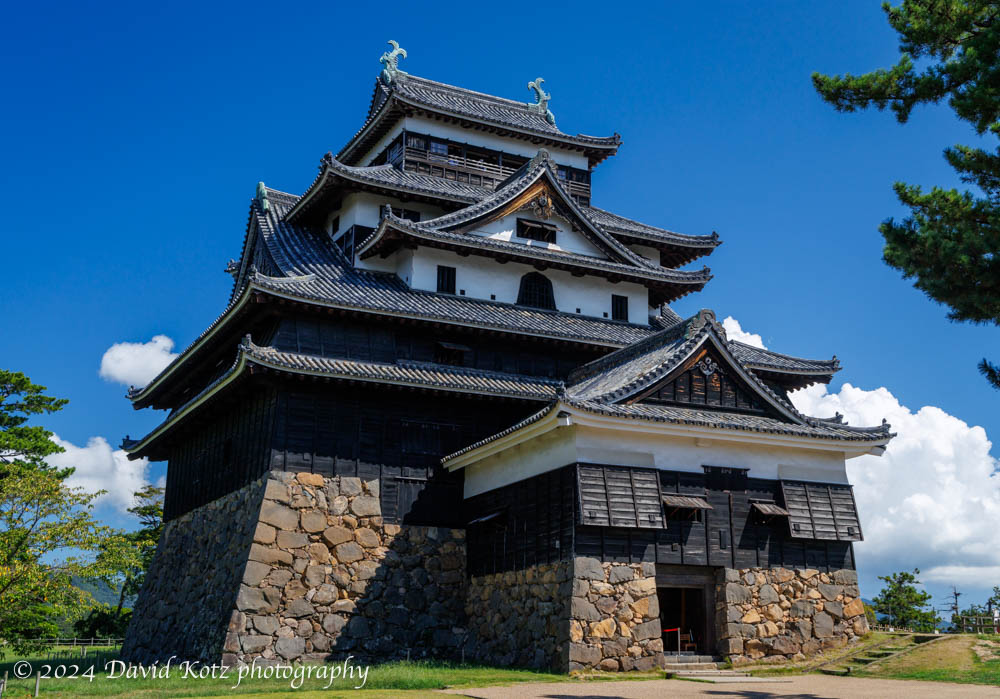
Built in 1611, it is a symbol of power, and served a defensive (not residential) purpose. Made of wood, with its exterior being charred cedar, it is known as a “black castle” (unlike Himeji, which is a “white castle” whose walls are whitewashed stucco). At either end of its peak are massive shachihoko (fish ornaments); made of wood, and covered in copper; at 210cm they are the tallest of all those on 12 remaining castles. I noted fish-shaped decorations to be a common flourish on castle peaks; apparently, the builders felt fish would help protect the castle because fire, including lightning strikes, was one of the biggest dangers.
The castle appears to have five tiers, but internally there are seven, including a climb from the basement. A massive timberframe structure, the interior construction was fascinating. Huge pillars were made from massive pine trees or, where necessary, pine boards bundled together with metal pins and straps. (We live in a timberframe home, so I was impressed by the timber-framing in this seventeenth-century structure!)
In the afternoon we drove over to the seaside village of Mihonoseke. Its small harbor was filled with fishing boats, its harborside alleyways include well-preserved historic homes (now hotels). We encountered a bridal couple on the street, with their photographer; it was interesting to see how modern couples have blended Western and Japanese wedding fashions.

We then explored a large Shinto shrine, and had time to explore. In a side building I found an older couple, sitting quietly in the shade and chatting while they prepared bundles of rice straw. Through sign language I was able to get permission to take a photo – but the aim of their work was never quite clear. The shrine included many decorative elements made of rice straw, including a massive braided rope common in all Shinto shrines, so perhaps they were preparing materials for such decorations.

We returned to the ship for an overnight cruise to Kanazawa.
Be sure to check out the gallery for more photos!
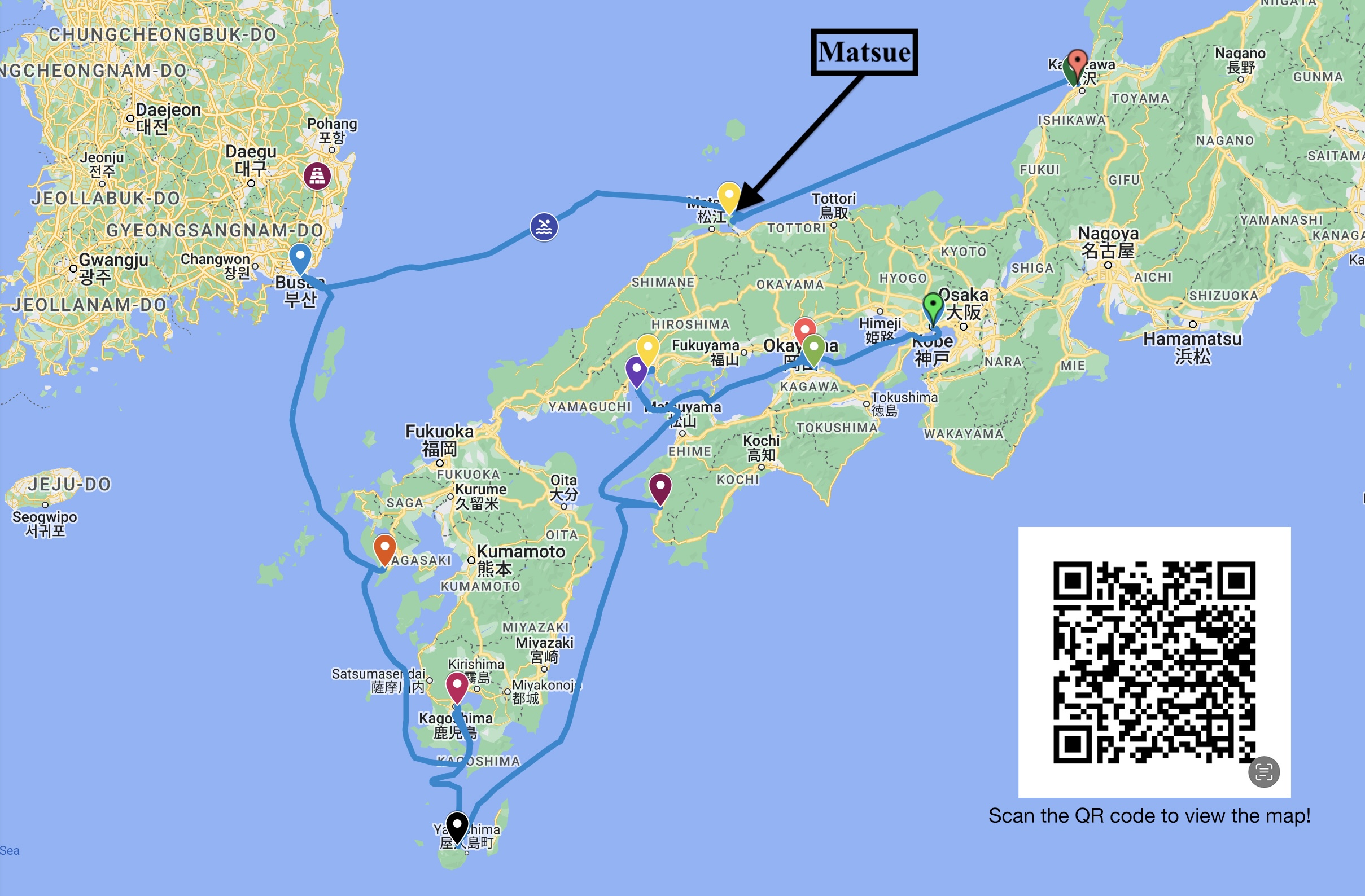
This post is part of a series about our Japan trip; the series starts here.

 David Kotz
One thought on “Japan, Day 11 (September 13): Sakaiminato, Matsue”