
Due to some legalistic rules about cruise operators in the Sea of Japan – the strategically important sea between Japan and the Asian mainland, bordered by Russia and Korea – we sailed overnight to South Korea and docked in Busan just before dawn. We boarded buses in the pouring rain – the first real rain we’d encountered in our travels. The 90-minute drive through the bustling port city of Busan, and then the countryside to the north, was visually interesting as our local tour guides filled us in on Korean history and culture. Read on!
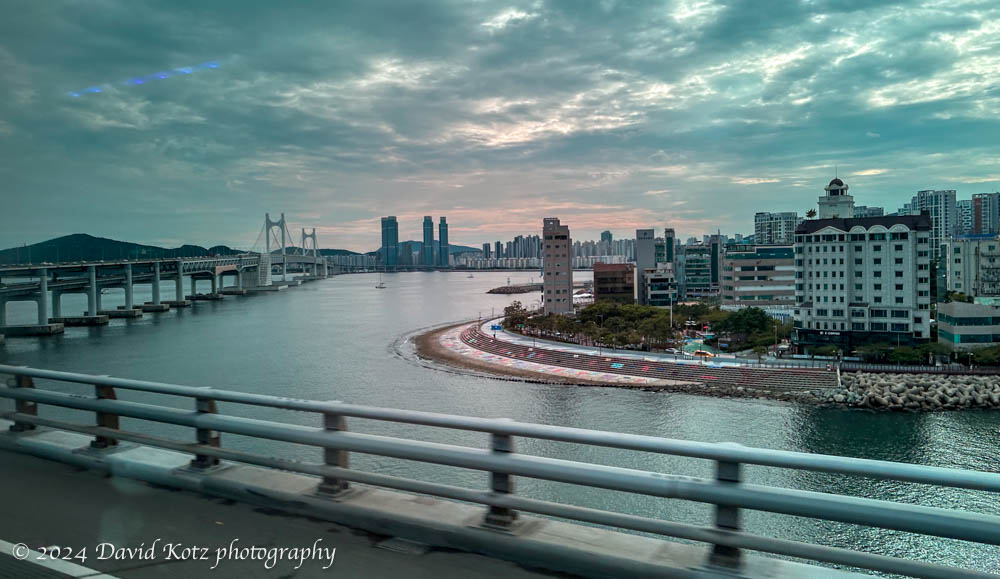
Our goal for the day was Gyeongju, the historic capital of the Silla kingdom. We visited three sites: a 1200-year-old stone observatory, a memorial park with numerous ancient burial mounds (of which ~31 out of ~155 mounds have been excavated), and an exquisite museum with artifacts excavated from burial mounds and with Buddha statues from around Korea. The amount of history here is mind-boggling: “Gyeongju was the capital of the ancient kingdom of Silla (57 BC – 935 AD), which ruled about two-thirds of the Korean peninsula at its height between the 7th and 9th centuries, for close to one thousand years” [Wikipedia].

We were treated to an elaborate lunch at a delightful local restaurant, in which several dozen traditional Korean dishes arrived, one by one, each more tantalizing than the first.

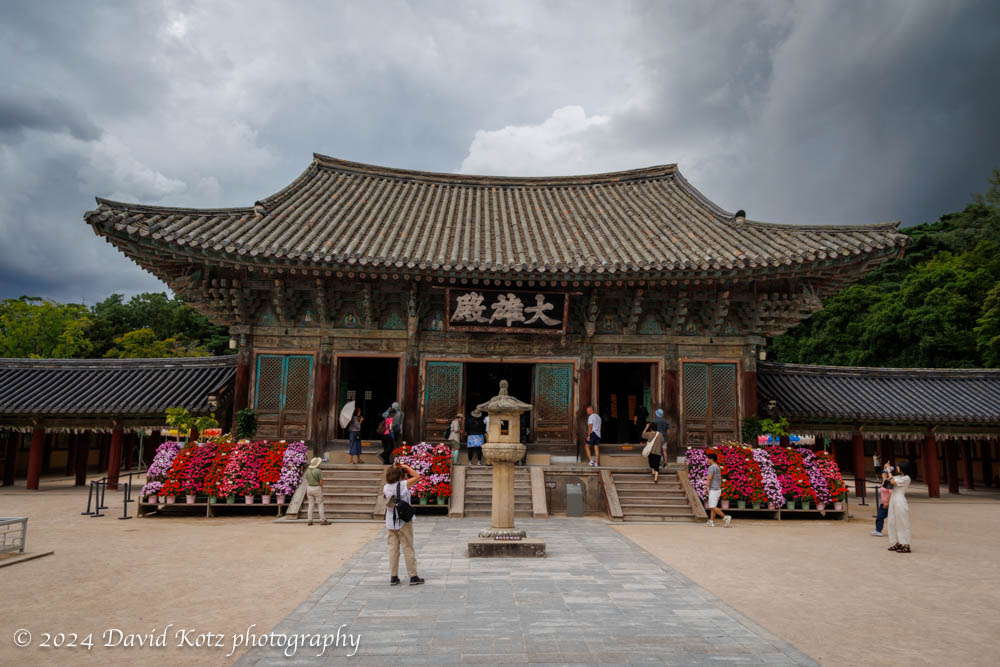
Fortified, we headed off to one final site, the Bulguksa Temple. Actually a complex of multiple Buddhist temples and associated facilities, it was built 751-774 CE and remains largely intact today. Spectacular!
We returned to port, transited South Korea immigration and customs for the second time that day, and were back on board in time to sail out of the harbor during dinner. You really must check out the photo gallery… this post has only a few photos, and there is lots to see!
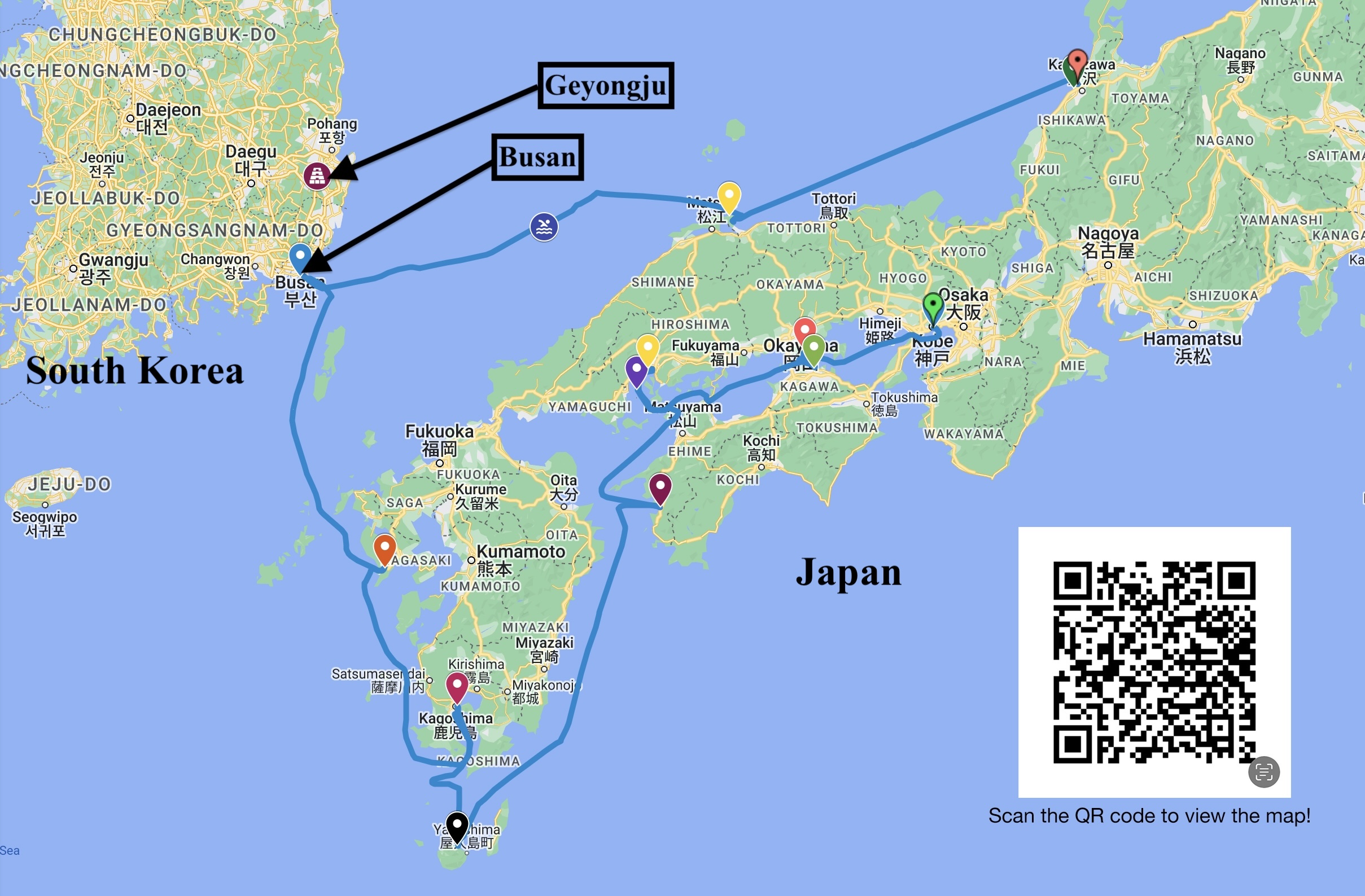
This post is part of a series about our Japan trip; the series starts here.

 David Kotz
Amazing photos – thank you!