
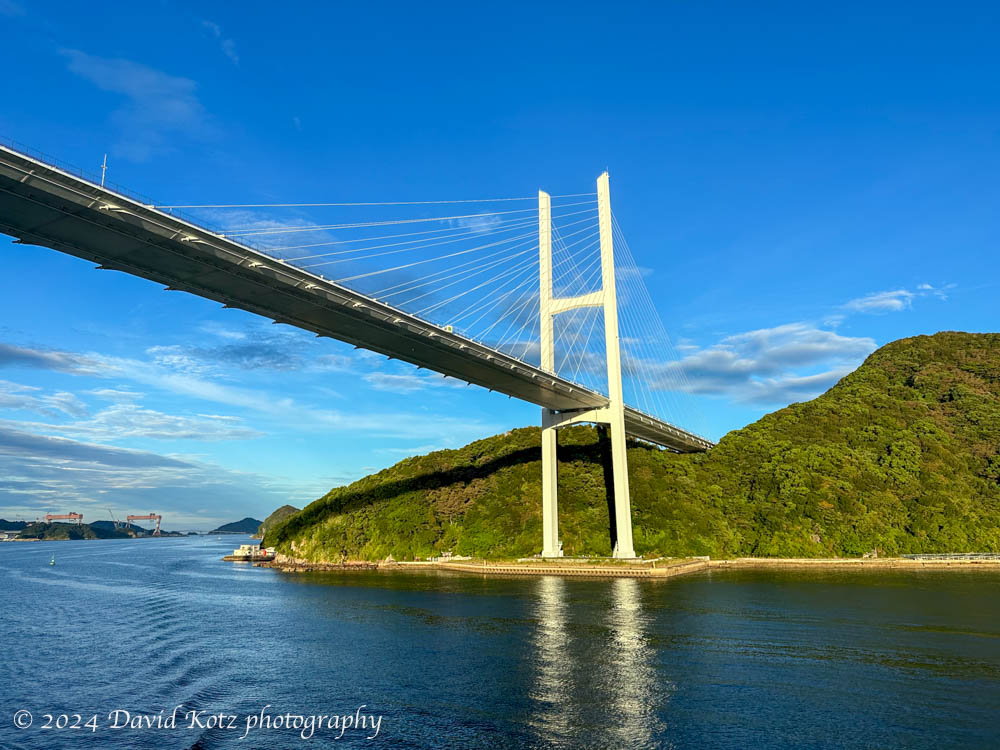
After an overnight journey we pulled into port at Nagasaki. To an American, and perhaps many others, that name evokes only sadness, as the site of the second atomic bombing in World War II. We were here to visit the Atomic Bomb Museum and the Peace Park, to be sure, but the city has a fascinating earlier history we also explored in a site known as Dejima. Read on!
Our morning allowed us to better understand the Atomic bombings of Hiroshima and Nagasaki. The Allies dropped the second atomic bomb here, at 11:02am on 9 August 1945. Indeed, today we happened to be in the Peace Park at 11:02am; as happens every day at that time, somber music played over loudspeakers. All the visitors paused to reflect on the horror of that moment, almost eighty years earlier. Records from December 1945, a few months after the bombing, estimate that 73,884 had died from the bombing, and 74,909 were injured. Earlier that year, the city’s population was approximately 240,000; thus, 62% of its residents were killed or injured.
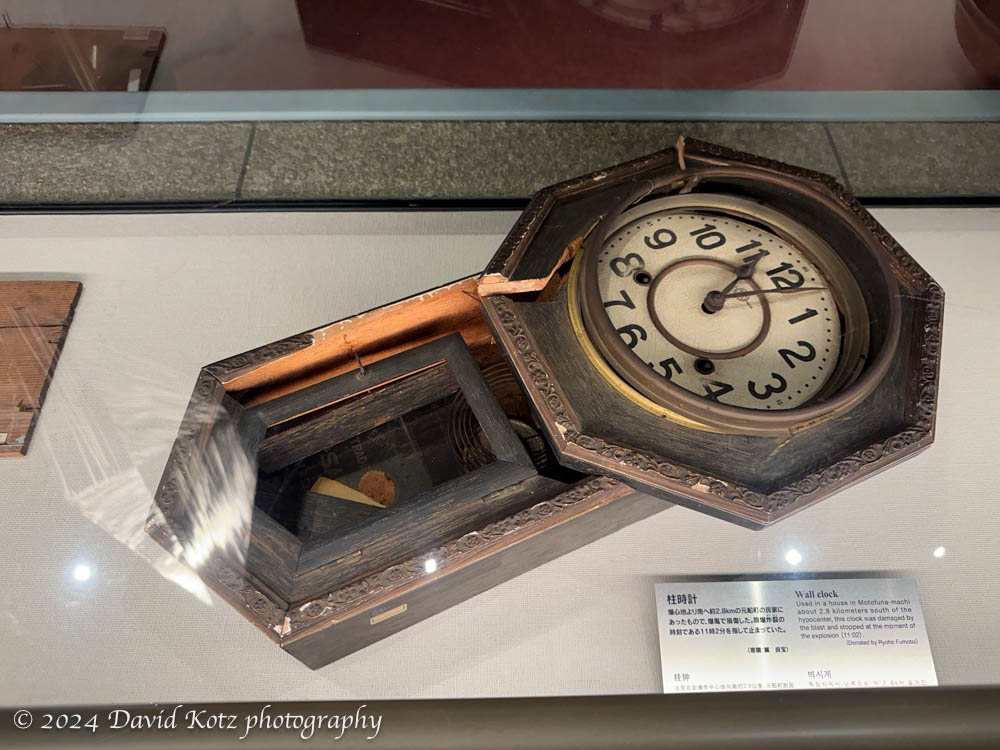
Although Nagasaki was damaged less than Hiroshima – because the bomb was not dropped in the center of town – the results were just as horrific. Our visit to the Atomic Bomb Museum was a highly emotional experience; some say, even more traumatic than our visit to Hiroshima. Here we reviewed documents and artifacts about the day of the bombing, including graphic photographs and written testimonials from the survivors. In one section a video screen allowed visitors to watch and hear interviews with survivors – local people, as well as foreign POWs from Korea and Australia.
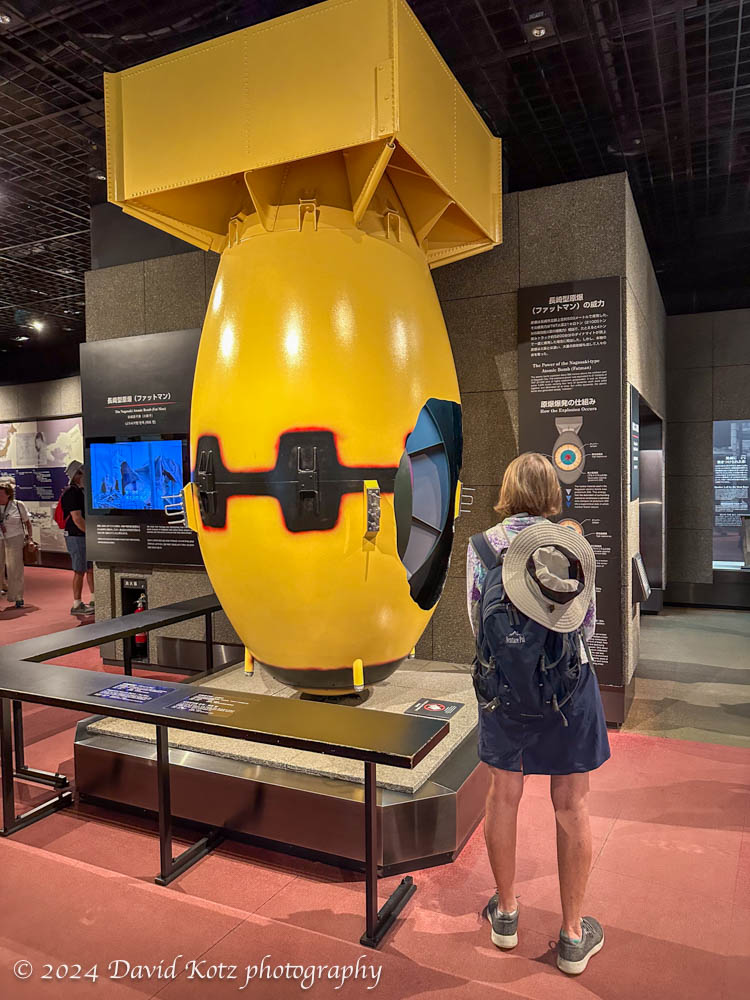
I spent a little time reading a display with quotes from leaders, including scientists, about their pre- and post-bombing thoughts about whether to drop the bombs and whether the bombings were necessary to win the war. The conventional wisdom is that the bombings were justified because they saved tens of thousands of lives (on both sides) that would have been lost when the Allies invaded mainland Japan; on the other hand, according to some of the quotes, some leaders thought the war was essentially over and the bombings were unnecessary. In a lecture on ship, we learned that Japan’s war council voted unanimously to keep fighting even after receiving news of both bombings… if they had done so, the battles would surely have been fierce and many lives would have been lost. Fortunately, the emperor overrode the council and Japan surrendered to the Allies.
Today, the Peace Park is beautiful; at its center is a beautiful fountain in the shape of dove’s wings, and a massive sculpture in which the “right hand points to the threat of nuclear weapons while the extended left hand symbolizes eternal peace. The mild face symbolizes divine grace and the gently closed eyes offer a prayer for the repose of the bomb victims’ souls” [Wikipedia]. The surrounding sculpture garden includes statues gifted by other cities and countries, and a fragment of the catholic cathedral, which was 500m from the hypocenter and heavily damaged by the bomb. A large group of middle-school children – all in uniform clothing and identical backpacks – were visiting the museum and the park, quietly following their teachers as they learned about their history.

After lunch on board we walked from the port to Dejima, a small trading village built by city leaders in 1636 to enable Japan to trade with the world without allowing outsiders to ever set foot in Japan. (Japan isolated itself from the world from 1641-1859 (218 years), trying to avoid external influence. But there was a need for trade, so they built Dejima; the construction was financed by wealthy Nagasaki merchants and originally hosted Portuguese traders. Later the Portuguese were evicted and the Dutch East Indies company moved in. For 218 years, this tiny island was the only contact between Japan and the rest of the world. Japan re-opened to the outside world in 1859, resulting in the “Mieiji period” of reformation and modernization.)

I encourage you to explore more photos in the gallery.
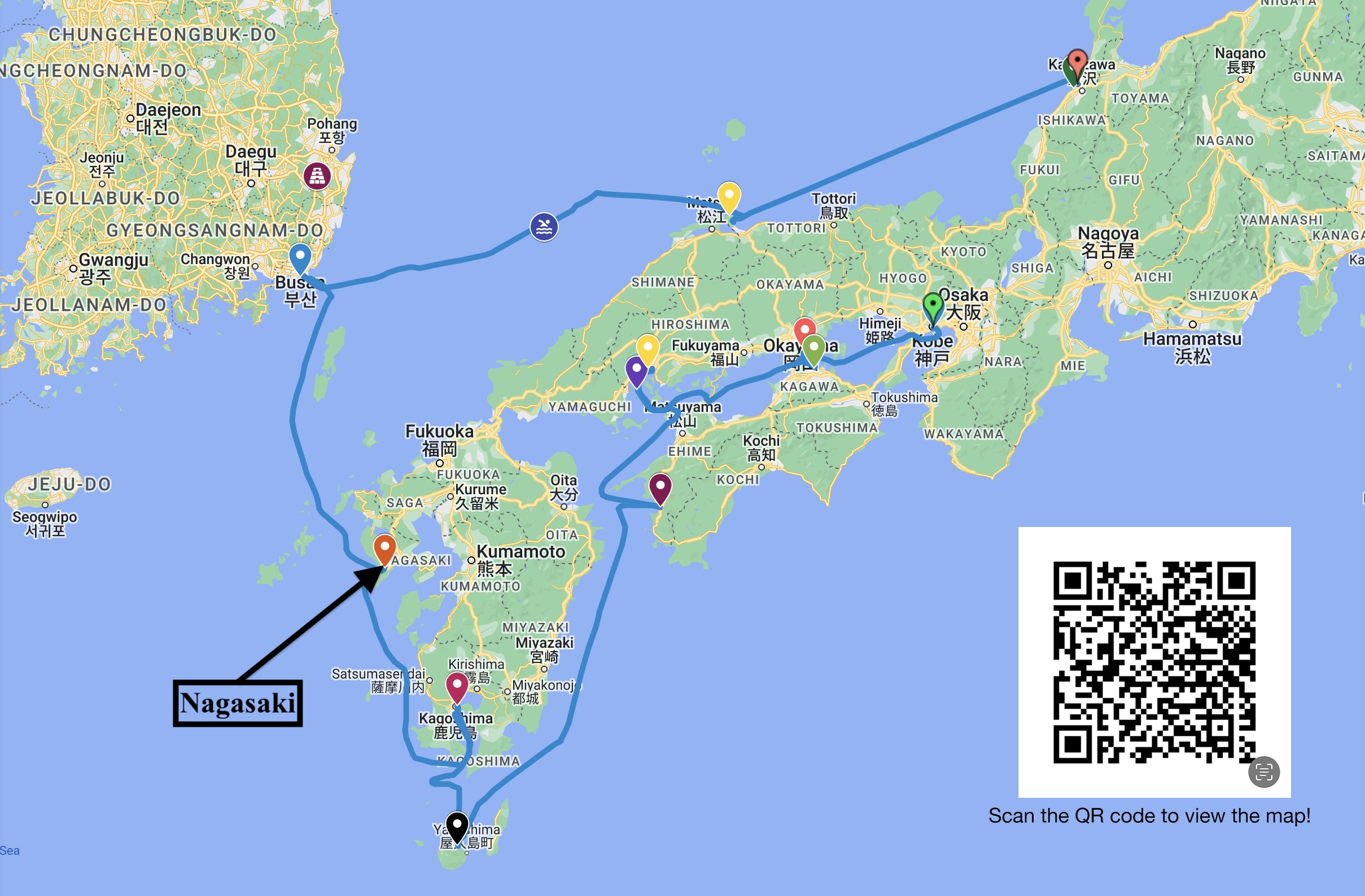
This post is part of a series about our Japan trip; the series starts here.

 David Kotz
One thought on “Japan, day 8 (September 10): Nagasaki”