Lunar eclipse

Partial eclipse of a harvest ‘supermoon’.

Last night we arrived home from almost three weeks of international travel just minutes before the beginning of a lunar ‘supermoon’ eclipse. The cloudless sky was dark and the moon had just risen over the hill to our east, bright and full. I quickly reconfigured my camera from our travels through sunny Japanese gardens into settings suitable for photographing the full moon, and captured a few shots as the partial eclipse began, and then peaked at 10:44 EDT. Below is a photo during peak, when the top of the moon was darkened by earth’s shadow.
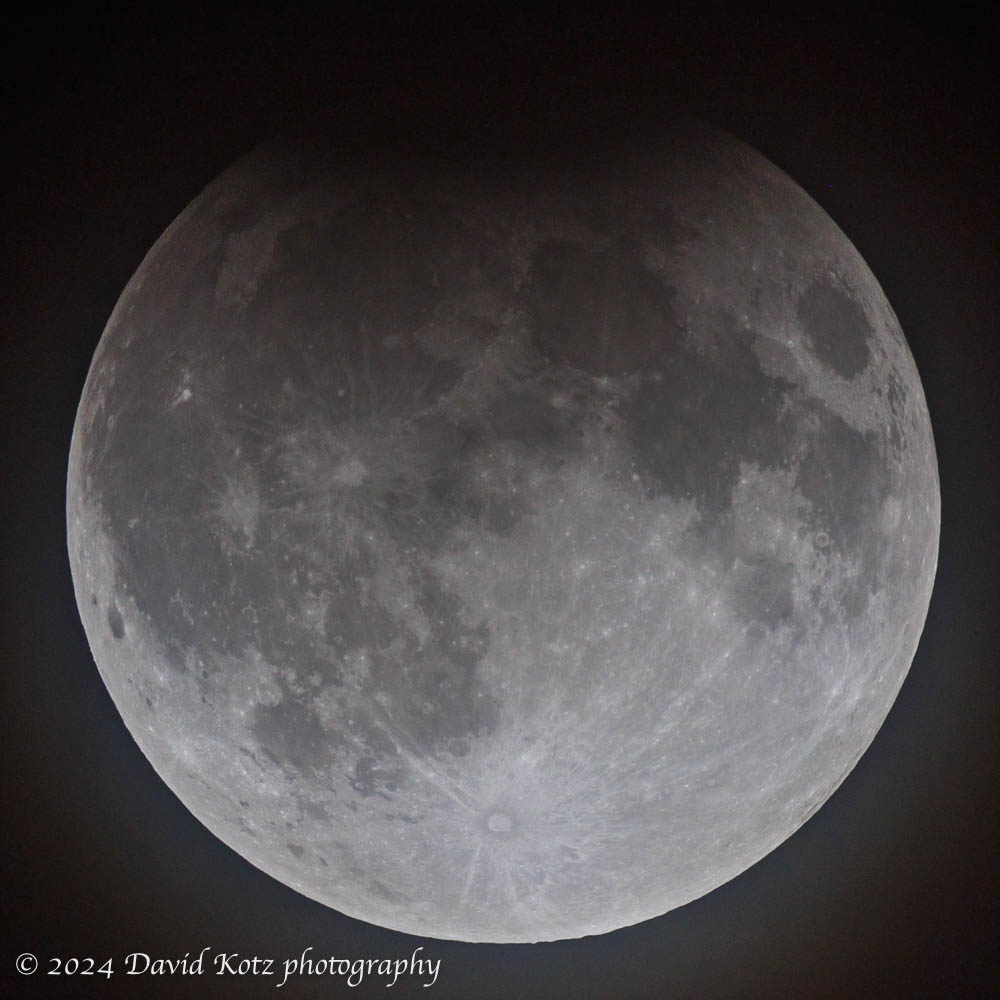
Canon R5 with 100-500mm lens + 1.4xTC, at 700mm, 1/100 at f/10, ISO 125. Cropped.

It was a calm, cool evening, and I stood in the driveway for about twenty minutes enjoying the growing eclipse. While I watched, I listened to the local coyote family howling at the moon, somewhere on the far side of the hill. Closer at hand, in the shadows to my south, I heard the alarm call of a white-tailed deer: a high-pitched snort while leaping away from an imagined predator. Meanwhile my cat, Sebastian, wove his way lazily around my ankles, equally happy to be spending an evening in the moonlight.

See the gallery of three photos – at full resolution, you can see even more detail.
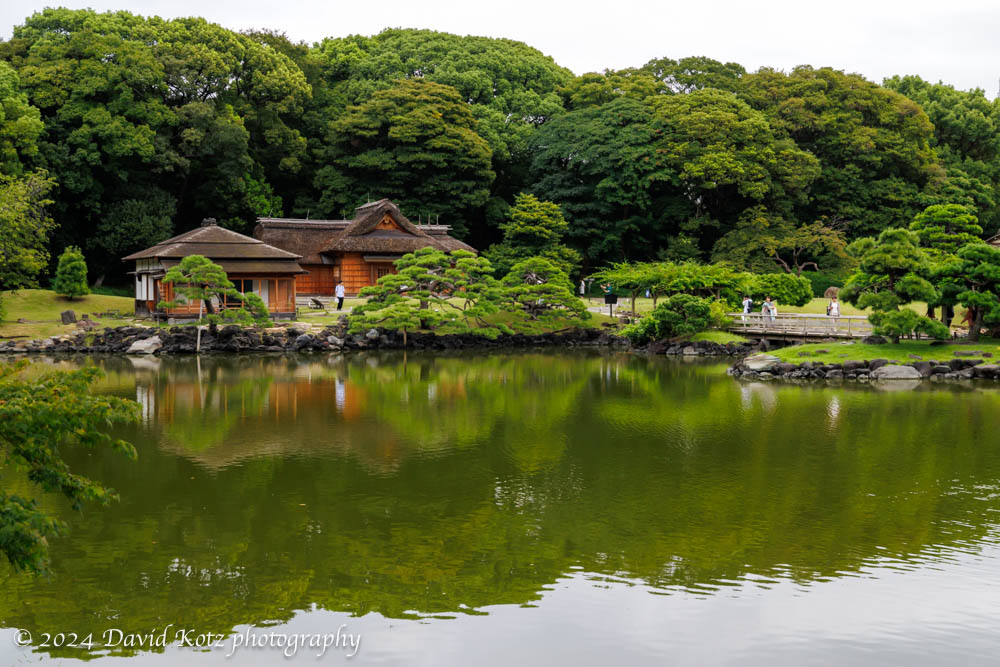
Japan, day 15 (September 17): Tokyo’s Hama-rikyu Gardens

Exploring Hama-rikyu Gardens, Tokyo.

Our final day was relaxed, a chance to pack before our evening non-stop flight to Boston.  So we took the opportunity for a morning walk around the Hama-rikyu Gardens… one last chance to enjoy the art and beauty of Japan! Donated to the public in 1945, “it was remodeled as a public garden on the site of a villa belonging to the ruling Tokugawa family in the 17th century.” These gardens (which we also visited late the day before) are unusual in that they are “surrounded by a seawater moat filled by Tokyo Bay” [Wikipedia]. Most of the original buildings are gone – destroyed by fire, earthquake, or war, but a 300 year-old black pine tree survives; likely planted by Tokugawa himself. Read on…

The large pond at Hama-rikyu Gardens, Tokyo, Japan.
Continue reading “Japan, day 15 (September 17): Tokyo’s Hama-rikyu Gardens”

Japan, day 14 (September 16): Tokyo, Meiji Shrine, Senso-ji temple, Geisha

We visit the Meiji Shrine and Senso-ji temple, then dinner with Geisha performers.

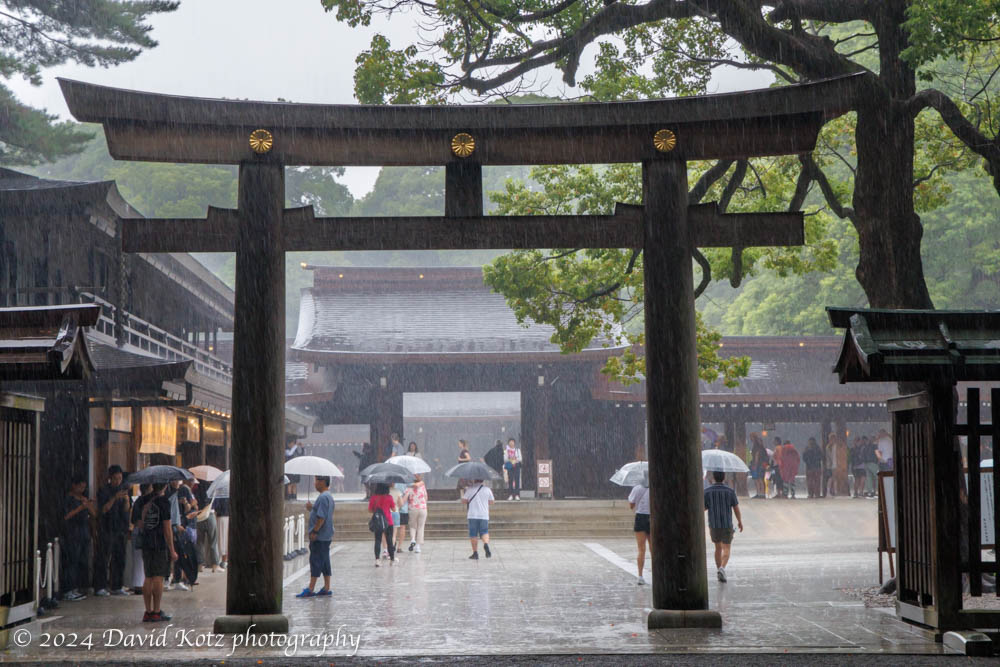
For our only full day in Tokyo we boarded buses to visit the Meiji Shrine, a Shinto shrine meant to memorialize Meiji, who ended the Shogun period and became the architect of Japan’s modernization.  He died in 1914, and the city built the Shrine in 1920.  Unfortunately, it (and much of Tokyo) was destroyed in WWII, but quickly rebuilt after the war.  Today, despite pouring rain, it was crowded with tourists, as well as many young families with babies; it is customary to bring a newborn (at 30 days of age) to pray for their good health. Read on to see where we went in the afternoon!

Rainy visit to Meiji shrine, Tokyo.
Continue reading “Japan, day 14 (September 16): Tokyo, Meiji Shrine, Senso-ji temple, Geisha”

Japan, Day 13 (September 15): Shinkansen, Tokyo

We hop the Shinkansen bullet train to Tokyo, enjoy lunch, then explore.

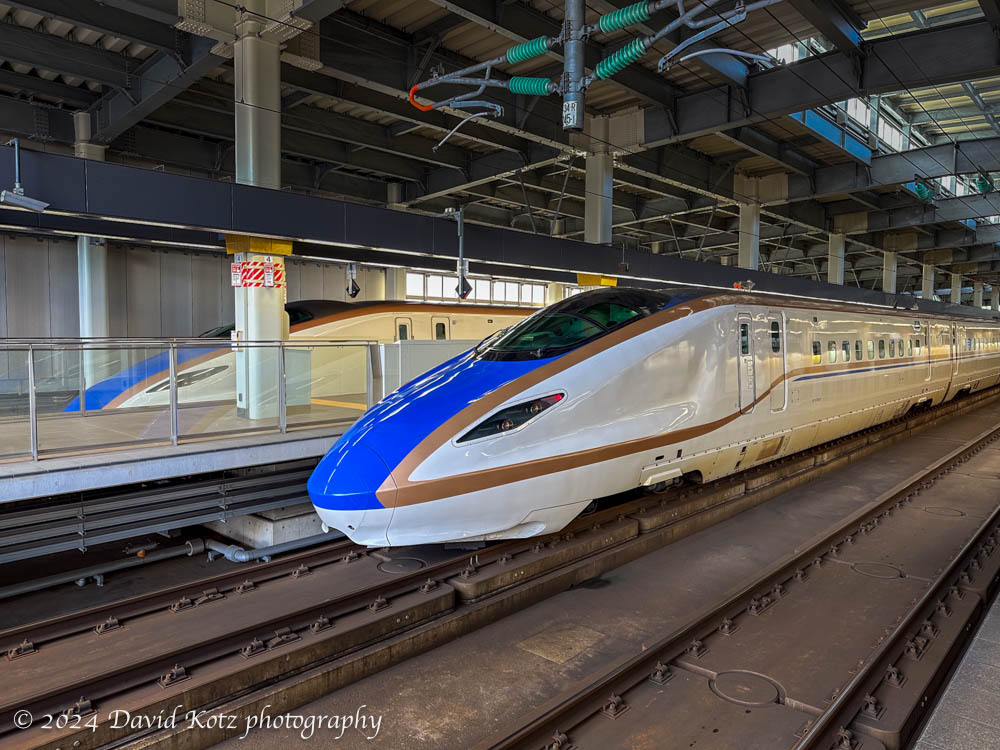
Today we disembarked for the last time, leaving the Resolution and boarding trains for Tokyo.  In the Kanazawa train station we boarded the Hokuriku Shinkansen (bullet train), which left the station spot on time (Japanese bullet trains are never more than a few seconds late, and in 60 years have never experienced a single accident).  Speeding at up to 260 km/h (162 mph) – and even faster between Omiya and Takasaki Stations, running at 275 km/h (171 mph) – we reached Tokyo in two and a half hours. Read on!

Hokuriku Shinkansen (bullet train) in Kanazawa, Japan.
Continue reading “Japan, Day 13 (September 15): Shinkansen, Tokyo”

Japan, Day 12 (September 14): Kanazawa

Our final port, Kanazawa. Historic Samurai home, Geisha district, and Kenroku-en garden.

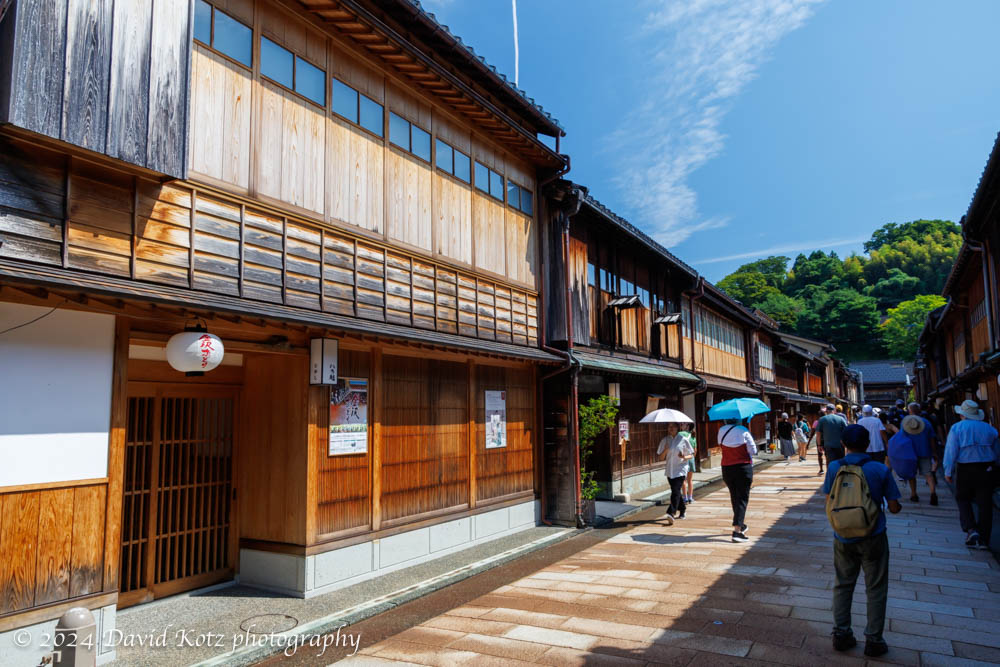
After an overnight cruise we arrived in the port of Kanazawa.  Known across Japan for its gold leaf, Pam went with a group to learn about the production of gold leaf and its application to jewelry and other uses.  I spent the morning visiting two historic districts.  The first was a Samurai village, including a historic Samurai house; it was interesting to walk through the preserved home and through a small neighborhood with other homes that retain the architecture of that period.  We then visited a historic district that had been a center for Geisha (though here they refer to them as geiko), including a tour of a historic 1820 Geisha tea house (Ochaya Shima), now a museum.  We strolled through streets retaining the historic architecture (with buildings now occupied by restaurants and souvenir shops). For the afternoon… read on!

Street in preserved Geisha district in Kanazawa.
Continue reading “Japan, Day 12 (September 14): Kanazawa”

Japan, Day 11 (September 13): Sakaiminato, Matsue

Returning to Japan, we visited Matsue Castle and the small fishing village of Mihonoseke.

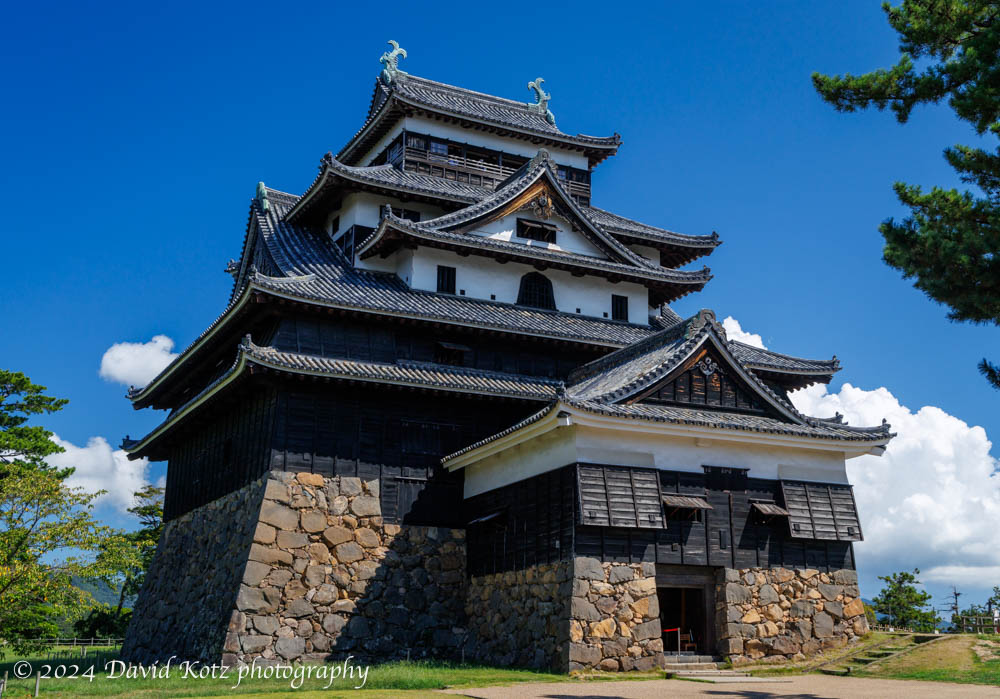
We re-entered Japan at Sakaiminato, a city whose name literally means border port – because Sakaiminato sits on the border between two prefectures.  We drove to the small city of Matsue (which means pine (matsu) water (eh)) to visit its castle.  There used to be about 360 castles across what is now Japan; today, only 12 castles remain, partly because of a national order to destroy all the castles when the samurai period ended in ~1868 during the Meiji reformation; others had succumbed to fire, earthquakes, or war.  Of the remaining twelve, five have been designated as ‘national treasures’ and are open to the public; Matsue Castle is the second-largest and third-tallest.  Read on!

Matsue Castle, Japan.
Continue reading “Japan, Day 11 (September 13): Sakaiminato, Matsue”

Japan, day 10 (September 12): Sea of Japan

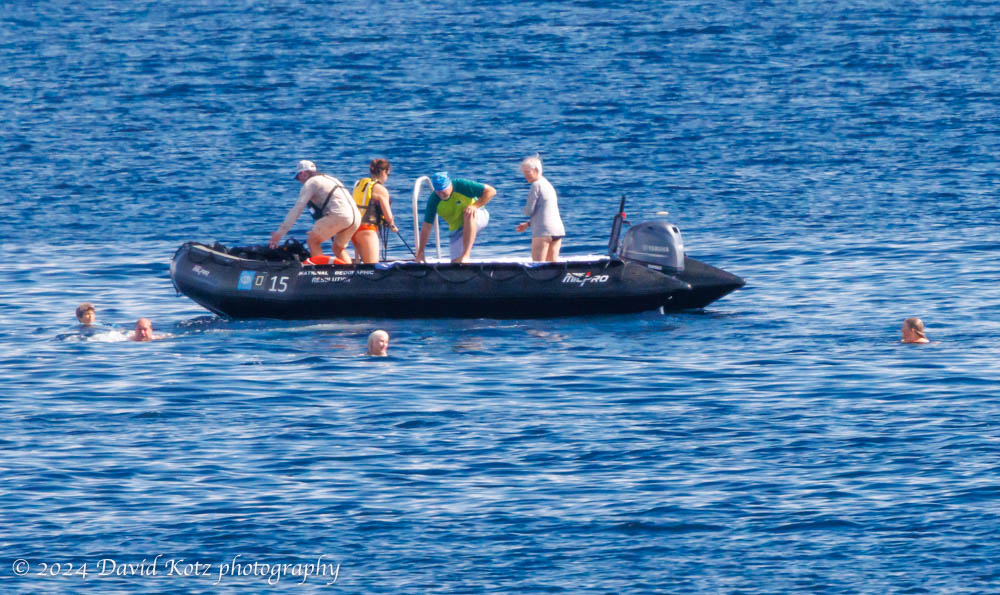
Swimming in the Sea of Japan.

We spent this entire day at sea, transiting the Sea of Japan to the east-northeast across blissfully calm seas.  Indeed, the weather was so calm that the crew stopped the ship, shortly after lunch, and deployed the Zodiacs – allowing those who might be interested in a swim to motor away a safe distance from the ship and swim in the open ocean.  What a treat! [Photo gallery]

Pam and others take a swim out in the Sea of Japan.
Continue reading “Japan, day 10 (September 12): Sea of Japan”

Japan, day 9 (September 11): Gyeongju, South Korea

A brief visit to South Korea.

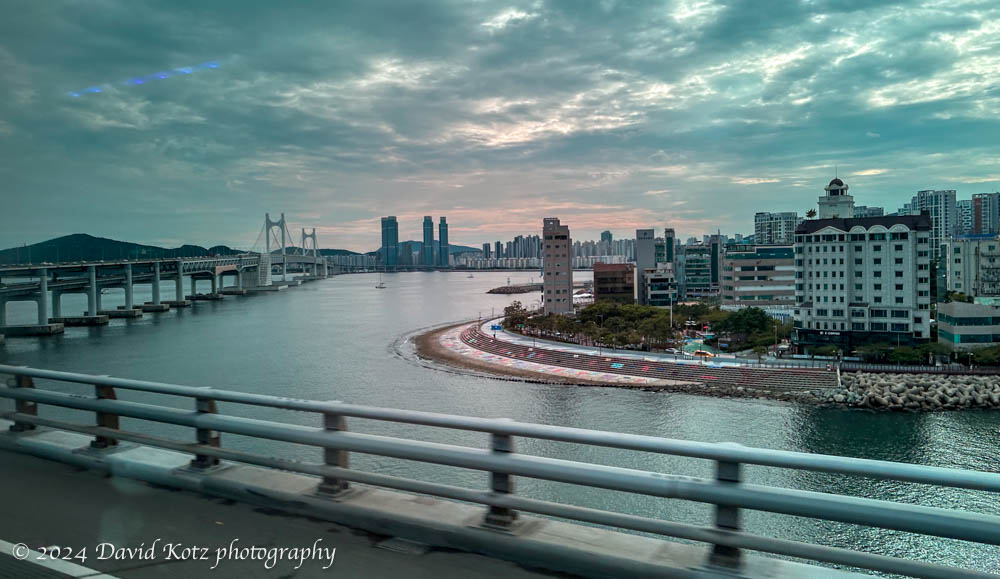
Due to some legalistic rules about cruise operators in the Sea of Japan – the strategically important sea between Japan and the Asian mainland, bordered by Russia and Korea – we sailed overnight to South Korea and docked in Busan just before dawn. We boarded buses in the pouring rain – the first real rain we’d encountered in our travels.  The 90-minute drive through the bustling port city of Busan, and then the countryside to the north, was visually interesting as our local tour guides filled us in on Korean history and culture. Read on!

The bustling port city of Busan, Korea.
Continue reading “Japan, day 9 (September 11): Gyeongju, South Korea”

Japan, day 8 (September 10): Nagasaki

A second atomic bomb site, possibly even more moving than Hiroshima.

After an overnight journey we pulled into port at Nagasaki. To an American, and perhaps many others, that name evokes only sadness, as the site of the second atomic bombing in World War II.  We were here to visit the Atomic Bomb Museum and the Peace Park, to be sure, but the city has a fascinating earlier history we also explored in a site known as Dejima. Read on!

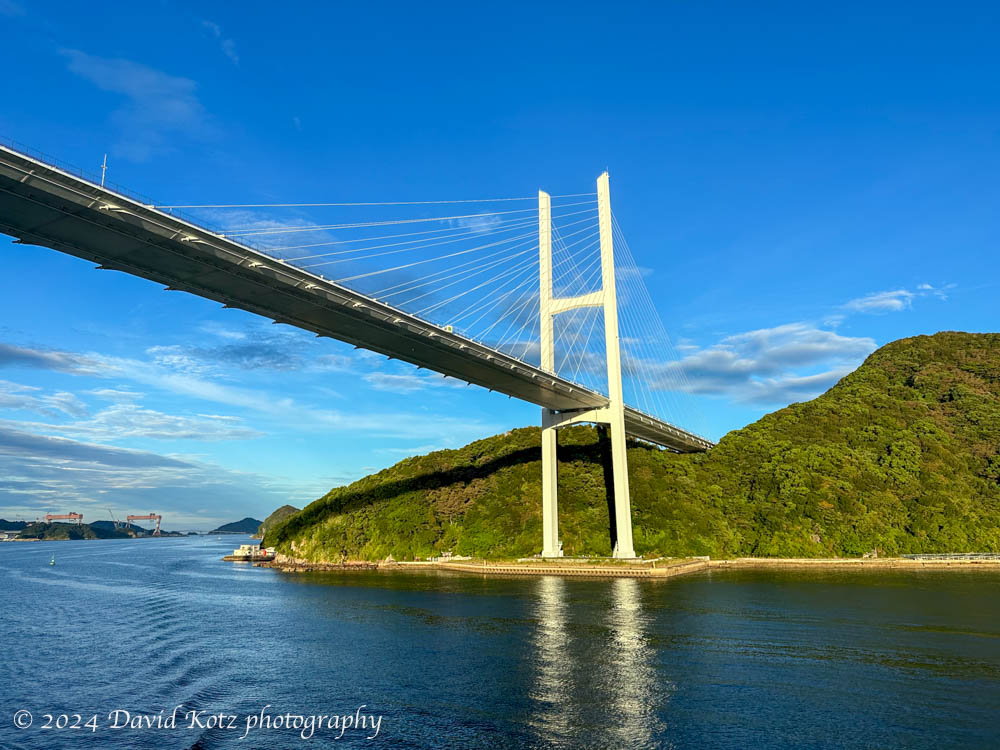
Passing under a modern bridge as we enter the harbor of Nagasaki, Japan.
Continue reading “Japan, day 8 (September 10): Nagasaki”