
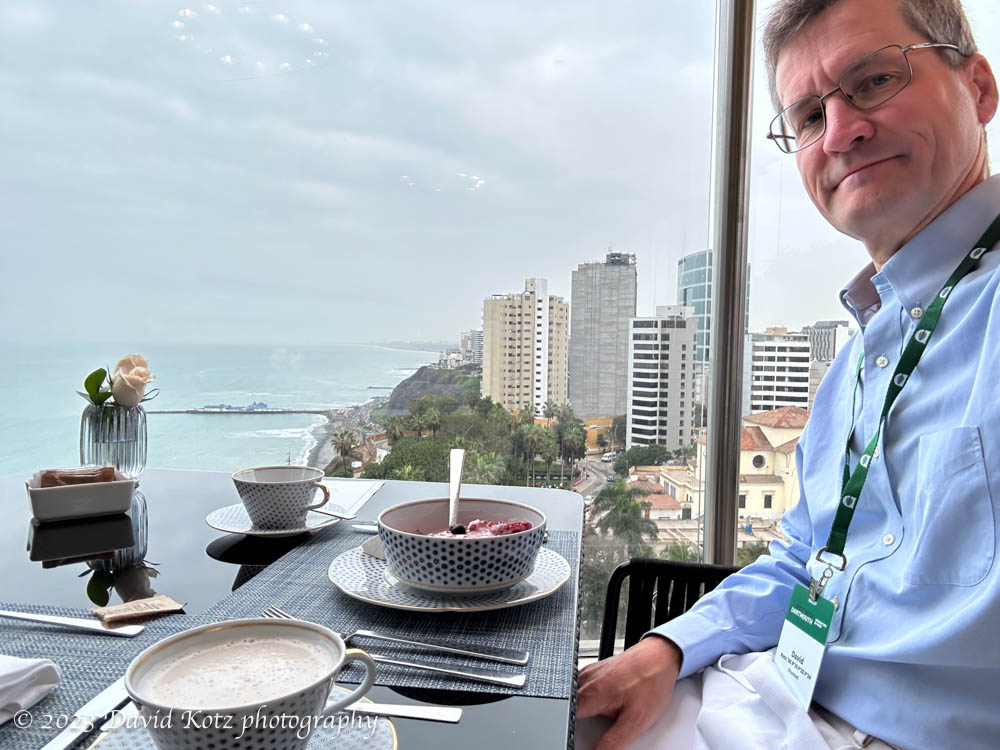
After our visits to Machu Picchu and the Sacred Valley, we returned to Lima for a Dartmouth Alumni event. We stayed in the beautiful Miraflores Park Belmond Hotel, overlooking the city and its coastline. Over the course of two days we had an opportunity to sample some of the gastronomic delights for which Lima is famous, and to visit some of the museums. Read on…
In addition to some Dartmouth-focused panels and presentations, we had a chance to visit the Museo Larco, with its impressive collection of artifacts from the era of the Incas – and before. The exhibit below, for example, is a gold headdress from the Chimu culture (1300-1532AD); little is known, but the sign indicates it was apparently part of the funerary offering for a great lord buried in the capital of the Chimu kingdom.

We also visited the Museo Pedro de Osma, which contained extensive paintings and other Peruvian Viceregal art from the early Spanish period. I have no photos, but the website gives you a rich sense of this historic villa and its art.
In the evening we were treated to a private visit to the Museo De Sitio Pucllana, one of the most impressive archaeological sites in Lima. “Huaca Pucllana is an archaeological site belonging to the Lima culture , from the period of regional developments (200 – 700 AD), …. It is built almost entirely with adobes and filled with boulders and sand. It is made up of a 25 meter high pyramid and a set of patios, squares and enclosures to the northeast of it.” It is hard to grasp from photos, but it is essentially a huge pyramid made entirely of adobe bricks. Lima’s dry climate has enabled these mud bricks to survive for over 1400 years! Dartmouth had arranged a special dinner event, under a massive tent next to the structure, with multi-colored lighting illuminating the ruins.

At the reception beforehand there was a fascinating display of native potato varieties; the photo below shows only half the display! Potatoes are (and were) an important part of the Andean cuisine.

The next day we enjoyed a hearty seafood lunch at Restaurant Fiesta, and then in the evening a reception and light buffet in the courtyard of the Convento de Santo Domingo, created in the 1530s. It is “where the University of San Marcos, officially the first Peruvian university and the oldest university in the Americas, began to function in the 16th century.” (Wikipedia)

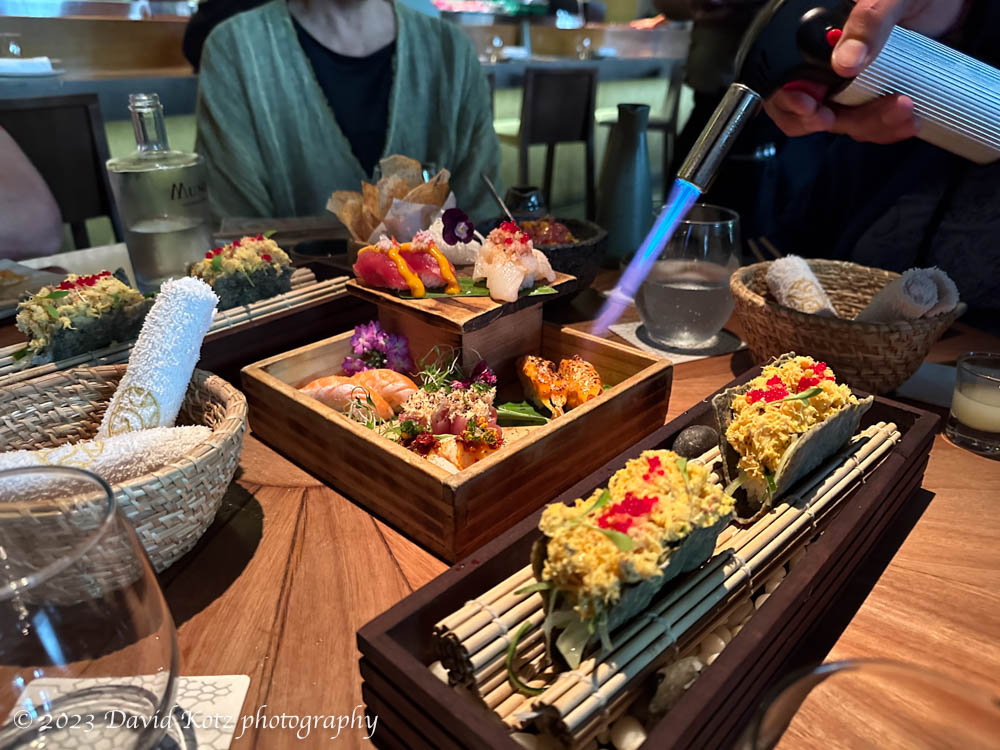
I share more photos in the gallery! But perhaps the best part of our visit to Lima was the food – incredible seafood, and dishes inspired by Andean, Spanish, Chinese, and Japanese cultures. Below is a photo from a Japanese restaurant, Osaka, where a small group of us sought sushi and related specialties on our final day in the city.

 David Kotz