
Until this year I had never been to South America. Astonishing, I know, given the amount of travel I have had the good fortune to pursue over the past forty years. Now, in just this year I have been to South America twice: in February to Buenos Aires (Argentina), albeit only for one night… and now to Peru for a nine-day visit to both Lima (on the coast) and Cusco (in the highlands). Our trip had four parts – so I will report in four posts. Our first stop was in the ‘Sacred Valley’ of the Incan civilization, outside the historic city of Cusco. There, we passed through small towns, toured some archaeological sites, enjoyed fabulous meals, and met with the delightful people of a small highland faming community. Read on!
Sunday – Lima to Cusco to Sacred Valley
On Saturday we arrived in Lima (on the coast) after a long trip from New Hampshire to New York to Lima. After a short night there we returned to the airport for a flight to Cusco, in the highlands at an elevation over 11,000 feet. We were delayed (long story) but eventually arrived in Cusco shortly after noon, where our group (organized by Dartmouth Alumni Travel) piled into a minivan for our tour of the area. The van climbed out of the city, high over a neighboring ridgline, and down into the Sacred Valley.
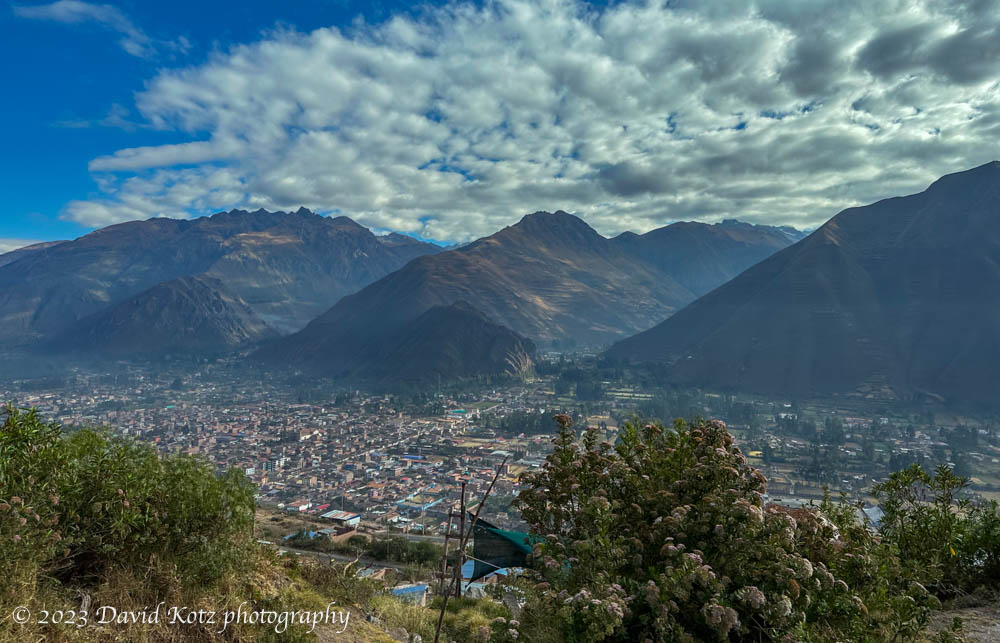
This valley, formed by the Urubamba River, is intensely fertile and heavily cultivated… and was important to the 14th-century Incan civilization for the same reason. We enjoyed a fabulous lunch at Hacienda Sarapampa, a family farm that highlights local foods in its delightful cuisine.

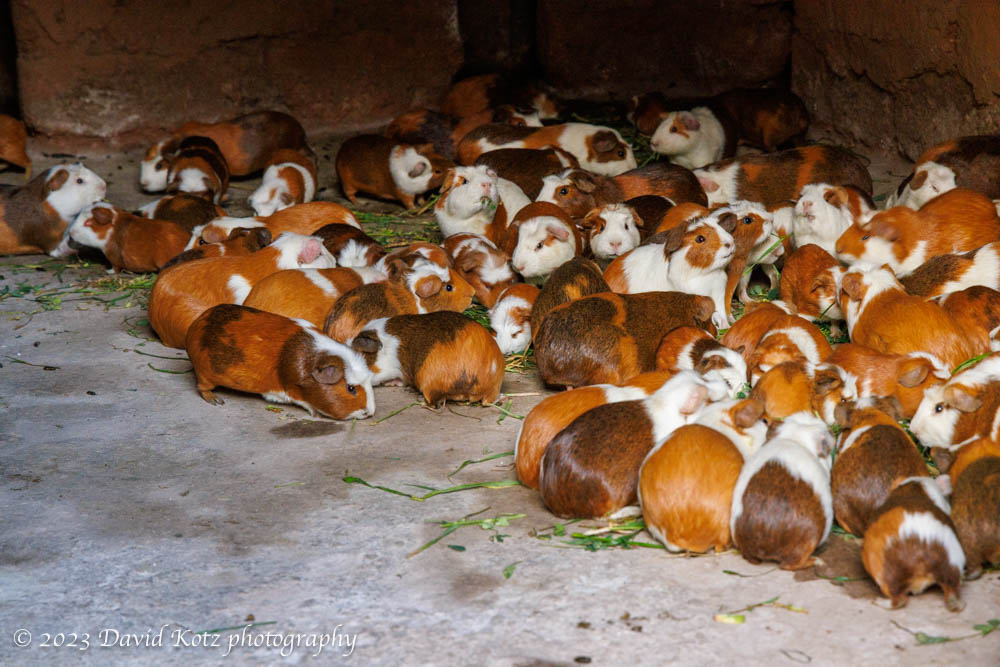
This farm was also our first opportunity to learn about the (current and historical) importance of guinea pigs as a meat crop. According to Wikipedia, “the guinea pig was first domesticated as early as 5000 BC for food by tribes in the Andean region of South America (the present-day southern part of Colombia, Ecuador, Peru, and Bolivia),” and they are still culturally important today. We frequently saw them, roasted on a stick, at roadside street-food vendors. The farm owner gave us a tour, including their pig house.
Due to the late hour, we proceeded to our hotel in the small city of Urubamba, Tambo del Inka . There we received an informative lecture from our Dartmouth faculty host, Prof. John Watanabe, before a delightful dinner at Teirra Restaurant (not far from the hotel.
Monday – Sacred Valley

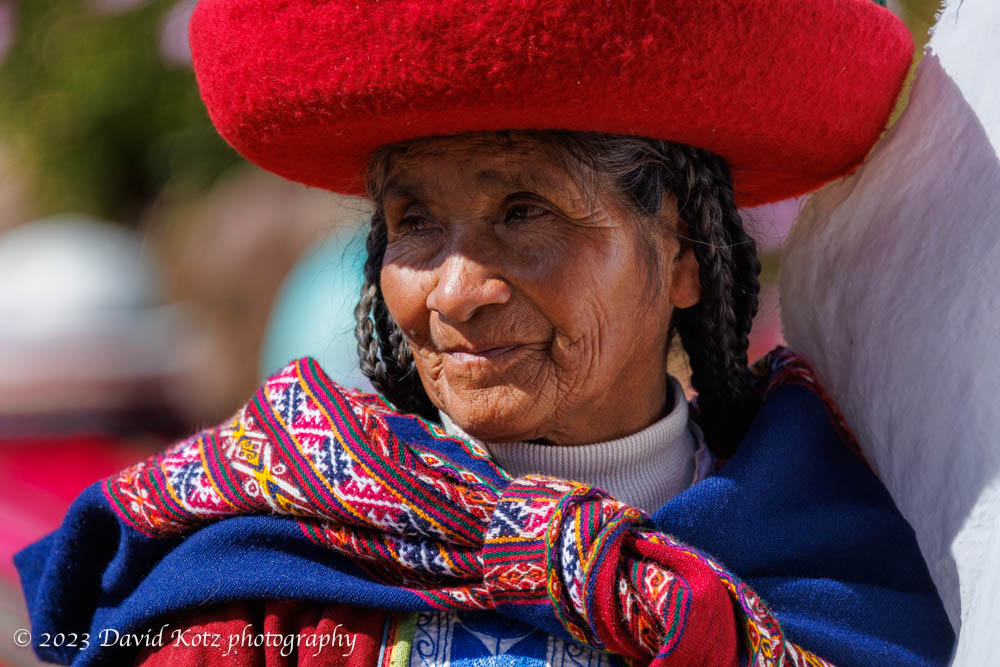
The highlight of our second day was a visit to the Qorqor community. We were welcome with music and dancing, encouraged to wear Andean clothing, and treated to an explanation of their traditional methods for spinning, dying, and weaving wool. We played their games, and (literally) chopped down one of their trees (analogous to breaking a piñata). We also purchased many of their beautiful wool products.
We had lunch at Iskay Maras, a home-based restaurant in Maras village, where we had lovely views of the surrounding mountains and more amazing food.


We visited ancient Incan terraces of Moray – whose purpose is still debated. They are terraced circular depressions, the largest of which is approximately 98 ft deep. As Wikipedia notes, “their depth, design, and orientation with respect to wind and sun creates a temperature difference of as much as 5 °C (9 °F) between the top and the bottom,” so some speculate it was a research farm… a place to experiment with growing crops at different elevations under different conditions.

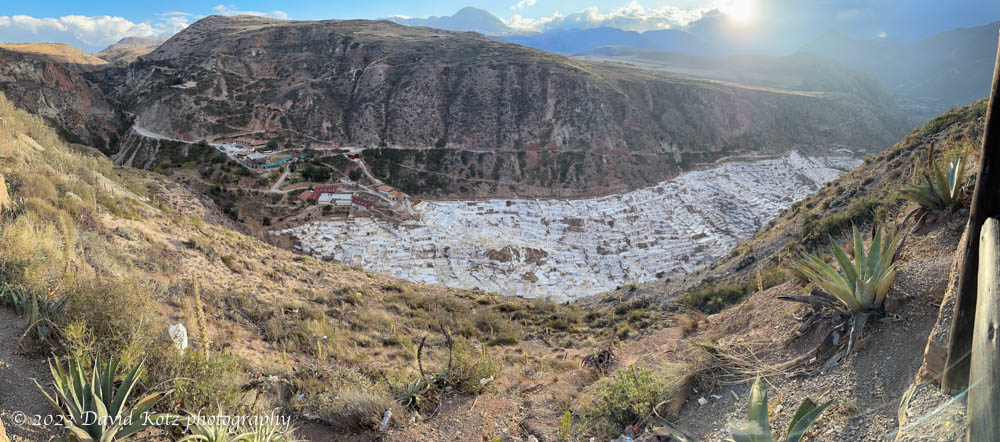
As the sun set, we visited the incredible salt mines at Maras, where families still control and mine natural salts. We stopped at the stalls that sell these salts, of course, to sample the wares.
After another informative lecture by Prof. Watanabe, we dined at nearby Forty Bistro. Once again, we stayed at Tambo del Inka in Urubamba.
Many more photos in the gallery – don’t miss!
Next: Machu Picchu!

 David Kotz
One thought on “Peru’s sacred valley”