
We arrived back in the Falkland Islands after two full days at sea; this time, we aimed to visit some of the smaller islands on the western side. (We had intended to make these visits on our outbound trip, but an incoming storm convinced the captain to head early to South Georgia and pick up the Falklands on the way back; good call!)
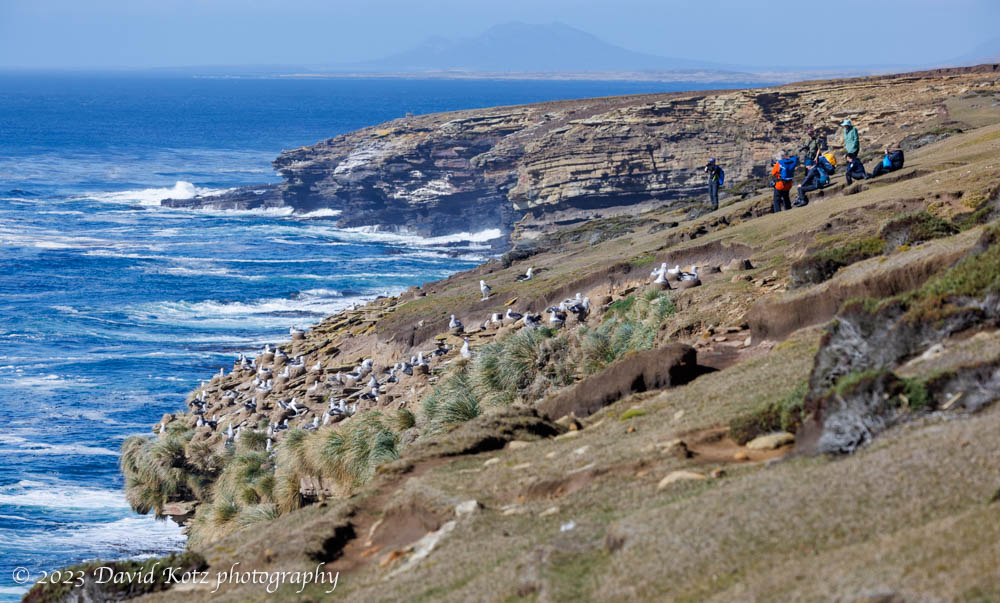
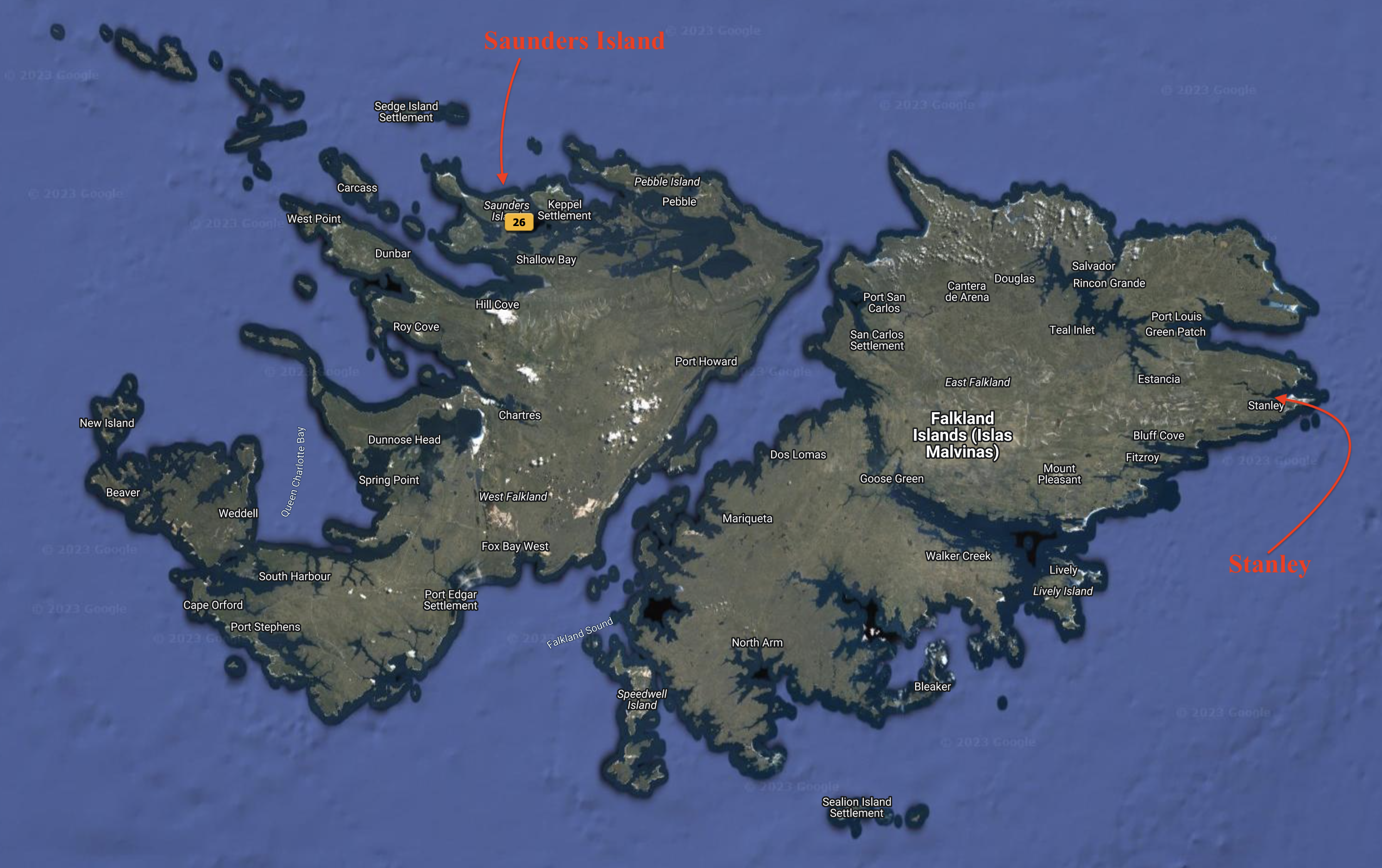
We spent today on Saunders Island, site of the original 1765 settlement, a garrison established by the British Navy. We spent the morning visiting an active sheep farm, and the afternoon visiting a cliffside rookery for albatross and rockhopper penguins. Read on! and check out the gallery of photos and videos.
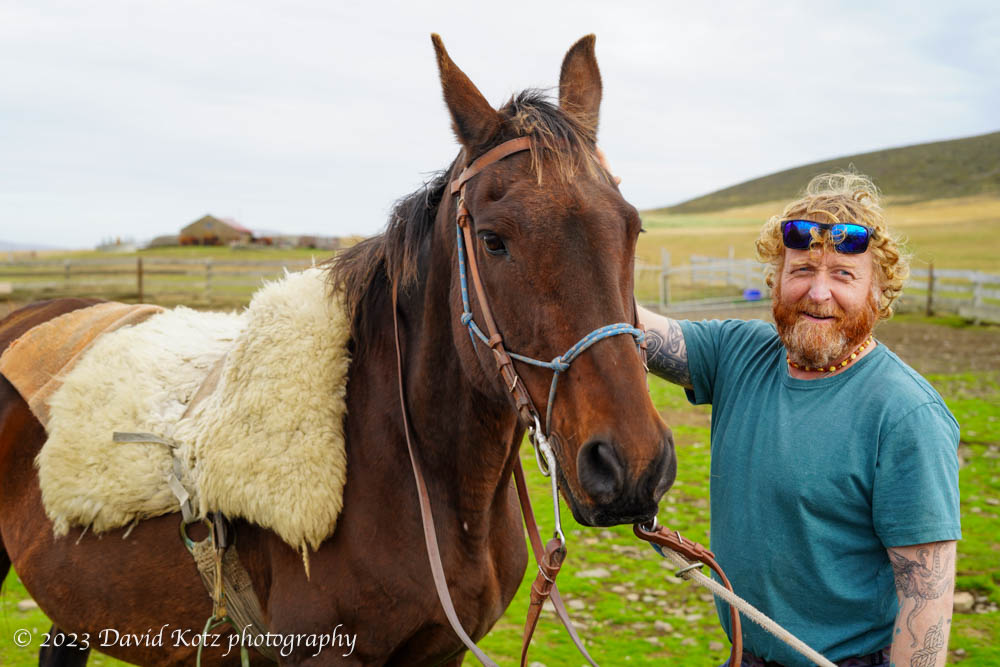
Our first stop was Port Egmont, where the British first claimed the Falkland Islands by establishing a garrison and village. Though it only lasted nine years, the Union Jack still flies proudly beside its ruined stone foundations. From here we walked over the grassland to the farm still owned by the family of our expedition leader, Russ, who grew up on this farm. The family owns the whole island, where it raises sheep and hosts visiting tourists like us – treating us to demonstrations of sheep-herding and sheep-shearing, followed by a barbeque cookout (lamb, of course) along the shore.
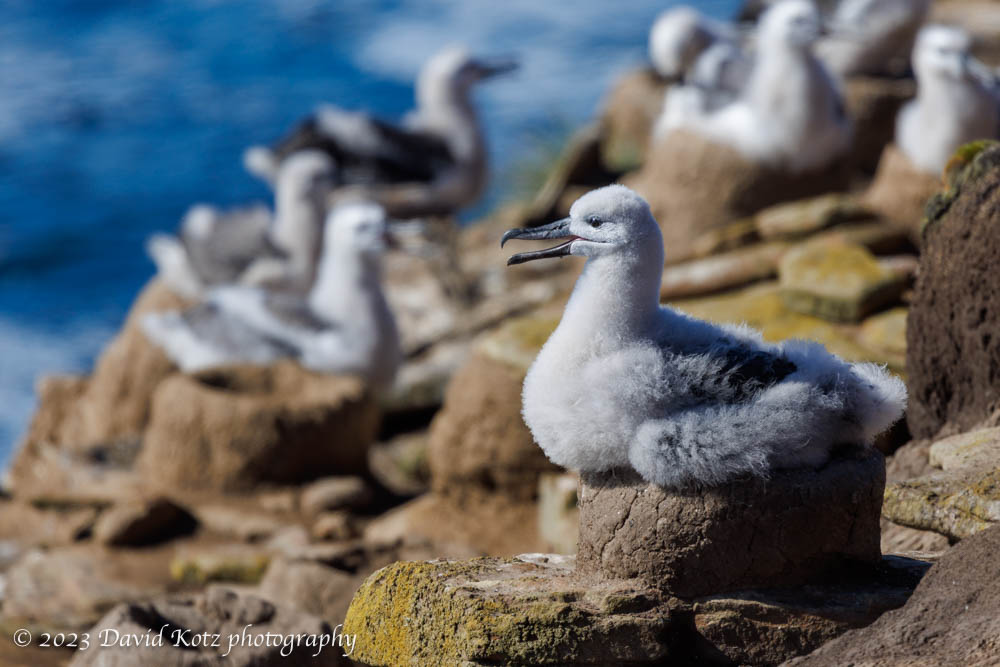
After lunch we motored around to the other side, landed on a beach, and climbed high to obtain a cliff-top view of two bird colonies – black-browed albatross and rockhopper penguins. A strong onshore breeze brought the surf pounding onto the rocks below, and ruffled the feathers of the birds resting on these steep slopes. We photographed from above, taking care with our own footing. Nonetheless, it was fascinating to watch the albatross chicks, each snug atop a nest made of mud and straw (perhaps constructed over several years). The chicks tested their fuzzy wings in the breeze while they waited, days at a time, for parents to return and regurgitate a meal for them.
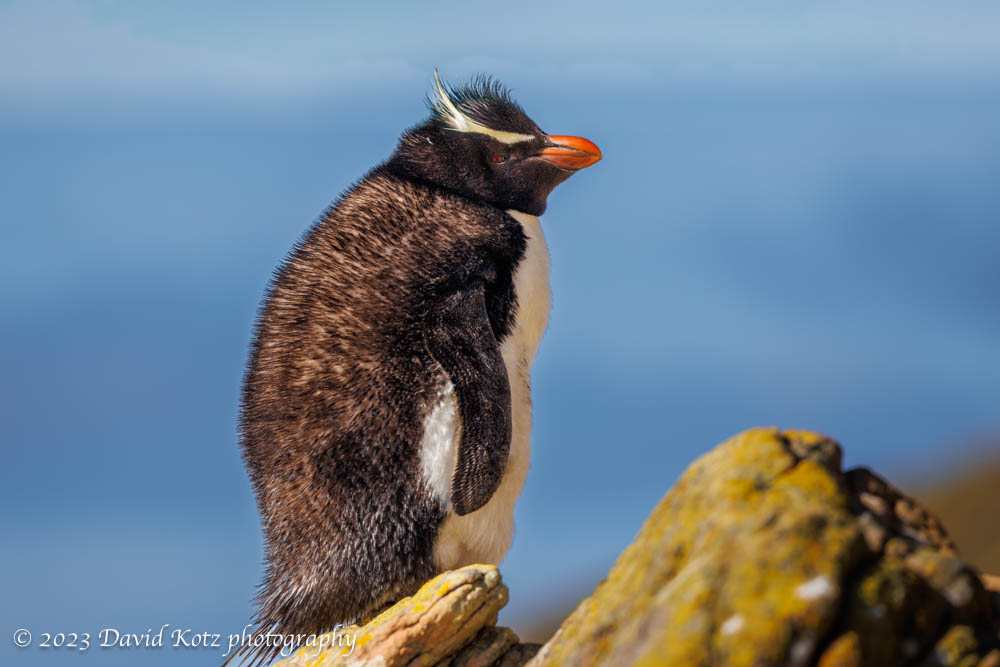
The rockhopper penguins, with their punk-rocker hairstyle, mostly seemed resigned to standing stiffly in place while the wind ruffled them from behind. I did see a few braving the surf and struggling on shore, hopping from rock to rock (hence their name) as they made their way out of the waves [video].
Back at the beach, small groups of Magellanic penguins were busy commuting between the sea and their homes up in the grassy hillside.
More to see in the gallery of photos and videos!

 David Kotz